
Das Große Esparsettenfeld In Znaim Iv — History & Facts
Is this a mirror — or a memory? In Das Große Esparsettenfeld In Znaim Iv, time seems to fold in on itself, inviting us to awaken to the echoes of a moment lost yet immortalized on canvas. Look to the right at the delicate interplay of light and shadow, where the warm tones of the earth blend seamlessly with the cooler hues of the sky. The artist's meticulous brushstrokes create a textured landscape that feels almost tactile, drawing the eye toward the sprawling fields that stretch into the distance. Notice how vibrant greens intermingle with muted browns and golds, suggesting the transition from day to dusk, as if the land itself is breathing, alive with potential. Beneath the surface, contrasts emerge—between the fertile land and the encroaching stillness of twilight.
This tension might reflect the duality of human existence; the vibrancy of life juxtaposed against the inevitability of time passing. The rhythmic patterns of the fields evoke a sense of continuity, yet the softening light hints at an awakening to something deeper, a recognition of the ephemeral beauty in nature's cycle. In 1893, Theodor Von Hörmann created this piece during a period of artistic exploration in Austria, as the country was experiencing cultural shifts towards modernity. While he painted in Znaim, a town resonant with history, he was also influenced by the broader movement of Plein Air painting, which celebrated the beauty of landscapes in natural light.
This backdrop of transformation in both his life and the art world infused his work with a palpable sense of longing and connection to the land.
More Artworks by Theodor Von Hörmann
Browse all →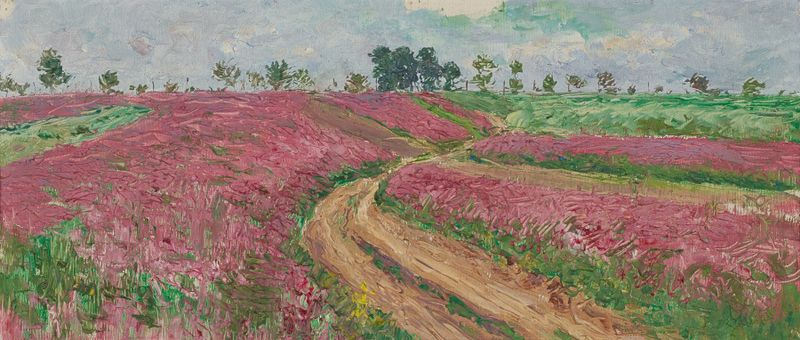
Esparsettenfeld Bei Znaim Ii
Theodor Von Hörmann

Blick Auf Paris
Theodor Von Hörmann

A Watering Place in Kis Bagh
Theodor Von Hörmann

Auf Der Ligethi Puszta
Theodor Von Hörmann
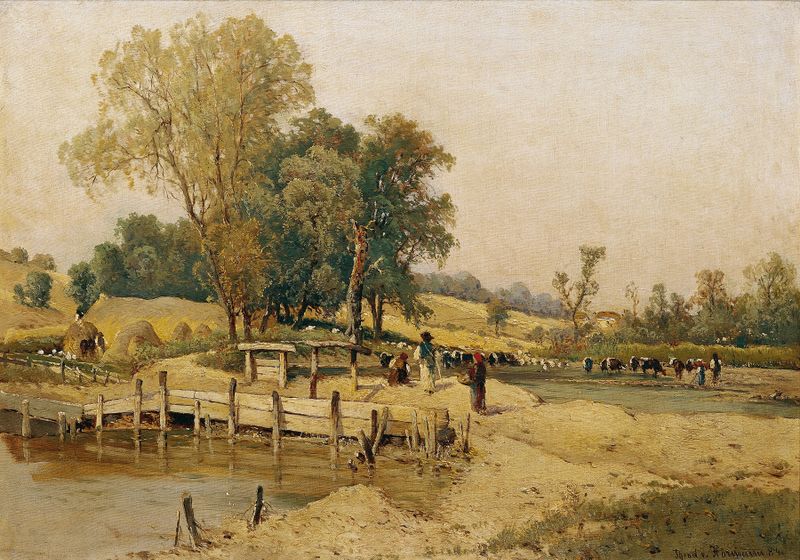
Ungarische Landschaft Mit Viehtränke
Theodor Von Hörmann
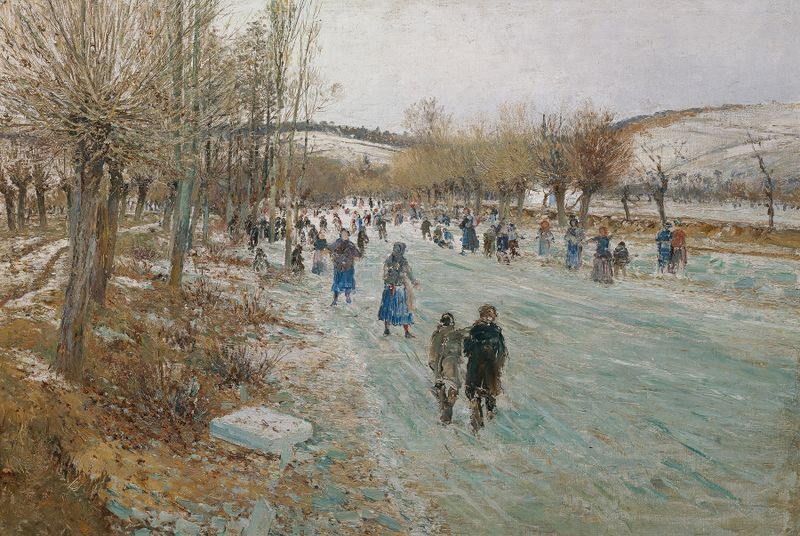
Eisläufer Auf Der Thaya Bei Lundenburg
Theodor Von Hörmann
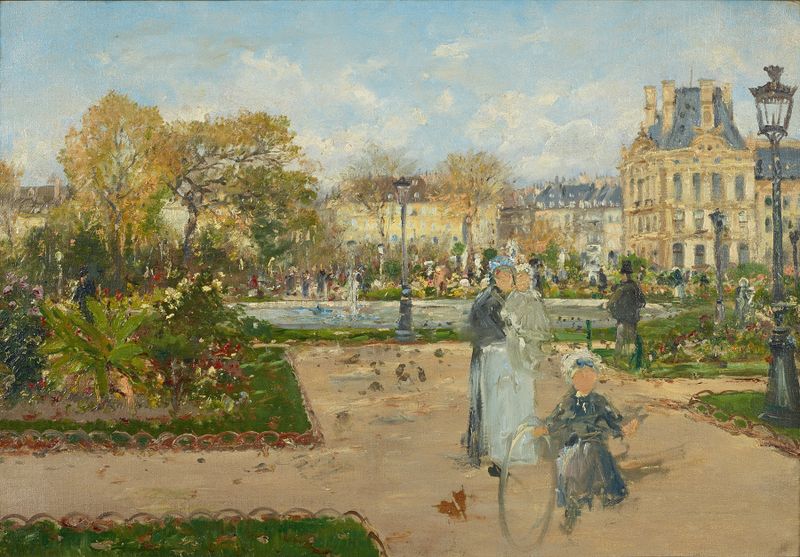
In Den Tuilerien
Theodor Von Hörmann

A Winter Day, Scene near St. Pölten
Theodor Von Hörmann

Znaim Im Schnee Ii
Theodor Von Hörmann
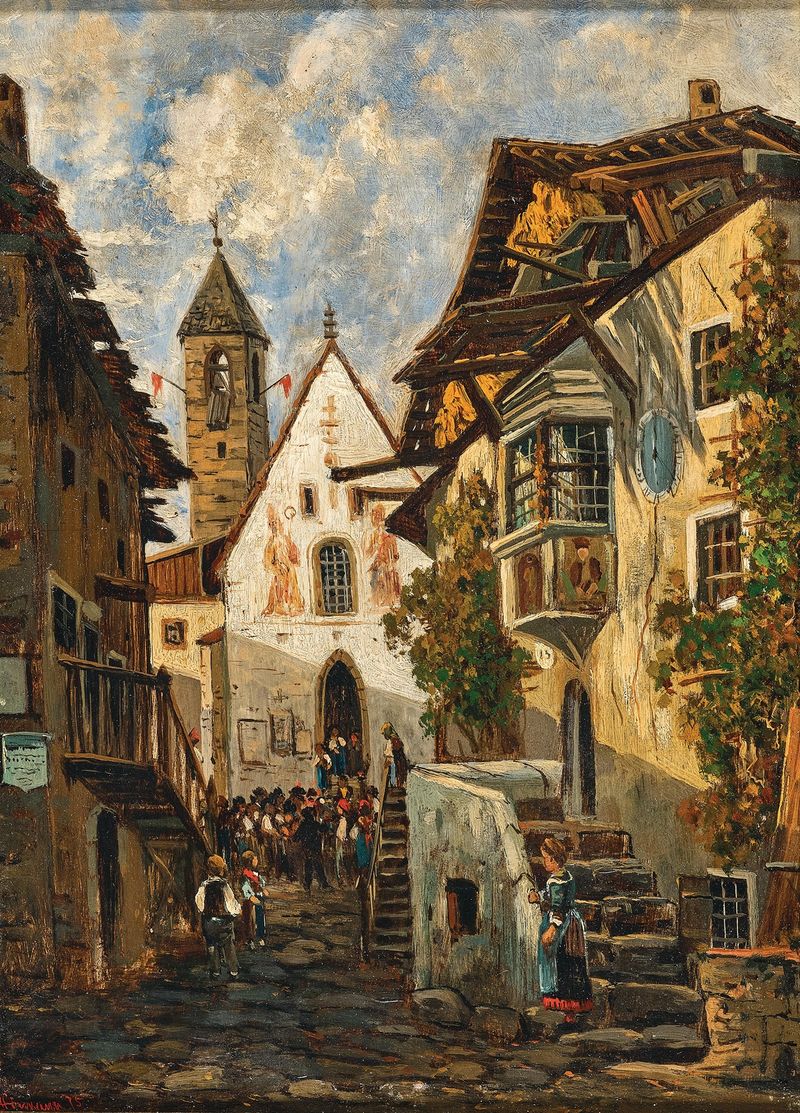
Dorfmotiv von Albeins bei Brixen, Tirol
Theodor Von Hörmann





