
De aankondiging aan Joachim — History & Facts
Who listens when art speaks of silence? In De aankondiging aan Joachim, the stillness resonates with the weight of fate, drawing us into a moment of profound contemplation. Look to the left, where the figure of Joachim stands, his posture a blend of reverence and bewilderment. The soft glow of light envelops him, illuminating the delicate details of his robe, while the background recedes into shadow, creating a space that feels both intimate and sacred. Notice how Dürer masterfully uses color to evoke emotion; the muted tones reflect Joachim's inner turmoil, contrasting with the ethereal brightness that bathes the angelic figure to the right, symbolizing divine intervention and hope. The tension in the painting lies in the juxtaposition between the serene angel and the troubled man.
Each brushstroke reveals layers of anxiety and promise, as Joachim's furrowed brow communicates doubt and yearning. The gentle curve of the angel's wings suggests both protection and inevitability—a destiny intertwined with human longing. This duality invites viewers to ponder the nature of divine communication and the silence that surrounds it, making the scene a quiet yet poignant commentary on faith and acceptance. Dürer painted this work between 1502 and 1506 during a period of personal and artistic evolution in Nuremberg.
He was grappling with the complexities of his newfound fame and the changing landscape of the art world, marked by the rise of the Northern Renaissance. The painting reflects not only his technical prowess but also a deep engagement with themes of spirituality and the human condition, as he explored the intersections of destiny and choice in a rapidly transforming society.
More Artworks by Albrecht Dürer
Browse all →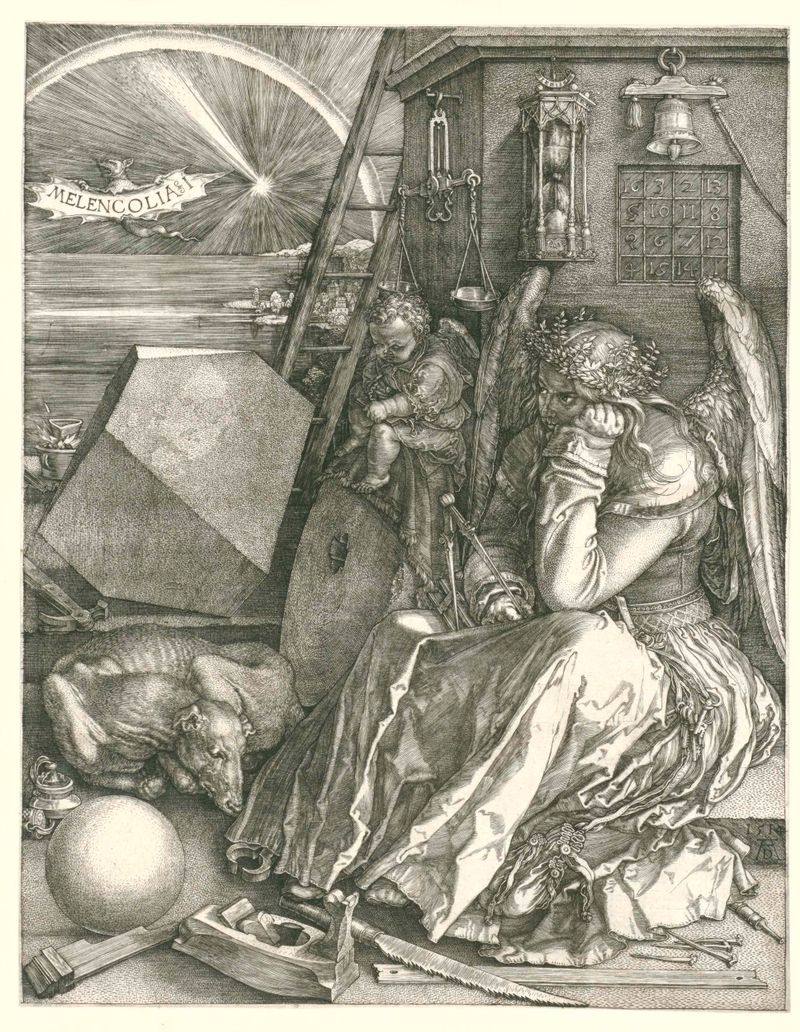
Melancholia
Albrecht Dürer
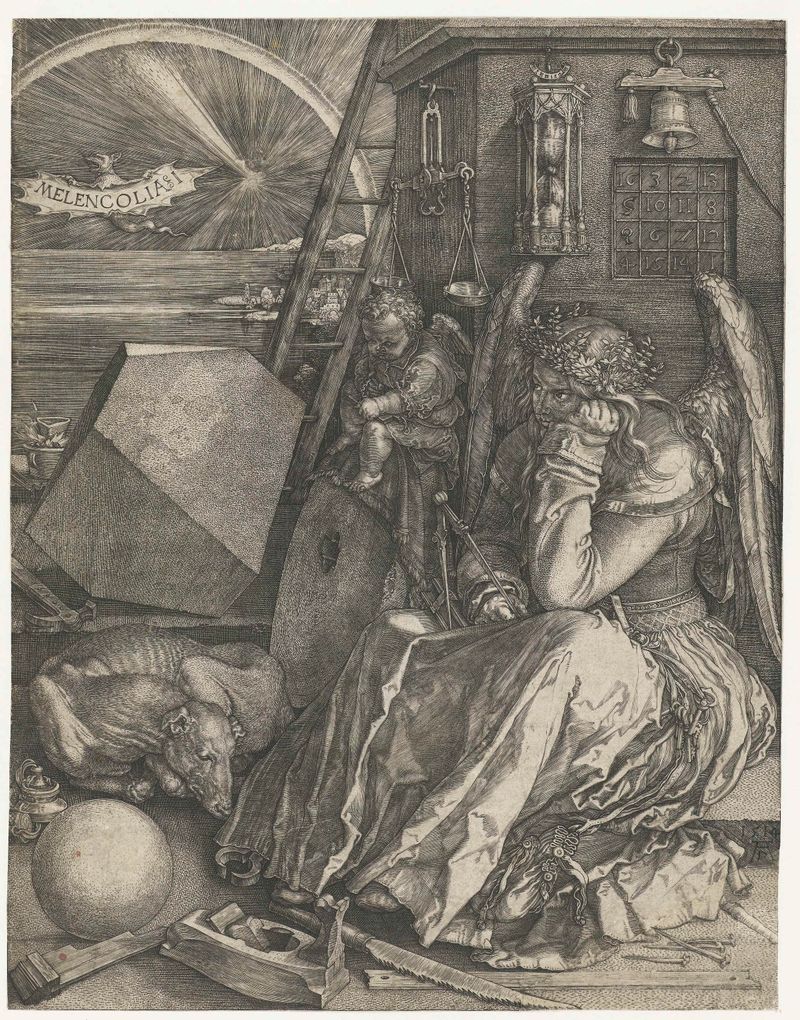
Melancholie
Albrecht Dürer
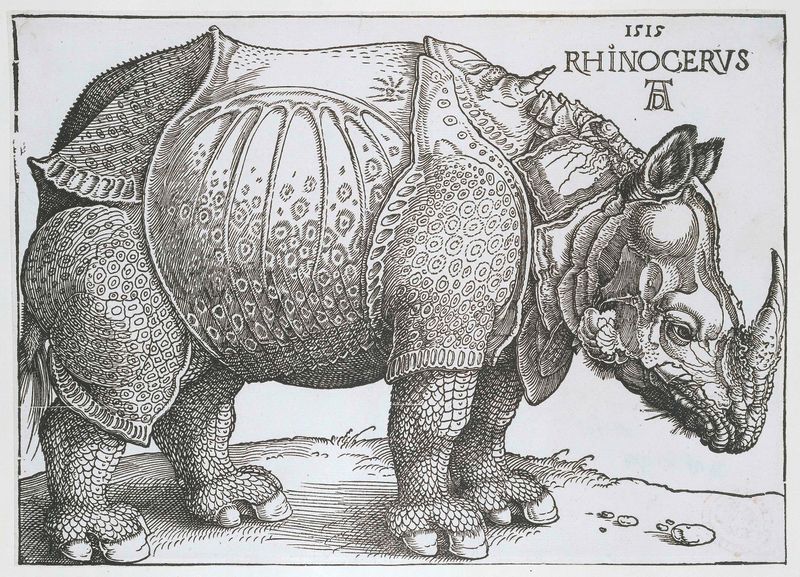
Neushoorn
Albrecht Dürer
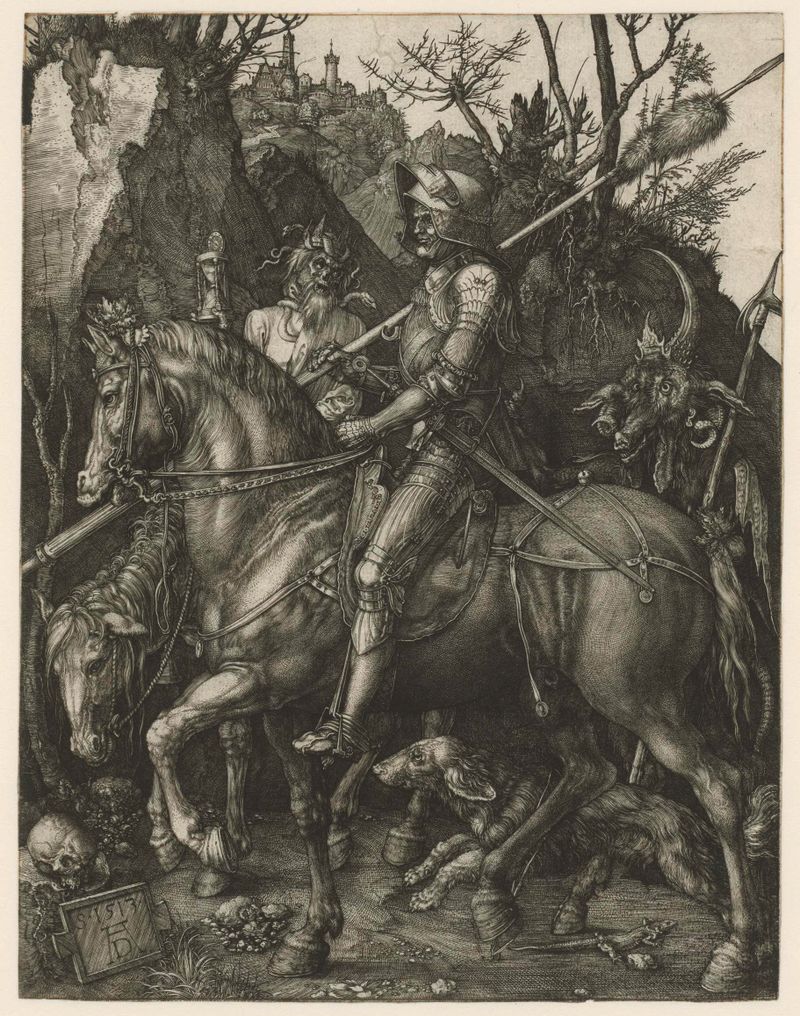
Knight, Death, and the Devil
Albrecht Dürer

De vier ruiters van de apocalyps
Albrecht Dürer

De vier ruiters van de apocalyps
Albrecht Dürer
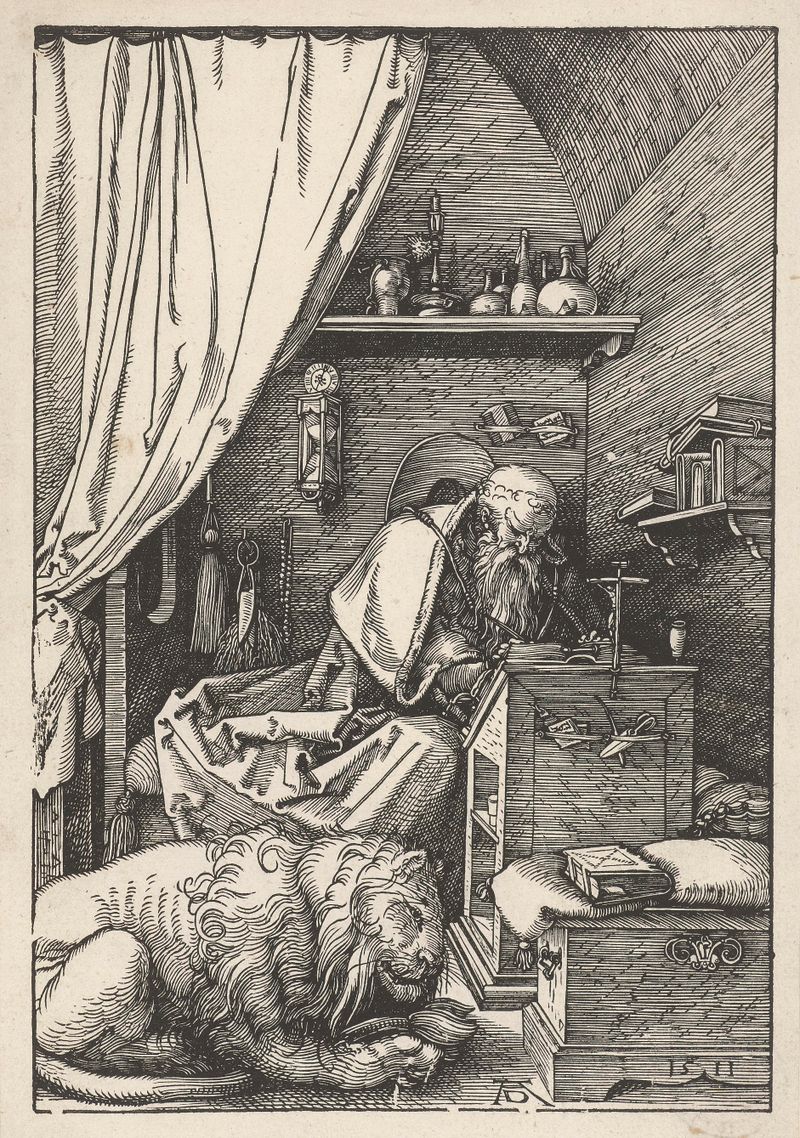
De Heilige Hiëronymus in zijn studeervertrek
Albrecht Dürer
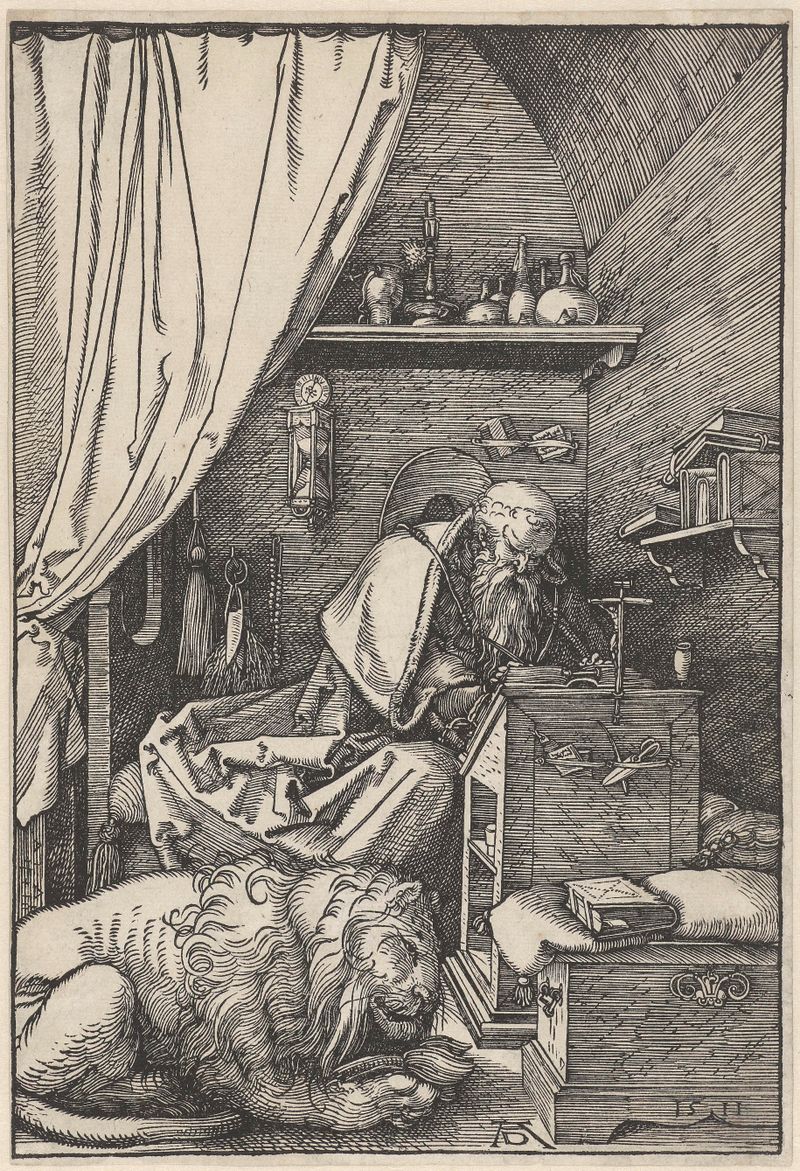
De Heilige Hiëronymus in zijn studeervertrek
Albrecht Dürer
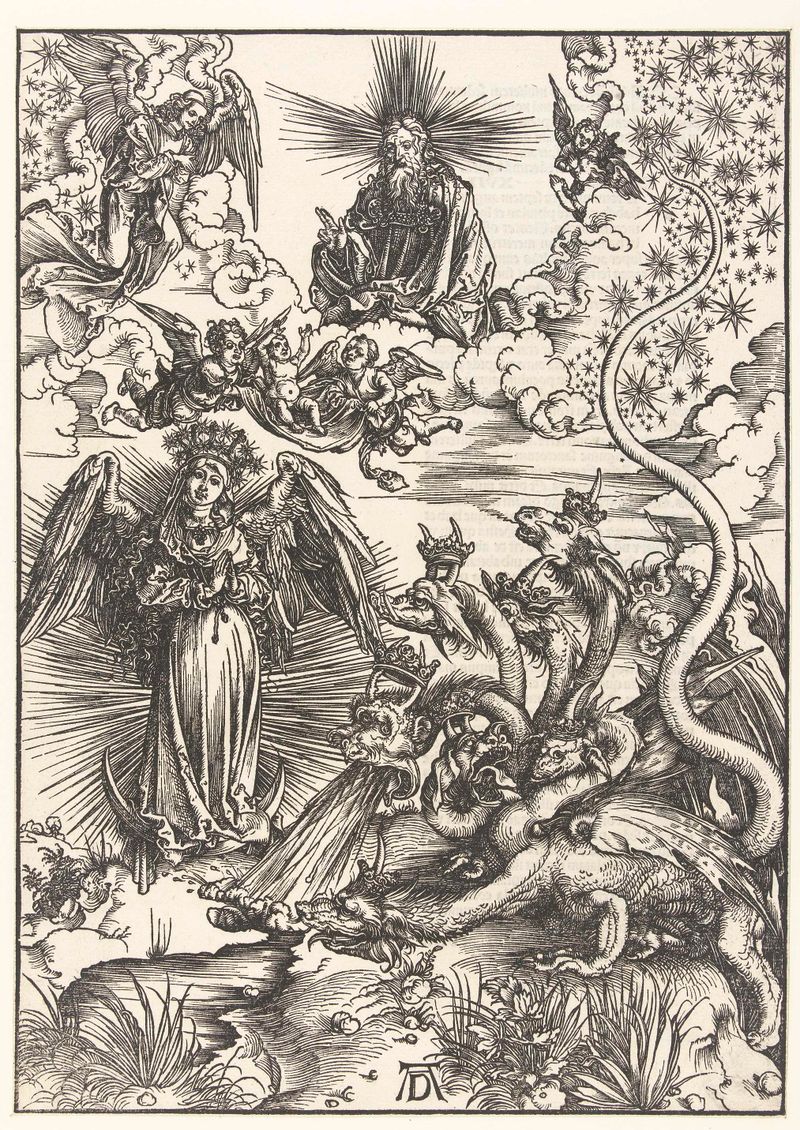
De apocalyptische vrouw en de zevenkoppige draak
Albrecht Dürer
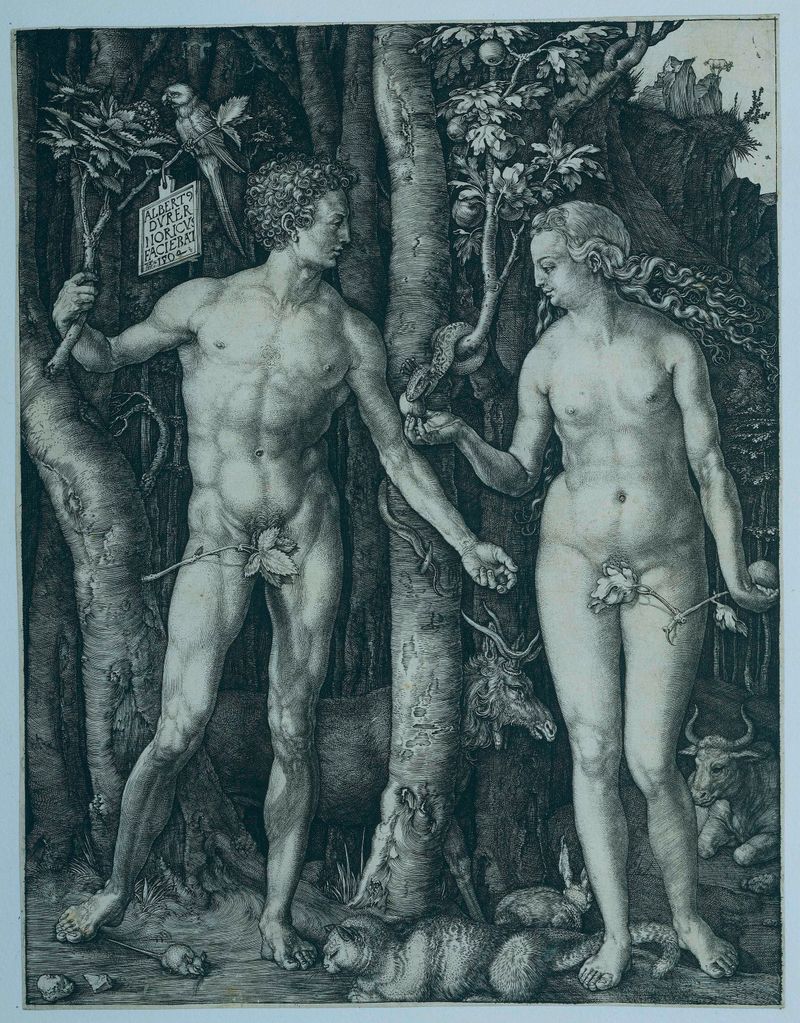
Adam en Eva
Albrecht Dürer
More Religious Art
Browse all →
The Return of the Prodigal Son
Rembrandt van Rijn

The Garden of Earthly Delights
El Bosco

Count Orgaz’ funeral
El Greco

The Hundred Guilder Print: the central piece with Christ preaching, the plate arched
Rembrandt van Rijn

The Descent from the Cross
Rogier van der Weyden

The return of the prodigal son
Rembrandt van Rijn