
De brug over de IJssel bij Doesburg — History & Facts
Is this a mirror — or a memory? In the serene landscape that unfolds before us, one can almost feel the gentle whisper of the wind and the soft caress of sunlight on the water’s surface. Look to the center of the canvas, where a delicate bridge stretches gracefully across the river, inviting us to traverse its span. The gentle blues of the water reflect the sky above, while the surrounding greenery offers a lush contrast, creating a symphony of color. Notice how the brushwork softly blends the hues, evoking a sense of harmony and tranquility that permeates the scene.
The careful arrangement of trees on either side frames the bridge, guiding the eye and suggesting a pause in time. Beneath the surface of this idyllic view lies a contrast between nature's enduring beauty and the subtle human intrusion of the bridge. The bridge stands not merely as a structure but as a symbol of connection—between people, places, and moments. There is also a palpable stillness; the lack of human presence allows for introspection, inviting the viewer to reflect on their own journey across life's bridges.
This quiet tension between progress and preservation plays a significant role in the overall serenity conveyed. Willem Roelofs painted this landscape in 1889 while living in the Netherlands, amidst a growing fascination with capturing natural scenery. During this period, the artist was part of the Hague School, which emphasized realistic depictions of everyday life and the interplay of light and environment. Roelofs’ work reflects both a personal connection to the landscape and a broader artistic movement seeking to portray the beauty of the natural world.
More Artworks by Willem Roelofs
Browse all →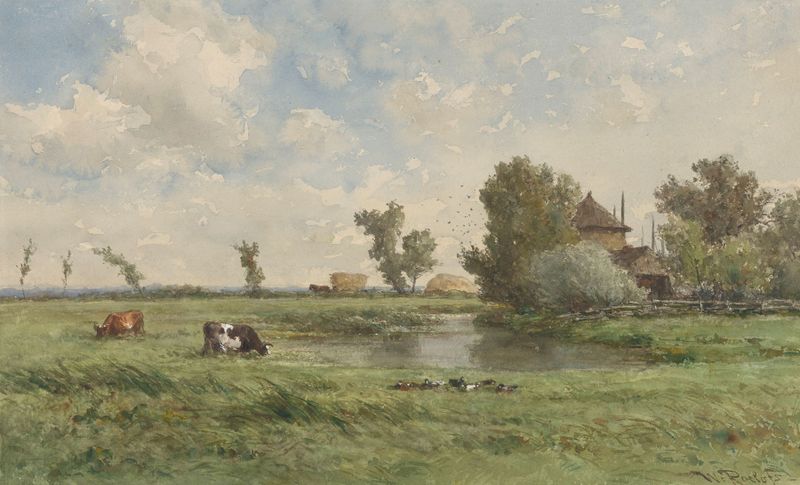
Weiland met koeien
Willem Roelofs
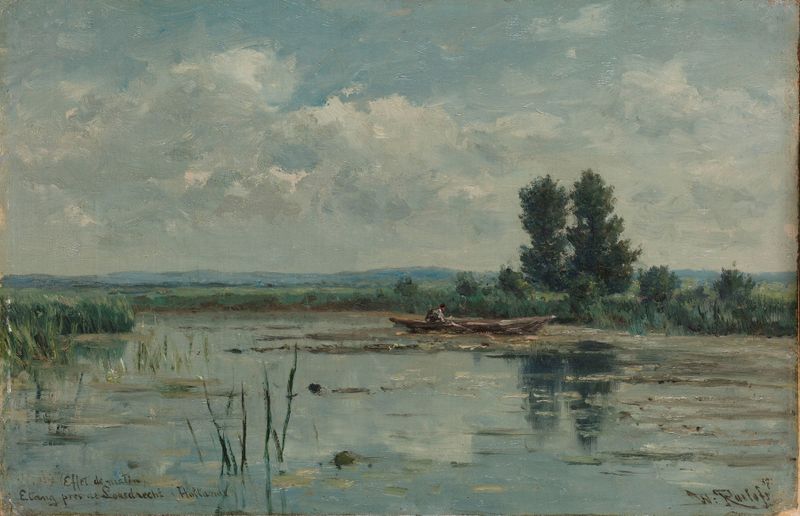
Lake near Loosdrecht
Willem Roelofs
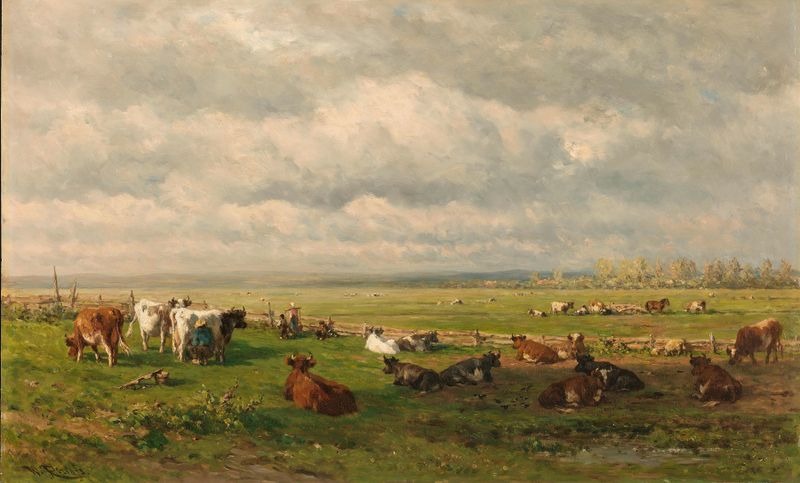
Meadow Landscape with Cattle
Willem Roelofs
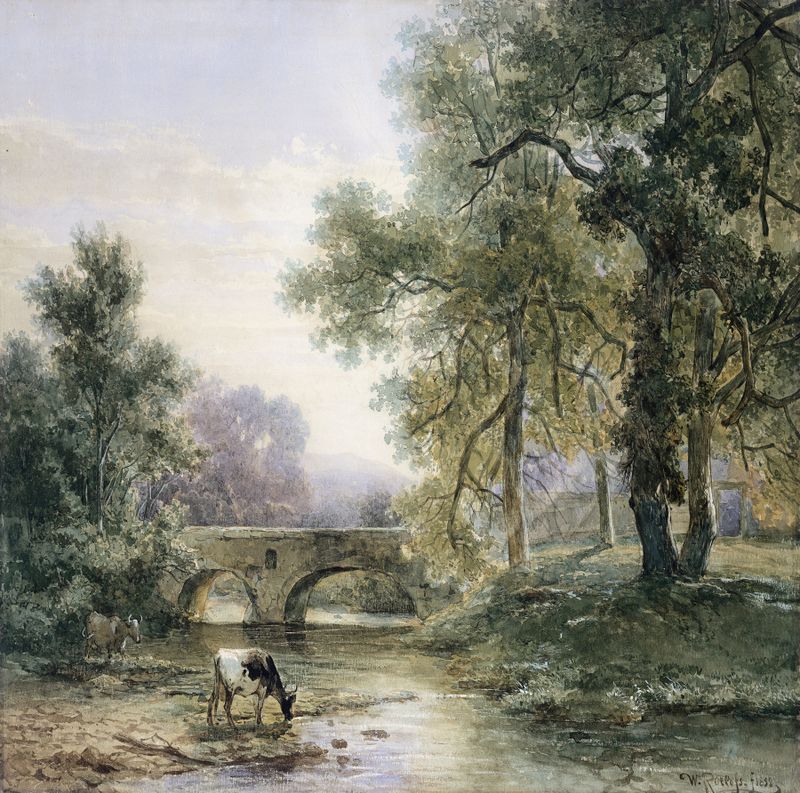
Boomrijk landschap met stenen brug over een rivier
Willem Roelofs
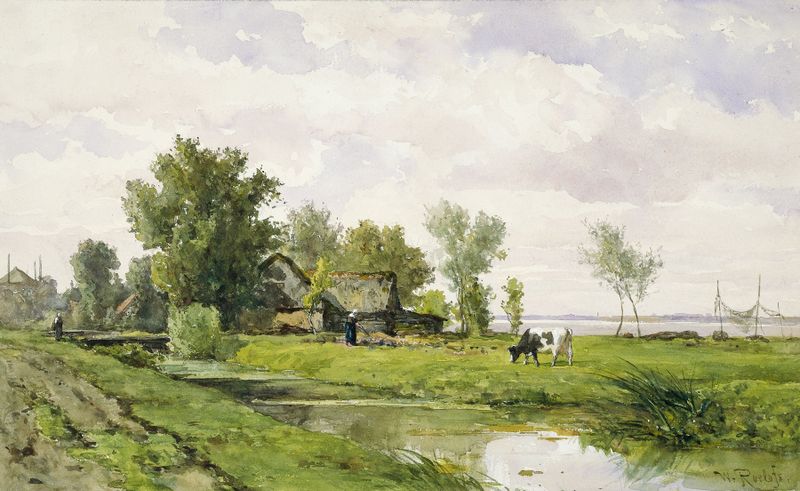
Farmhouse by a Ditch
Willem Roelofs
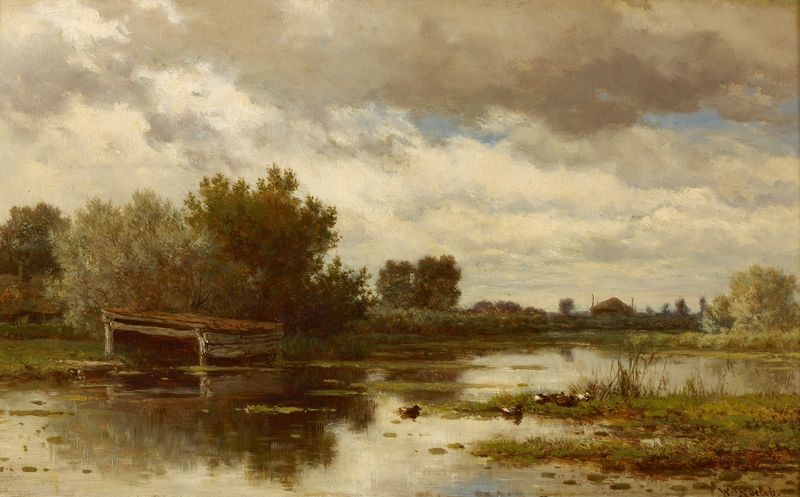
Landschap met moeras
Willem Roelofs
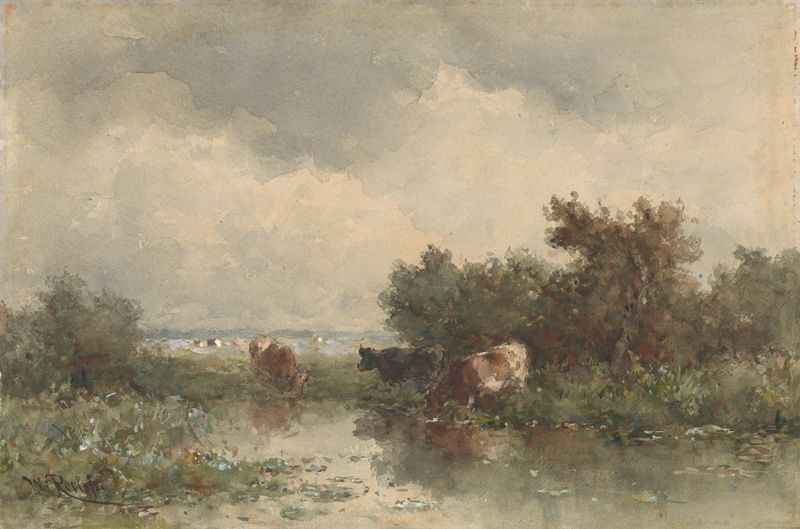
Drie koeien aan een plas
Willem Roelofs
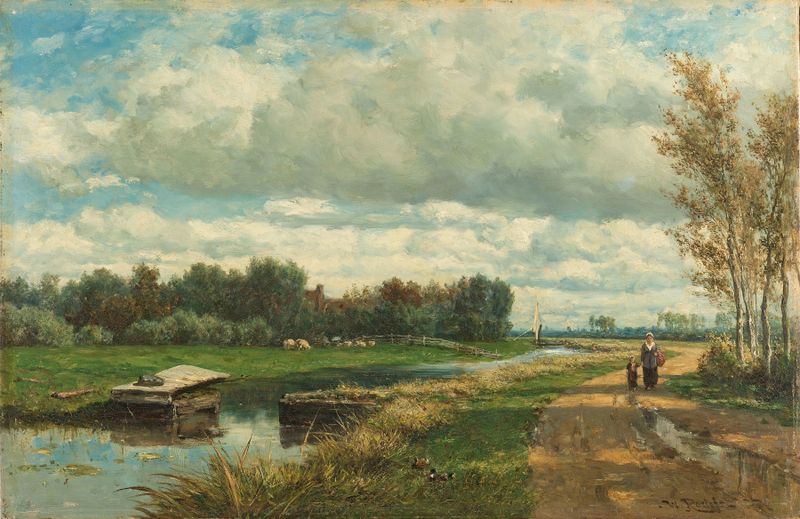
Landscape in the Environs of The Hague
Willem Roelofs
Landschap met boerderij en vee
Willem Roelofs
Seascape near Heijst
Willem Roelofs





