
Landschap met boerderij en vee — History & Facts
Can beauty exist without sorrow? In the tranquil embrace of nature, silence speaks volumes, inviting contemplation and reflection. Focus on the vast landscape filled with gentle hills that cradle a quaint farmhouse, nestled amongst grazing cattle. The soft hues of green and amber dominate the scene, illuminated by the warm, golden light of late afternoon. Notice how the sunlight filters through the clouds, casting delicate shadows that bring depth to the sprawling fields.
The meticulous brushwork reveals a sense of harmony, where every blade of grass and every cloud is rendered with care, evoking a serene stillness. Beneath the surface, the painting encapsulates a tension between pastoral beauty and the inevitability of change. The calmness of the scene is juxtaposed with the fleeting nature of time, hinting at the transient existence of rural life. The figures, though small in scale, represent the connection to land and heritage, yet their anonymity reminds us of the loneliness that often accompanies such beauty.
The silence of the setting, while peaceful, carries an undercurrent of nostalgia, suggesting that these moments are both cherished and ephemeral. Willem Roelofs painted this work in 1849 during a period of profound transformation in the Netherlands, where industrialization was beginning to reshape the countryside. Living in The Hague, he sought to capture the beauty of rural landscapes before they vanished. This piece reflects his dedication to plein air painting and the celebration of a pastoral life that was rapidly changing, showcasing his role in the Dutch Romantic movement.
More Artworks by Willem Roelofs
Browse all →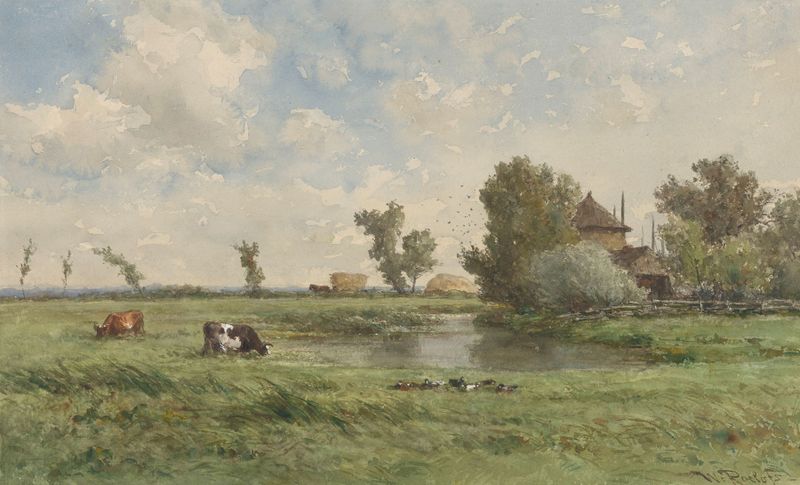
Weiland met koeien
Willem Roelofs
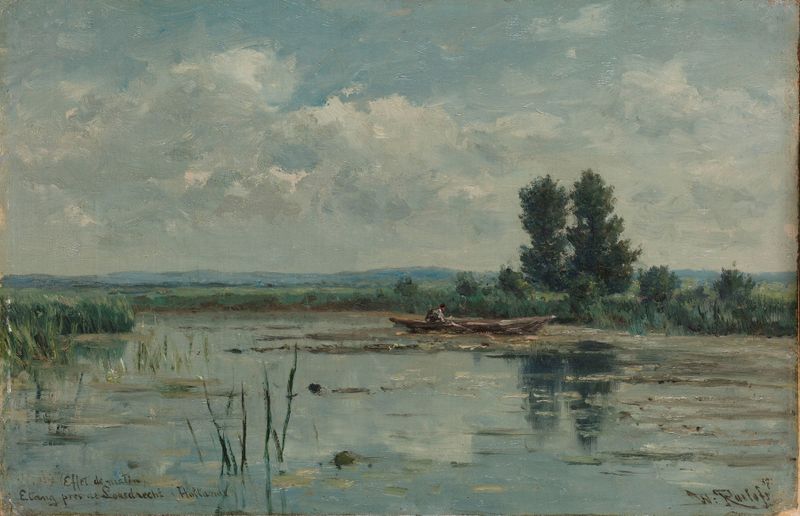
Lake near Loosdrecht
Willem Roelofs
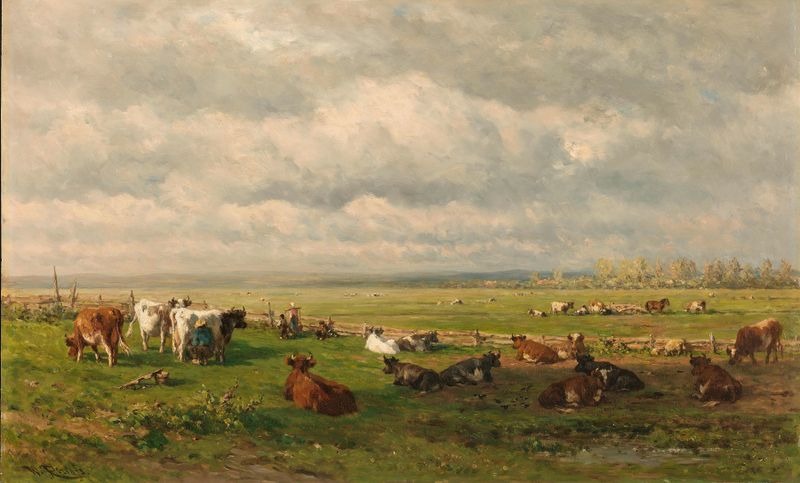
Meadow Landscape with Cattle
Willem Roelofs
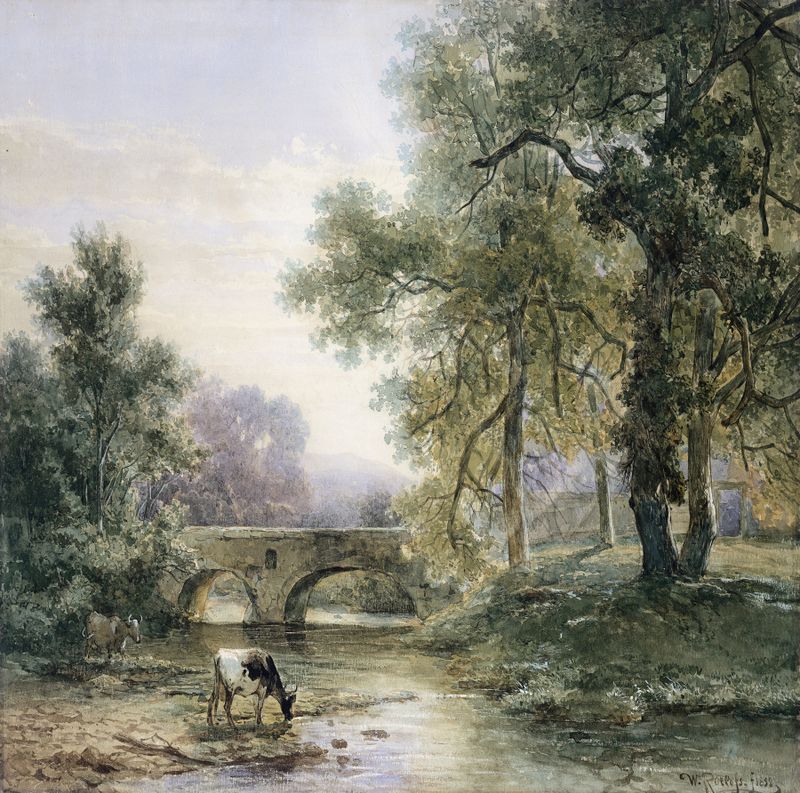
Boomrijk landschap met stenen brug over een rivier
Willem Roelofs
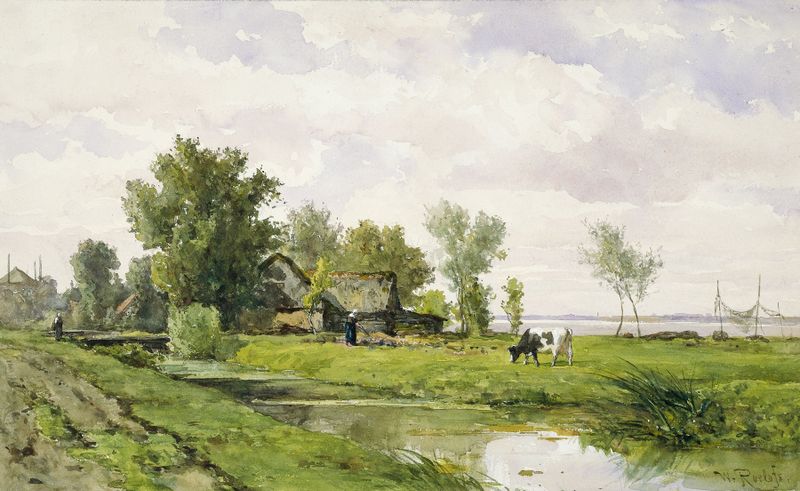
Farmhouse by a Ditch
Willem Roelofs
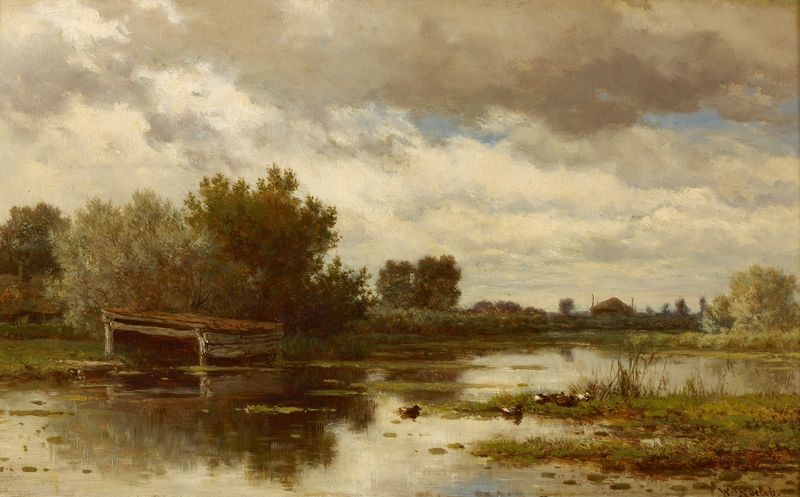
Landschap met moeras
Willem Roelofs
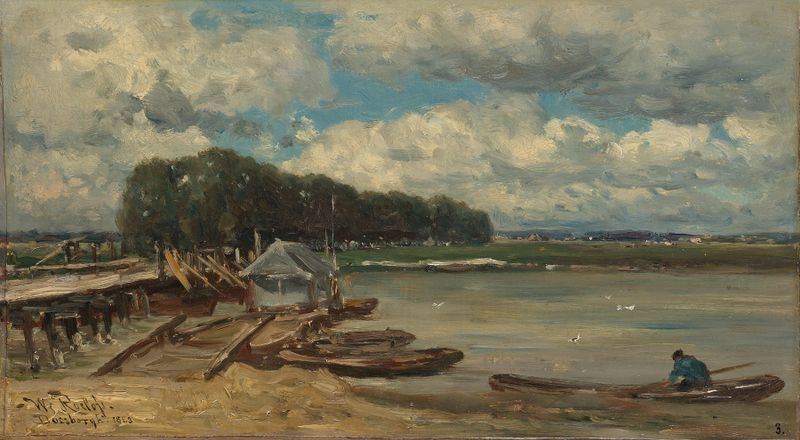
De brug over de IJssel bij Doesburg
Willem Roelofs
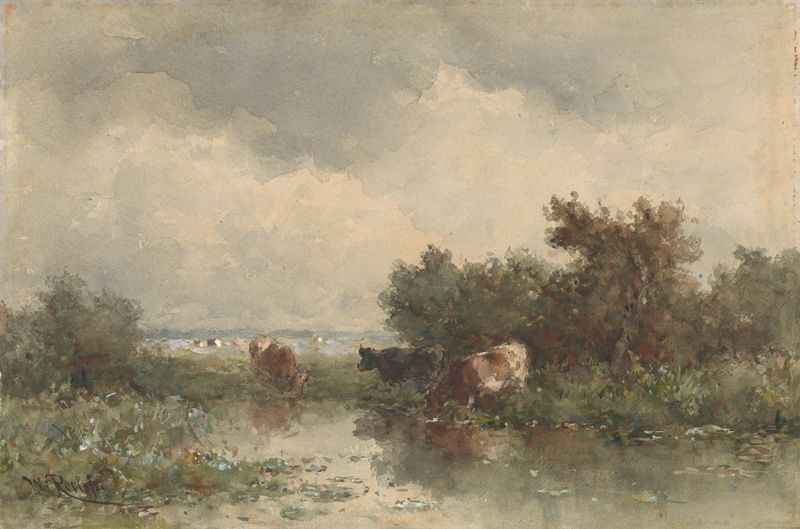
Drie koeien aan een plas
Willem Roelofs
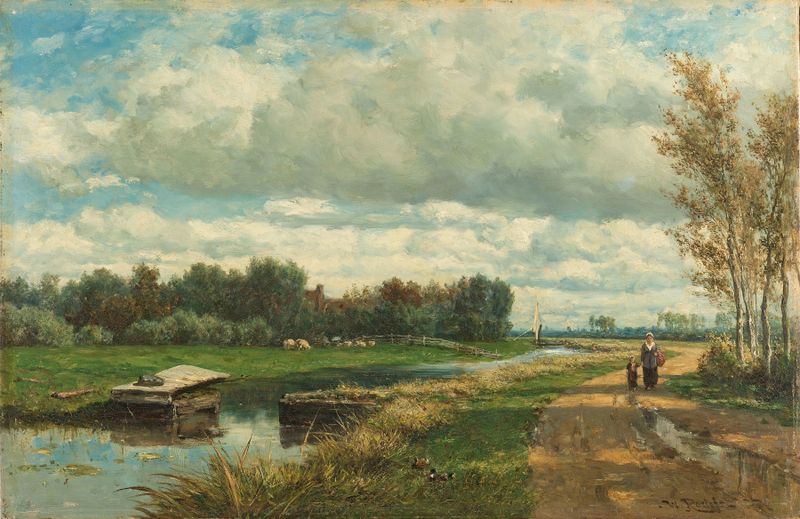
Landscape in the Environs of The Hague
Willem Roelofs
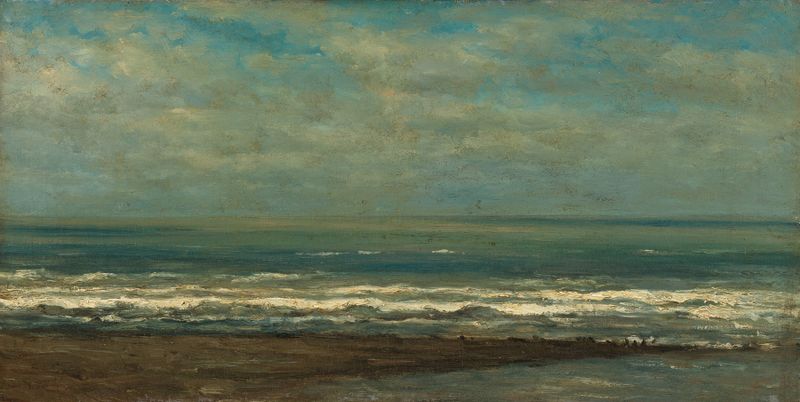
Seascape near Heijst
Willem Roelofs





