
Landschap met moeras — History & Facts
Can beauty exist without sorrow? In Landschap met moeras, the delicate interplay of vibrant colors and subdued tones invites us to ponder the fragility of innocence amidst nature’s complex tapestry. Look to the foreground where lush greenery flourishes, a testament to life’s unyielding spirit. Notice how the light gently bathes the scene, casting shadows that resonate with both warmth and melancholy. Roelofs masterfully employs a palette of soft greens and earthy browns, guiding the viewer's gaze toward the still waters of the marsh, which reflect the ephemeral beauty of the sky.
The composition is balanced yet dynamic, drawing you in and encouraging an exploration of the tranquil yet brooding landscape. Deeper insights emerge as you contemplate the marsh's enigmatic stillness. The juxtaposition of the vibrant flora against the muted waters reveals a tension between vitality and the inevitable passage of time. Here, innocence resides not only in the beauty of nature but also in the quiet acknowledgment of its transience.
Small details, like the gentle ripples in the water, evoke the idea that even in moments of serene beauty, there lies an undercurrent of sorrow. Willem Roelofs painted Landschap met moeras in 1837 during a period of burgeoning Romanticism in Europe. Living in the Netherlands, he was deeply influenced by the natural landscapes around him, reflecting a shift toward an emotional engagement with nature in art. This painting aligns with the era's fascination with capturing the sublime, celebrating both the wonder and the fragility of the world.
More Artworks by Willem Roelofs
Browse all →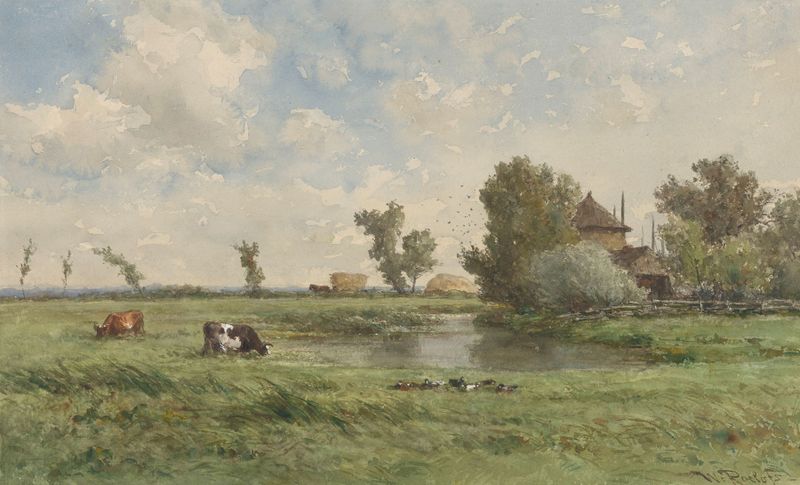
Weiland met koeien
Willem Roelofs
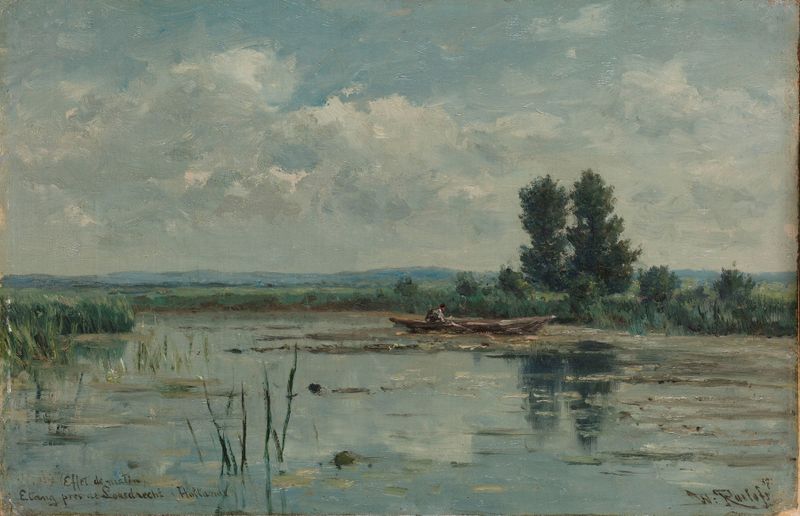
Lake near Loosdrecht
Willem Roelofs
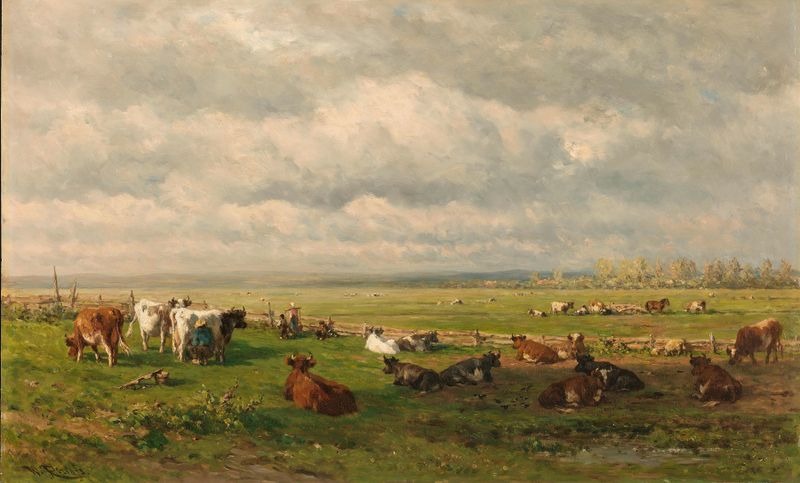
Meadow Landscape with Cattle
Willem Roelofs
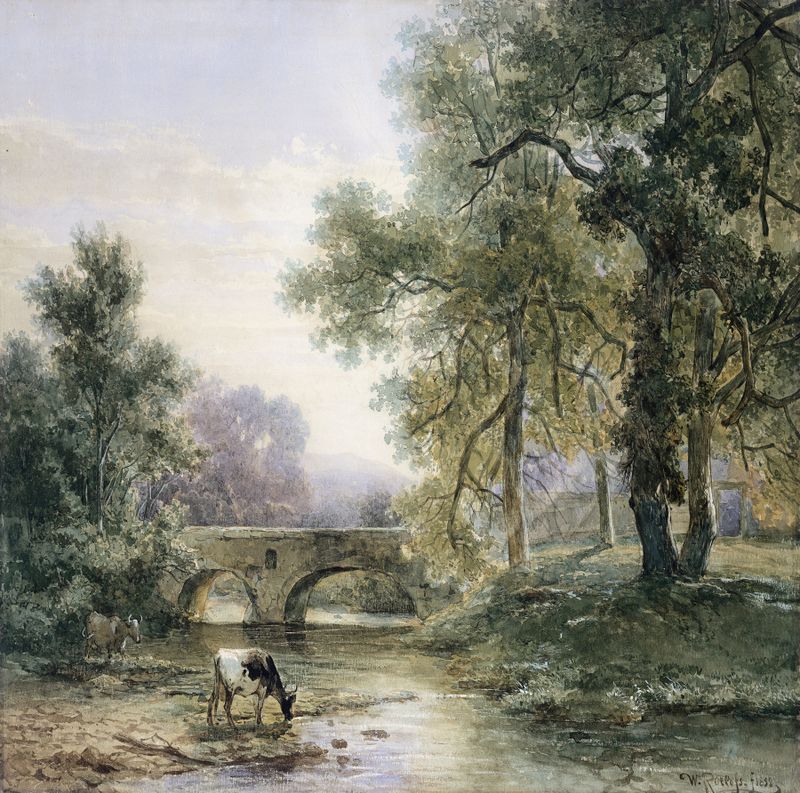
Boomrijk landschap met stenen brug over een rivier
Willem Roelofs
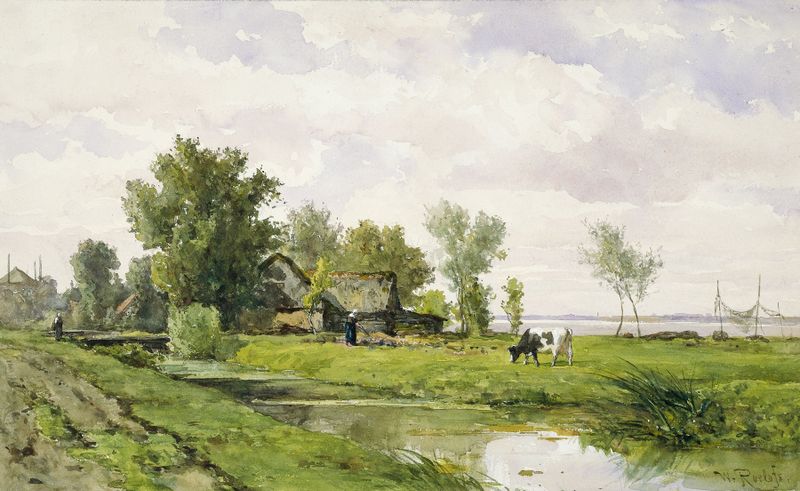
Farmhouse by a Ditch
Willem Roelofs
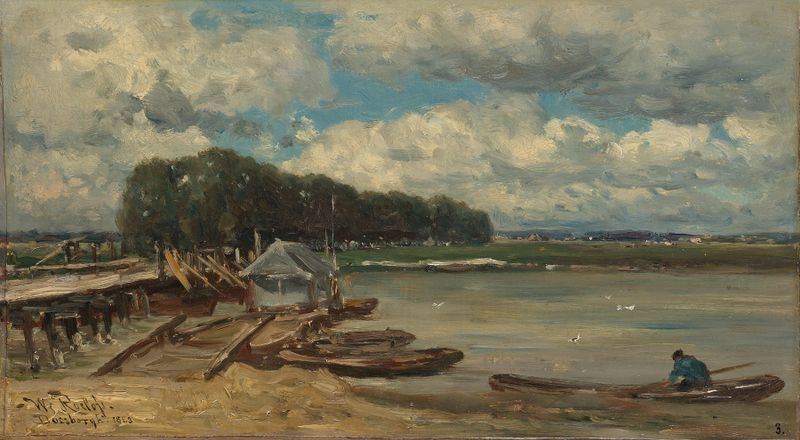
De brug over de IJssel bij Doesburg
Willem Roelofs
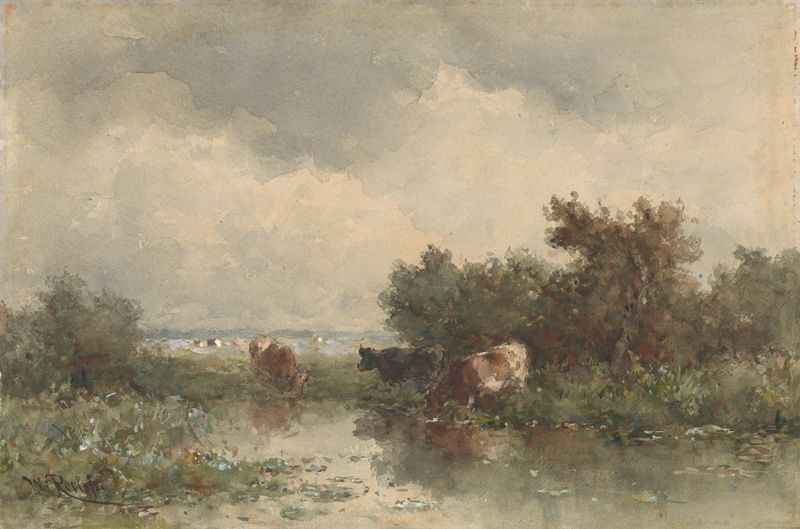
Drie koeien aan een plas
Willem Roelofs
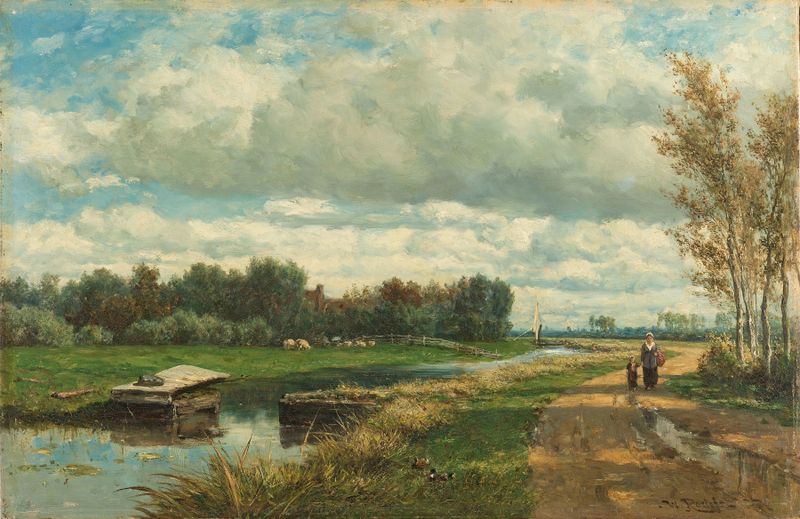
Landscape in the Environs of The Hague
Willem Roelofs
Landschap met boerderij en vee
Willem Roelofs
Seascape near Heijst
Willem Roelofs





