
Farmhouse by a Ditch — History & Facts
Could a single brushstroke hold eternity? In Farmhouse by a Ditch, the fleeting beauty of rural life is captured within a moment that feels both intimate and expansive. It invites the viewer to ponder the layers of reality woven into each stroke, revealing the illusion of life and its transience. Focus on the vibrant greens of the fields spilling into the foreground, contrasted by the earthy browns of the farmhouse. Look closely at the way the light dances across the ditch, reflecting a shimmering palette of blues and yellows.
The placement of the building, slightly off-center, creates a natural tension that draws the eye, while the broad, sweeping strokes evoke a lively atmosphere, as if the landscape is breathing alongside the viewer. The juxtaposition of the sturdy farmhouse against the fluidity of the ditch speaks to the intricate balance between permanence and change. Notice how the gentle curves of the water suggest movement, contrasting with the solidity of the structure, which stands firm against the passage of time. This interplay of elements invites a contemplation of rural existence — the connection to land and the inevitability of nature's cycles. Painted between 1875 and 1880 during a time of great experimentation within the art world, Roelofs was deeply influenced by the evolving techniques of the Dutch landscape tradition.
Living in the Netherlands, he found himself amidst the rise of Impressionism, a movement that would redefine perceptions of light and color. This period of artistic change allowed him to explore new expressive possibilities, culminating in works that resonate with both nostalgia and the ephemeral beauty of everyday life.
More Artworks by Willem Roelofs
Browse all →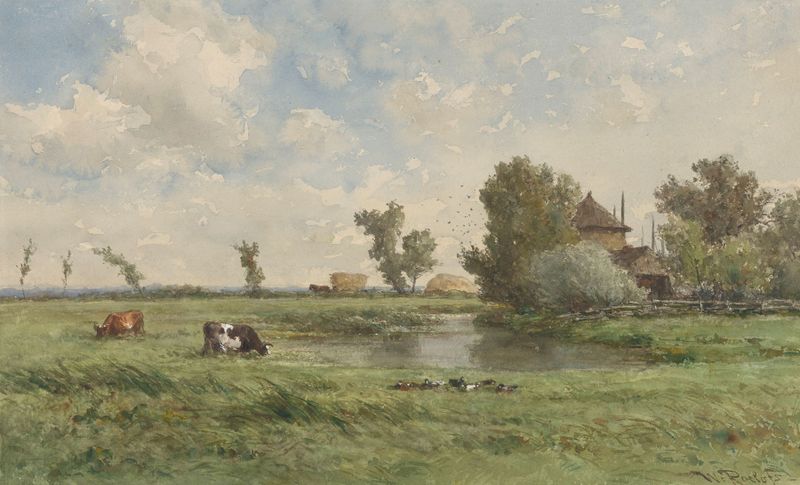
Weiland met koeien
Willem Roelofs
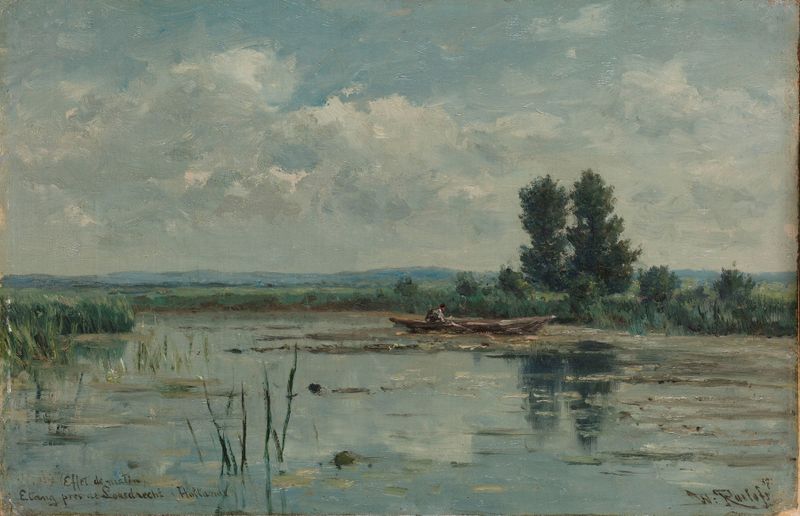
Lake near Loosdrecht
Willem Roelofs
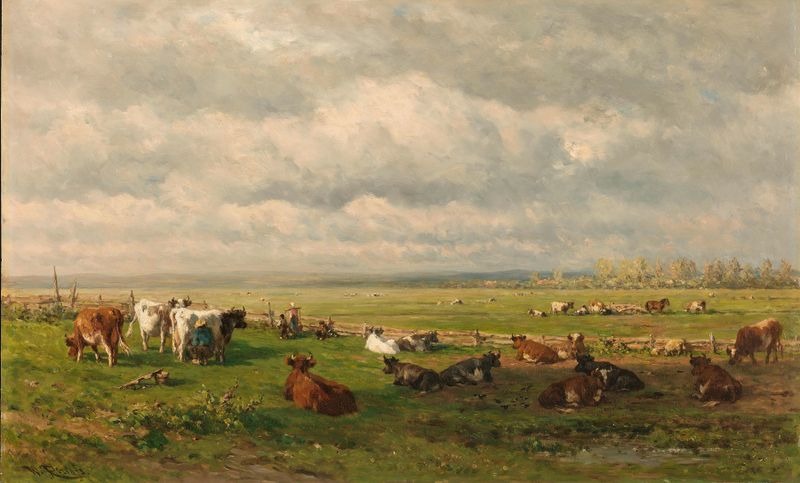
Meadow Landscape with Cattle
Willem Roelofs
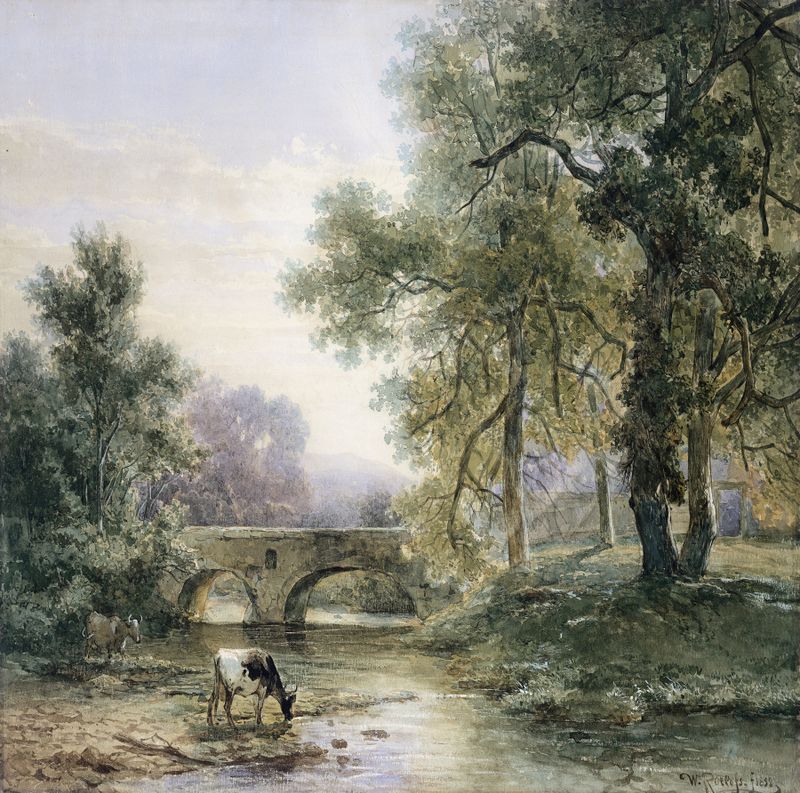
Boomrijk landschap met stenen brug over een rivier
Willem Roelofs
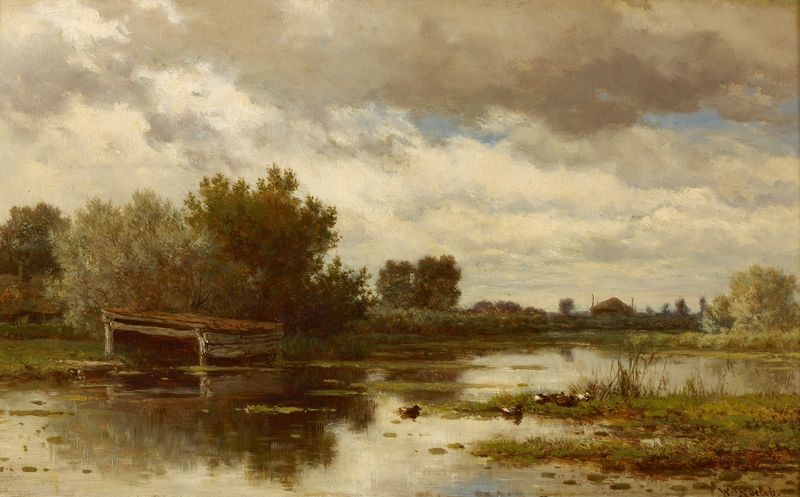
Landschap met moeras
Willem Roelofs
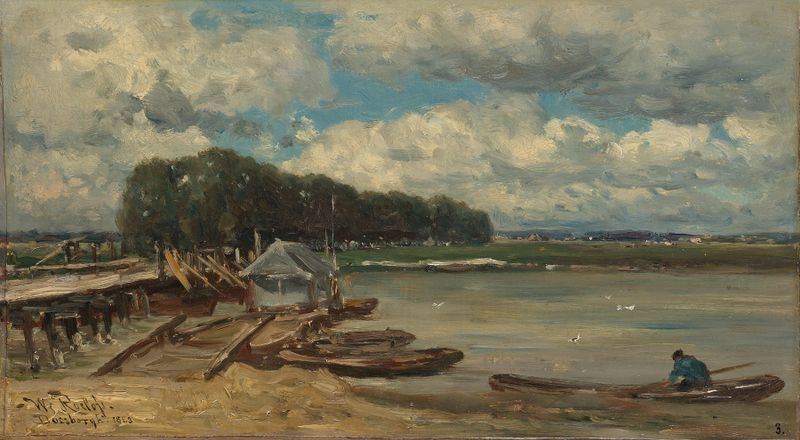
De brug over de IJssel bij Doesburg
Willem Roelofs
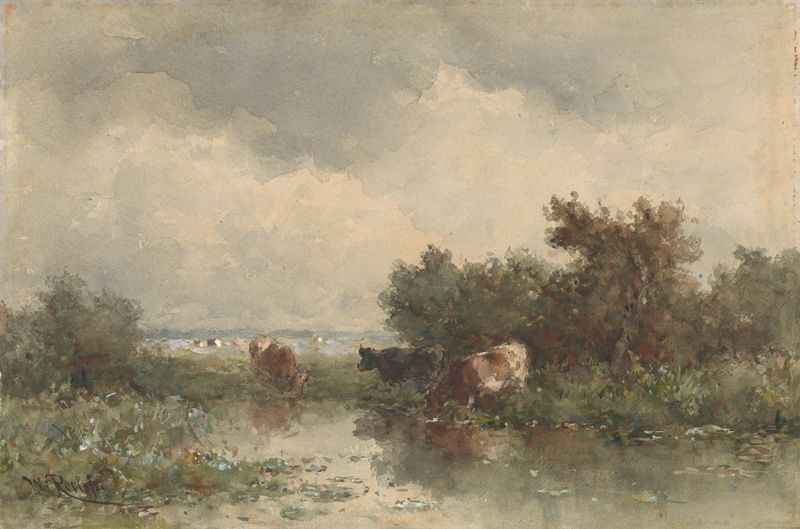
Drie koeien aan een plas
Willem Roelofs
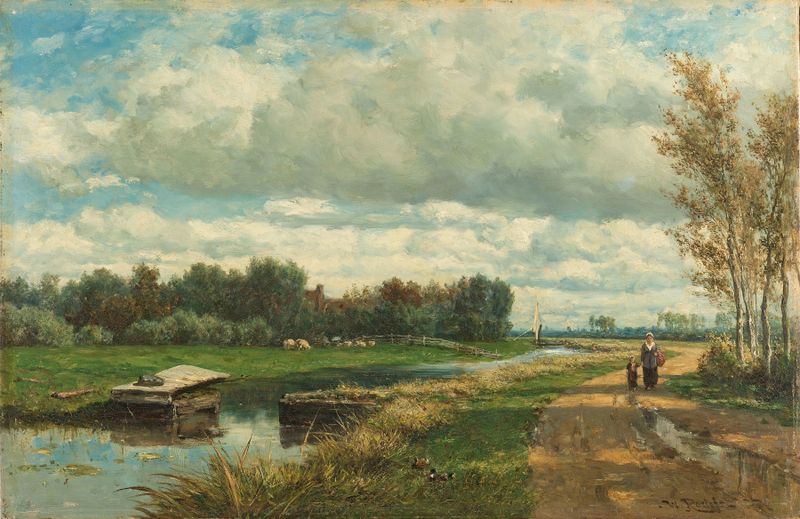
Landscape in the Environs of The Hague
Willem Roelofs
Landschap met boerderij en vee
Willem Roelofs
Seascape near Heijst
Willem Roelofs





