Drie koeien aan een plas — History & Facts
In Drie koeien aan een plas, emptiness speaks louder than the figures that populate the canvas. Look to the center, where three cows stand by a tranquil pool, their reflections merging with the water’s surface. The gentle brushstrokes and muted earth tones create a sense of serenity, yet the surrounding landscape feels vast and uninhabited. The soft light spills over the scene, casting delicate shadows that highlight the gentle contours of the cows, inviting the viewer to pause and breathe. Beneath the surface calm lies a poignant tension — the isolation of the cows against the expansive backdrop evokes a feeling of longing and solitude.
The tranquil water, acting as a mirror, reflects not just the animals, but also an absence, a reminder of the silence that envelops them. The composition captures a moment frozen in time, illustrating the contrast between life and the emptiness of the surrounding fields. Willem Roelofs created this piece during the late 19th century, a period marked by a shift toward realism in the Dutch art scene. Living in the Netherlands during a time of industrial change, he sought to capture the quiet beauty of rural life, emphasizing the harmony found in nature.
This painting reflects his deep appreciation for the simplicity of pastoral scenes amidst a rapidly evolving world, allowing viewers to connect with the profound stillness that resides in the natural environment.
More Artworks by Willem Roelofs
Browse all →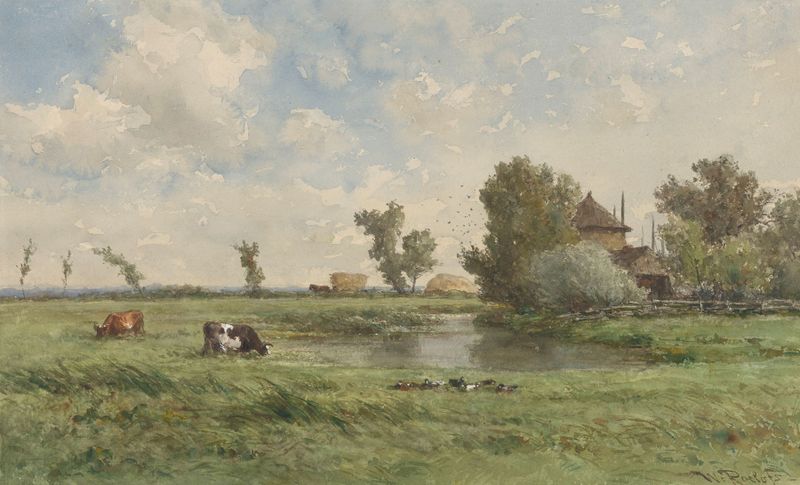
Weiland met koeien
Willem Roelofs
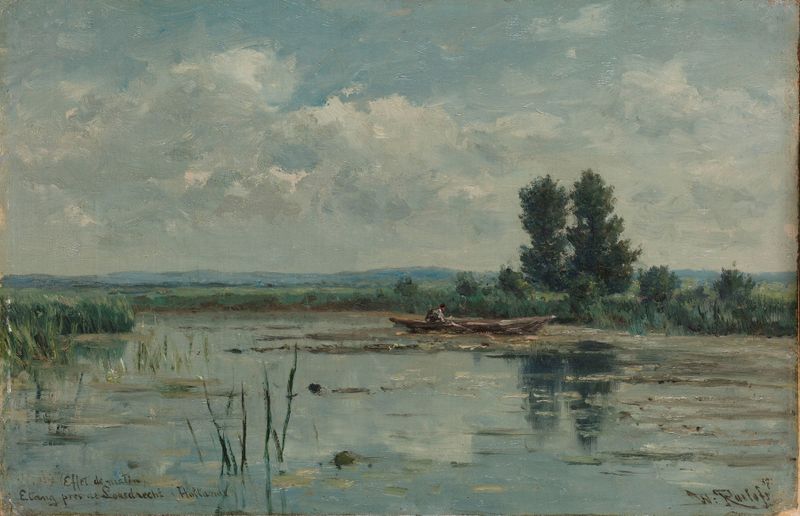
Lake near Loosdrecht
Willem Roelofs
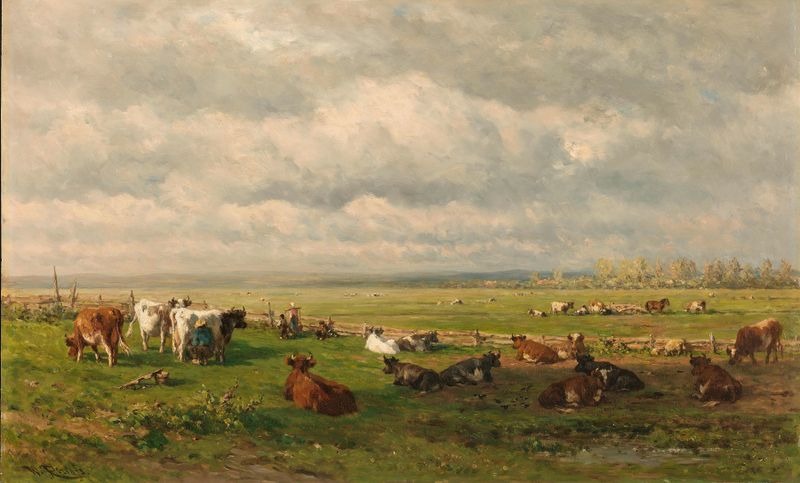
Meadow Landscape with Cattle
Willem Roelofs
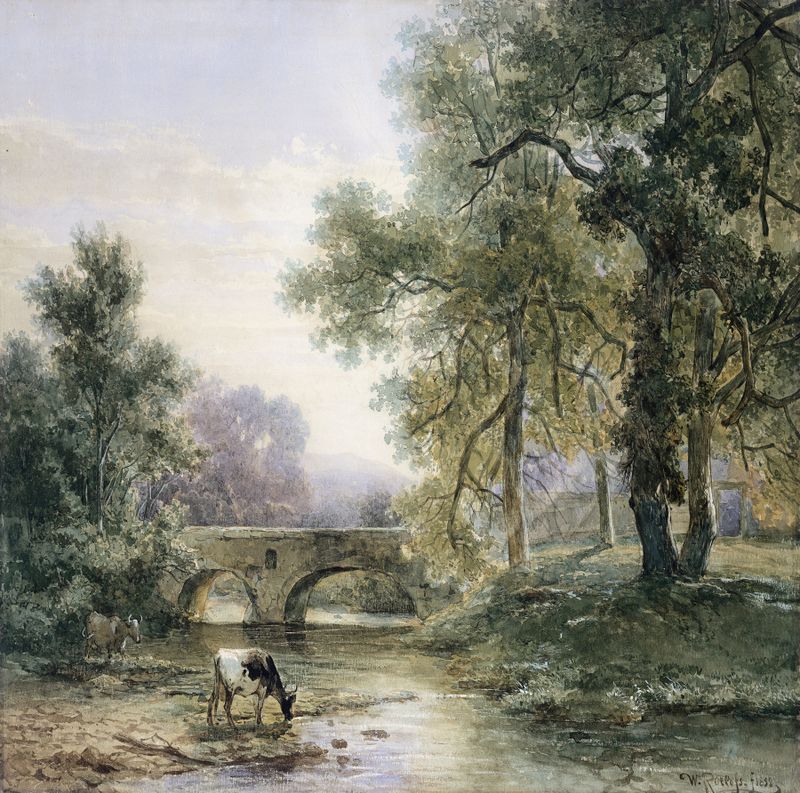
Boomrijk landschap met stenen brug over een rivier
Willem Roelofs
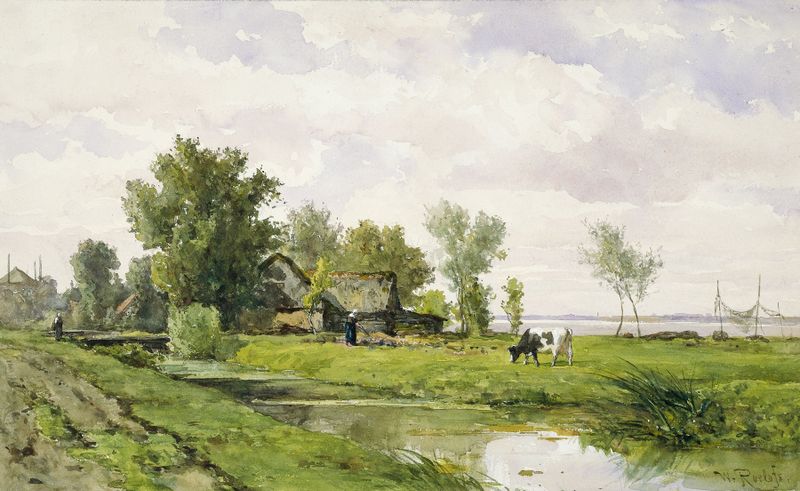
Farmhouse by a Ditch
Willem Roelofs
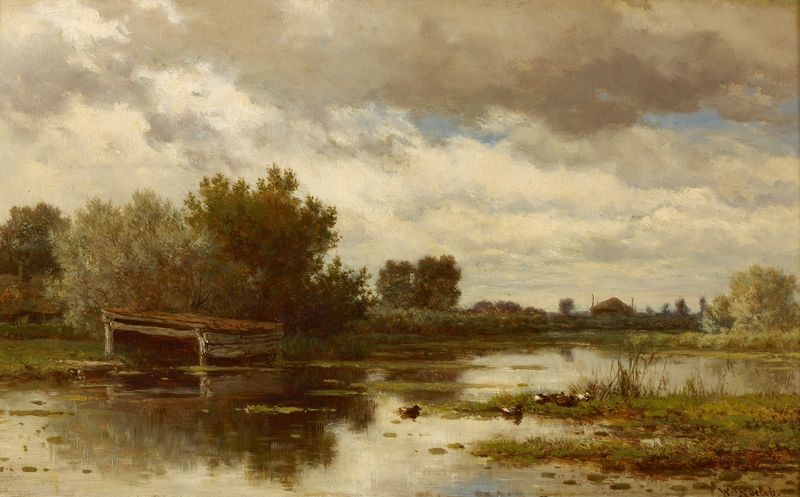
Landschap met moeras
Willem Roelofs
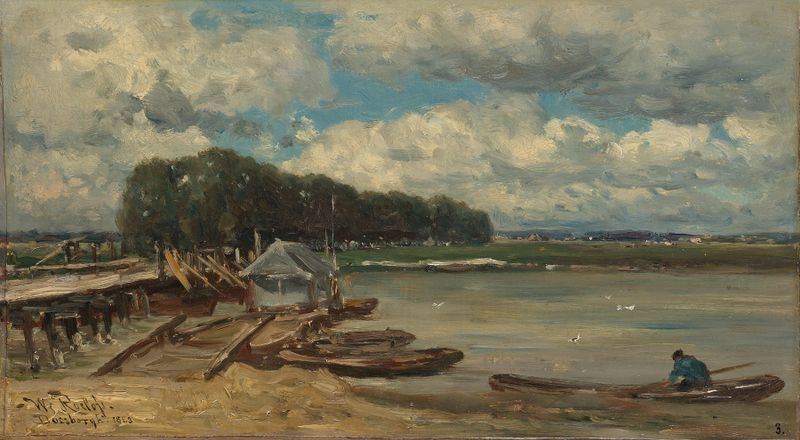
De brug over de IJssel bij Doesburg
Willem Roelofs
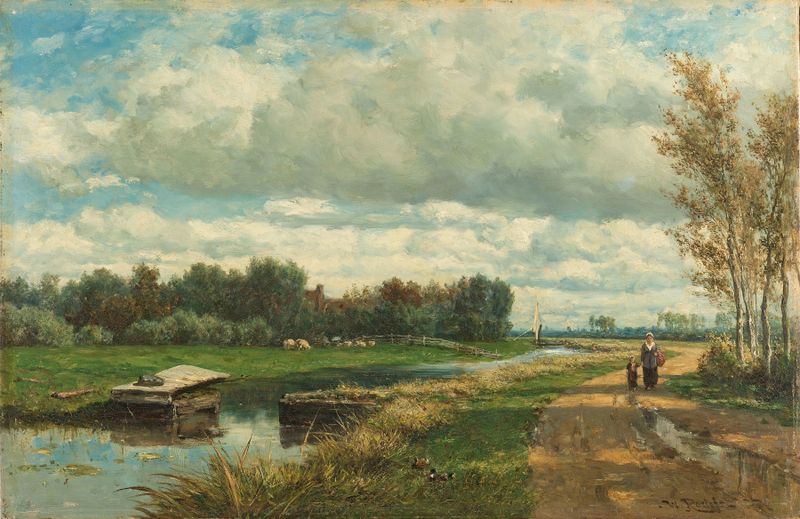
Landscape in the Environs of The Hague
Willem Roelofs
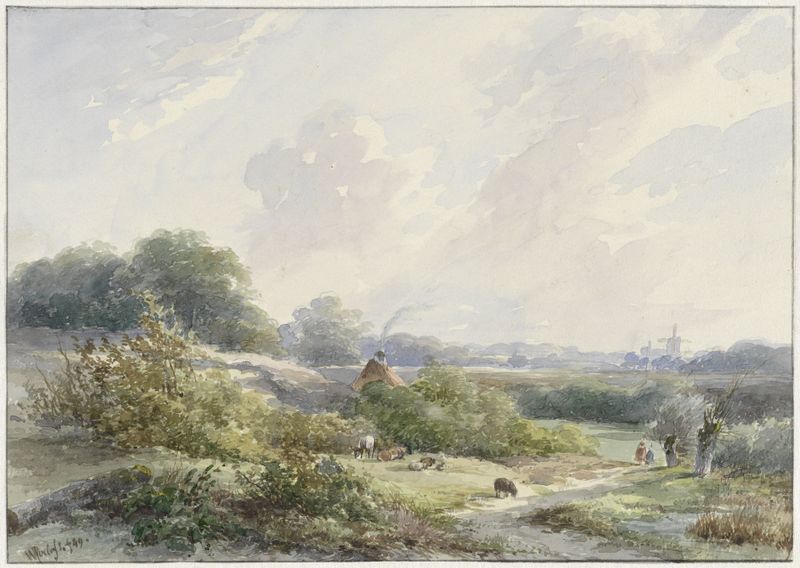
Landschap met boerderij en vee
Willem Roelofs
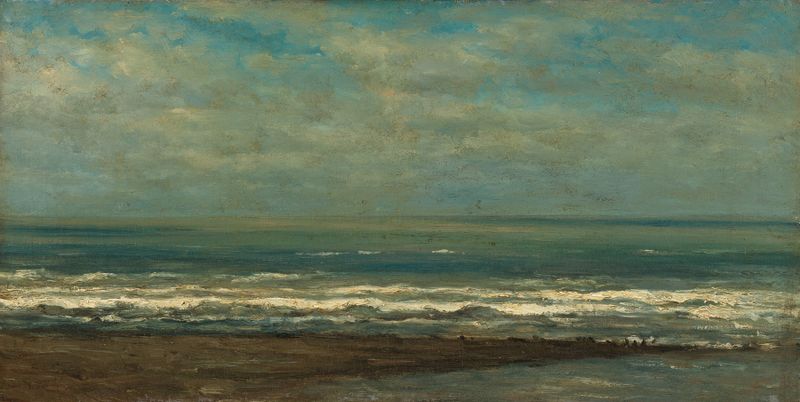
Seascape near Heijst
Willem Roelofs