
De daken van Oostende — History & Facts
In the subtle interplay of light and shadow, longing finds its expression amidst the rooftops and chimneys of a coastal town. Look to the top left, where textured rooftops glisten under a veil of luxurious gold and muted blues. The brushwork is both delicate and vigorous, capturing the roughness of the buildings while simultaneously inviting a sense of warmth. As your gaze wanders across the canvas, notice how the colors shift from earthy tones to ethereal whispers of sky, revealing a world suspended between reality and dream.
Ensor’s choice of palette evokes nostalgia, a bittersweet longing for moments lost to time. Deeper in this scene lie emotional contrasts that resonate with the viewer. The angular structures, rigid and defined, stand in stark opposition to the fluidity of the horizon, representing the tension between confinement and freedom. This duality hints at an unfulfilled desire, as if the rooftops yearn to break free and touch the infinite beyond.
Further, the absence of figures amplifies this sense of isolation, suggesting that longing itself is a solitary experience. In 1900, the artist created this work in his hometown, Ostend, a place where he often grappled with personal and artistic transitions. During this time, Ensor was exploring themes of identity and society, moving away from his earlier, more macabre subjects. The world of art was evolving, and he was beginning to embrace modernism, seeking to express complex emotional landscapes that mirrored his own turbulent experiences.
More Artworks by James Ensor
Browse all →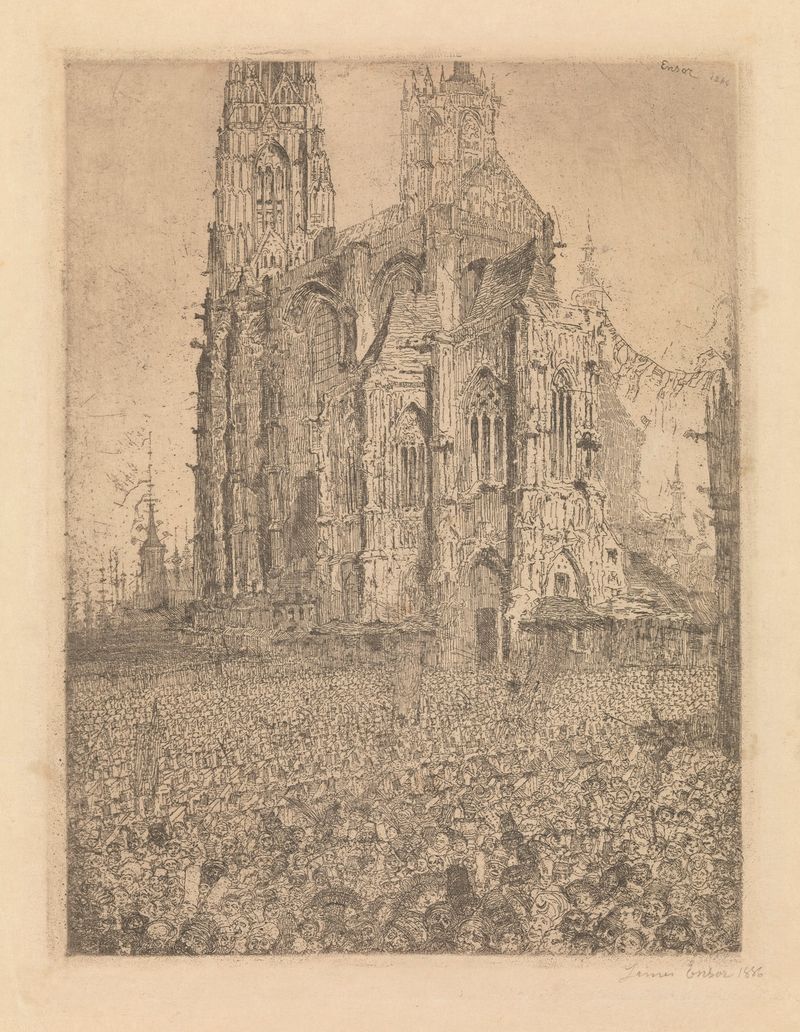
The Cathedral
James Ensor
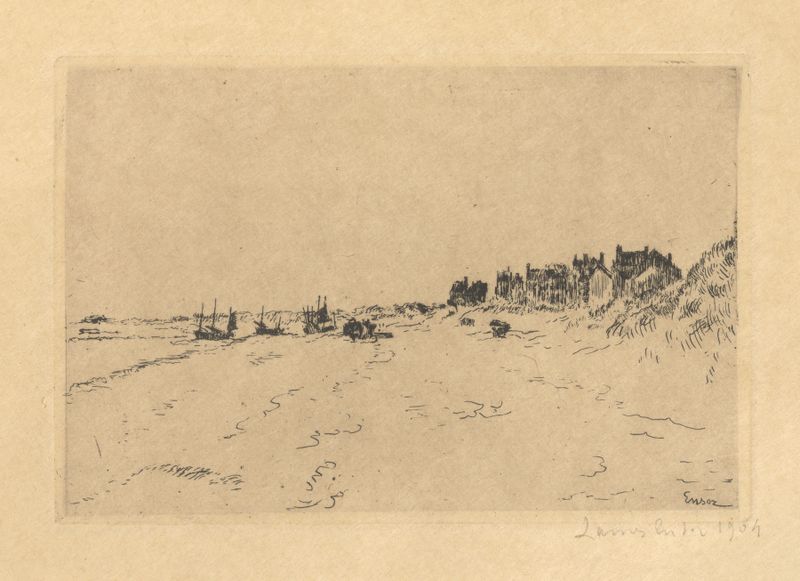
Het strand van De Panne
James Ensor
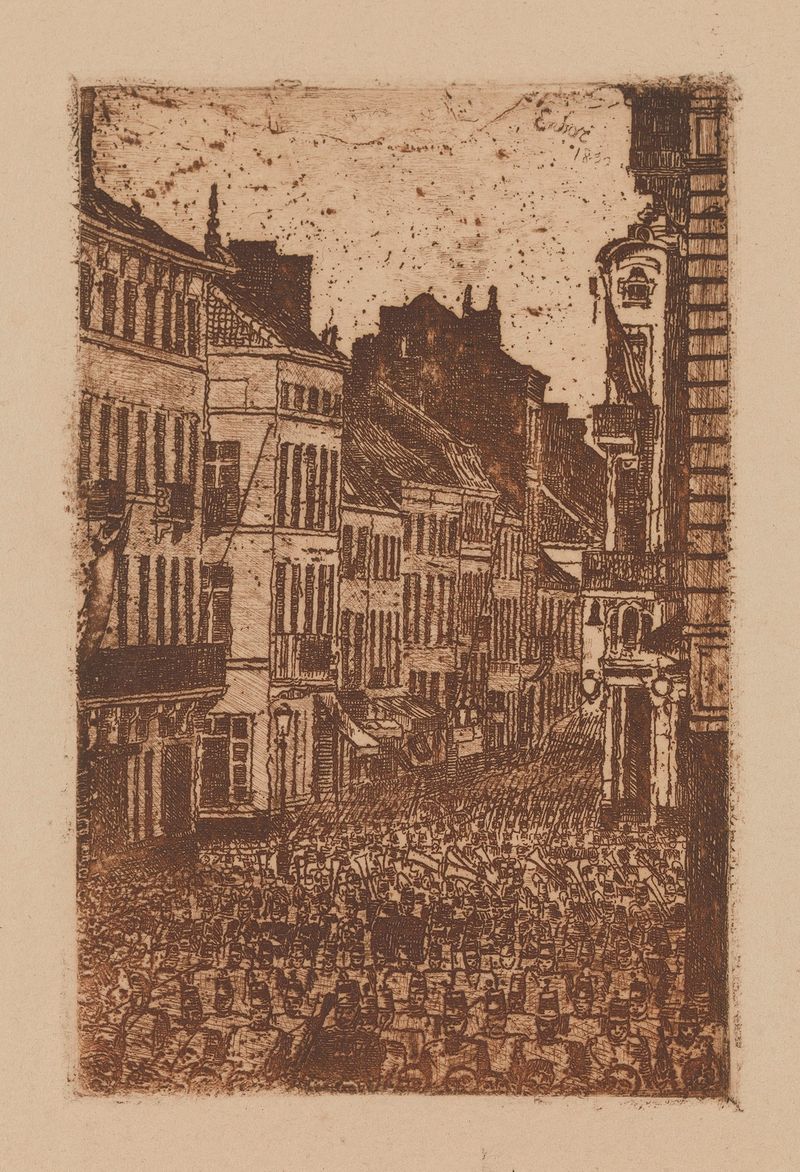
The Music in the rue de Flandre, Ostend
James Ensor
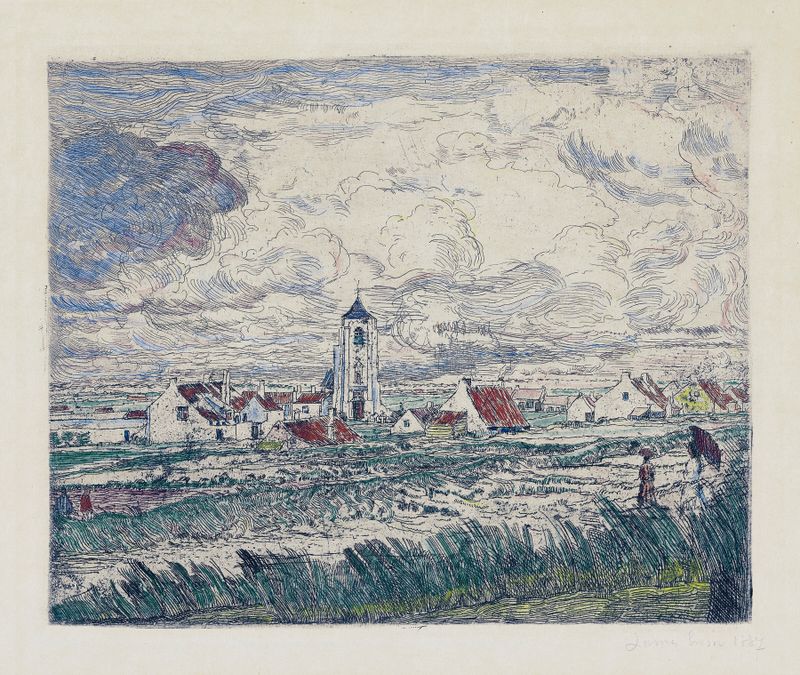
Grande vue de Mariakerke
James Ensor
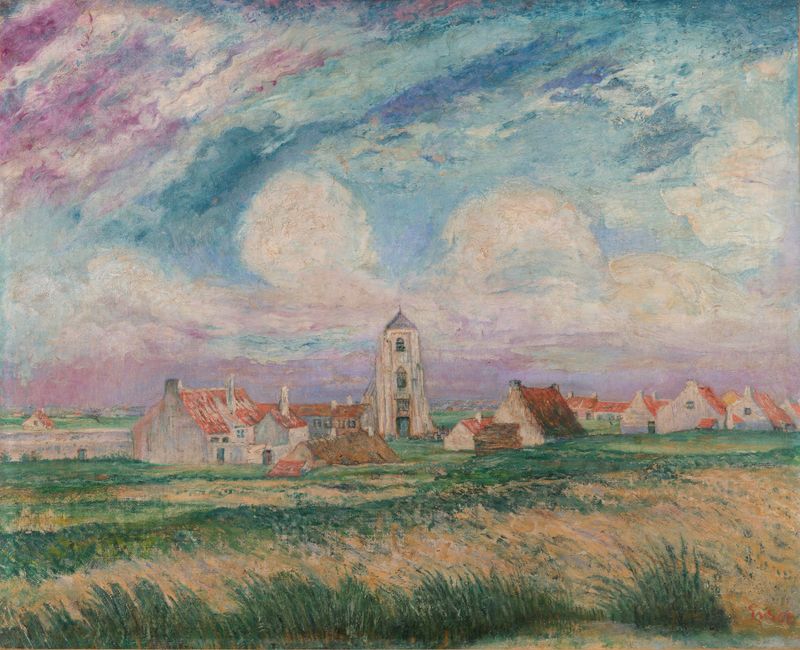
View of Mariakerke
James Ensor
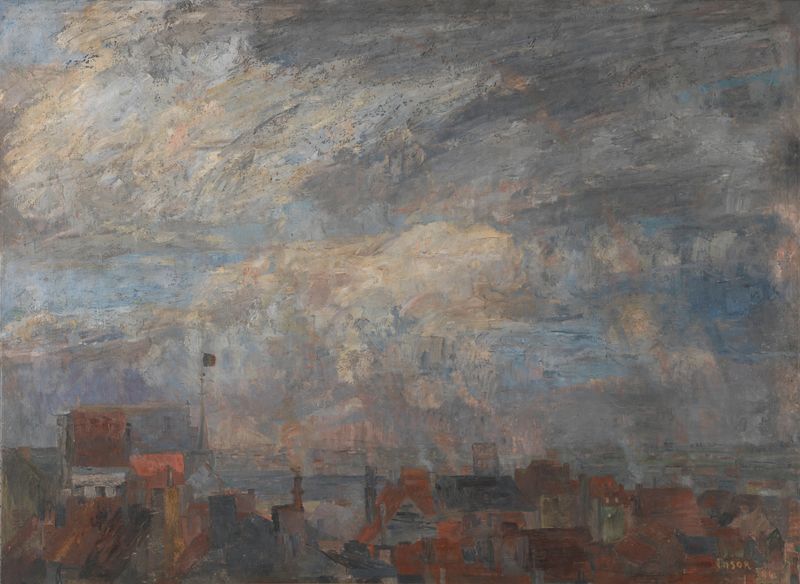
The Rooftops of Ostend
James Ensor
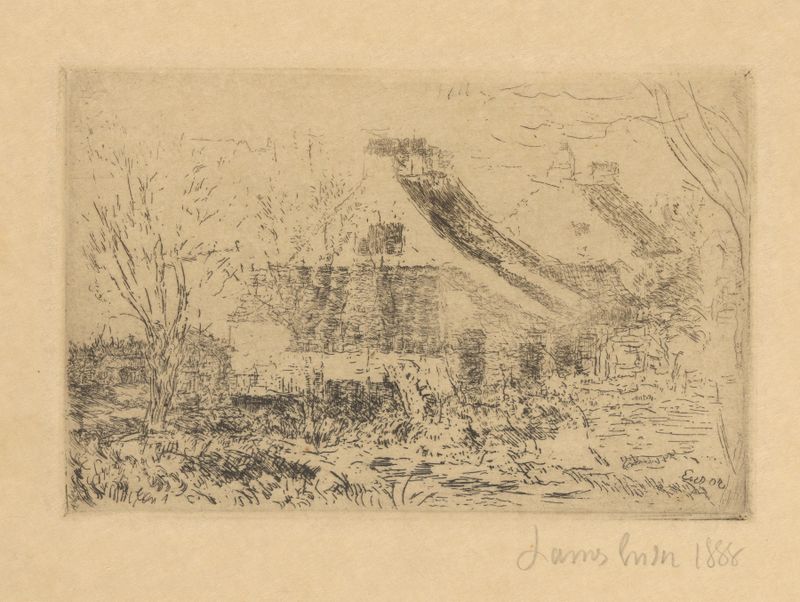
Huisjes in Mariakerke
James Ensor
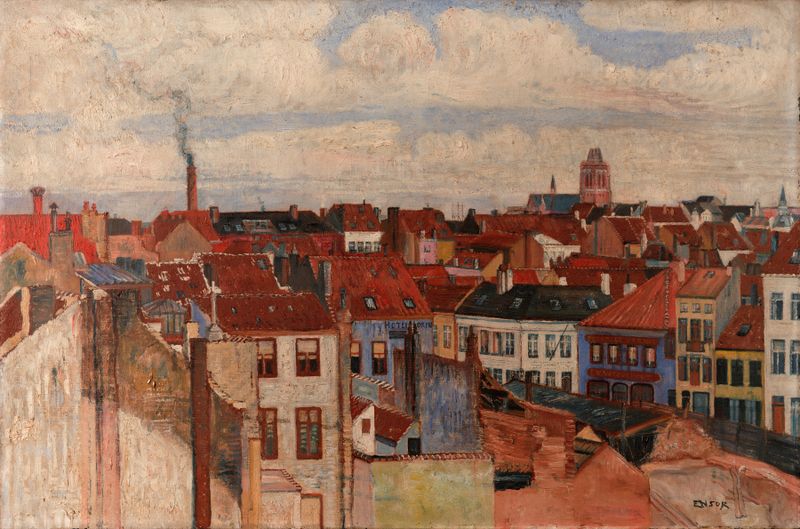
The rooftops of Ostend
James Ensor
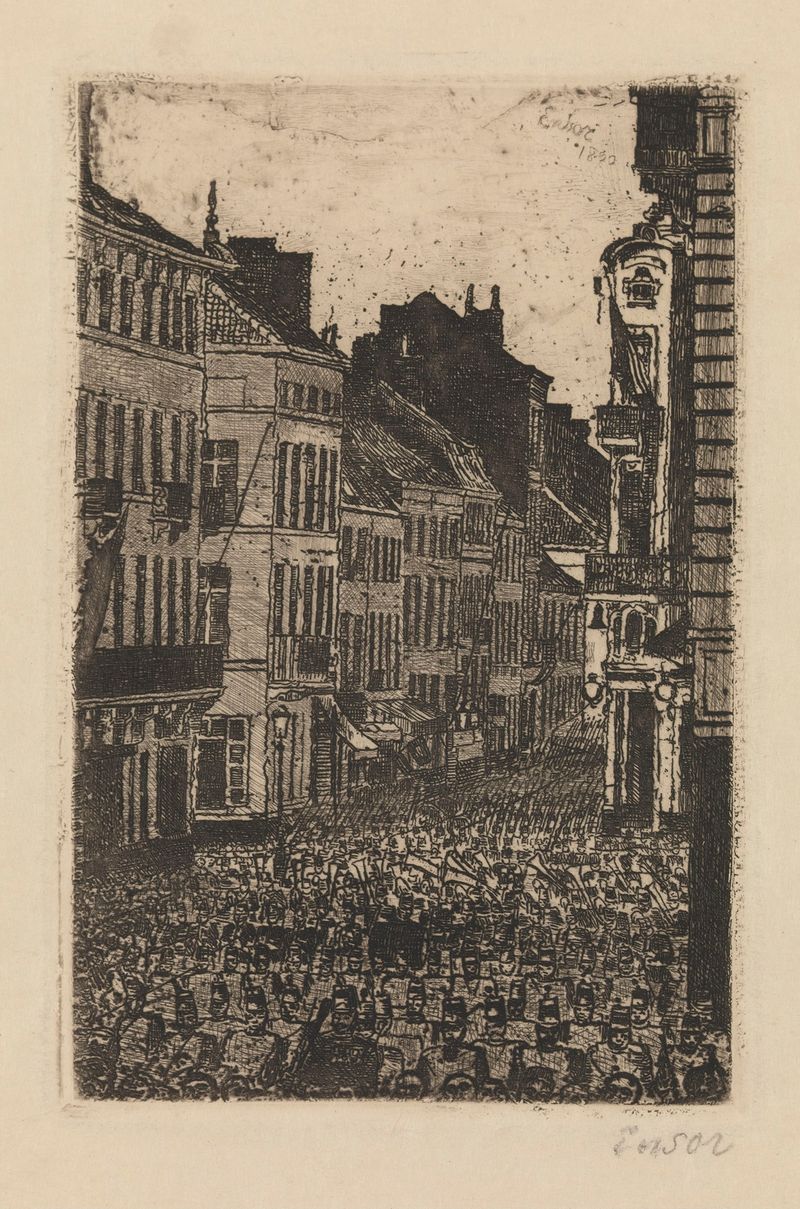
The Music in the rue de Flandre, Ostend
James Ensor
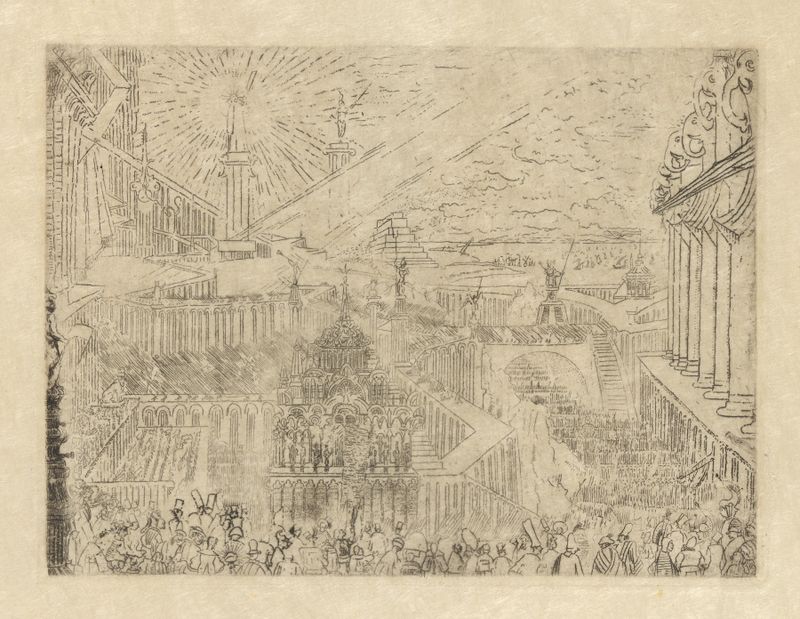
Verovering van een vreemde stad
James Ensor





