
De Heilige Familie met Johannes de Evangelist, Maria Magdalena en Nicodemus — History & Facts
In the stillness of De Heilige Familie met Johannes de Evangelist, Maria Magdalena en Nicodemus, silence envelops the figures, yet it vibrates with unspoken stories and heavy emotions. Each character holds a piece of the narrative, inviting us to ponder their hidden dialogues and shared histories. Look to the center at the tender interplay of light and shadow that embraces the Holy Family, illuminating their serene expressions. Notice how Dürer meticulously renders the textures of their clothing, contrasting the rich, dark hues with delicate highlights that reveal the contours of their forms.
The careful arrangement of figures creates a triangular composition, drawing the viewer’s eye toward the emotional core of the painting, while the muted palette evokes a sense of sacred tranquility. Amidst the calm, there exists a profound tension. The proximity of Nicodemus, cloaked in uncertainty, juxtaposes the unwavering presence of Mary and the Evangelist, suggesting the struggle between faith and doubt. Each gaze, whether contemplative or sorrowful, encapsulates the weight of their collective past—a mix of longing, redemption, and the shadows of loss.
This quiet moment resonates with the emotional gravity of their relationships, urging us to reflect on the fragility of human connection. Created between 1510 and 1515, this piece emerged during a period of significant transition in art and religion. Dürer, already a prominent figure in the Northern Renaissance, grappled with the complexities of faith amidst the Reformation. His dedication to capturing the human spirit, combined with the evolving cultural landscape, shaped a work that transcends its time, inviting viewers to engage with both the divine and the deeply human.
More Artworks by Albrecht Dürer
Browse all →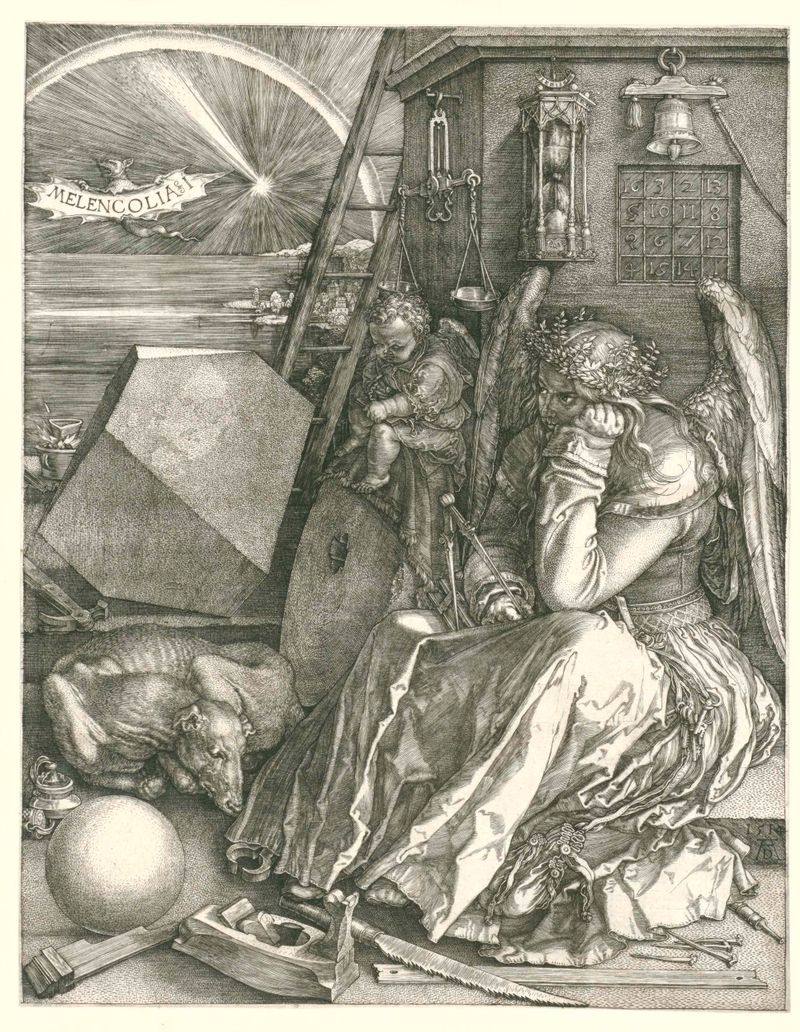
Melancholia
Albrecht Dürer
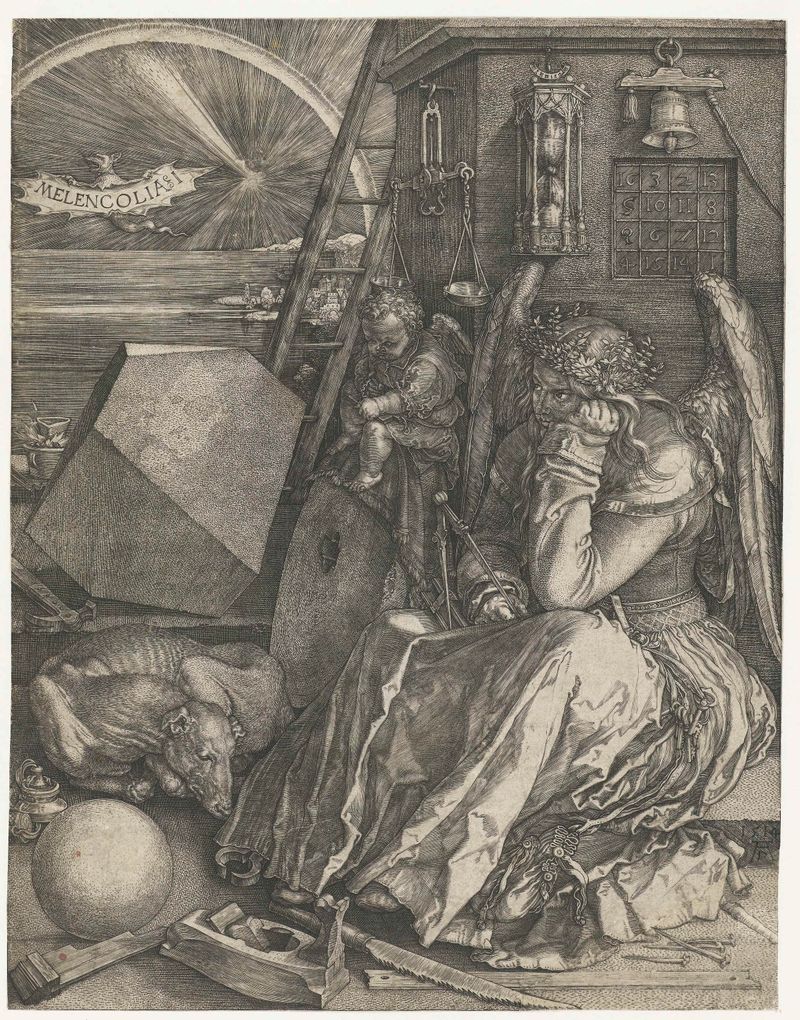
Melancholie
Albrecht Dürer
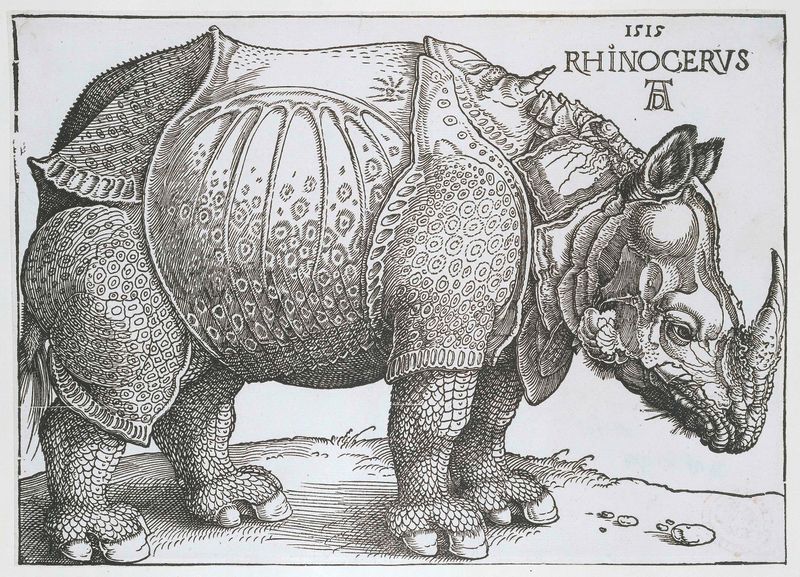
Neushoorn
Albrecht Dürer
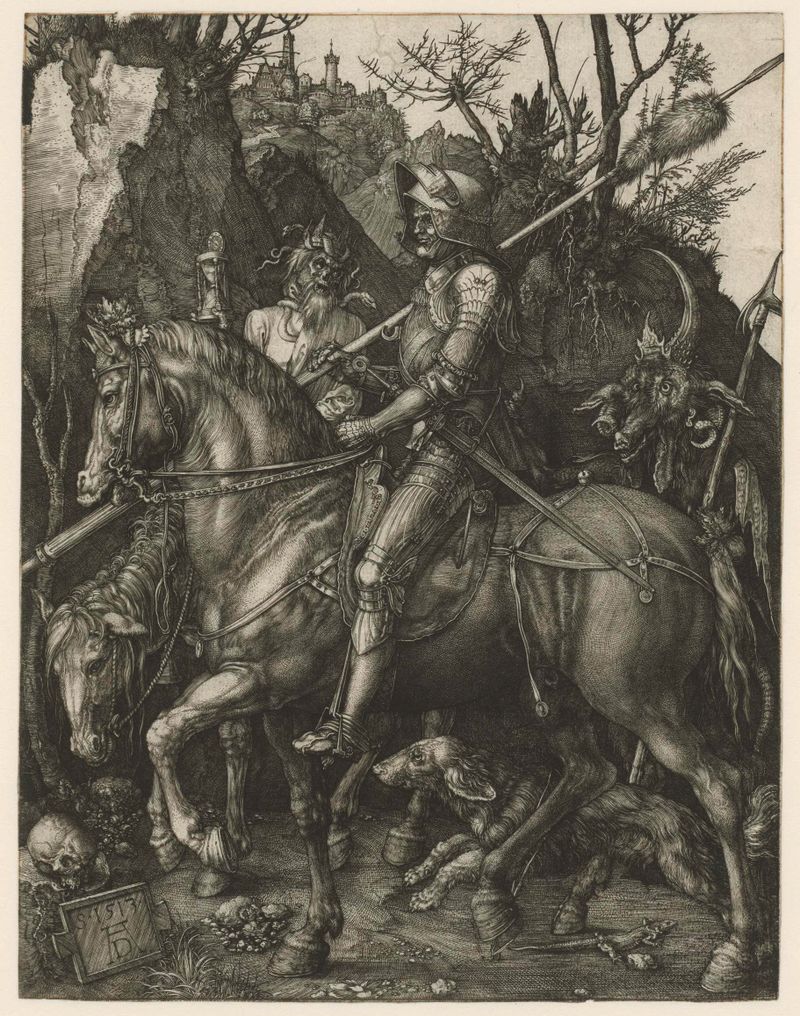
Knight, Death, and the Devil
Albrecht Dürer

De vier ruiters van de apocalyps
Albrecht Dürer

De vier ruiters van de apocalyps
Albrecht Dürer
De Heilige Hiëronymus in zijn studeervertrek
Albrecht Dürer
De Heilige Hiëronymus in zijn studeervertrek
Albrecht Dürer
De apocalyptische vrouw en de zevenkoppige draak
Albrecht Dürer
Adam en Eva
Albrecht Dürer
More Religious Art
Browse all →
The Return of the Prodigal Son
Rembrandt van Rijn

The Garden of Earthly Delights
El Bosco

Count Orgaz’ funeral
El Greco

The Hundred Guilder Print: the central piece with Christ preaching, the plate arched
Rembrandt van Rijn

The Descent from the Cross
Rogier van der Weyden

The return of the prodigal son
Rembrandt van Rijn