
De Heilige Hiëronymus in de wildernis — History & Facts
Could beauty survive in a century of chaos? In De Heilige Hiëronymus in de wildernis, a haunting stillness engulfs the scene, inviting the viewer into a contemplative space where solitude reigns supreme. The figure of Saint Jerome, absorbed in his studies, becomes a poignant emblem of isolation, surrounded by the wilderness that speaks both to his spiritual quest and the desolation of his environment. Look closely at the left side of the painting, where Jerome's worn, weathered visage captures the harsh light filtering through the trees. His intense gaze is drawn to the open book before him, a symbol of knowledge, while his seated posture suggests both fatigue and focus.
The delicate interplay of shadow and light highlights the textures of his unadorned robes and the rocky ground beneath, contrasting the softness of nature with the starkness of his existence. The artwork subtly weaves themes of intellectual pursuit and existential solitude. The loneliness of Jerome is mirrored in the stark landscape that surrounds him, with gnarled trees and desolate rocks echoing his internal struggle. Further, the presence of the lion at his feet suggests companionship in isolation, yet it also serves as a reminder of the untamed wilderness that encroaches upon the sanctity of his scholarly devotion. Painted between 1475 and 1500, Dürer created this work during a time when Northern Renaissance art was flourishing, characterized by detailed realism and complex human emotion.
Residing in Nuremberg, Dürer was grappling with his own artistic identity amidst the evolving landscape of European art. The complexities of faith, knowledge, and solitude found in this piece reflect not only his personal introspection but also the broader existential inquiries of a world in transition.
More Artworks by Albrecht Dürer
Browse all →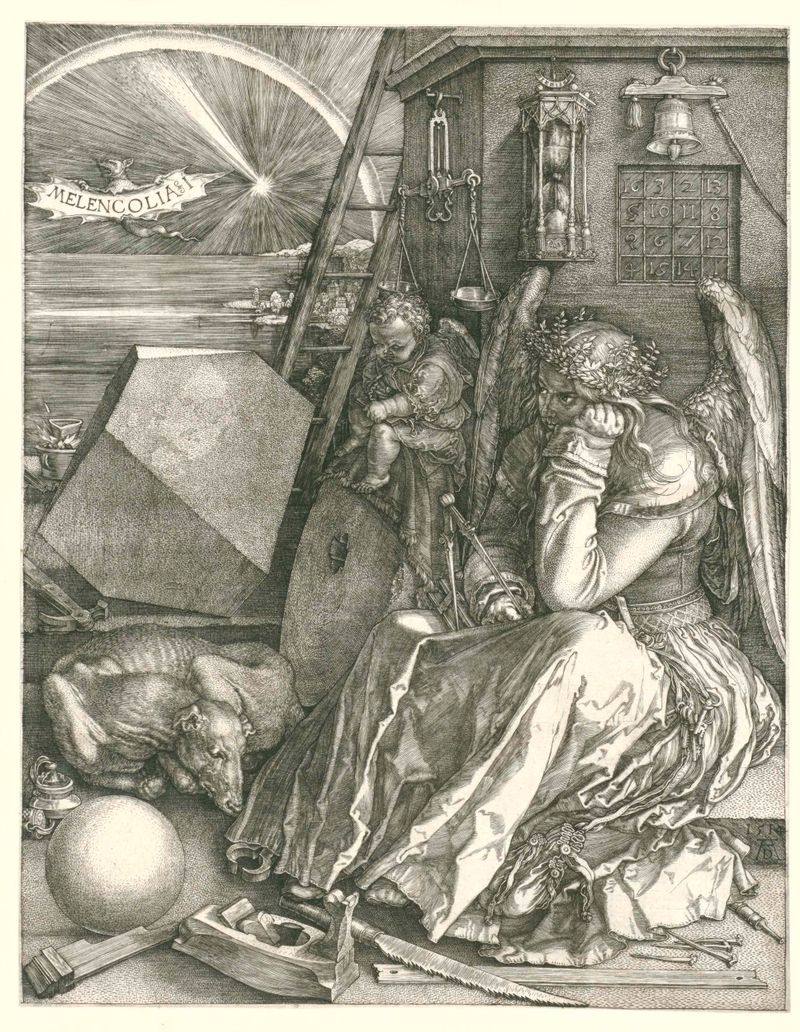
Melancholia
Albrecht Dürer
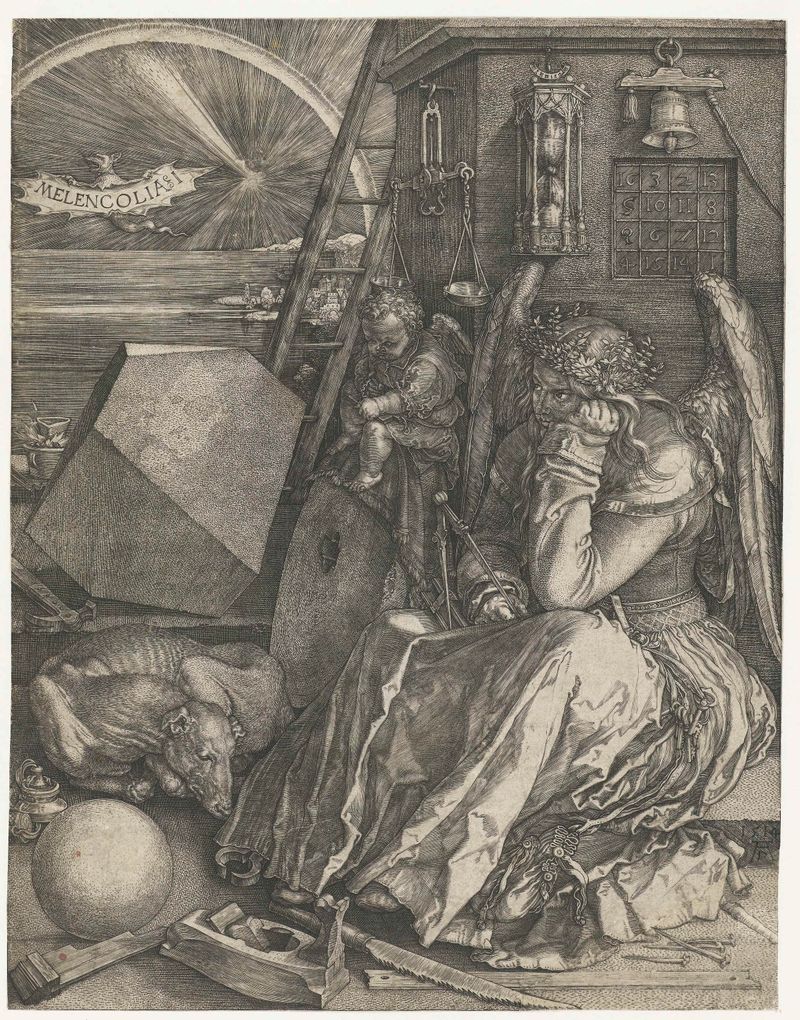
Melancholie
Albrecht Dürer

Neushoorn
Albrecht Dürer
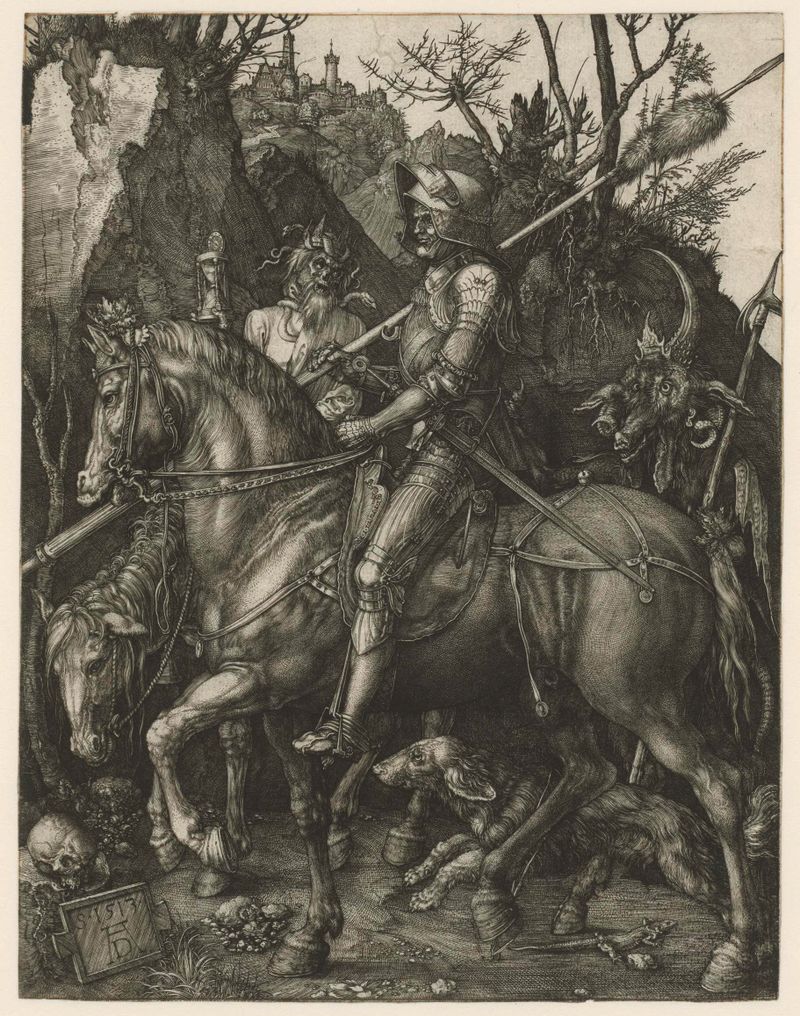
Knight, Death, and the Devil
Albrecht Dürer

De vier ruiters van de apocalyps
Albrecht Dürer

De vier ruiters van de apocalyps
Albrecht Dürer
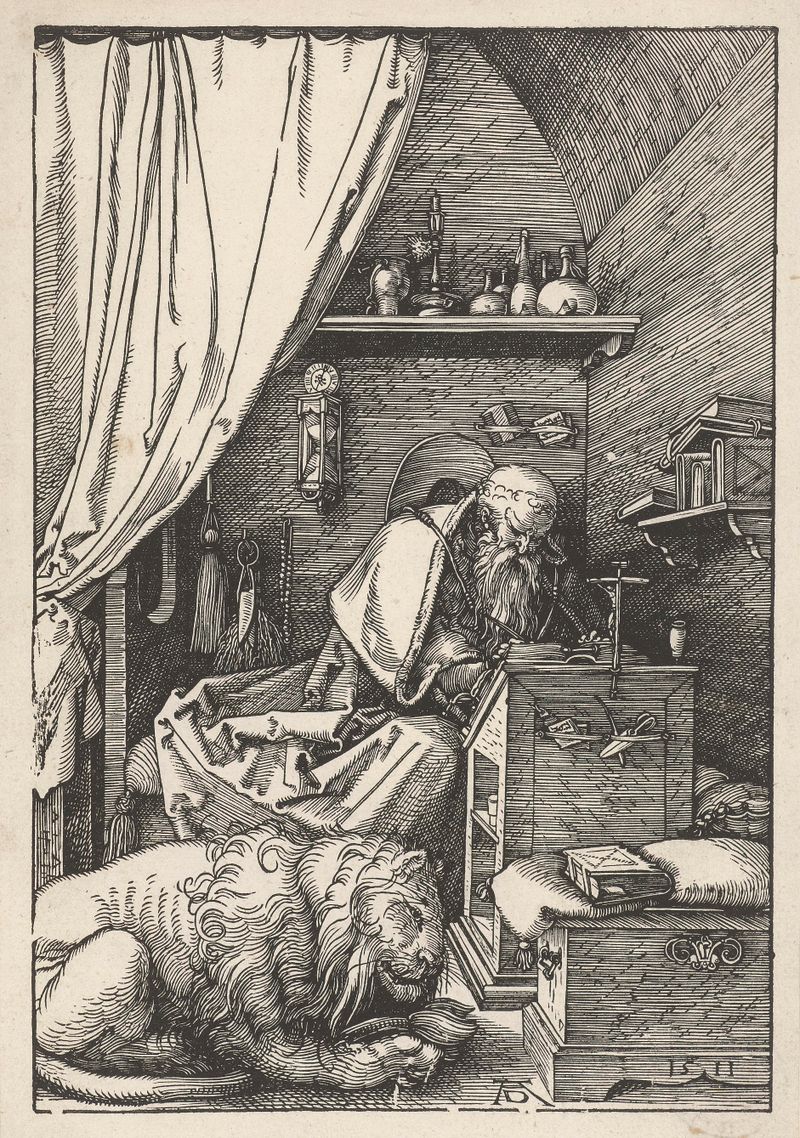
De Heilige Hiëronymus in zijn studeervertrek
Albrecht Dürer
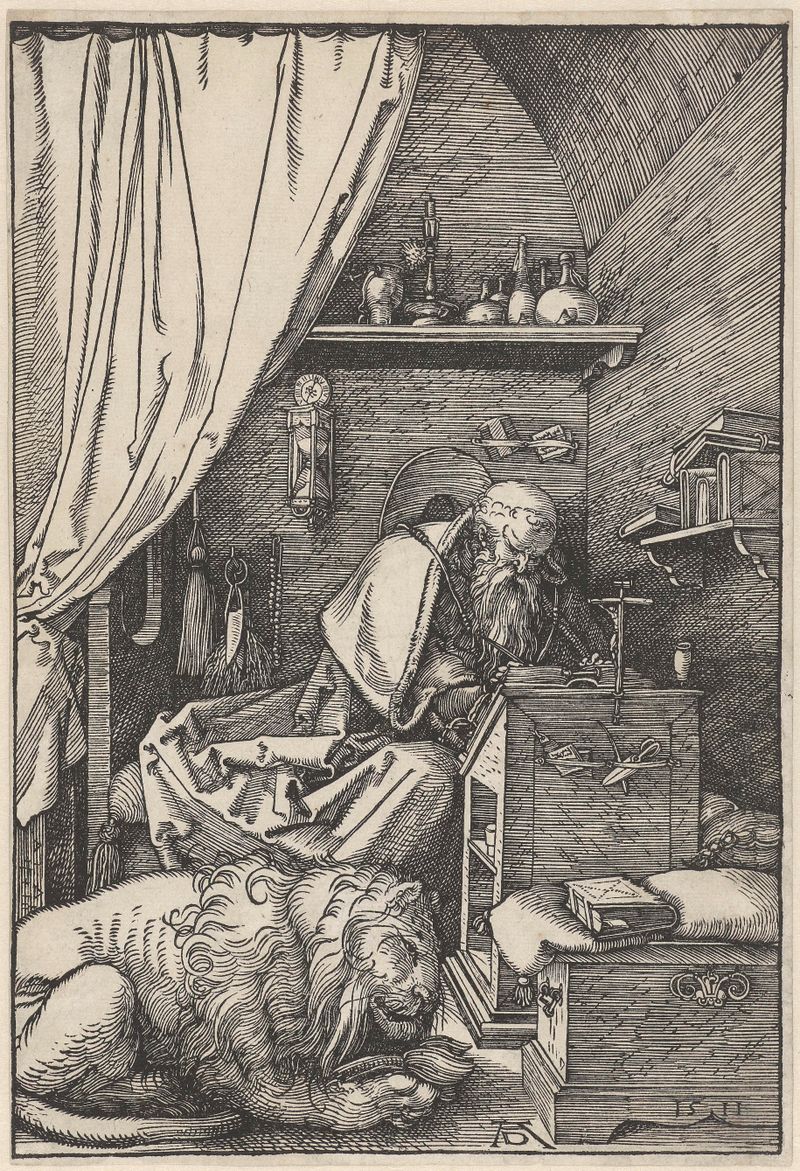
De Heilige Hiëronymus in zijn studeervertrek
Albrecht Dürer
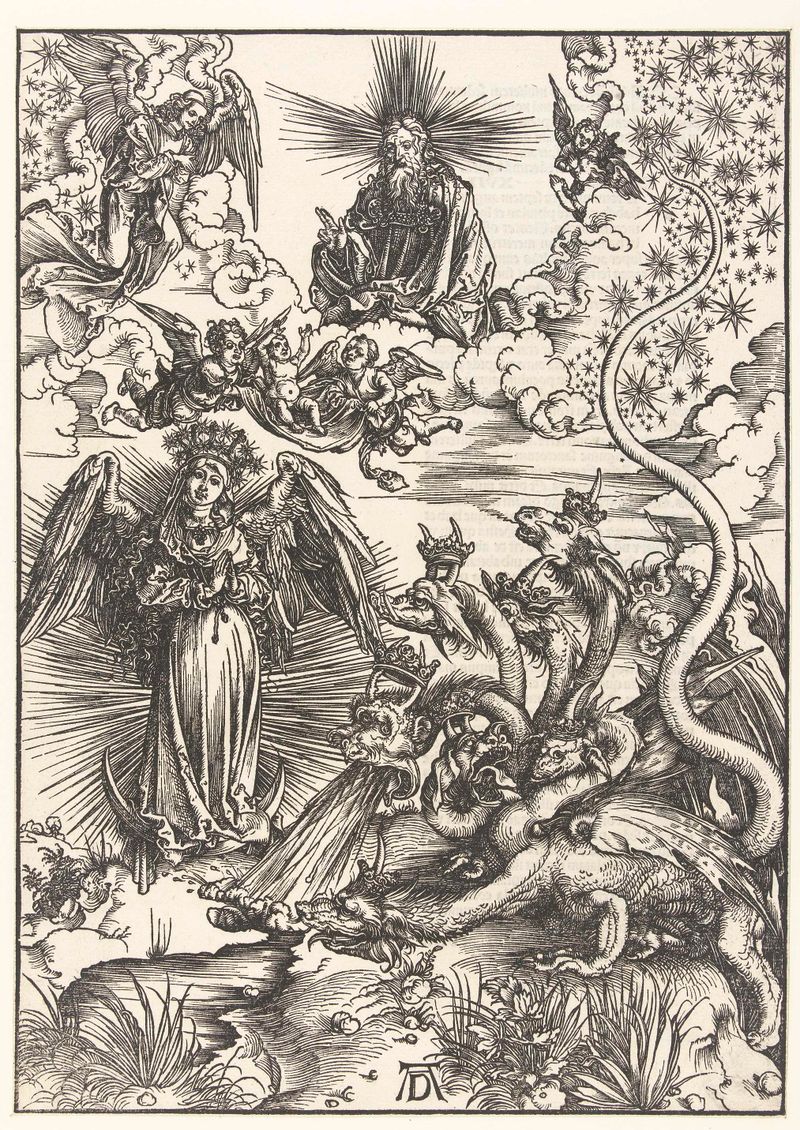
De apocalyptische vrouw en de zevenkoppige draak
Albrecht Dürer
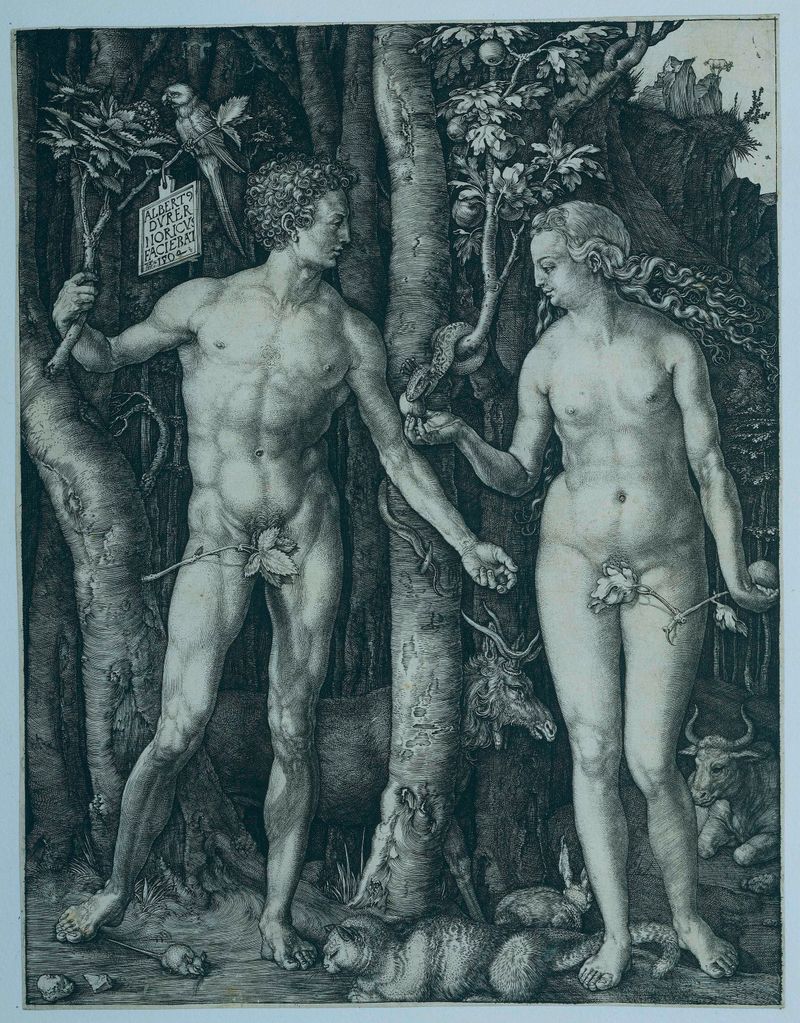
Adam en Eva
Albrecht Dürer
More Religious Art
Browse all →
The Return of the Prodigal Son
Rembrandt van Rijn

The Garden of Earthly Delights
El Bosco

Count Orgaz’ funeral
El Greco

The Hundred Guilder Print: the central piece with Christ preaching, the plate arched
Rembrandt van Rijn

The Descent from the Cross
Rogier van der Weyden

The return of the prodigal son
Rembrandt van Rijn