De oude ommegang op de Meir — History & Facts
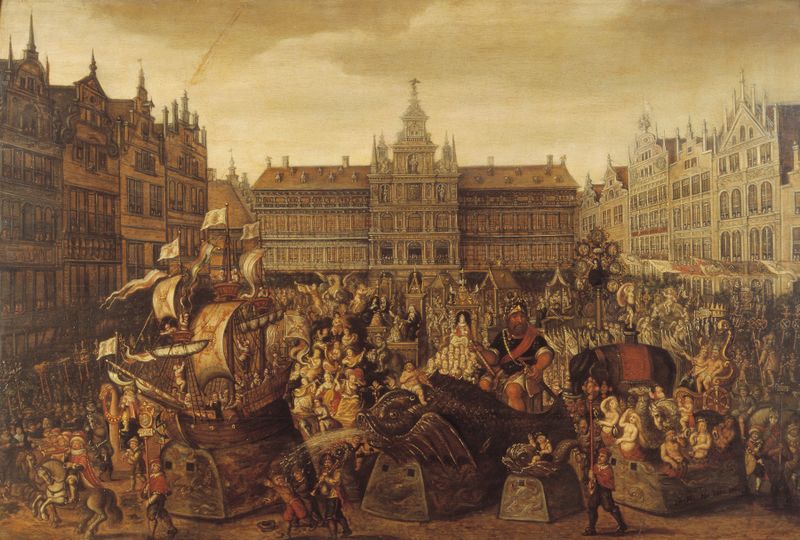
In a moment suspended in time, silence becomes the canvas’s heartbeat, echoing the unspoken stories of life’s vibrant tapestry. Focus first on the intricate figures clustered in a procession at the center of the canvas, their garments flowing with rich colors, imbued with the spirit of celebration. Notice how the soft light bathes their faces, illuminating expressions that hint at joy and reflection. The composition is carefully arranged, guiding the viewer's gaze along the rhythmic flow of bodies, while the surrounding architecture looms large, anchoring the scene in a palpable sense of place.
The warm tones contrast with the cooler shadows, creating a dynamic interplay that breathes life into the stillness. Delving deeper, the artist captures the juxtaposition of communal joy and personal introspection. The figures, while united in celebration, exhibit individual moments of contemplation, suggesting a collective memory tinged with nostalgia. Hidden in the crowd, a child gazes upward, eyes wide, embodying both innocence and curiosity.
This detail amplifies the emotional tension between the exuberance of the event and the reflective nature of those present, transforming the gathering into a moment of shared humanity. In 1680, Alexander Casteels II created this masterpiece during a time when the arts flourished in the Low Countries, reflecting both the Baroque style's opulence and the emerging trends of Dutch realism. Living in Antwerp, Casteels was influenced by the rich traditions of his city, where the intersections of commerce and culture blossomed. The serene yet vibrant atmosphere in De oude ommegang op de Meir stands as a testament to the artist’s ability to encapsulate the essence of a moment that resonates through the ages.