
De St. Anthonie’s Waag te Amsterdam — History & Facts
What if silence could speak through light? In De St. Anthonie’s Waag te Amsterdam, a gentle interplay of luminosity and reflection invites the viewer to consider the beauty found in stillness and observation. Look to the left at the delicate interplay of light on the water's surface, where soft waves reflect the structure's warm tones. The composition centers around the historic weigh house, framed by the tranquil river that melts into the soft hues of dusk.
Notice how the artist uses a muted palette of ochres and blues that evoke a sense of nostalgia, guiding your gaze toward the silhouetted figures who linger on the cobbled streets, lost in their own reverie. In this artwork, hidden meanings emerge through the contrast of light and shadow. The vibrant glow against the shadowy buildings symbolizes a meeting point between the past and present, while the stillness of the figures hints at the unspoken stories of daily life. The careful placement of each element reveals a moment caught in time—a reminder of the transient nature of existence, where every detail, from the rippling water to the quiet architecture, speaks volumes about our shared humanity. created this work in the 20th century while living in Amsterdam, a city rich with history and artistic innovation.
During this time, he explored themes of reflection and the passage of time in a rapidly changing world. The post-war atmosphere shaped his artistic vision, allowing him to capture the transient beauty of everyday life with a profound sense of contemplation.
More Artworks by Willem Wenckebach
Browse all →
Bakkersgang te Amsterdam
Willem Wenckebach

Oude huizen aan het Markenplein te Amsterdam
Willem Wenckebach

Oude huizen aan het Waterlooplein te Amsterdam
Willem Wenckebach
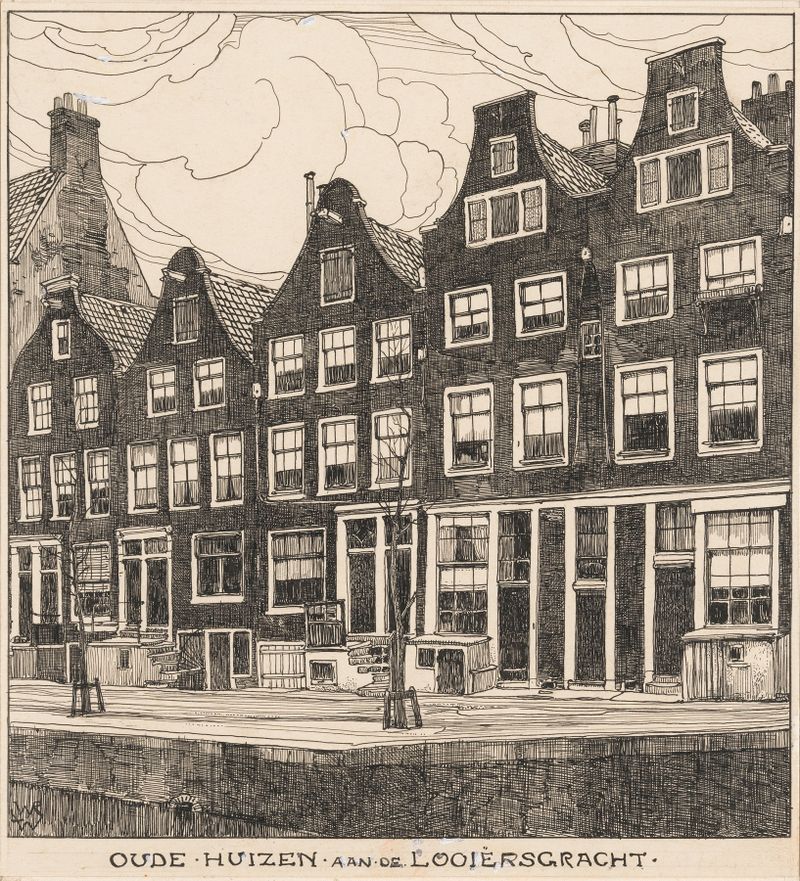
Oude huizen aan de Looiersgracht te Amsterdam
Willem Wenckebach
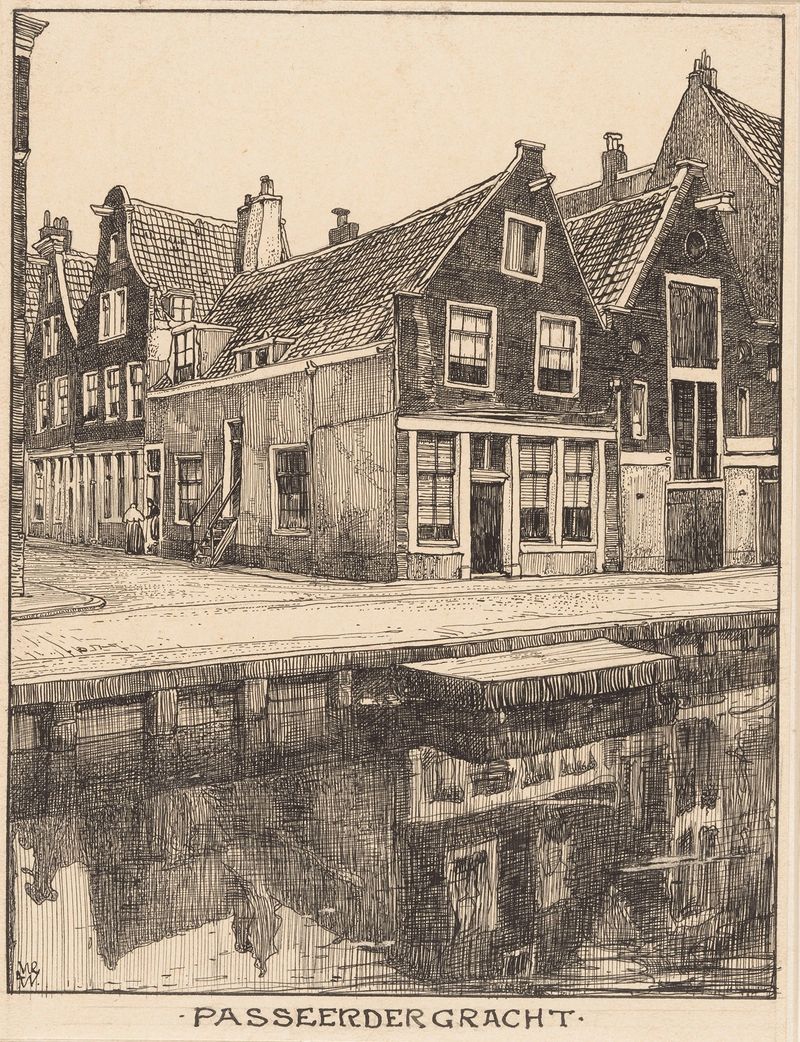
Passeerder Gracht te Amsterdam
Willem Wenckebach
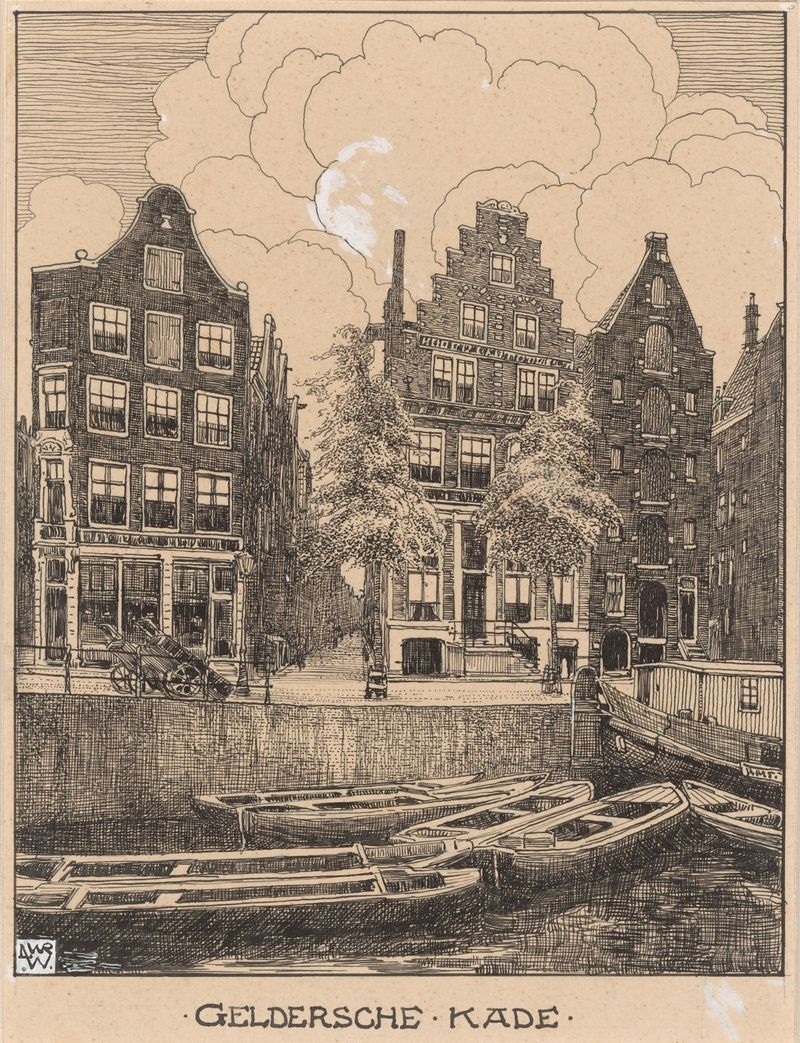
De Gelderse Kade te Amsterdam
Willem Wenckebach
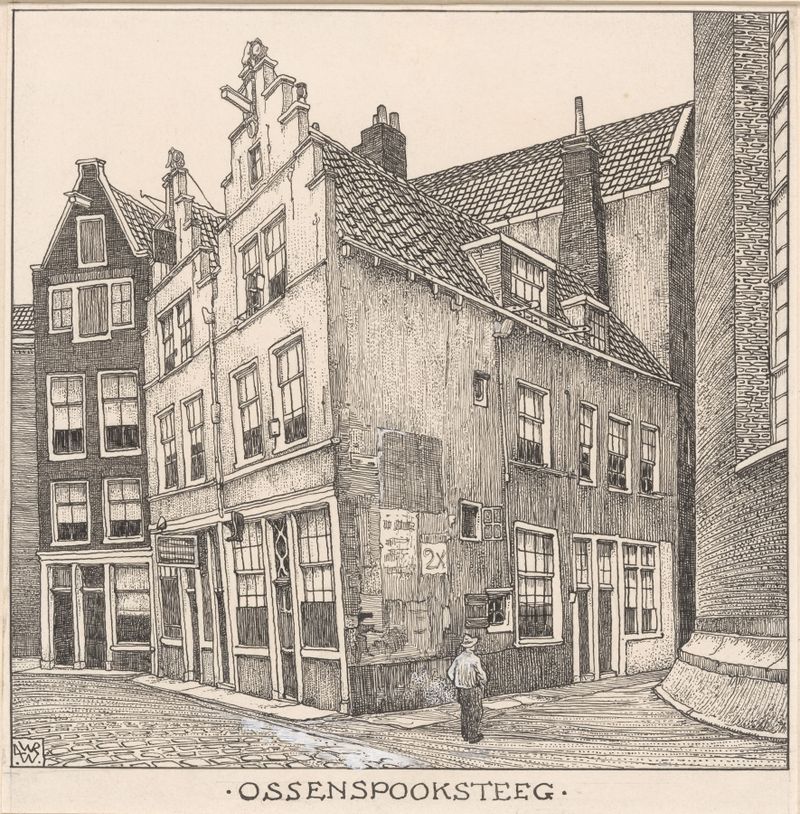
De Ossenspooksteeg te Amsterdam
Willem Wenckebach

Het Beurspleintje te Amsterdam
Willem Wenckebach
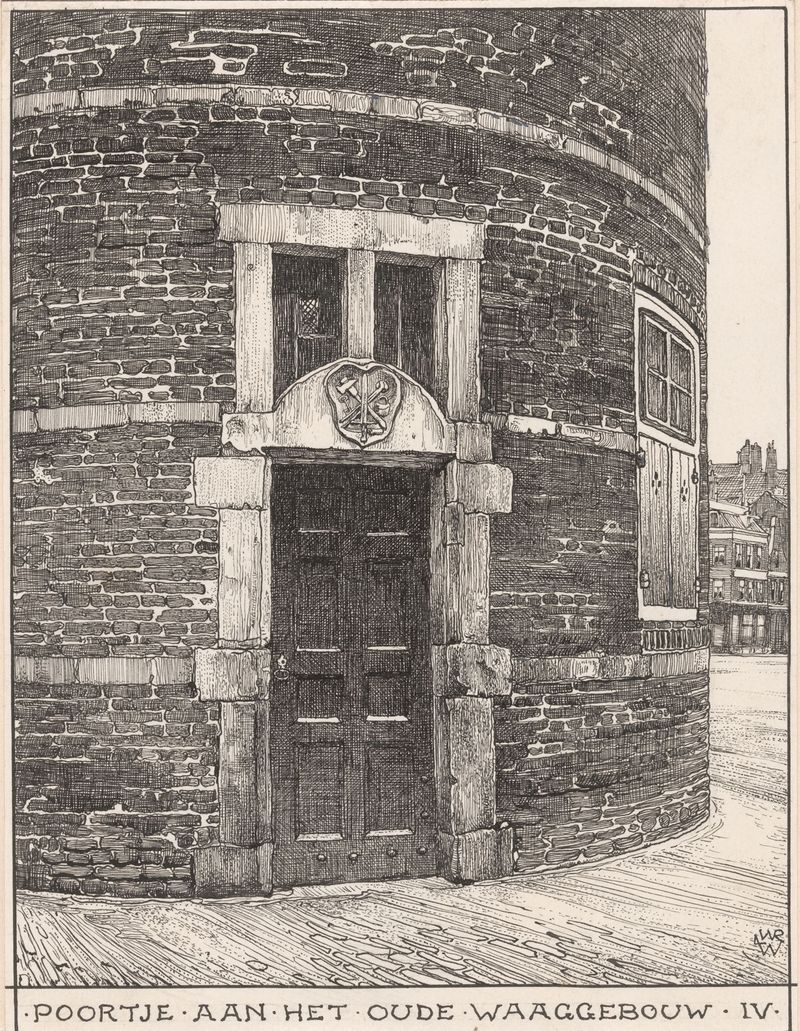
Poortje aan het oude Waaggebouw te Amsterdam
Willem Wenckebach

Torensluis te Amsterdam
Willem Wenckebach
More Architecture Art
Browse all →
The statue of Liberty
Frédéric Auguste Bartholdi

View of Houses in Delft, Known as ‘The Little Street’
Johannes Vermeer

View of Houses in Delft, Known as ‘The Little Street’
Johannes Vermeer

The Cathedral in Rouen. The portal, Grey Weather
Claude Monet

The yellow house
Vincent van Gogh

The Church in Auvers-sur-Oise, View from the Chevet
Vincent van Gogh