
De vaart — History & Facts
Can paint confess what words never could? In De vaart, the ethereal quality of the water and sky invites viewers into a tranquil reverie, where dreams float just beneath the surface of reality. Focus on the gentle ripples of the water, a silken reflection of the soft hues above, where blues and grays blend seamlessly. Notice how the light dances across the canvas, creating an interplay of shadow and luminescence that makes the scene pulse with life. The boats, seemingly at rest, are anchored in a moment that balances stillness and motion, capturing the essence of both the physical and the ephemeral. Look closely, and you’ll find small details that reveal deeper meanings.
The delicate brushwork conveys a sense of fleetingness, as if the scene might dissolve into vapor at any moment. The horizon's blur suggests an unattainable distance, a yearning that resonates with the dreamlike quality of the painting. This contrast between the tangible boats and the intangible sky evokes a longing for connection and exploration, both of the self and the surrounding world. In 1862, Jongkind was living in Paris, amidst a burgeoning movement that embraced Impressionism.
Influenced by his contemporaries, he sought to capture the transitory beauty of nature, reflecting the changing rhythms of life. This work emerges from a period of personal exploration, aligning with his desire to convey the profound, often unspoken emotions tethered to the natural world.
More Artworks by Johan Barthold Jongkind
Browse all →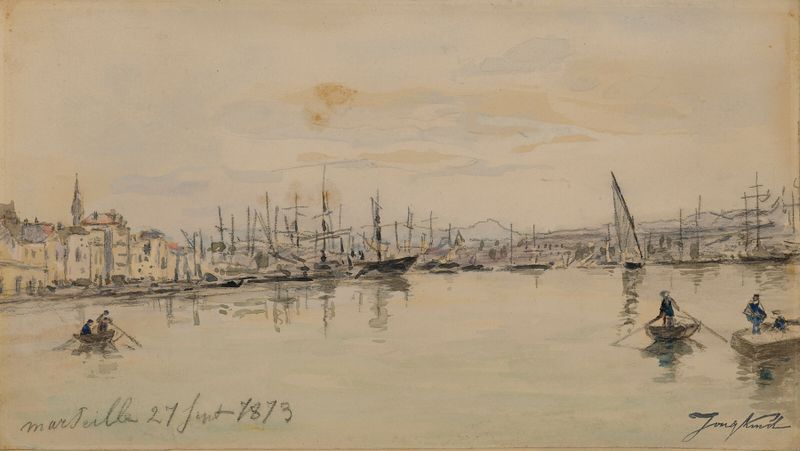
Le Port de Marseille
Johan Barthold Jongkind

Canal Saint-Martin
Johan Barthold Jongkind

Countryside near Brezins, between Grenoble and Vienne
Johan Barthold Jongkind

Notre-Dame vue du quai de la Tournelle
Johan Barthold Jongkind

Environs de Grenoble
Johan Barthold Jongkind

Clair de lune à Overschie (environs de Rotterdam)
Johan Barthold Jongkind

Port de Honfleur
Johan Barthold Jongkind
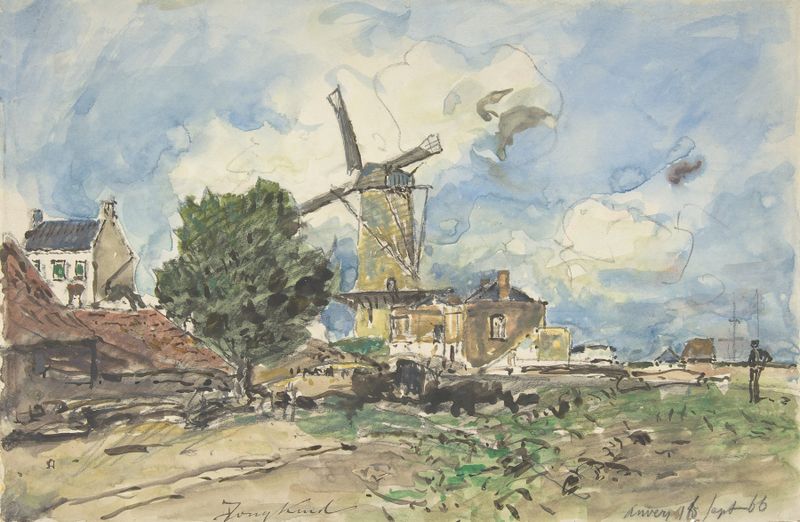
Wind Mill at Antwerp
Johan Barthold Jongkind

Le Havre
Johan Barthold Jongkind

The Church of Overschie
Johan Barthold Jongkind





