
De Van Iseghemlaan in Oostende — History & Facts
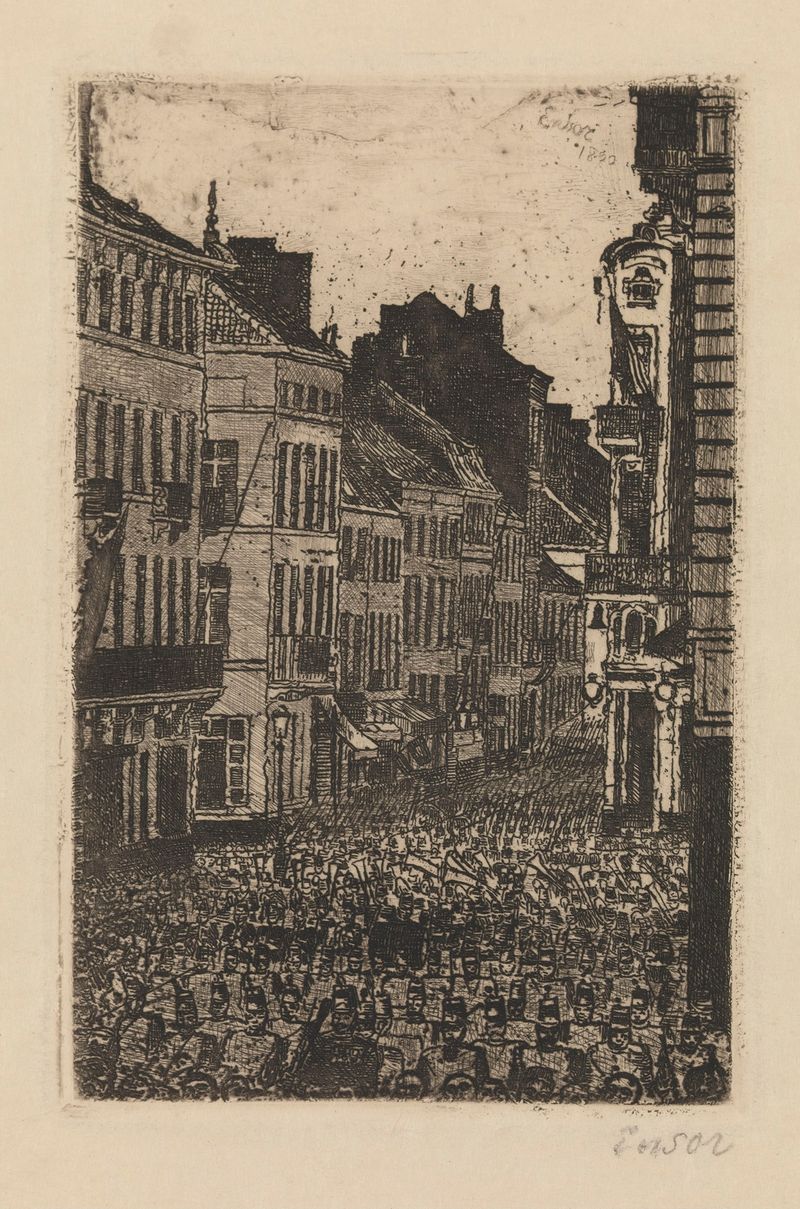
Can beauty exist without sorrow? In the nuanced interplay between light and shadow in a coastal scene, this question resonates deeply, echoing the vacuity that often underpins our appreciation of aesthetics. Look to the left at the graceful curve of the street, where the cobblestones are painted with soft blues and greens, reflecting the transient nature of the day. Notice how the light filters through the trees, casting delicate patterns that dance across the ground, creating an ethereal atmosphere. The figures, rendered in a playful yet haunting manner, draw the eye; they seem to drift, encapsulating a moment suspended in time.
Their expressions carry an ambiguity that invites both joy and melancholy in equal measure. Beneath the surface, tension simmers. The vibrant colors juxtaposed with the figures' disquiet hint at deeper emotional truths, suggesting that beauty is often accompanied by an underlying void. Each element contributes to a narrative of longing — the street beckons, yet the figures remain ensnared in their own solitude, caught between a world of vibrancy and a sense of existential emptiness.
Here, the joyous splendor of life coexists with an ever-present shadow. Created in 1889 while Ensor was living in Oostende, this work reflects a period of introspection in his life. At this time, he was experimenting with color and form, seeking to convey emotional depth through his artistry. The art world was experiencing a shift towards modernism, and Ensor's exploration of themes such as isolation and the human condition would later resonate deeply within the realms of expressionism and surrealism.
More Artworks by James Ensor
Browse all →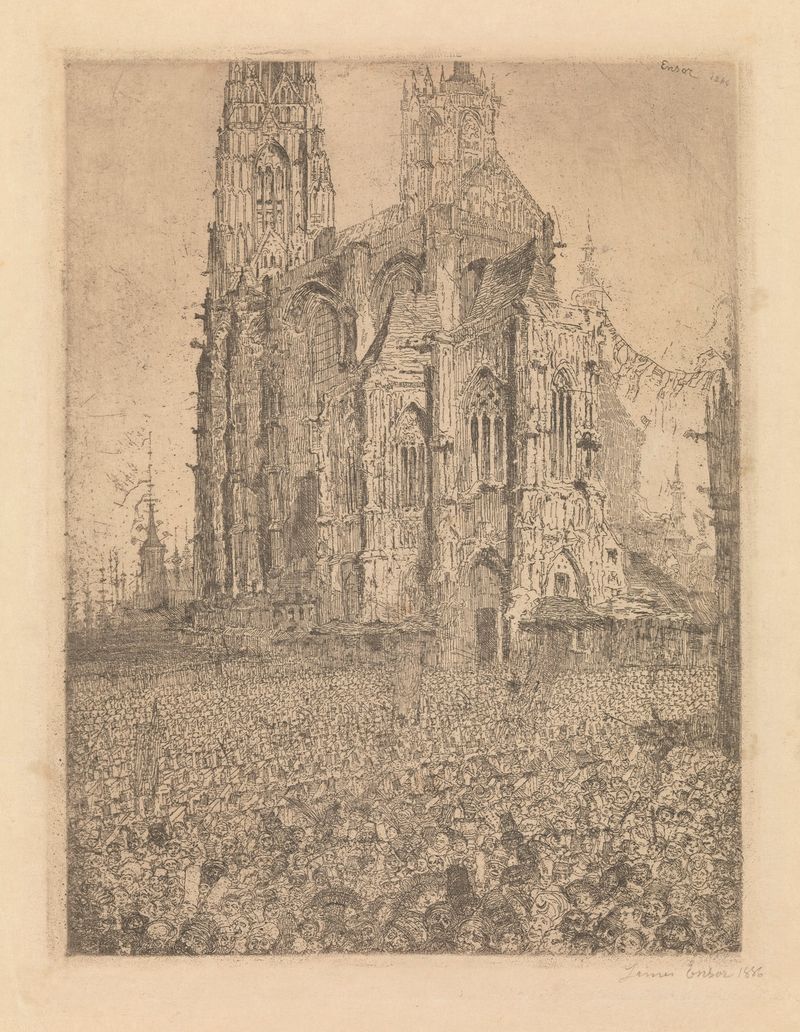
The Cathedral
James Ensor
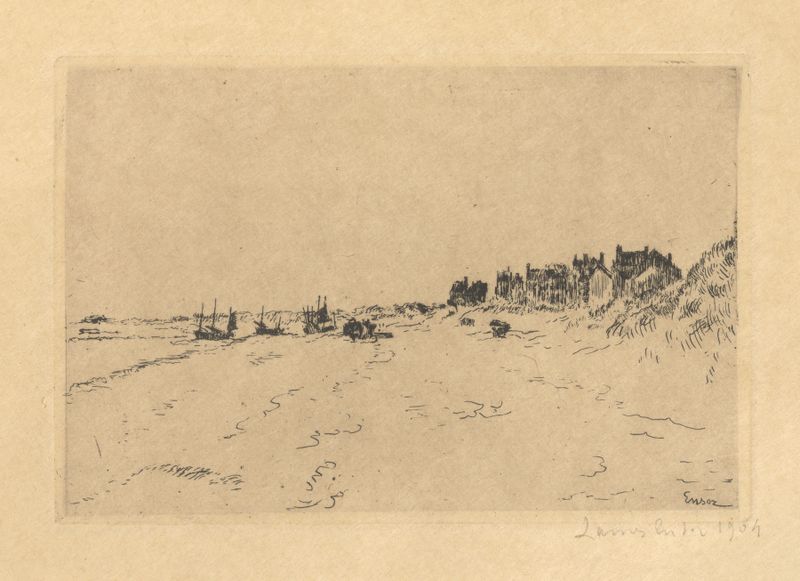
Het strand van De Panne
James Ensor
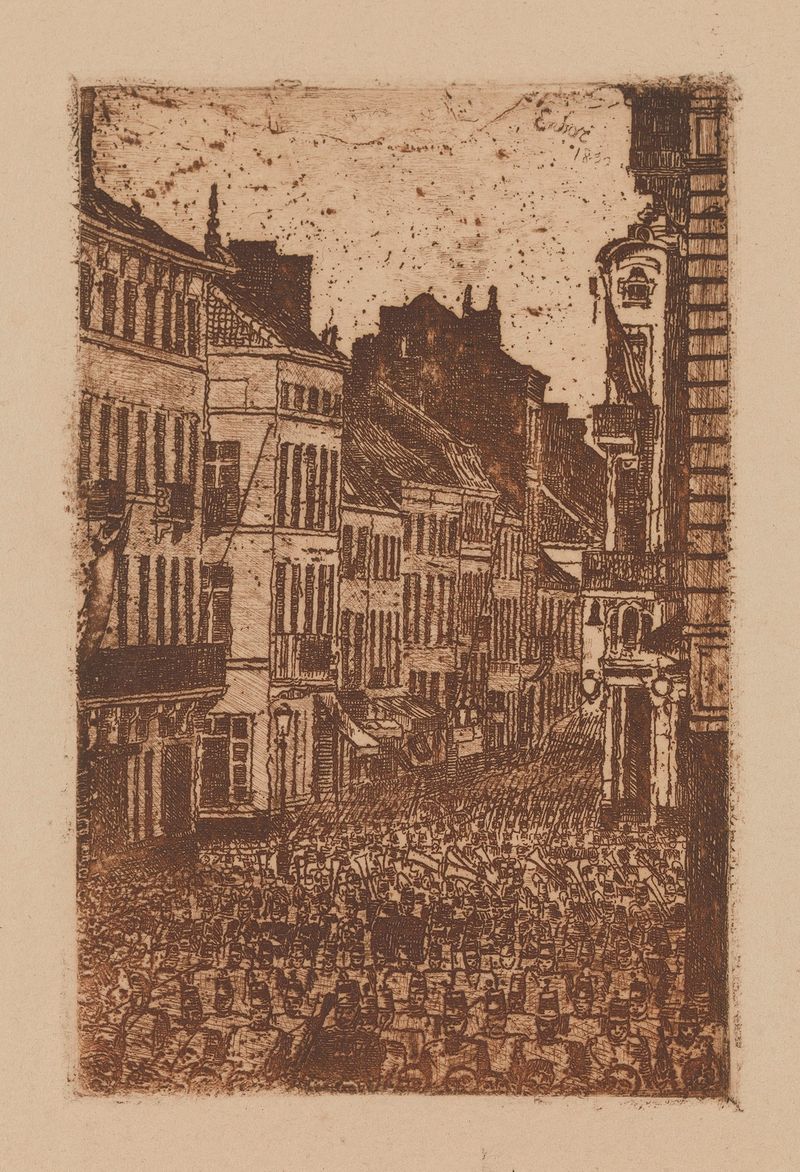
The Music in the rue de Flandre, Ostend
James Ensor
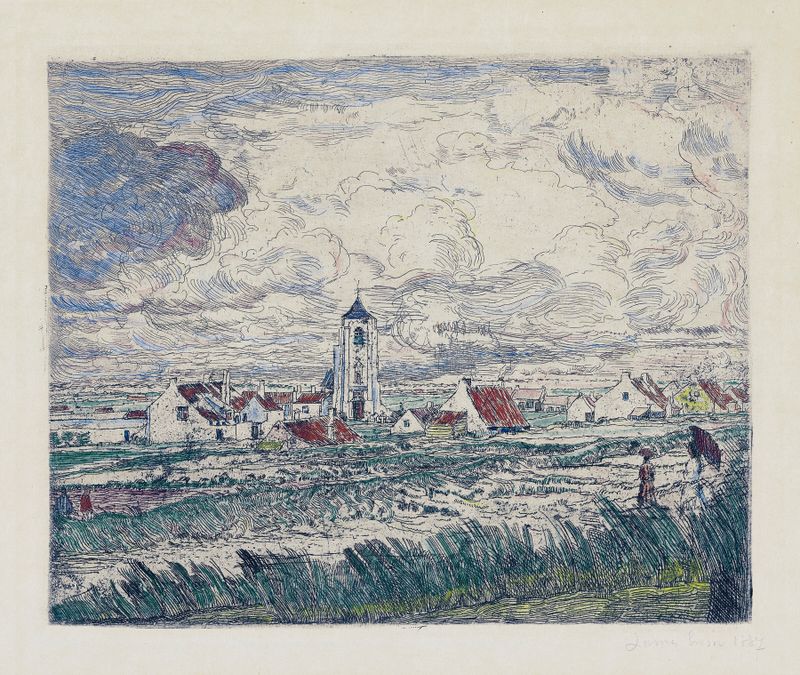
Grande vue de Mariakerke
James Ensor
View of Mariakerke
James Ensor
The Rooftops of Ostend
James Ensor
Huisjes in Mariakerke
James Ensor
The rooftops of Ostend
James Ensor
The Music in the rue de Flandre, Ostend
James Ensor
Verovering van een vreemde stad
James Ensor





