
Der Canale Grande in Venedig — History & Facts
In the quiet embrace of history, we often overlook the delicate legacies crafted by those who wield a brush. Look closely at the vibrant strokes that depict the Grand Canal in Venice, where the shimmering water dances beneath a canopy of soft blues and warm earth tones. Notice how the light reflects off the surface, capturing the essence of the bustling life along the canal, while the shadows whisper of stories past. The composition draws you in, inviting your eye to trace the curve of the waterway, flanked by stately buildings that stand like sentinels of time. Yet beneath this picturesque exterior lies a tension between the vibrancy of life and the inevitability of change.
The boats, filled with passengers, bustle about their daily routines, yet their forms seem to slip slightly out of focus, suggesting a moment caught between permanence and ephemerality. The juxtaposition of the serene water against the weathered façades hints at the ghosts of history, both celebrated and forgotten, urging us to ponder what legacies remain as time flows ever forward. Franz Alt painted this work in 1850, during a time of great transformation in Europe. Having settled in Venice, he was immersed in the Romantic movement, which sought to capture the emotional essence of landscapes and urban scenes.
At a time when the world was rapidly changing, Alt’s brush immortalized the charm of Venice, a city at the crossroads of history, longing to be remembered amidst the tides of time.
More Artworks by Franz Alt
Browse all →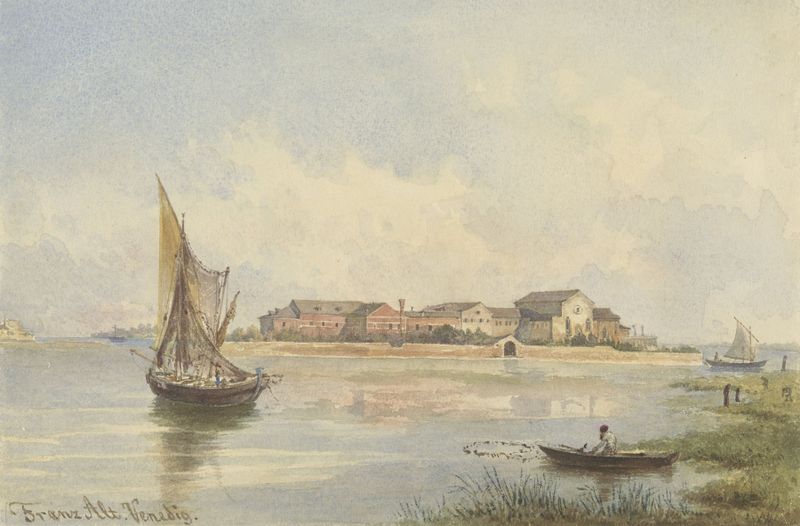
Gezicht op de Lagune te Venetië
Franz Alt
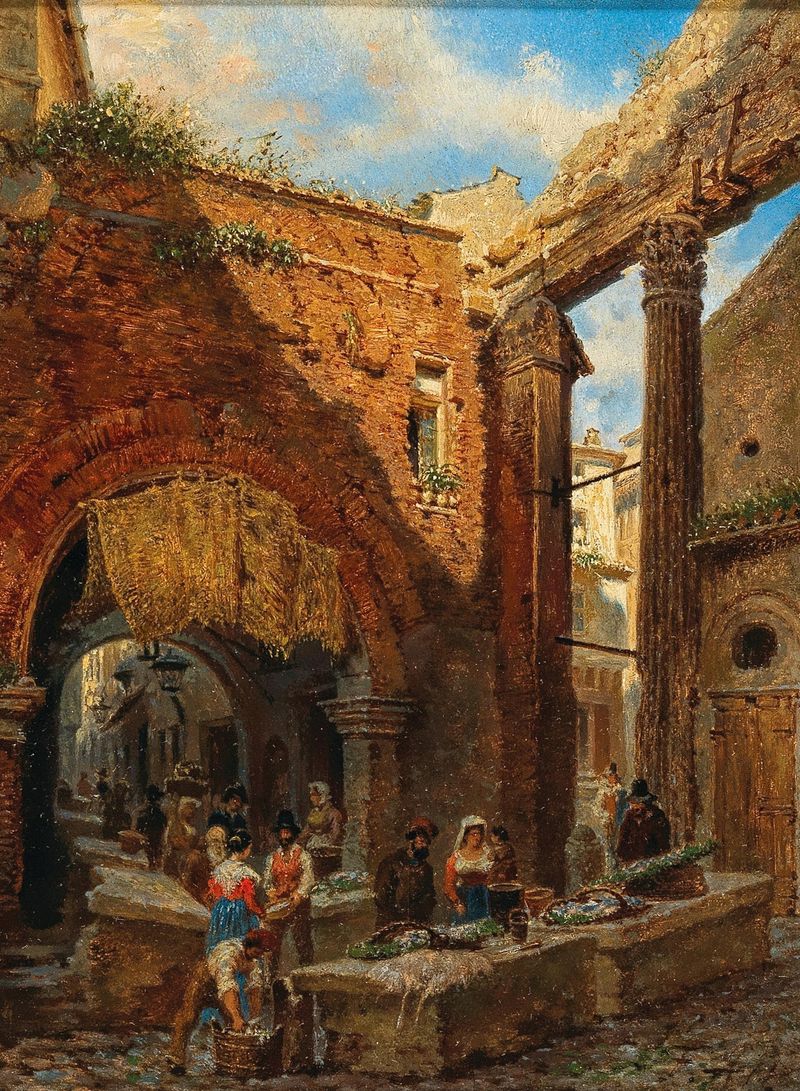
Rom Portico di Ottavia mit dem alten Fischmarkt
Franz Alt
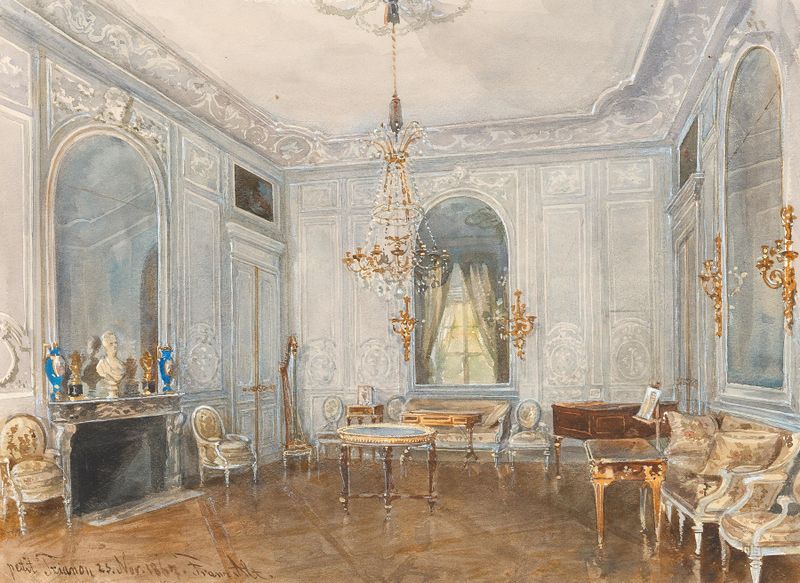
The dining room in the Petit Trianon, Versailles
Franz Alt

Blick in den Mailänder Dom
Franz Alt

Galerie d’Apollon in the Louvre, Paris
Franz Alt
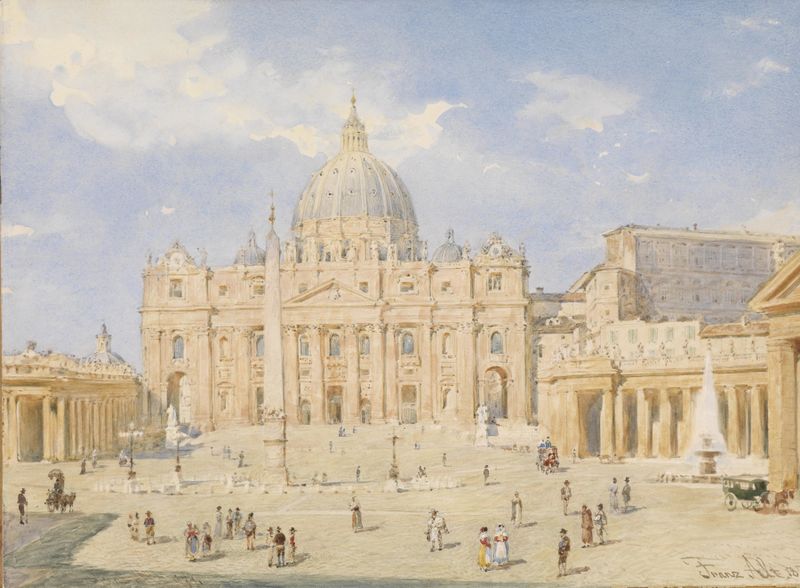
Petersplatz Rom
Franz Alt

Rome, a View of the Portico di Ottavia with the Old Fish Market
Franz Alt
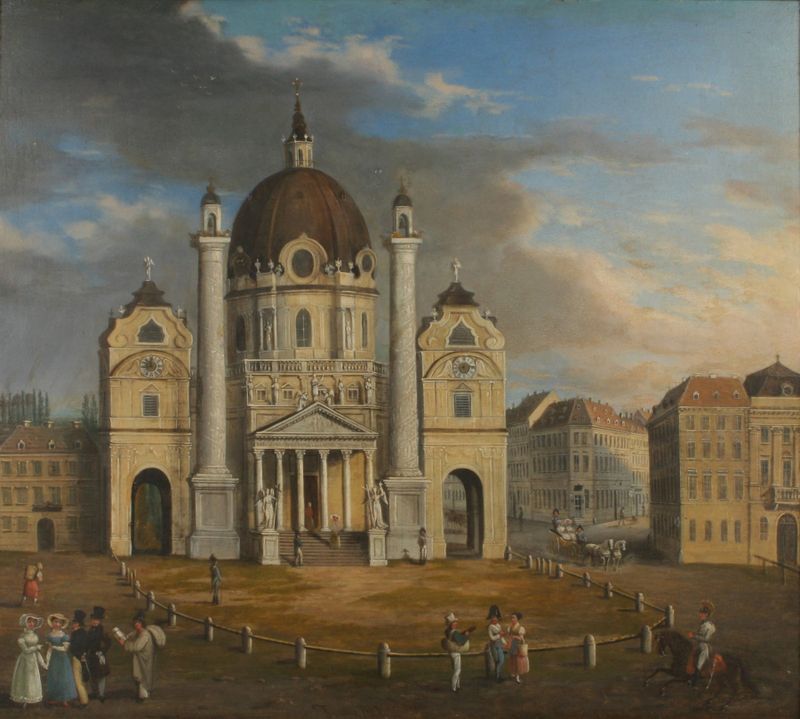
Blick auf die Karlskirche
Franz Alt

Dresden Stiege zur Brühlschen Terrasse
Franz Alt
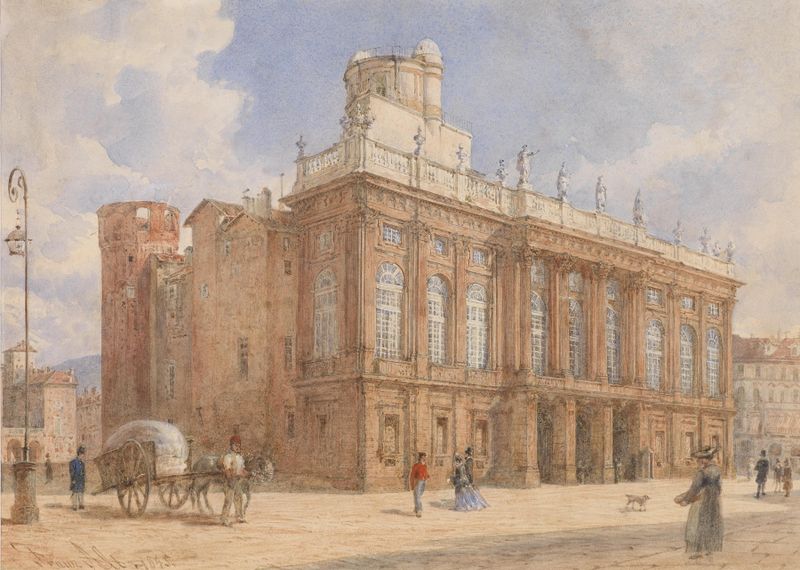
Castello Reale in Turin
Franz Alt





