
Dégagement de la colonnade du Louvre — History & Facts
Can beauty exist without sorrow? In Dégagement de la colonnade du Louvre, the delicate balance between grandeur and decay unfolds before the viewer’s eyes. Look to the left at the majestic colonnade, where light gently washes over the intricate architecture, revealing the timelessness of the structure. The meticulous brushwork defines each column and arch, drawing your gaze upward toward the sky that hovers above like a silent witness. The palette, rich in earth tones contrasted by soft blues, creates an inviting yet contemplative atmosphere that beckons exploration of both the space and its history. As you delve deeper, notice the figures who populate the scene—ensconced in their own worlds, they embody the fleeting essence of life amidst the permanence of stone.
The juxtaposition of the lively activity of the foreground against the steadfastness of the colonnade evokes a poignant tension between the ephemeral and the eternal. Each motion, caught in the play of shadow and light, tells a story of aspiration and transience, suggesting that beauty often exists in the shadows of time. Created in 1764, this work emerged during a period of artistic evolution in France, as the Rococo style began yielding to Neoclassicism. Demachy, deeply influenced by the changing tides of culture and artistic ideals, sought to capture the essence of the Louvre's architectural splendor while reflecting on the nature of beauty itself.
At this time, Paris was a hub of innovation, where artists like him were redefining representation, and in this painting, he encapsulated the profound dialogue between permanence and impermanence.
More Artworks by Pierre-Antoine Demachy
Browse all →
Démolition de la Bastille, le 17 juillet 1789
Pierre-Antoine Demachy
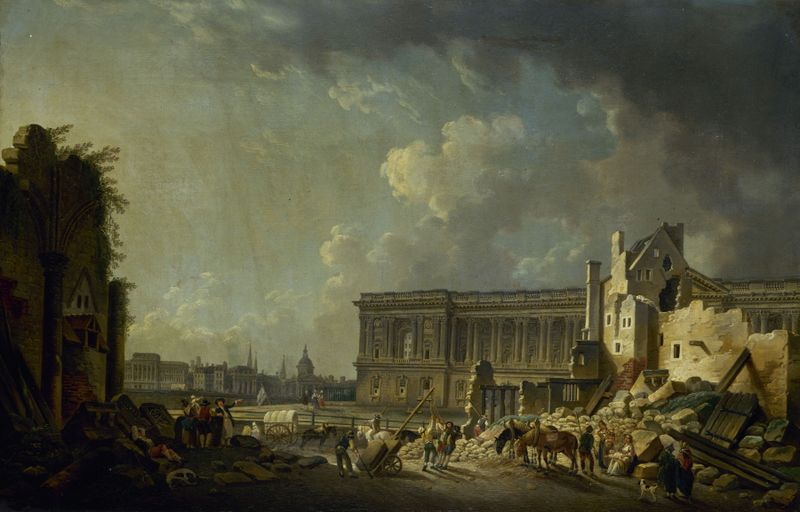
Dégagement de la colonnade du Louvre
Pierre-Antoine Demachy

La colonnade du Louvre, nouvellement dégagée
Pierre-Antoine Demachy
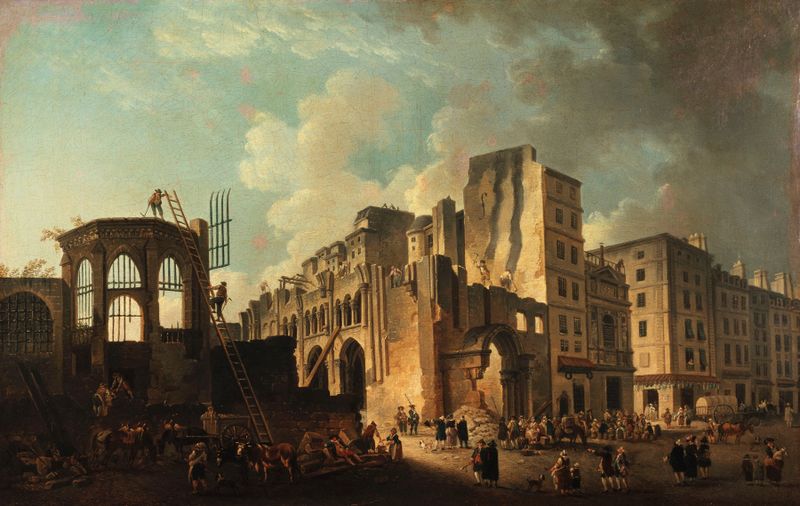
La démolition de l’église des Saints-Innocents, rue Saint-Denis
Pierre-Antoine Demachy
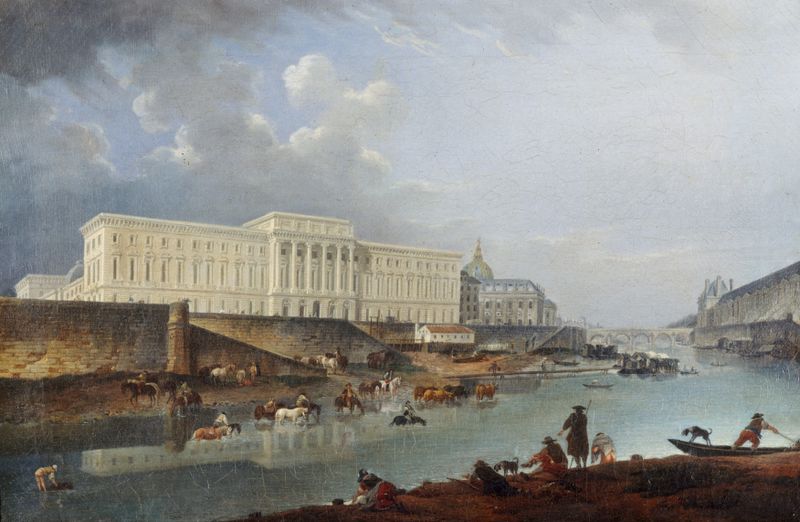
L’Hôtel de la Monnaie, le quai de Conti et la Seine, vus de la pointe de la Cité
Pierre-Antoine Demachy

Dégagement de la colonnade du Louvre
Pierre-Antoine Demachy

L’Hôtel de la Monnaie et le Louvre, vus du Pont-Neuf, vers 1800
Pierre-Antoine Demachy
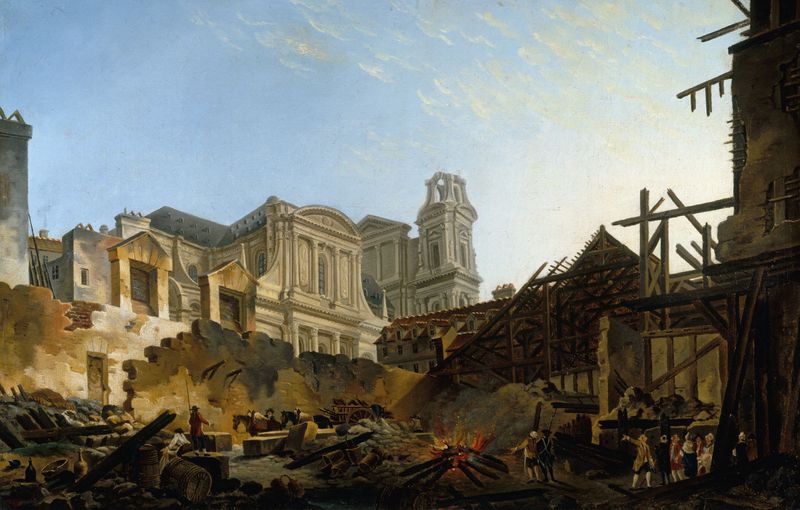
La foire Saint-Germain après l’incendie de la nuit du 16 au 17 mars 1762
Pierre-Antoine Demachy

La Foire Saint-Germain pendant l’incendie (nuit du 16 au 17 mars 1762)
Pierre-Antoine Demachy
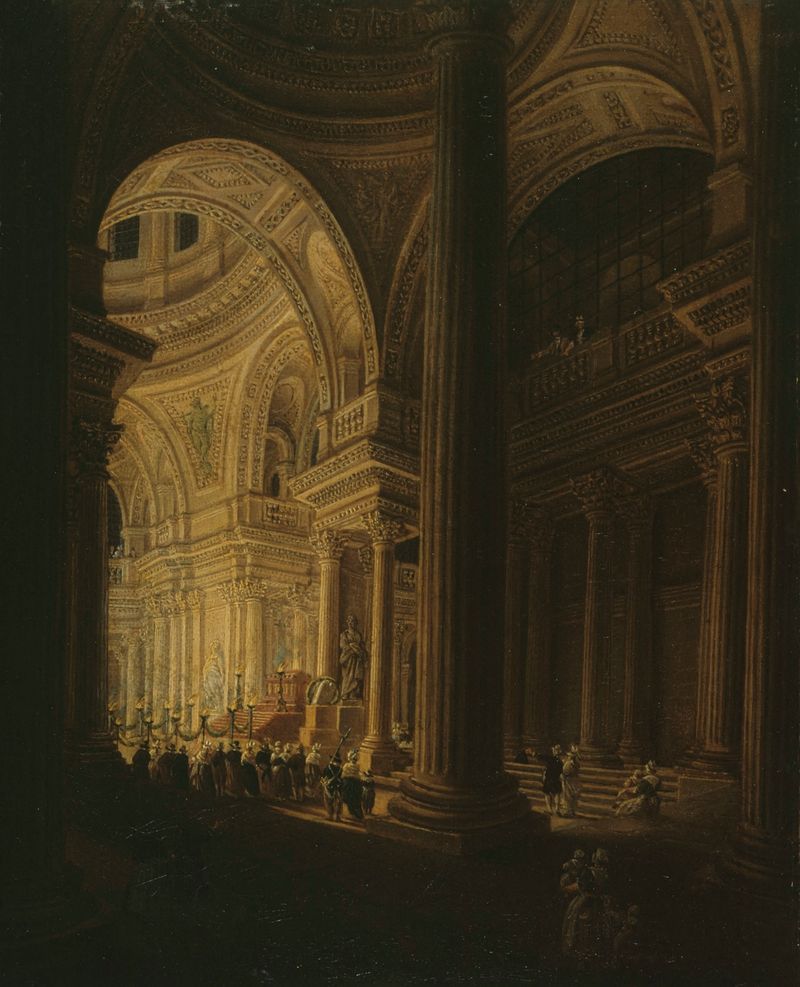
Le sarcophage de Jean-Jacques Rousseau, exposé au Panthéon (20 vendémiaire an III – 11 octobre 1794)
Pierre-Antoine Demachy
More Architecture Art
Browse all →
The statue of Liberty
Frédéric Auguste Bartholdi

View of Houses in Delft, Known as ‘The Little Street’
Johannes Vermeer

View of Houses in Delft, Known as ‘The Little Street’
Johannes Vermeer

The Cathedral in Rouen. The portal, Grey Weather
Claude Monet

The yellow house
Vincent van Gogh

The Church in Auvers-sur-Oise, View from the Chevet
Vincent van Gogh