
Dégagement de la seconde partie des Arènes de la rue Monge — History & Facts
Can paint confess what words never could? In the stillness of Dégagement de la seconde partie des Arènes de la rue Monge, yearning unfolds, a stark testament to the passage of time and the echoes of what once was. Look to the left at the weathered stone walls, their muted hues of ochre and gray whispering secrets of history. The play of light filtering through gaps creates dappled patterns on the ground, drawing your gaze toward the figures emerging from the shadows, each pose imbued with a sense of purpose. The composition is structured yet dynamic, with diagonal lines guiding your eyes into the heart of the scene, where human interaction flickers like a distant memory. Beneath the surface, emotions stir—a longing for connection amid the desolation.
The juxtaposition of the sturdy architecture against the delicate, almost tentative gestures of the people conveys a poignant contrast between permanence and transience. Each figure seems to carry the weight of unspoken stories, their silhouettes hinting at lives intertwined with the past, highlighting a shared experience of loss and resilience. During the years spanning 1915 to 1945, Jouas painted this work amid a backdrop of turmoil—two world wars reshaping Europe and the very fabric of society. As he navigated his own artistic journey, he engaged with the shifting paradigms of modernism, seeking to capture the soul of a city that was both familiar and irrevocably changed.
This painting stands as a reflection of those complexities, a window into a world longing for understanding and memory.
More Artworks by Charles Jouas
Browse all →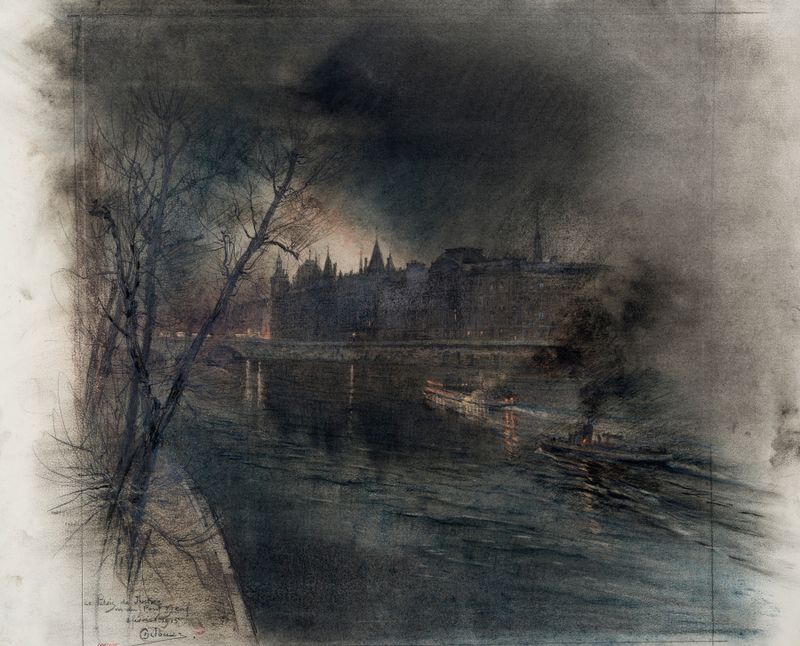
Le Palais de Justice vu du Pont-Neuf
Charles Jouas
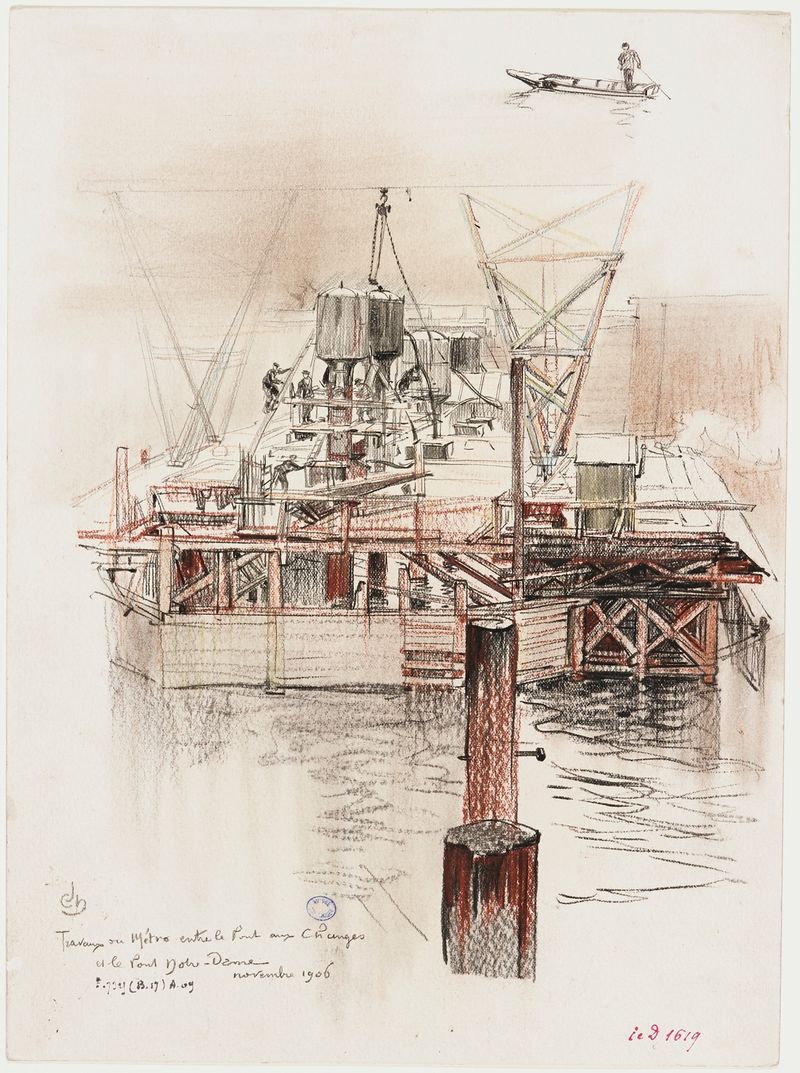
Travaux du métro entre le pont au Change et le pont Notre Dame
Charles Jouas
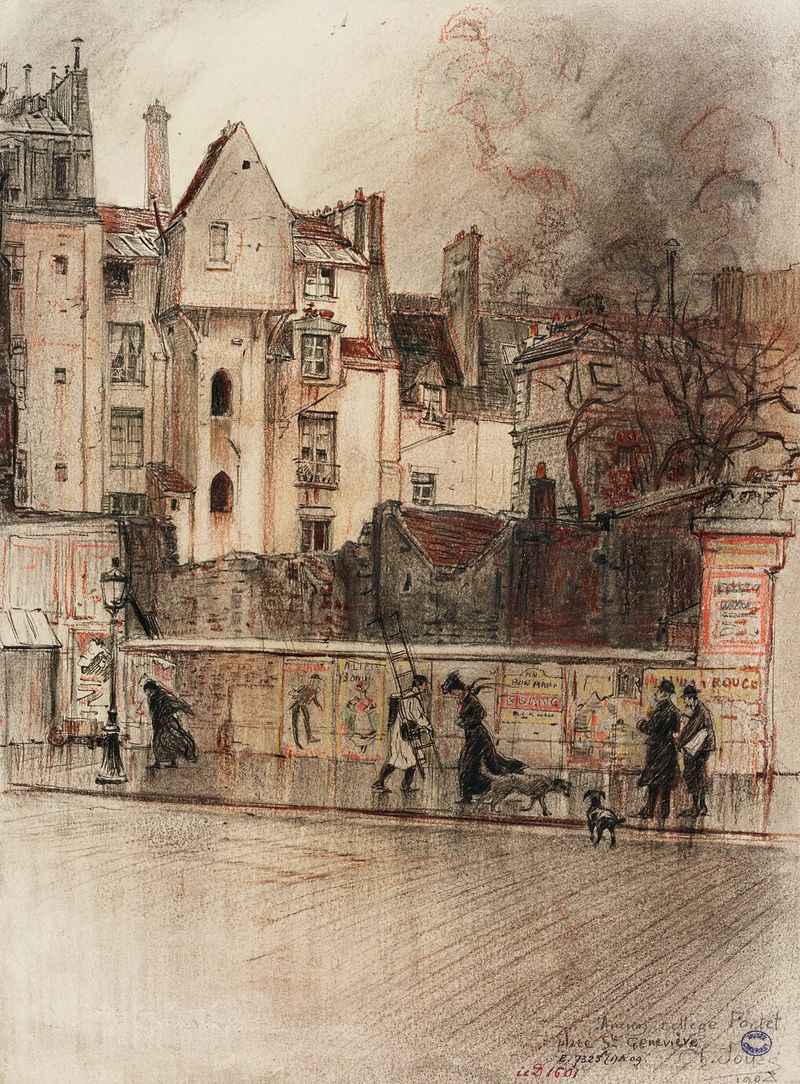
La tour de Calvin (ancien collège de Fortet), place Sainte Geneviève
Charles Jouas

Travaux du métro entre le pont au Change et le pont Notre Dame
Charles Jouas
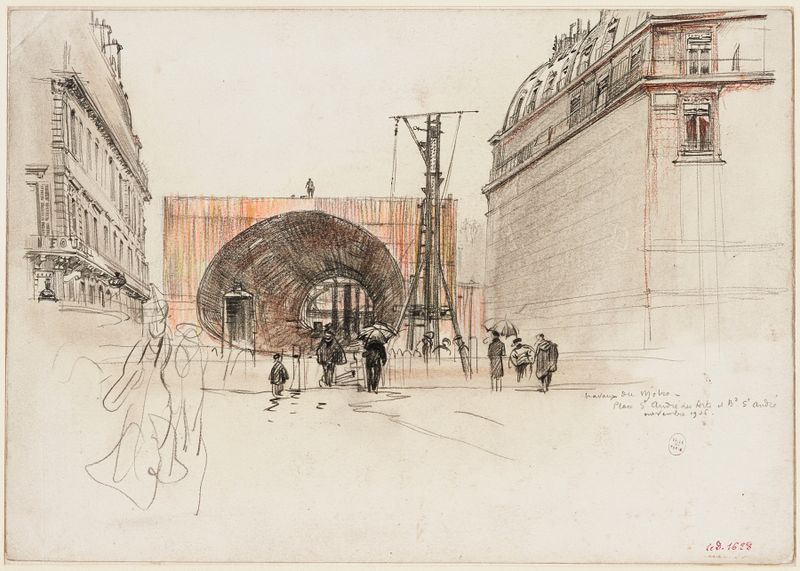
Travaux du métropolitain rue Danton et boulevard Saint-André (le caisson), 6ème aarondissement, Paris
Charles Jouas
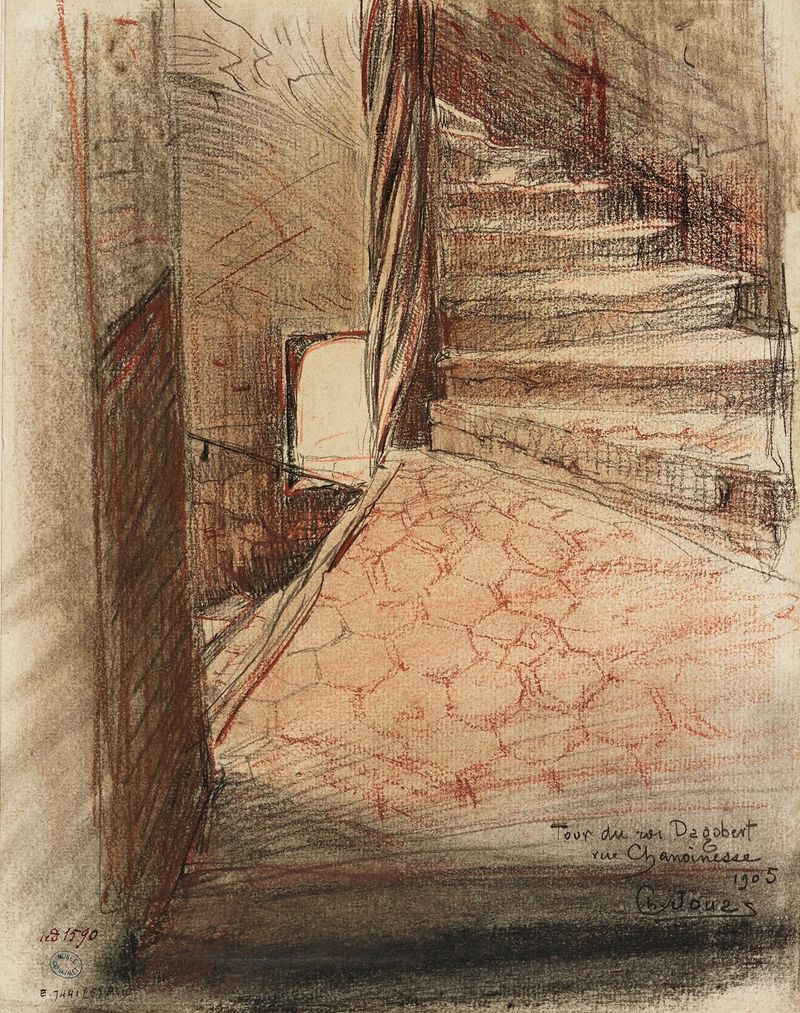
Escalier de la tour Dagobert, rue Chanoinesse
Charles Jouas

Escalier intérieur, 16 rue du Cloître Notre-Dame
Charles Jouas

L’escalier de la rue des Barres
Charles Jouas
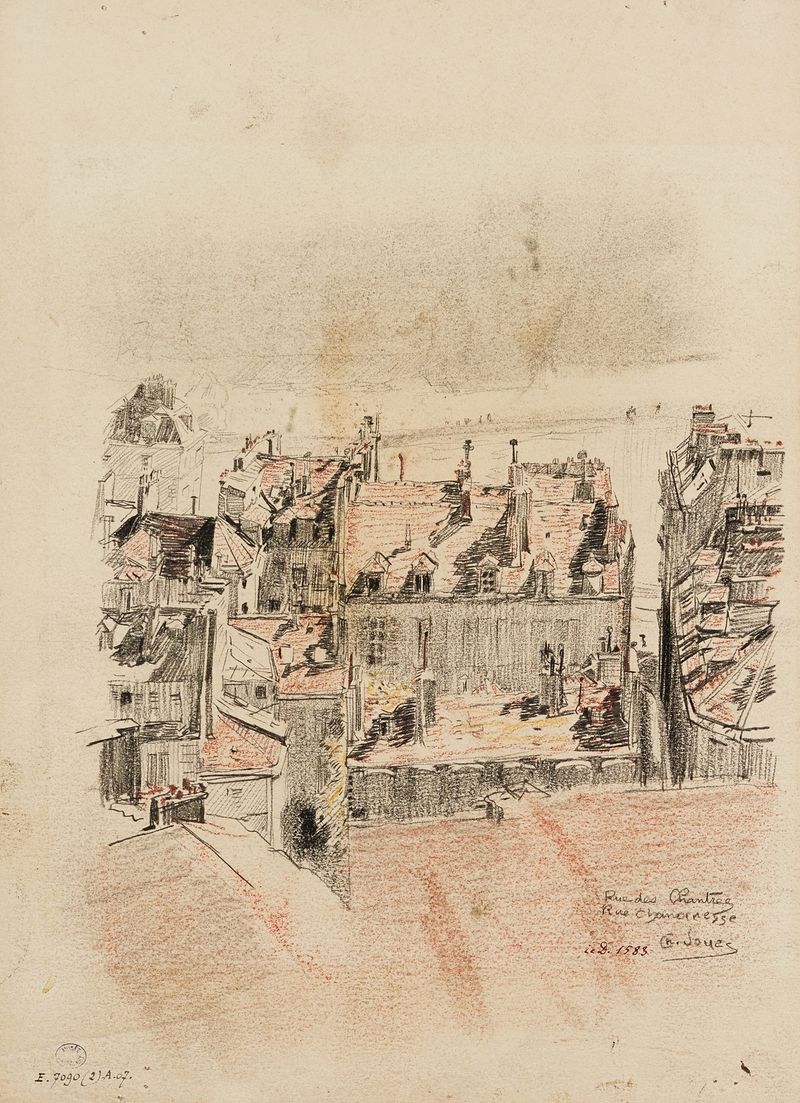
Rue des Chantres et rue Chanoinesse
Charles Jouas

Rue Grenier sur l’Eau
Charles Jouas





