
Diana and Callisto, Actaeon in the distance — History & Facts
A golden hush settles over the water’s edge, where the painter’s eye lingers not on a single figure, but on the charged space between them. The women, caught in a moment of startled intimacy, seem to freeze as the viewer approaches—one arm thrown protectively, another reaching out, the pale curve of skin set against the shadowed undergrowth. The painter, Adriaen van Stalbemt, draws you into the clearing not just with the drama of gesture, but with a careful orchestration of light: the sunlit glade is a stage, the dense foliage a curtain, and the distant figure—almost lost in the trees—reminds us that stories can unfold quietly, in the periphery. This is a world shaped by early seventeenth-century tastes, when mythological scenes offered both moral lessons and a pretext for exploring the nude.
The painting, made between 1600 and 1634, belongs to a tradition where collectors—often wealthy merchants or minor nobility—sought out such works for their cabinets, eager to display learning and refinement. Van Stalbemt was known for his intricate landscapes, and here he balances the human drama with a landscape that feels almost enchanted, every tree and ripple painted with care. History has kept few traces of this specific painting’s journey, but its survival invites us to linger in its shaded grove, searching for the moment when myth and nature meet.
More Artworks by Adriaen van Stalbemt

Countryside landscape with staffage
Adriaen van Stalbemt
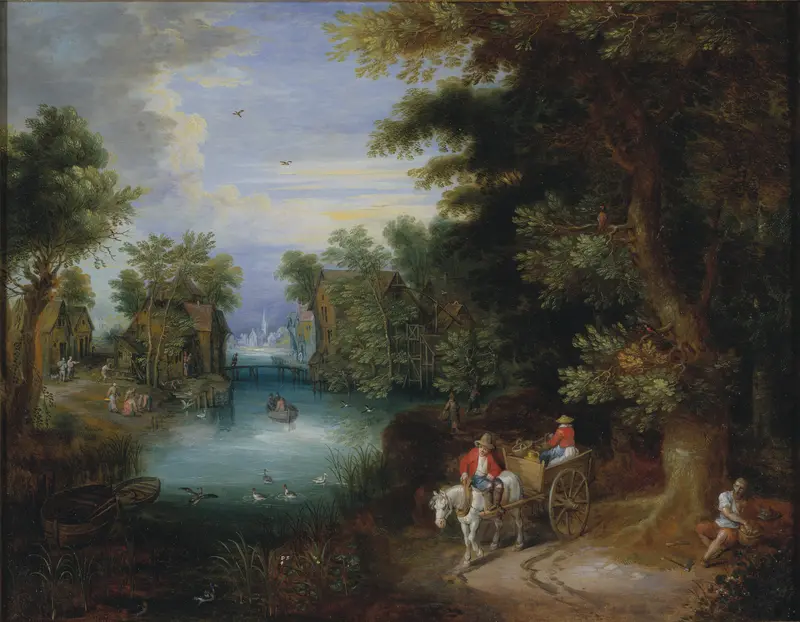
River Landscape with Peasants
Adriaen van Stalbemt
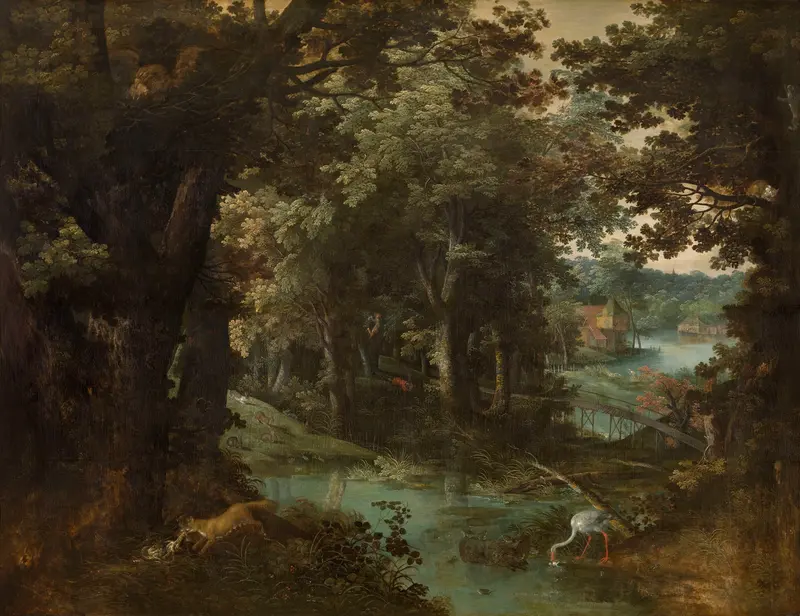
Landscape with Beast Fables
Adriaen van Stalbemt
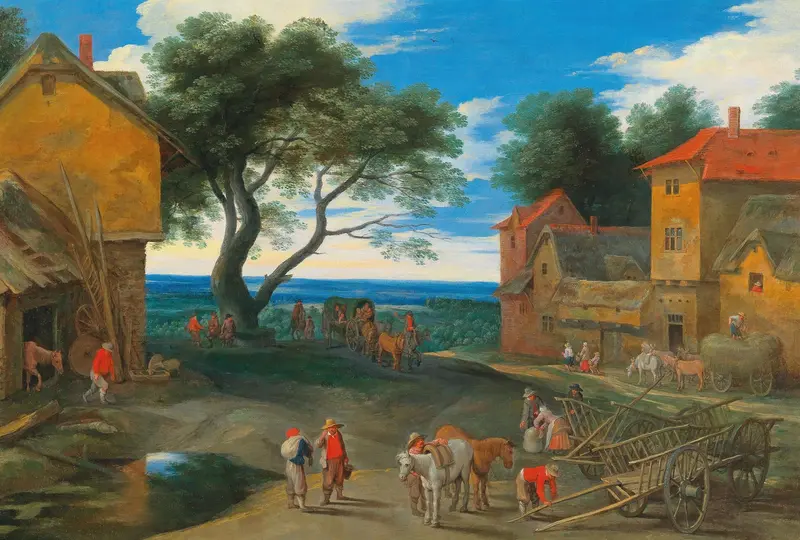
Travellers in a landscape with buildings
Adriaen van Stalbemt
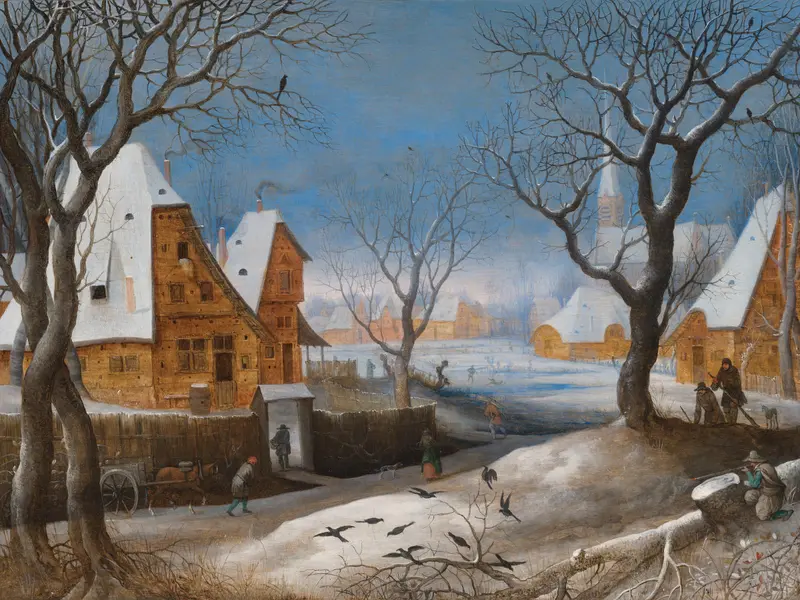
A winter landscape, with figures in a village
Adriaen van Stalbemt
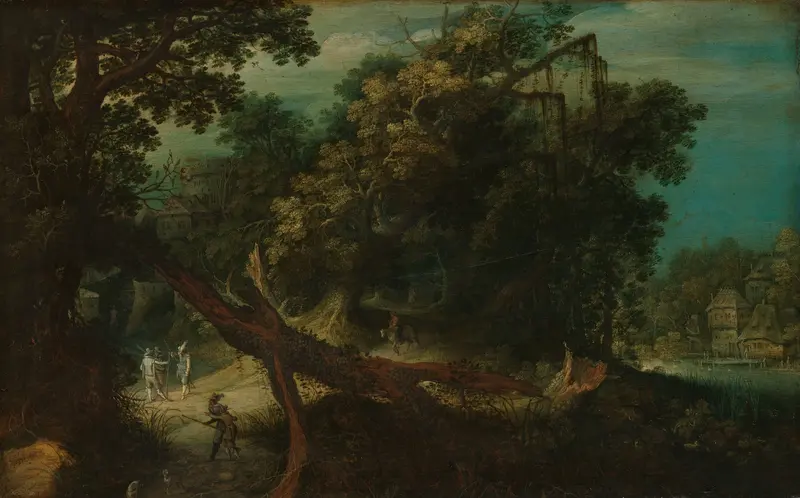
Shooters in a Forest Glade
Adriaen van Stalbemt
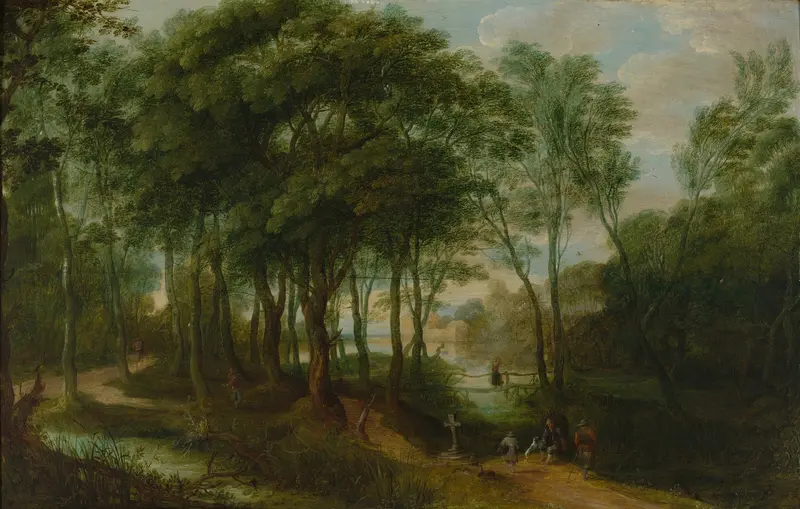
Figures On A Wooded Path, With A Building Behind
Adriaen van Stalbemt
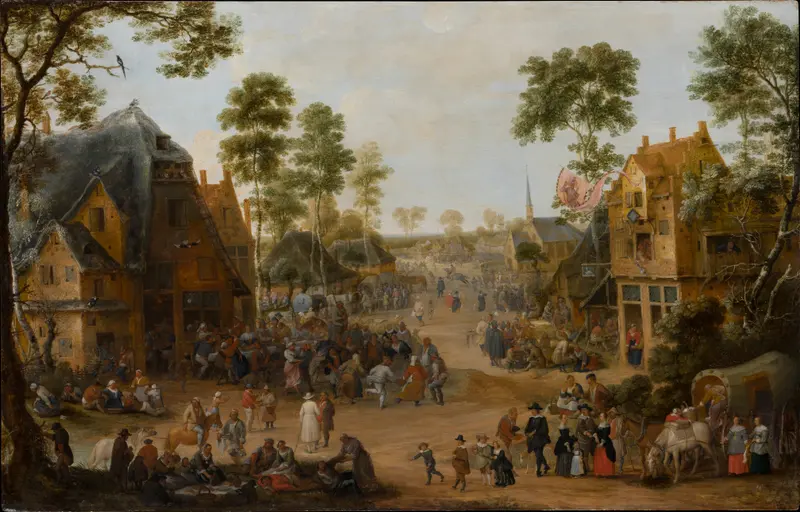
Village Church Festival
Adriaen van Stalbemt
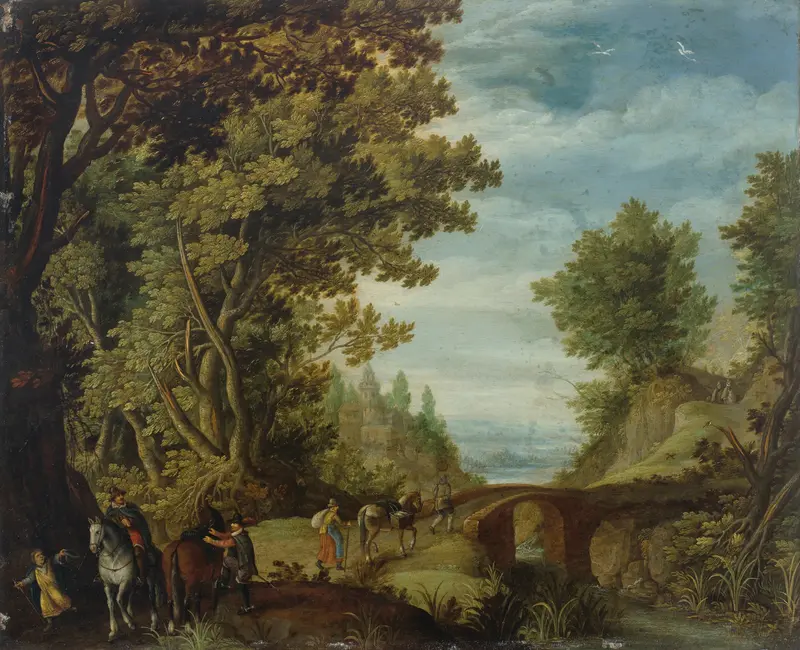
A wooded landscape with travelers crossing a bridge
Adriaen van Stalbemt
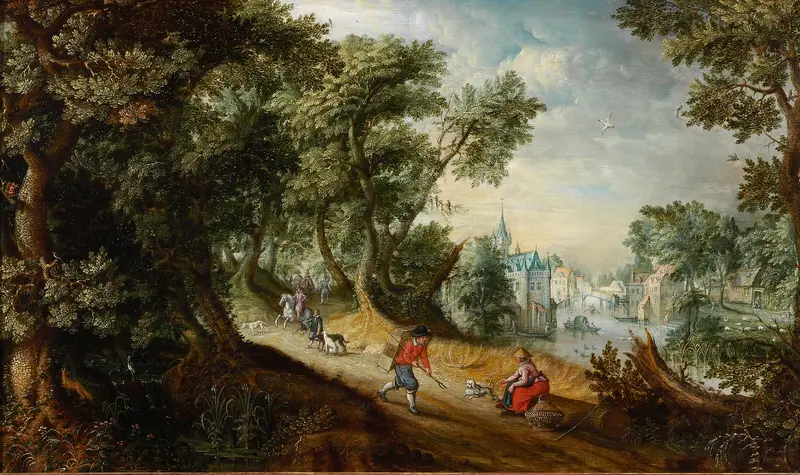
Landschap met rivier
Adriaen van Stalbemt





