Perseus and Andromeda — History & Facts
A young woman stands chained to a rocky outcrop at the right edge of the panel, her arms raised above her head and her body turned in profile toward the left. She is nearly nude, with only a white cloth draped loosely around her hips, and her long hair falls over her shoulder as she looks downward, her expression tense and anxious. Directly below her, a large sea monster with a gaping mouth and curling body emerges from the water, its head turned upward in her direction.
To the left, a male figure in armor swoops down from above, his body twisted in a dynamic pose as he brandishes a curved sword in his right hand and holds a round shield in his left. His helmet gleams with a metallic sheen, and a flowing pink sash trails behind him, adding a sense of movement to the scene. Around the monster, the water is rendered with loose, swirling brushstrokes, suggesting agitation and danger, while the rocky backdrop is painted in earthy browns and ochres.
The light falls from the left, illuminating the woman's pale skin and catching the highlights on the armored figure and the monster's head, creating strong contrasts throughout the composition. The paint is applied in rapid, visible strokes, especially in the water and background, giving the surface a lively, sketch-like quality. The composition is tightly framed, focusing attention on the dramatic encounter between the three main figures, with the vertical format emphasizing the woman's vulnerable position.
Small details, such as the links of the chains around the woman's wrists and the glint on the hero's shield, reveal the artist's attention to narrative and material effects. Perseus and Andromeda was painted by Peter Paul Rubens in 1636.
Sources: Museum Boijmans Van Beuningen, record 3199 (OK) · Wikidata Q19925882 · Image source (Wikimedia Commons)
More Artworks by Peter Paul Rubens

The Coronation of Henri IV
Peter Paul Rubens

Portrait de Marie de Médicis
Peter Paul Rubens

Apollo and Daphne
Peter Paul Rubens

Anne of Austria, Queen of France
Peter Paul Rubens

Bacchus and Ariadne
Peter Paul Rubens

Christ on the Cross with Maria, Mary Magdalene and St John
Peter Paul Rubens

Equestrian portrait of Charles Colonna, Duke of Marsi
Peter Paul Rubens

Hippomenes and Atalanta
Peter Paul Rubens

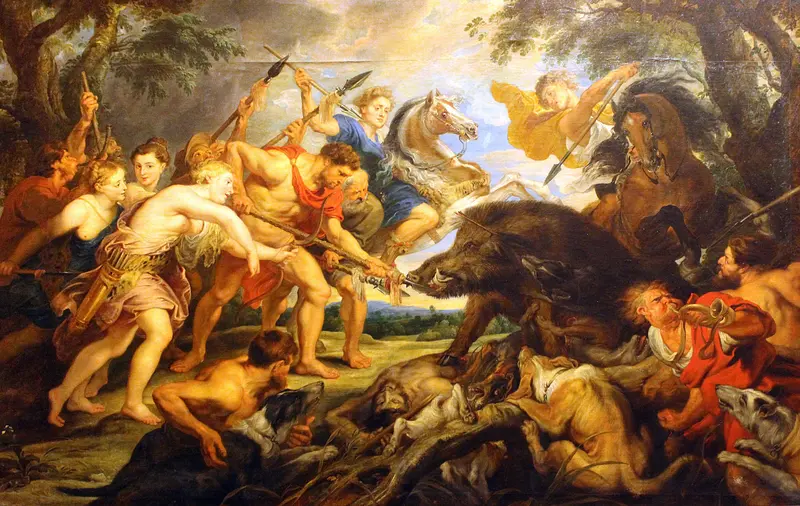
Meleager and Atalanta and the Hunt of the Calydonian Boar
Peter Paul Rubens
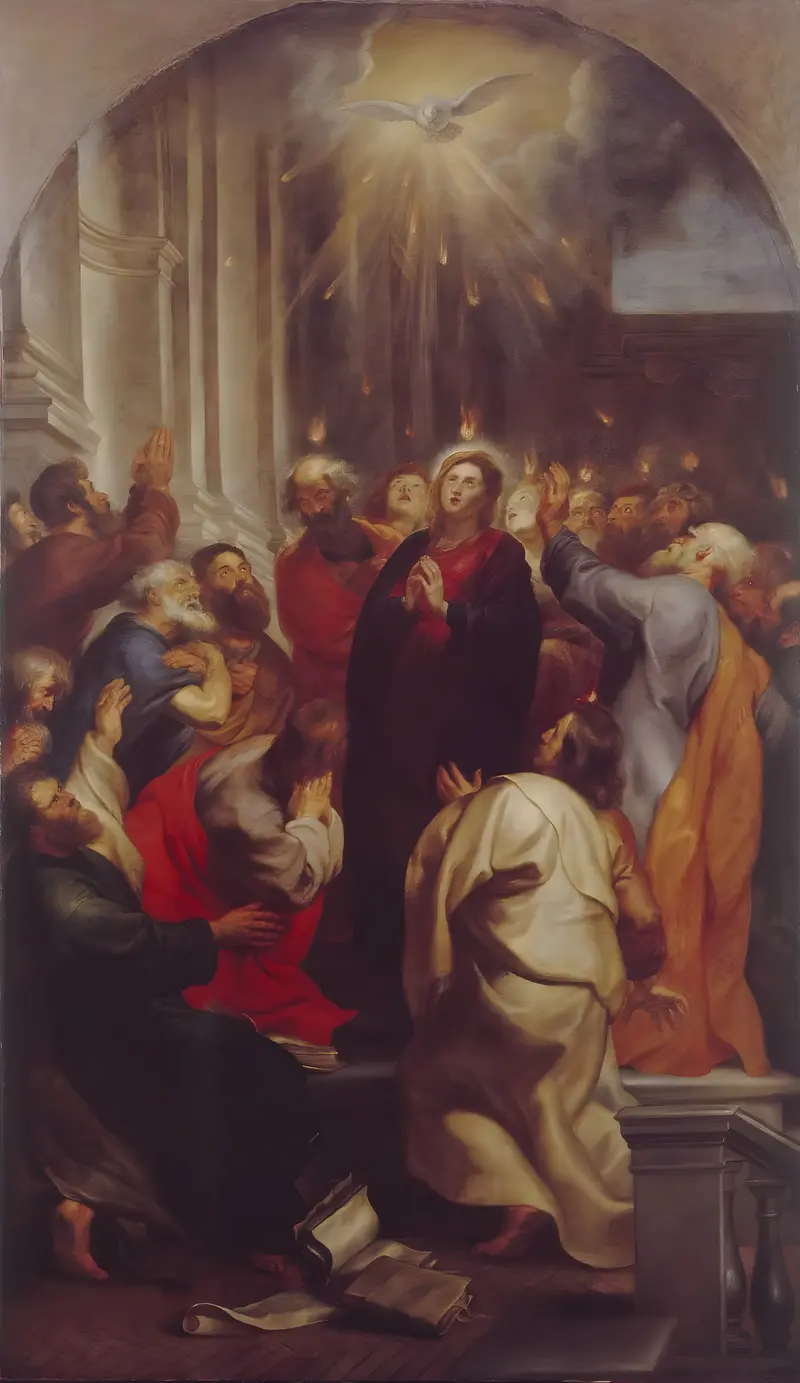
Pentecost
Peter Paul Rubens