
Die Alpe Barneuza (Wallis) — History & Facts
Can paint confess what words never could? In Die Alpe Barneuza (Wallis), a silent yearning unfolds beneath the towering peaks, a longing for connection to nature's sublime beauty. Look to the left at the majestic mountains, their jagged peaks reaching skyward, veiled in a soft mist that hints at the mysteries held within. The vibrant greens of the valley below contrast starkly with the grays and whites of the rocky summits, drawing the eye into the depth of the landscape. Notice how the brushstrokes convey both texture and emotion, as the artist captures the fleeting light that dances across the canvas, illuminating the scene with a warm glow. This work embodies the duality of desire—both for the vastness of the untamed wilderness and for the intimacy of human experience within it.
The tension between the serene valley and the imposing mountains suggests a struggle between tranquility and ambition. In subtle details, like the wispy clouds that cling to the heights, there lies an echo of unattainable dreams, as if the landscape itself yearns for acknowledgment and understanding. In 1900, while creating this piece, the artist was deeply immersed in the beauty of the Swiss Alps, reflecting a period of exploration and appreciation for natural landscapes. This era in art was marked by a growing fascination with realism and the impressionistic treatment of light and form.
Compton’s work captures both the physicality and emotional resonance of the Alpine scenery, a testament to his mastery at a time when such themes were gaining prominence in the artistic dialogue.
More Artworks by Edward Theodore Compton
Browse all →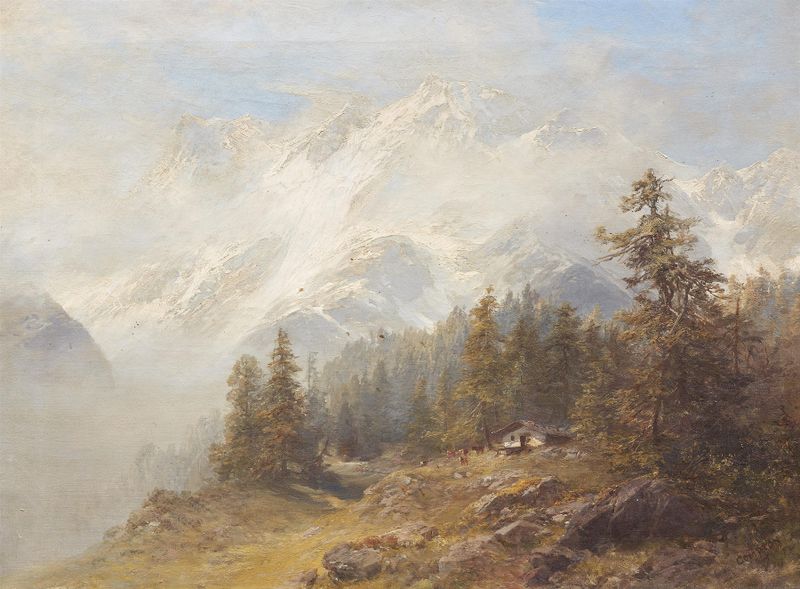
Alpenlandschaft vor schneebedecktem Massiv
Edward Theodore Compton
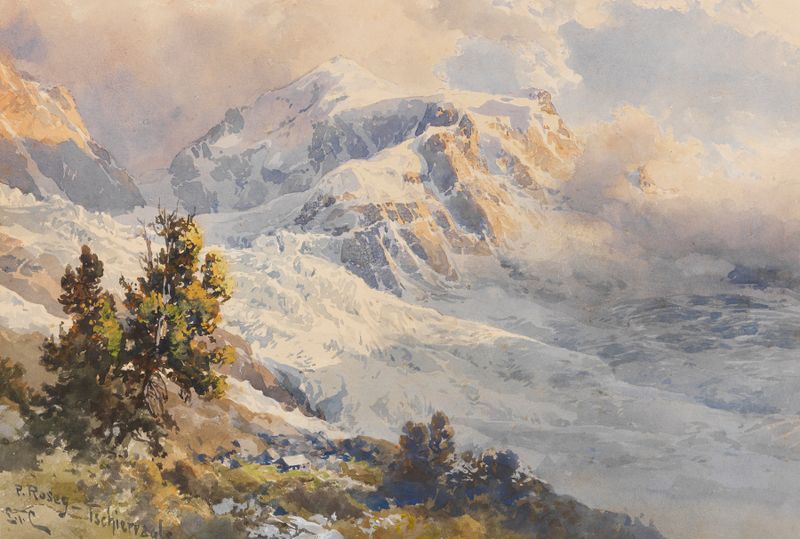
Piz Roseg – Tschiervagletscher
Edward Theodore Compton
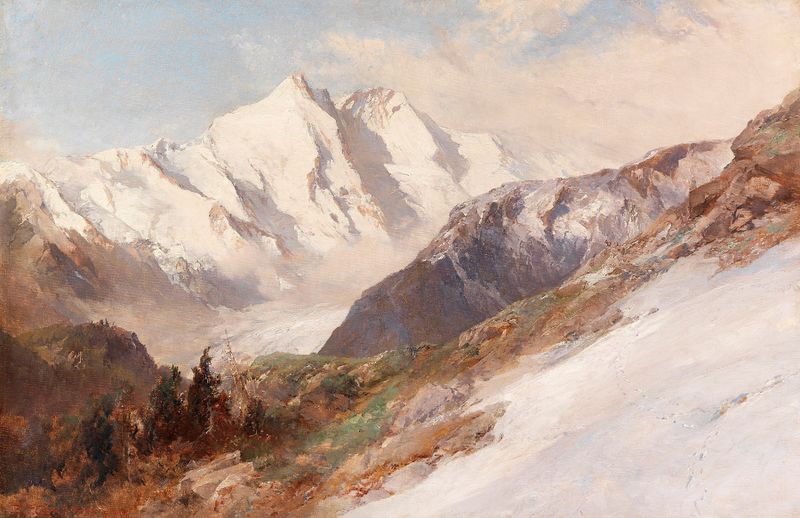
Blick auf die Nordseite des Großglockners
Edward Theodore Compton
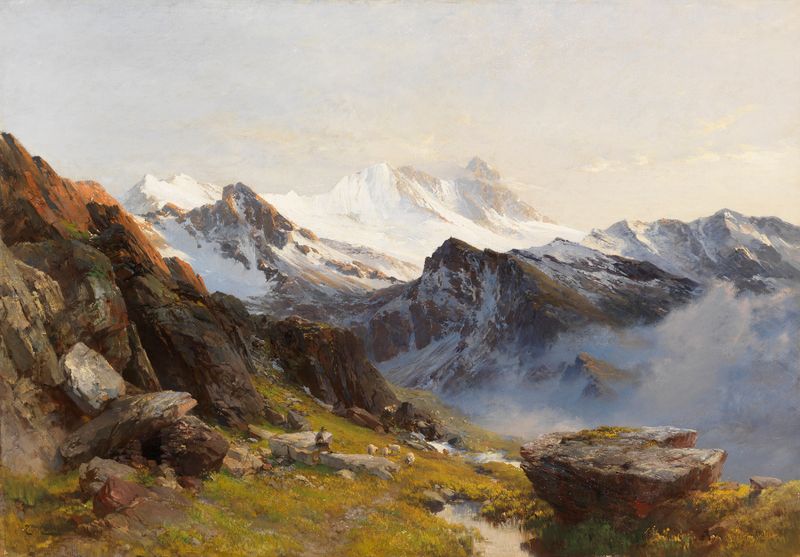
Großglockner von der Prager Hütte aus, früh
Edward Theodore Compton
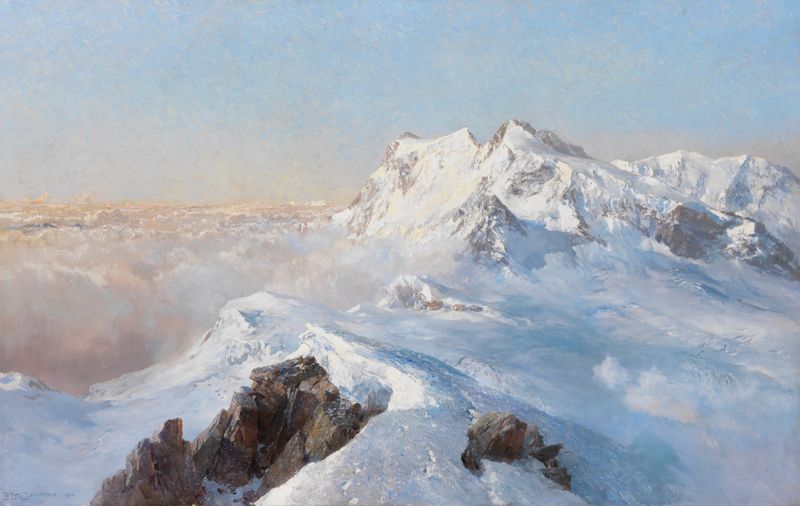
Über dem Nebelmeer (Monte Rosa vom Rimpfischhorn)
Edward Theodore Compton
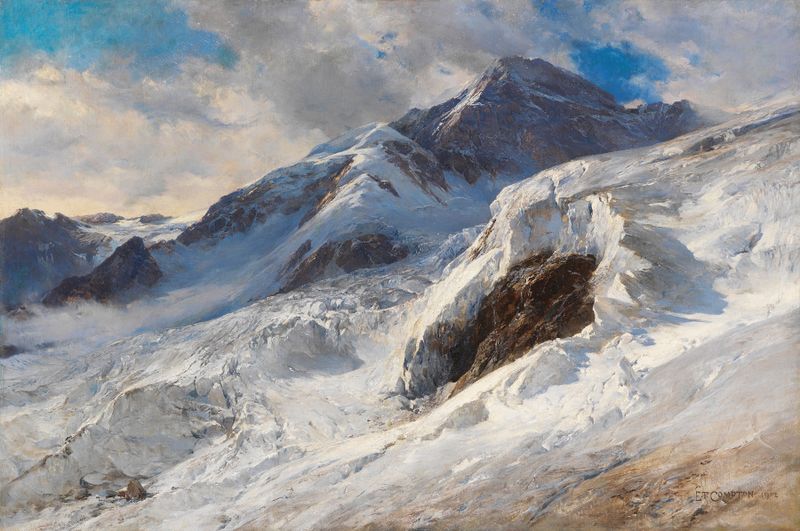
Lyskamm (Monte-Rosa)
Edward Theodore Compton
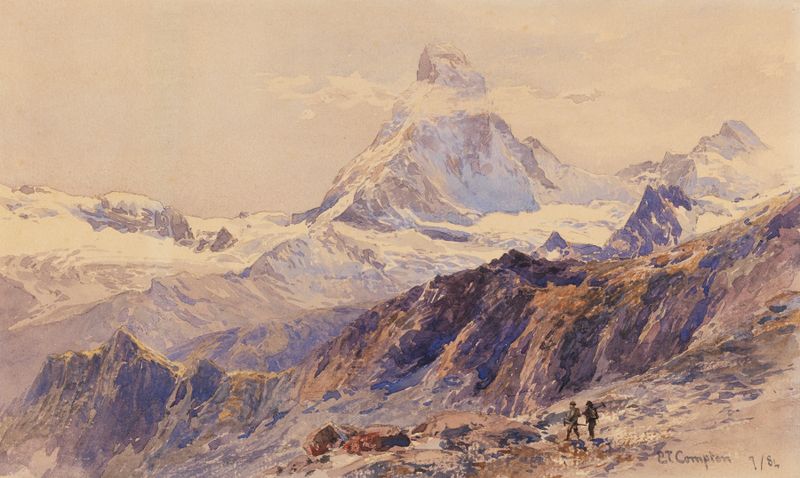
Das Matterhorn von der Triftkumme
Edward Theodore Compton
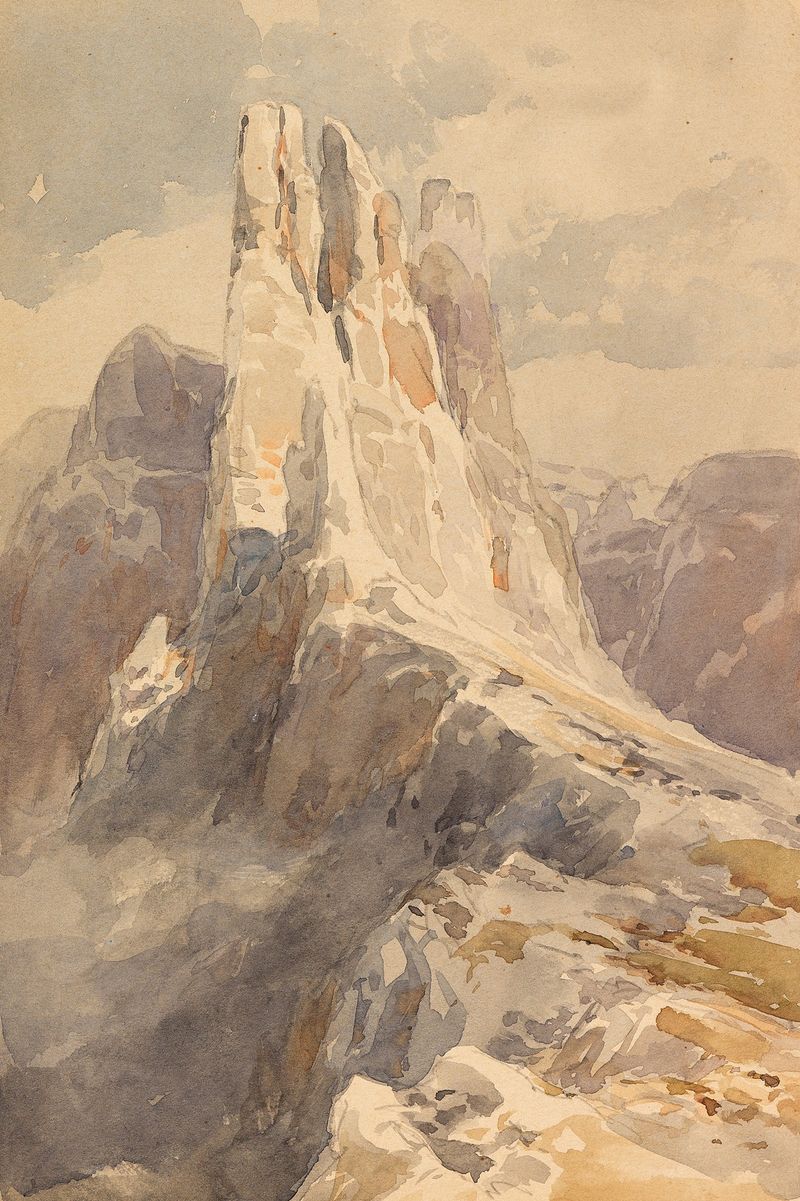
Blick auf die Vajolet-Türme in den Dolomiten
Edward Theodore Compton
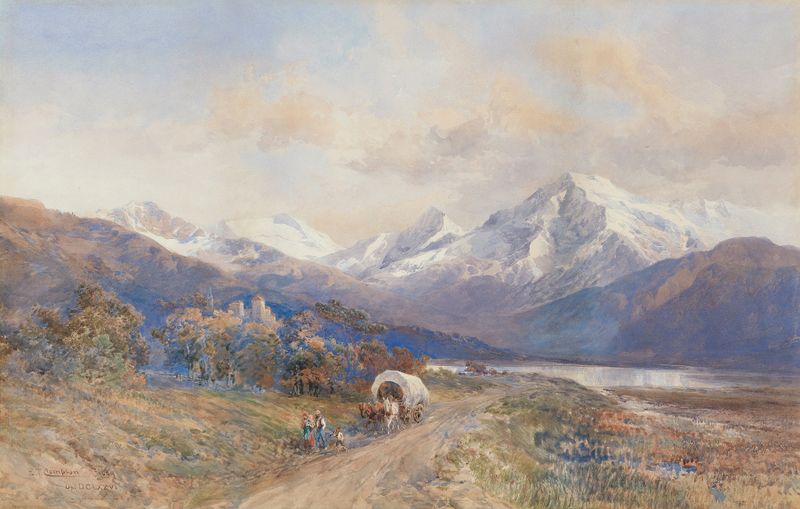
Blick auf den Ortler von St. Valentin
Edward Theodore Compton
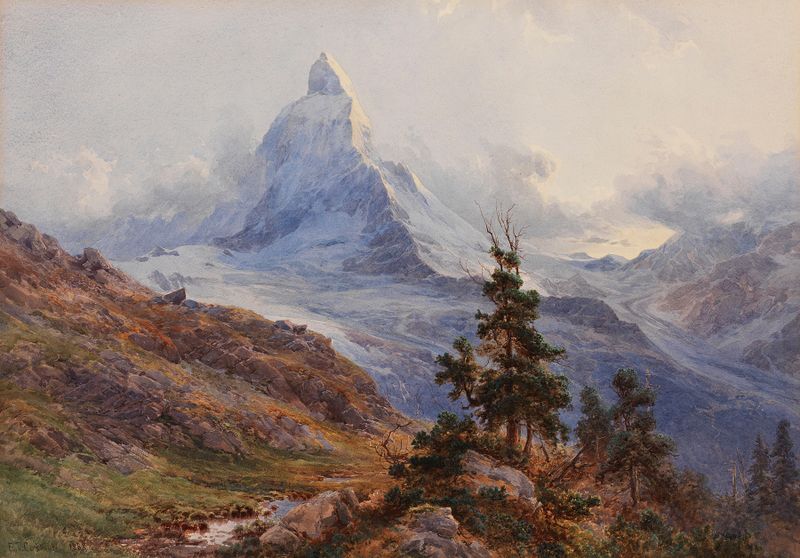
View of the Matterhorn
Edward Theodore Compton





