
Die Alpen von Graubünden vom Tödi aus — History & Facts
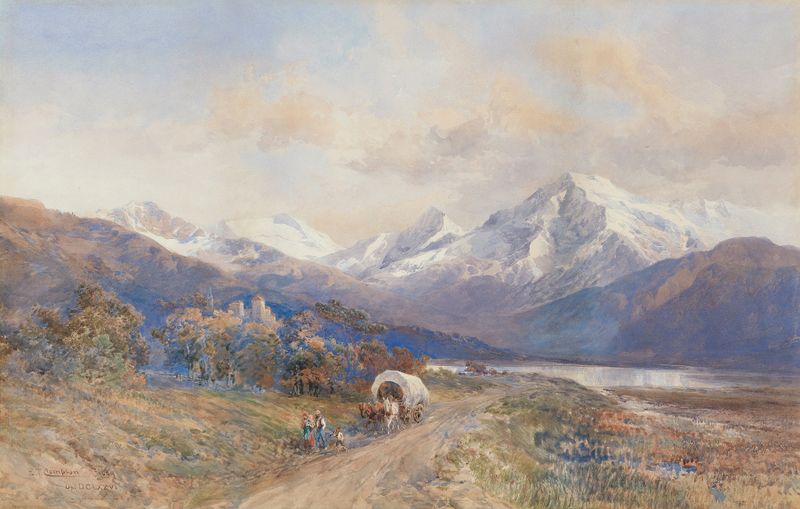
In the vast expanse of the natural world, emptiness can echo louder than words, revealing truths hidden in the crevices of our souls. Look to the left at the jagged silhouettes of the towering peaks, their angular forms contrasting sharply with the smooth, undulating valleys below. The canvas is awash in a palette of cool blues and crisp whites, capturing the crispness of high-altitude air, while sunlight glimmers off the snow, creating a brilliant highlight that draws the eye. Notice how the composition guides your gaze upward, inviting you to trace the contours of the mountains that seem to stretch infinitely toward the heavens. Within this breathtaking vista, there lies a poignant juxtaposition of majesty and isolation.
The expansive landscape, both awe-inspiring and desolate, evokes a sense of longing, as if the viewer is yearning for connection amidst the vastness. The emptiness speaks to the human experience—our search for meaning in a world that often feels insurmountable. Here, in solitude, one can find both beauty and a profound sense of loss. In 1900, the artist created this work while residing in the picturesque landscapes of Switzerland, a country that infused his art with its grandeur.
At this time, landscapes were evolving in the art world, reflecting a shift towards capturing the sublime qualities of nature. Compton, known for his meticulous attention to detail and ability to depict light, sought to convey not just the physical beauty of the mountains, but the emotions they inspire—a testament to humanity's complex relationship with nature and its vast, unyielding spaces.
More Artworks by Edward Theodore Compton
Browse all →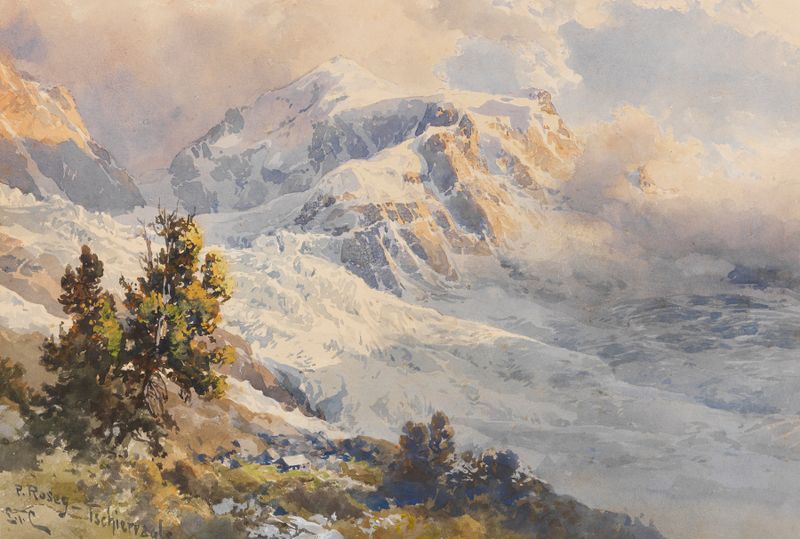
Piz Roseg – Tschiervagletscher
Edward Theodore Compton
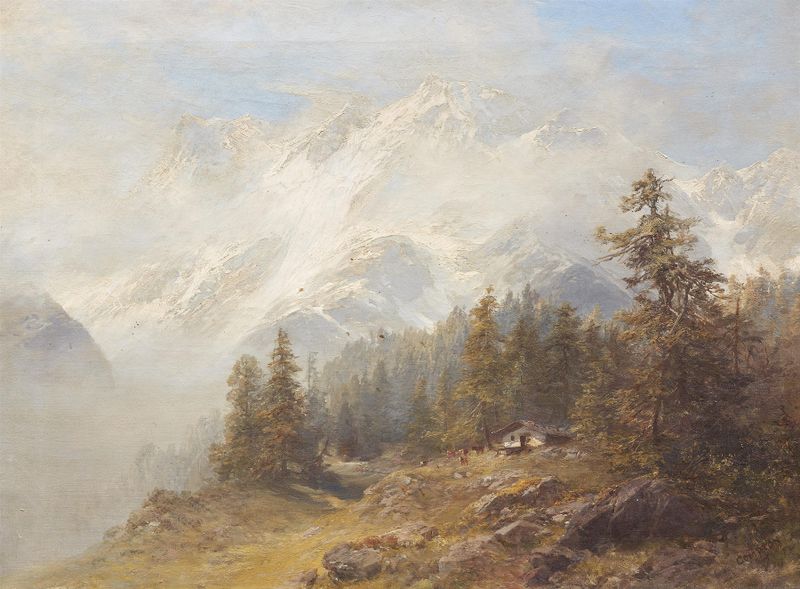
Alpenlandschaft vor schneebedecktem Massiv
Edward Theodore Compton
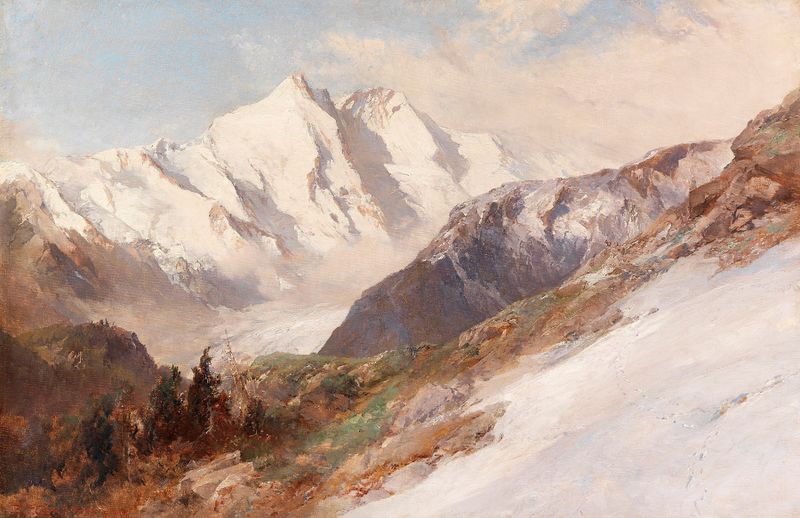
Blick auf die Nordseite des Großglockners
Edward Theodore Compton
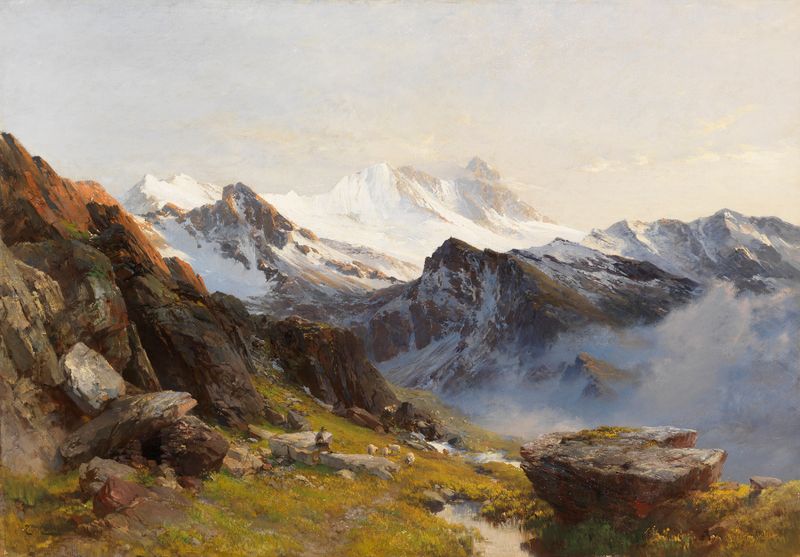
Großglockner von der Prager Hütte aus, früh
Edward Theodore Compton
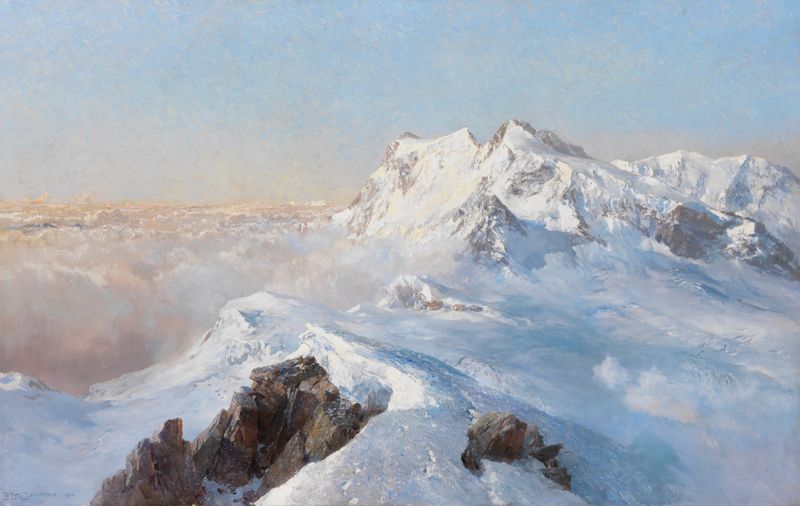
Über dem Nebelmeer (Monte Rosa vom Rimpfischhorn)
Edward Theodore Compton
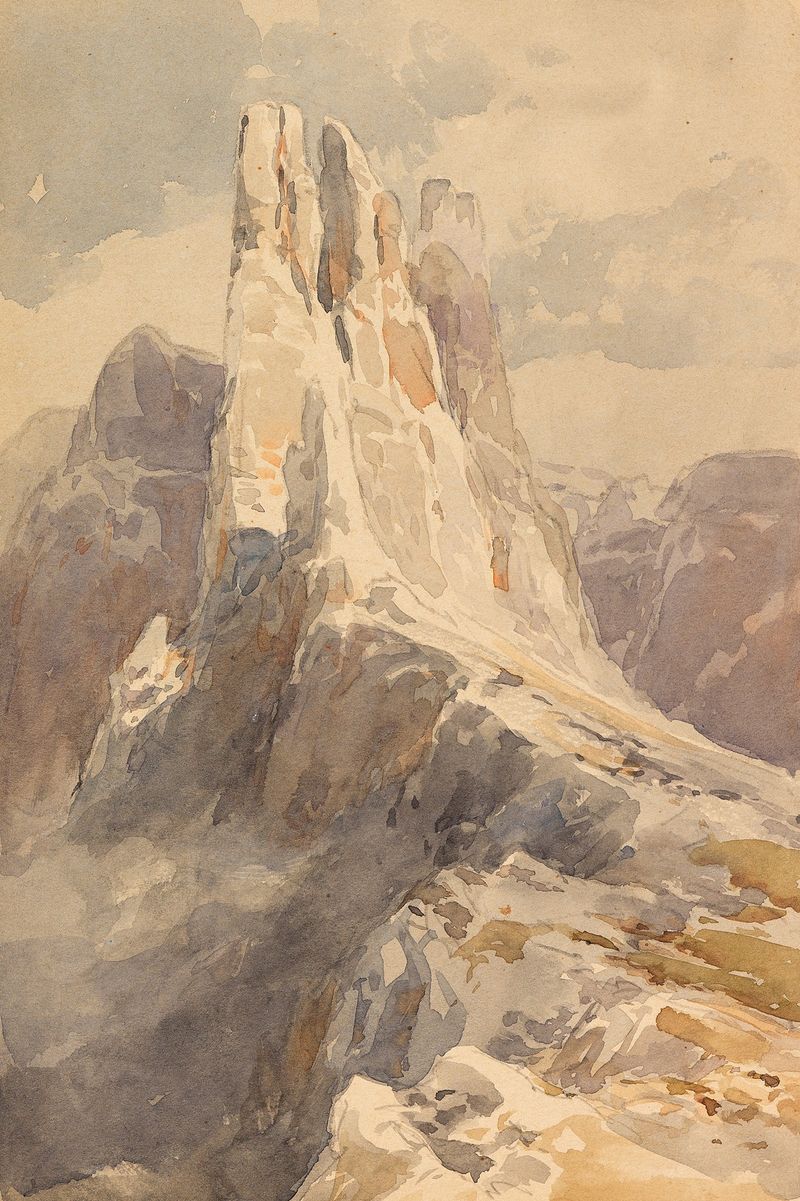
Blick auf die Vajolet-Türme in den Dolomiten
Edward Theodore Compton
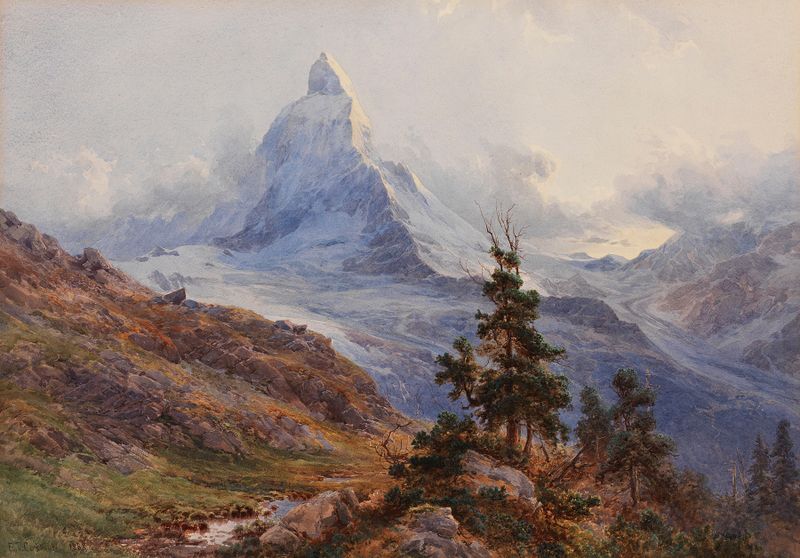
View of the Matterhorn
Edward Theodore Compton
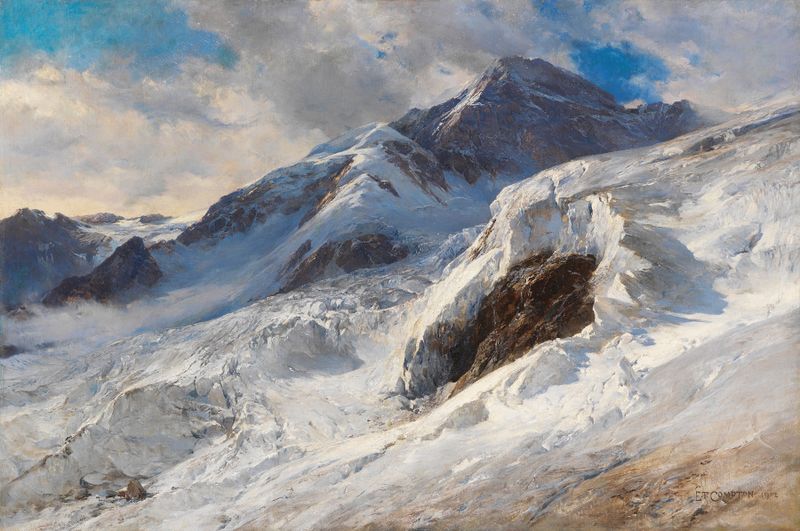
Lyskamm (Monte-Rosa)
Edward Theodore Compton
Blick auf den Ortler von St. Valentin
Edward Theodore Compton
Das Matterhorn von der Triftkumme
Edward Theodore Compton





