
Die Birkenallee im Wannseegarten nach Osten, Wohl — History & Facts
When did color learn to lie? In the stillness of a sunlit garden, tranquility washes over the viewer like the gentle caress of a warm breeze. Each brushstroke whispers secrets of serenity, inviting us to lose ourselves within a lush embrace of nature. Focus on the soft, dappled light that filters through the vibrant green leaves, casting playful shadows upon the path ahead. Look closely at the delicate interplay of colors: the deep greens of the birch trees contrast beautifully with the muted earth tones of the pathway, guiding our eyes deeper into the scene.
The composition leads us down the avenue, suggesting a journey not just through the garden, but into the heart of calm. The artist employs thick impasto techniques that create a tactile quality, allowing the viewer to almost feel the warmth of the sun and the coolness of the shade. Yet there is a tension beneath the surface; the vibrant colors bring forth a sense of joy, while the quiet absence of people hints at solitude or introspection. The rhythmic pattern of the trees creates a sense of order, yet their slightly swaying trunks suggest an unseen breeze, symbolizing the transient nature of peace.
This duality evokes a deeper reflection on the fragility of moments spent in serenity, reminding us that stillness often accompanies solitude. In 1924, Max Liebermann painted this piece during a pivotal time in his life, as he was establishing himself as one of Germany’s leading Impressionists. Creating art in post-World War I Germany, he faced the challenges of a changing society, yet his depictions of gardens and landscapes remained a refuge. This work epitomizes his commitment to capturing fleeting beauty amidst a world that was grappling with its own complexities.
More Artworks by Max Liebermann
Browse all →
Die Blumenterrasse in Wannsee mit Blick auf den Fischotterbrunnen
Max Liebermann
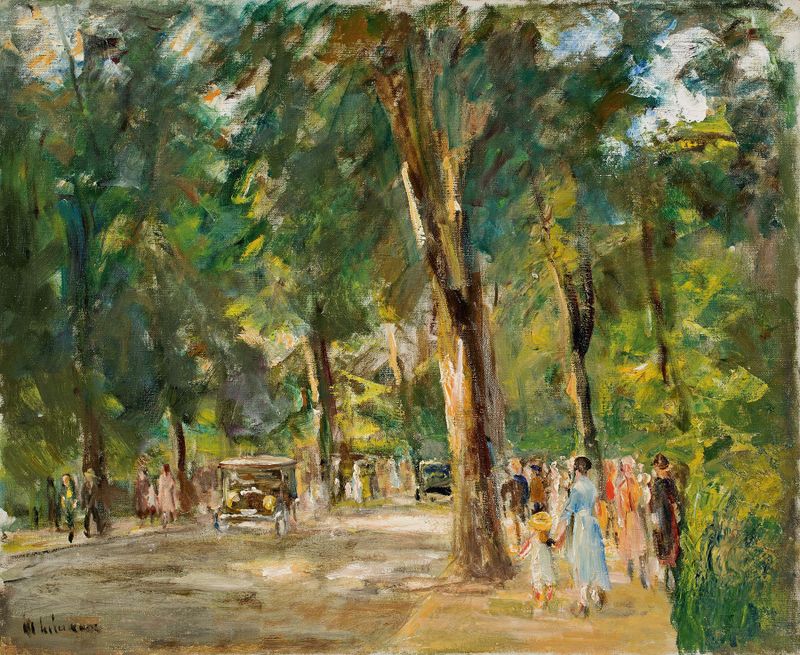
Die Große Seestraße in Wannsee mit Spaziergängern
Max Liebermann

Seitlicher Blick in den Wannseegarten
Max Liebermann

Der Rosengarten in Wannsee
Max Liebermann

Allee mit Spaziergängern und Automobilen
Max Liebermann

Blick in meinen Garten
Max Liebermann
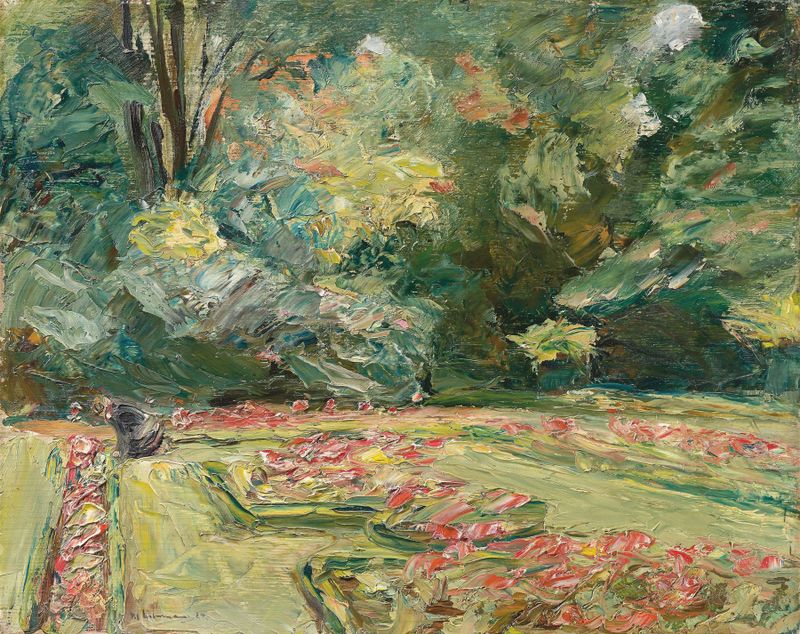
Die Blumenterrasse im Wannseegarten nach Norden
Max Liebermann

Spielende Kinder am Strand
Max Liebermann
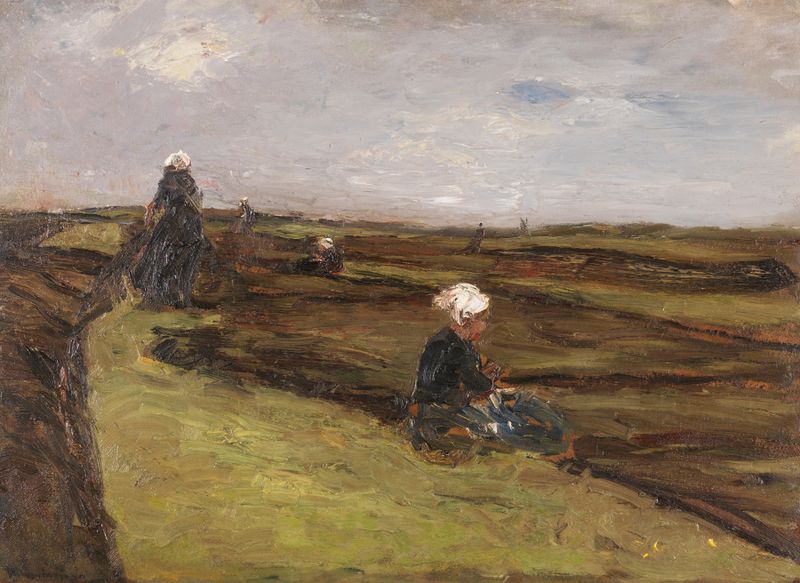
Die Netzflickerinnen
Max Liebermann

Am Strand von Noordwijk
Max Liebermann





