
Die Birkenallee in Wannsee nach Nordwesten — History & Facts
What if beauty was never meant to be finished? In Die Birkenallee in Wannsee nach Nordwesten, Max Liebermann invites us to ponder the divine within the natural world, capturing a fleeting moment that feels both eternal and ephemeral. Look to the lower left corner, where the path meanders gently beneath the arching boughs of birch trees. Notice the dappled light filtering through the leaves, illuminating the soft greens and delicate whites that dominate the canvas. The brushstrokes are lively yet controlled, each stroke conveying the vibrancy of the foliage while creating a sense of movement that beckons the viewer to step into this tranquil scene.
The depth of perspective draws your gaze further down the path, where the image fades softly into the distance, hinting at the infinite. The contrasting light and shadow create an emotional tension, embodying the delicate balance between tranquility and transience. This interplay can be seen in the gentle sway of the trees, which, though rooted, seem to dance in a whispering breeze. Additionally, the absence of human figures allows the viewer to reflect on solitude and the divine presence in nature, provoking thoughts about the interconnectedness of life and beauty itself. Created in 1920, this work emerged during a period of significant change in Liebermann's life; he was grappling with the effects of World War I and the shifting artistic landscapes of the time.
As a leading figure in the German Impressionist movement, he sought to capture the essence of his surroundings through a lens of intimacy and realism, reflecting both his personal experiences and broader societal transformations.
More Artworks by Max Liebermann
Browse all →
Die Blumenterrasse in Wannsee mit Blick auf den Fischotterbrunnen
Max Liebermann
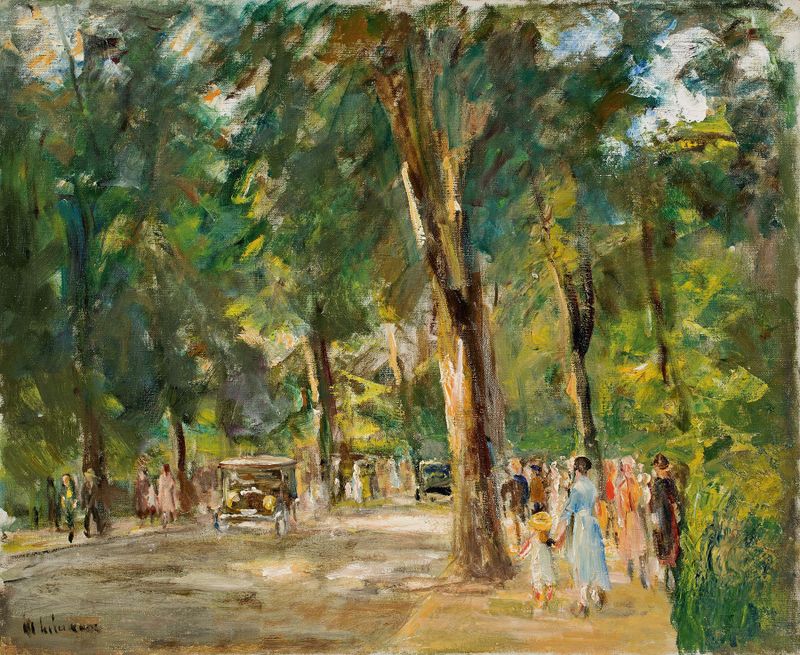
Die Große Seestraße in Wannsee mit Spaziergängern
Max Liebermann

Seitlicher Blick in den Wannseegarten
Max Liebermann

Der Rosengarten in Wannsee
Max Liebermann

Allee mit Spaziergängern und Automobilen
Max Liebermann

Blick in meinen Garten
Max Liebermann
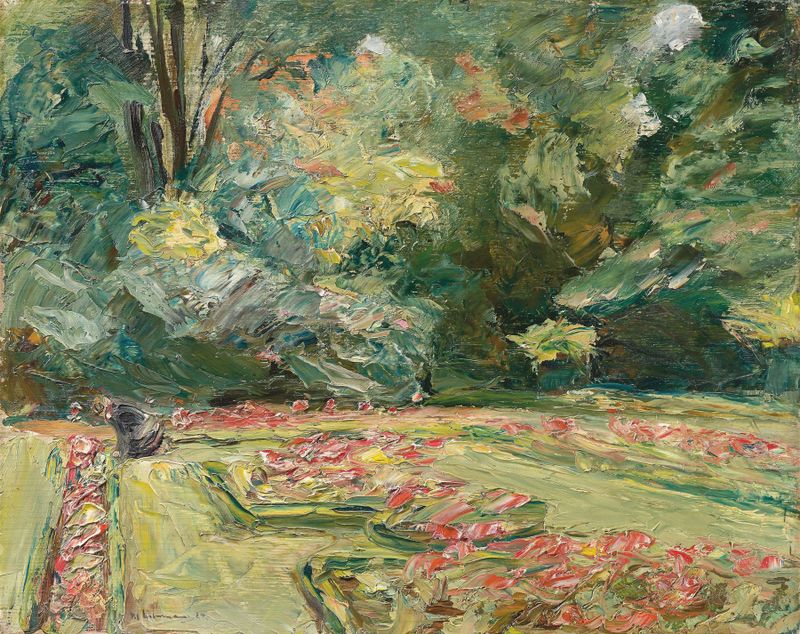
Die Blumenterrasse im Wannseegarten nach Norden
Max Liebermann

Spielende Kinder am Strand
Max Liebermann
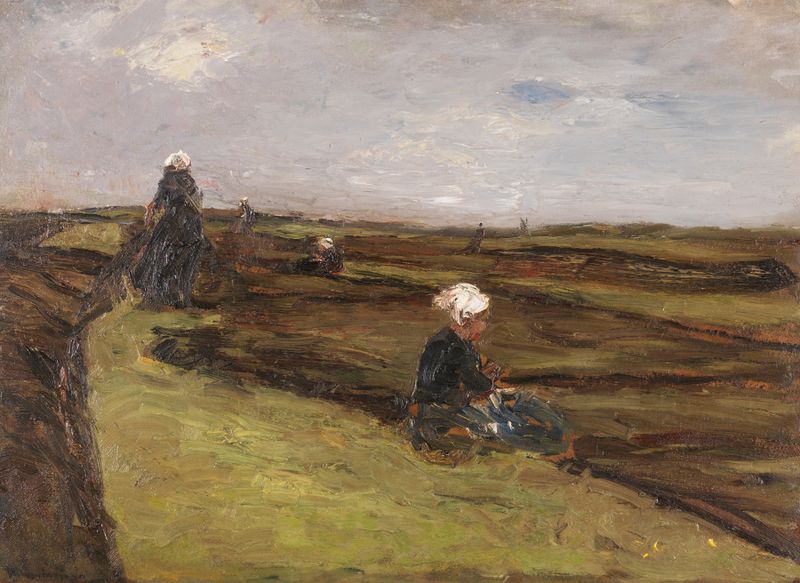
Die Netzflickerinnen
Max Liebermann

Am Strand von Noordwijk
Max Liebermann





