
Die Colomierstraße in Wannsee — History & Facts
Could a single brushstroke hold eternity? In Max Liebermann's work, the answer reverberates with the weight of obsession, inviting the viewer to linger within its grasp. Look to the left at the gently undulating path winding through the trees, its earthy tones offering a comforting invitation to both the eye and the spirit. Notice how the dappled sunlight filters through the leafy canopy, painting delicate patterns on the ground. The juxtaposition of vibrant greens and soft browns evokes a sense of tranquility, yet the brushwork pulses with urgency, capturing an intimate moment in nature that feels almost ephemeral. Delve deeper into the scene, and you'll find hidden tensions woven throughout.
The trees stand tall and proud, yet their shadows hint at an underlying melancholy, a reminder of the passage of time that shadows beauty. In the foreground, hints of human presence linger, perhaps an unseen figure or the faint echo of laughter, drawing attention to the delicate balance between solitude and connection. This subtle interplay between light and shadow becomes a meditation on the fleeting nature of existence, inviting reflection. Created in 1917, this piece emerged during a tumultuous period in Liebermann's life, marked by the impacts of World War I and the changing tides of art.
Living in Berlin, he was both a participant in and a witness to the modernist movements that were redefining the boundaries of artistic expression. As he painted Die Colomierstraße in Wannsee, the artist grappled with his own sense of purpose, striving to find beauty and meaning amid chaos, capturing the essence of life that felt increasingly fragile.
More Artworks by Max Liebermann
Browse all →
Die Blumenterrasse in Wannsee mit Blick auf den Fischotterbrunnen
Max Liebermann
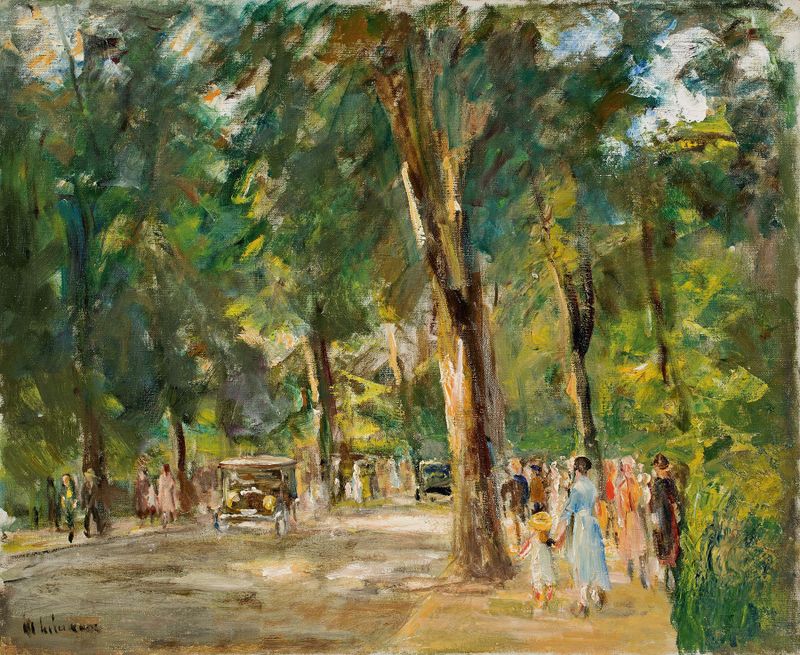
Die Große Seestraße in Wannsee mit Spaziergängern
Max Liebermann

Seitlicher Blick in den Wannseegarten
Max Liebermann

Der Rosengarten in Wannsee
Max Liebermann

Allee mit Spaziergängern und Automobilen
Max Liebermann

Blick in meinen Garten
Max Liebermann
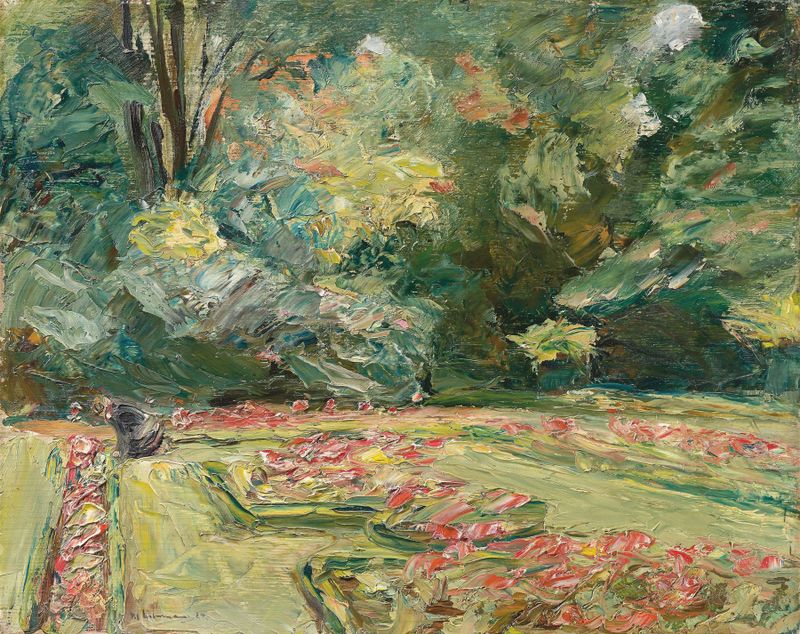
Die Blumenterrasse im Wannseegarten nach Norden
Max Liebermann

Spielende Kinder am Strand
Max Liebermann
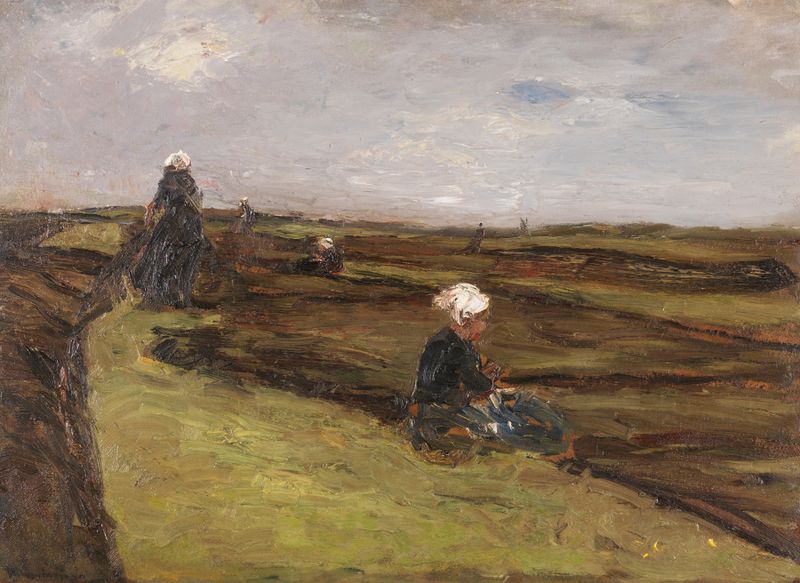
Die Netzflickerinnen
Max Liebermann

Am Strand von Noordwijk
Max Liebermann





