
Die Dorotheergasse In Wien Mit Dem Alten Versatzamt — History & Facts
Can paint confess what words never could? In Die Dorotheergasse In Wien Mit Dem Alten Versatzamt, a haunting stillness echoes through the crumbling architecture, whispering secrets of a forgotten world. Look to the center of the canvas, where the aged facade of a building stands resolutely against the passage of time. The muted palette of earthy browns and grays evokes a sense of decay, while splashes of light illuminate the weathered textures. Notice how the shadows cling to the corners, creating a contrast that deepens the sense of nostalgia.
The brushstrokes capture not just the physical state of the structure but its soul, inviting viewers to ponder the stories that reside within its walls. As you explore further, the interplay of light and shadow reveals the emotional weight of abandonment and resilience. The broken windows seem to gaze mournfully at the street, while the cobblestones beneath them hint at the vibrant life that once thrived here. Yet, there is a subtle beauty in this decay; it speaks to the passage of time and the inevitability of change.
The scene reflects the bittersweet relationship between memory and loss, urging introspection about what persists and what fades. Ernst Graner painted this work in 1890, a time when Vienna was a hub of artistic experimentation and cultural transition. The city was on the cusp of modernity, yet still steeped in its imperial past. Graner, an observer of urban life, captured not just the physical landscape of his environment but also the deeper emotions that arise from observing its decline amidst rapid change.
More Artworks by Ernst Graner
Browse all →
The Departure of Emperor Francis Joseph, near the Schweizertor in Hofburg residence
Ernst Graner

Old Albrechtsplatz (today Albertinaplatz) in Vienna with the Philipphof and the Mozart monument
Ernst Graner
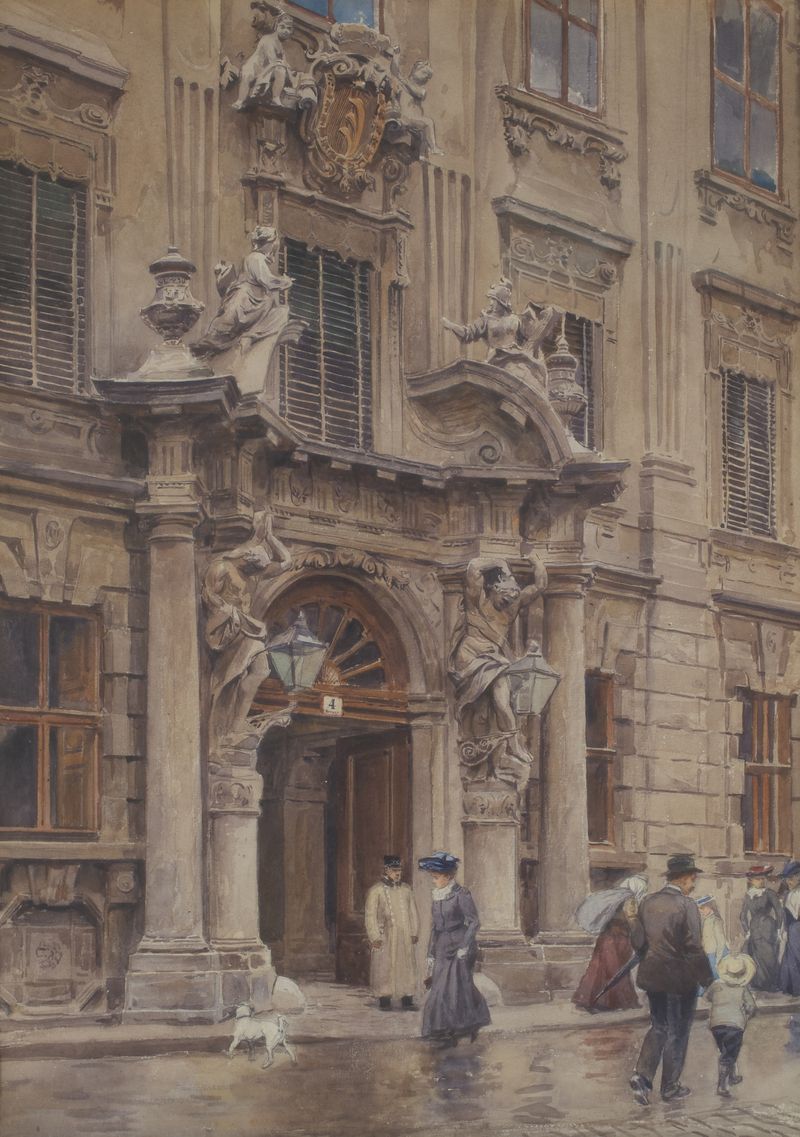
Das Portal Des Palais Kinsky
Ernst Graner
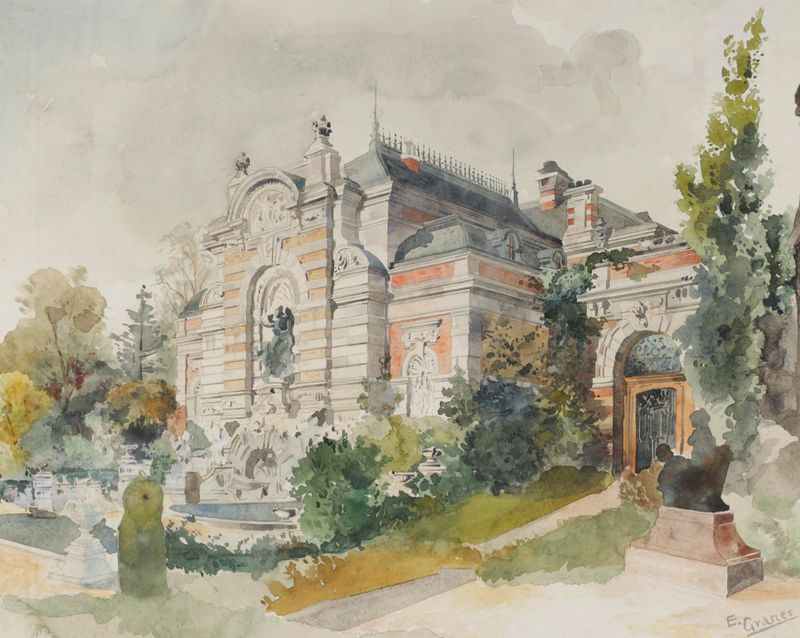
Villa in einem Park
Ernst Graner

Karlskirche
Ernst Graner

Kaiser Franz Joseph überquert den Naschmarkt
Ernst Graner

Palais des Prinzen Eugen in der Himmelpfortgasse
Ernst Graner

Die Schwendergasse In Wien Mit Schwenders Colosseum
Ernst Graner
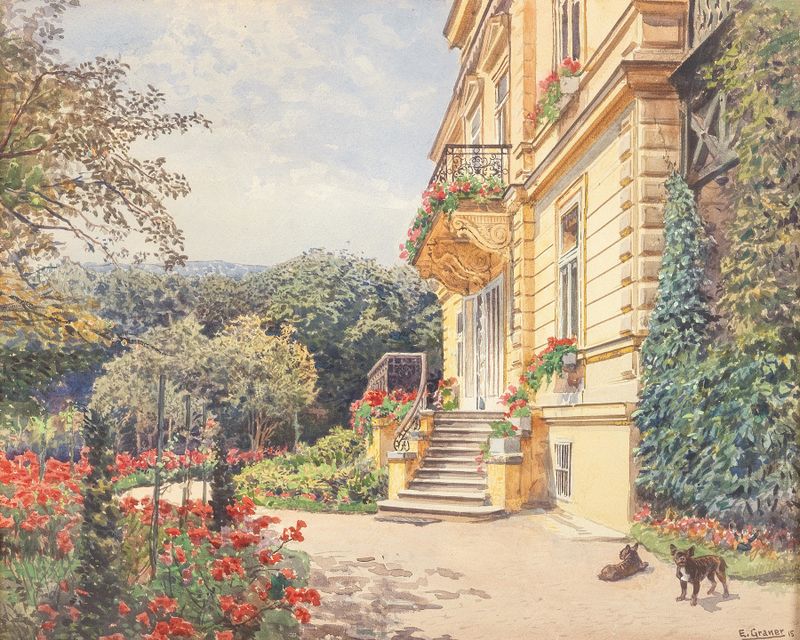
Villa in gepflegtem Garten
Ernst Graner
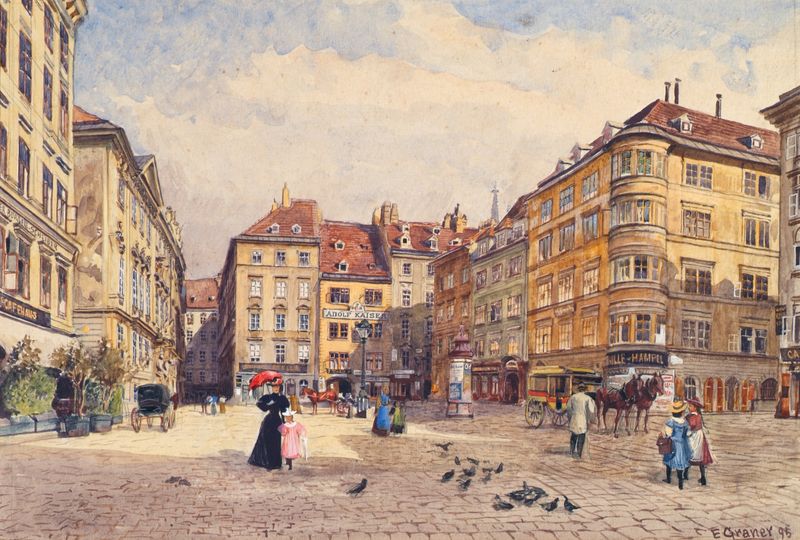
Der Judenplatz In Wien
Ernst Graner
More Architecture Art
Browse all →
The statue of Liberty
Frédéric Auguste Bartholdi

View of Houses in Delft, Known as ‘The Little Street’
Johannes Vermeer

View of Houses in Delft, Known as ‘The Little Street’
Johannes Vermeer

The Cathedral in Rouen. The portal, Grey Weather
Claude Monet

The yellow house
Vincent van Gogh

The Church in Auvers-sur-Oise, View from the Chevet
Vincent van Gogh