
Die Kalifengräber bei Kairo, Ende — History & Facts
In Die Kalifengräber bei Kairo, Ende, the interplay of vibrant hues and muted tones invites contemplation far beyond the canvas. Look to the center, where rich ochres and deep azure converge, creating a striking horizon that draws the eye. The architectural forms rise majestically against the backdrop, their intricate details softened by a gentle wash of light. Notice how the artist employs a delicate balance of shadow and illumination, capturing the solemnity of the graves while hinting at the vibrancy of life that once surrounded them.
Each brushstroke seems to echo whispers of history, while the colors dance in a silent dialogue. Yet, beneath this beauty lies a profound tension. The juxtaposition of decay and permanence speaks to the passage of time, suggesting both reverence and loss. The stark contrast between the vividness of the surroundings and the somber subject matter evokes a bittersweet nostalgia for what was.
Here, the artist intertwines the vibrance of life with the stillness of death, creating an emotional resonance that invites viewers to reflect on their own histories. In 1890, while residing in Germany, Carl Wuttke painted this piece during a time when realism was evolving into more expressive forms. Influenced by the burgeoning interest in Orientalism and the exploration of non-Western themes, he sought to capture a moment in Cairo’s history that transcended mere representation, engaging with the cultural complexities of his era. This work is a testament to his ability to synthesize technique with emotional depth, making it a noteworthy exploration of color and silence.
More Artworks by Carl Wuttke
Browse all →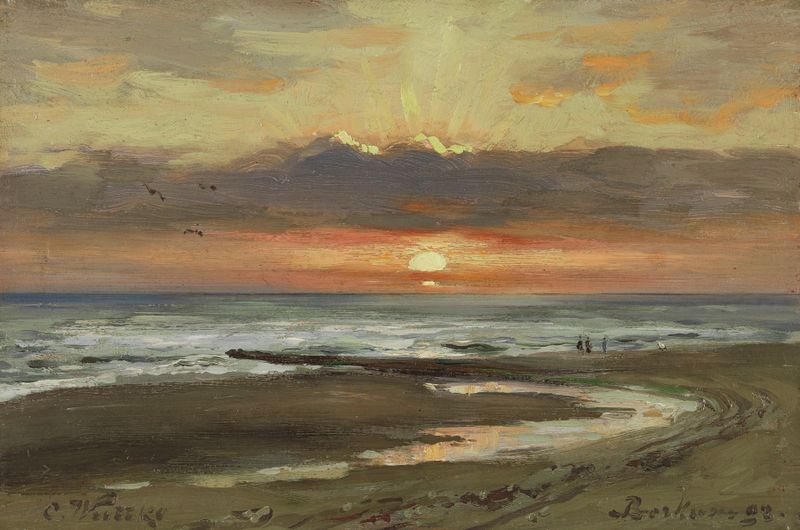
Sonnenuntergang auf Borkum
Carl Wuttke

Orientalischer Basar
Carl Wuttke

Blick vom antiken Theater in Taormina auf den Ätna
Carl Wuttke
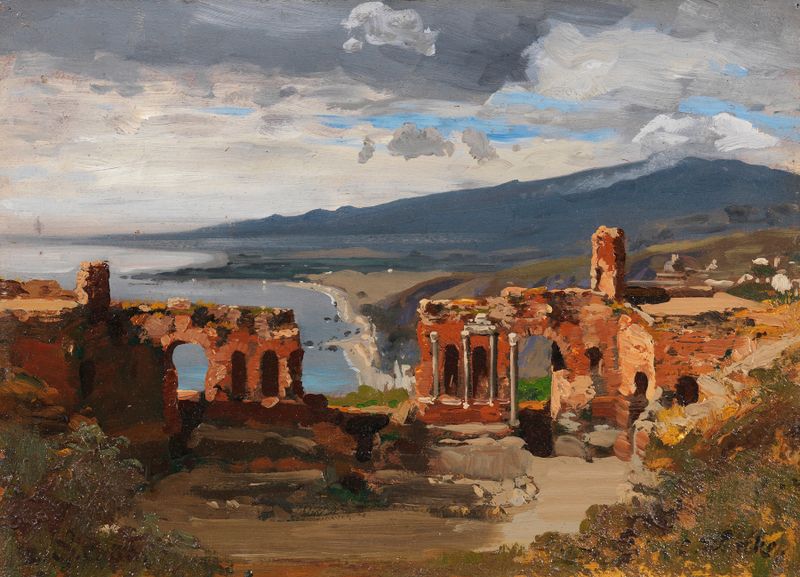
Blick vom antiken Theater in Taormina auf den Ätna
Carl Wuttke
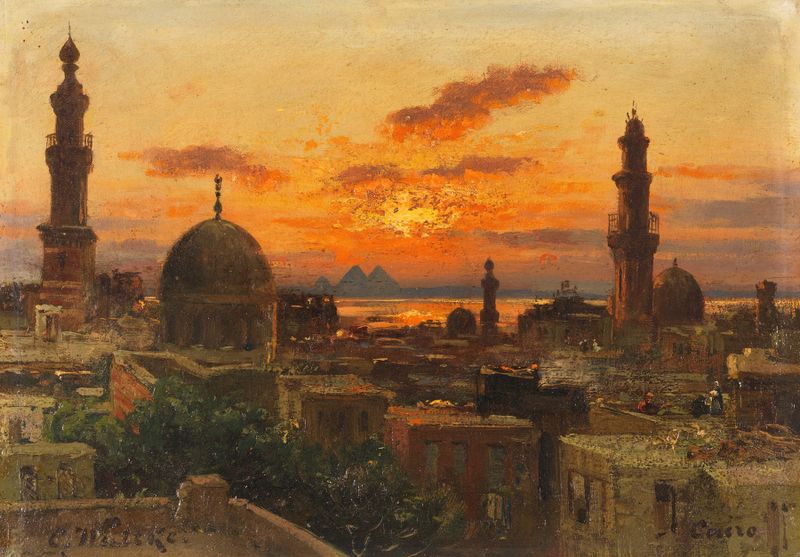
Kairo im Abendlicht
Carl Wuttke
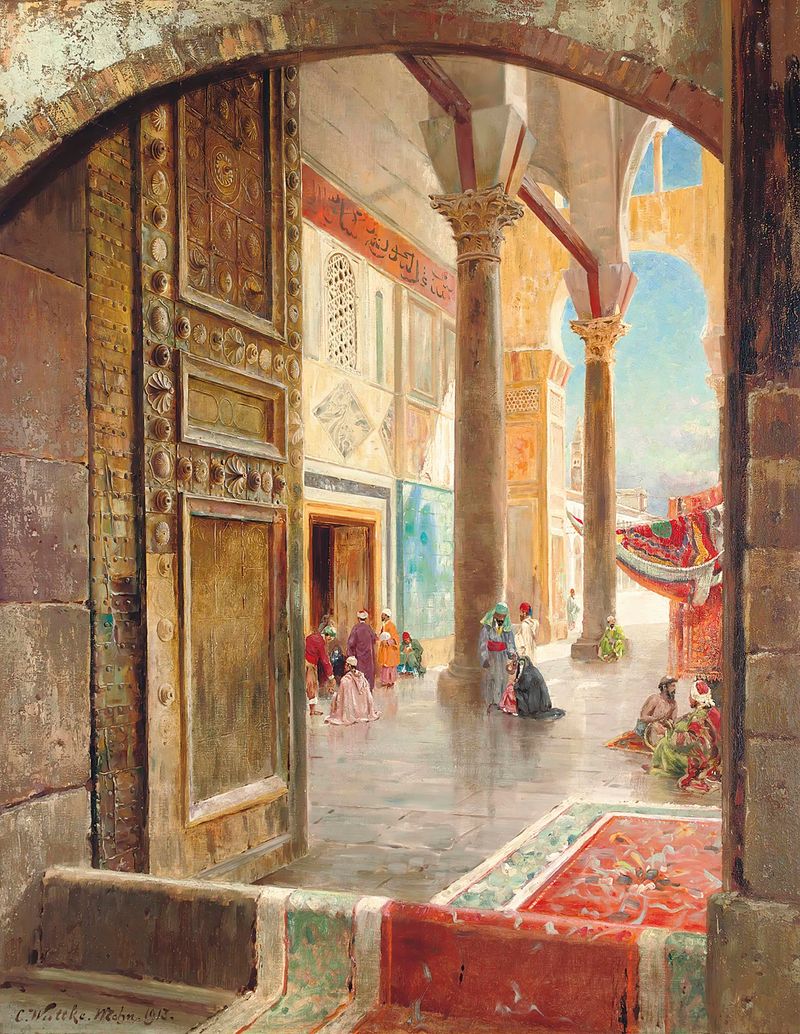
The Great Umayyad Mosque, Damascus
Carl Wuttke
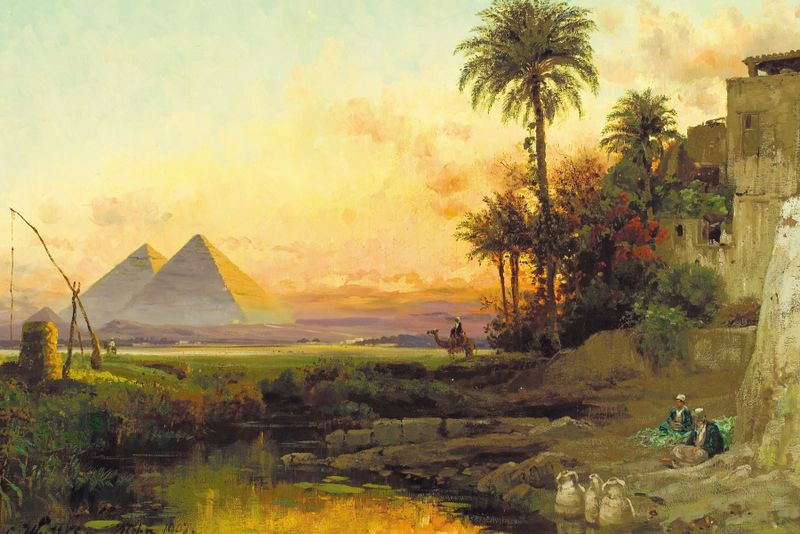
The Pyramids at Dusk
Carl Wuttke

Ansicht von Kairo mit dem Südtor der Stadtmauer
Carl Wuttke

Hügellandschaft in Westbengalen
Carl Wuttke
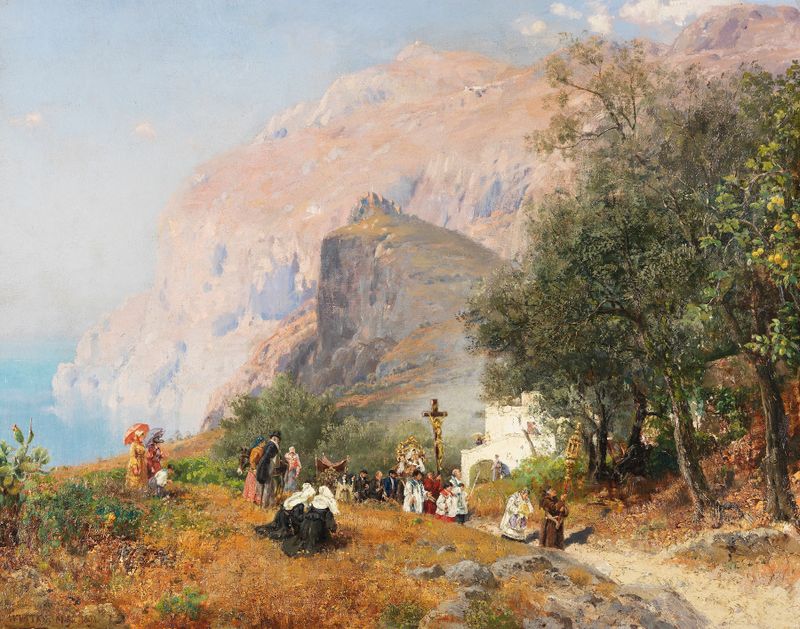
Prozession auf Capri
Carl Wuttke





