
Hügellandschaft in Westbengalen — History & Facts
In a world that constantly shifts beneath our feet, art stands as a testament to unquenchable longing and the essence of place. Look closely at the undulating hills that rise and fall across the canvas, their lush greens and earthy browns weaving an intricate tapestry. The soft, diffused light bathes the landscape, inviting your gaze to wander across the gentle contours. Notice how the sky, a delicate wash of pastel hues, seems to cradle the earth below, merging the two in a harmonious embrace.
Each brushstroke speaks of the artist’s reverence for the natural world, while the quiet serenity of the scene evokes a longing for peace and connection. Yet, beneath the tranquil surface lies a tension between desire and the ever-present passage of time. The hills, while inviting, are also a reminder of the transitory nature of beauty—a fleeting moment captured forever. The interplay of light and shadow further emphasizes this dichotomy, suggesting that even in stillness, a yearning remains for what has been and what could be.
Wuttke’s choice of color and form reveals his deep emotional investment in the landscape, transforming it into a canvas of desire itself. In his untitled work, the artist was likely influenced by the romanticism of nature that permeated the late 19th century. Operating within a context that favored emotion and personal expression, Wuttke explored his relationship to the landscape during a time when artists were beginning to break away from traditional constraints. Although the precise date of this painting remains unknown, it reflects a period of introspection and a desire to connect with the essence of a place, capturing the beauty and the longing inherent in every breath of nature.
More Artworks by Carl Wuttke
Browse all →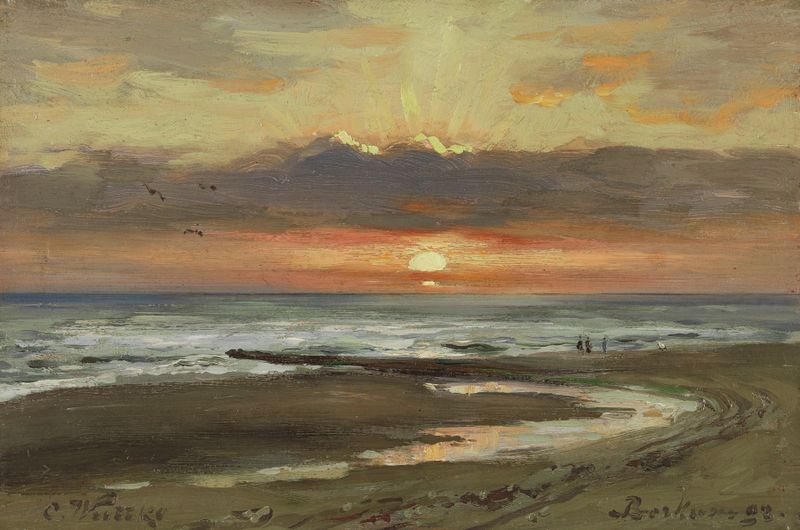
Sonnenuntergang auf Borkum
Carl Wuttke

Orientalischer Basar
Carl Wuttke

Blick vom antiken Theater in Taormina auf den Ätna
Carl Wuttke
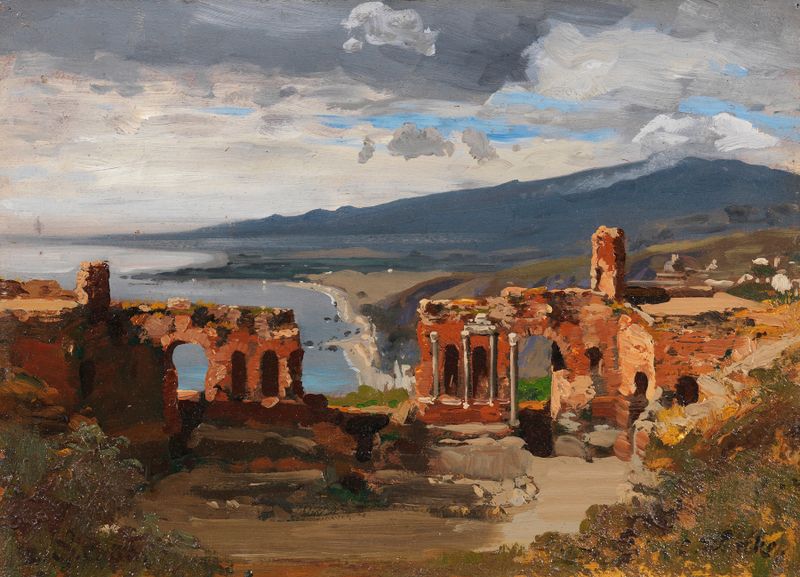
Blick vom antiken Theater in Taormina auf den Ätna
Carl Wuttke
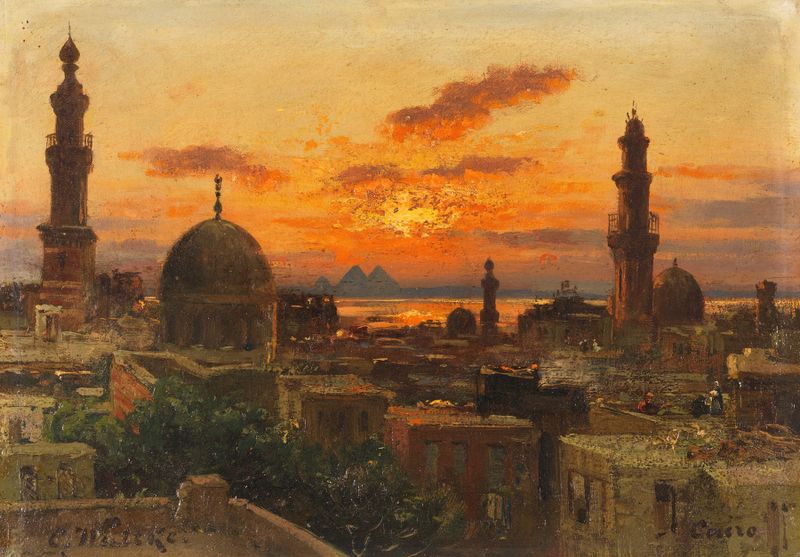
Kairo im Abendlicht
Carl Wuttke
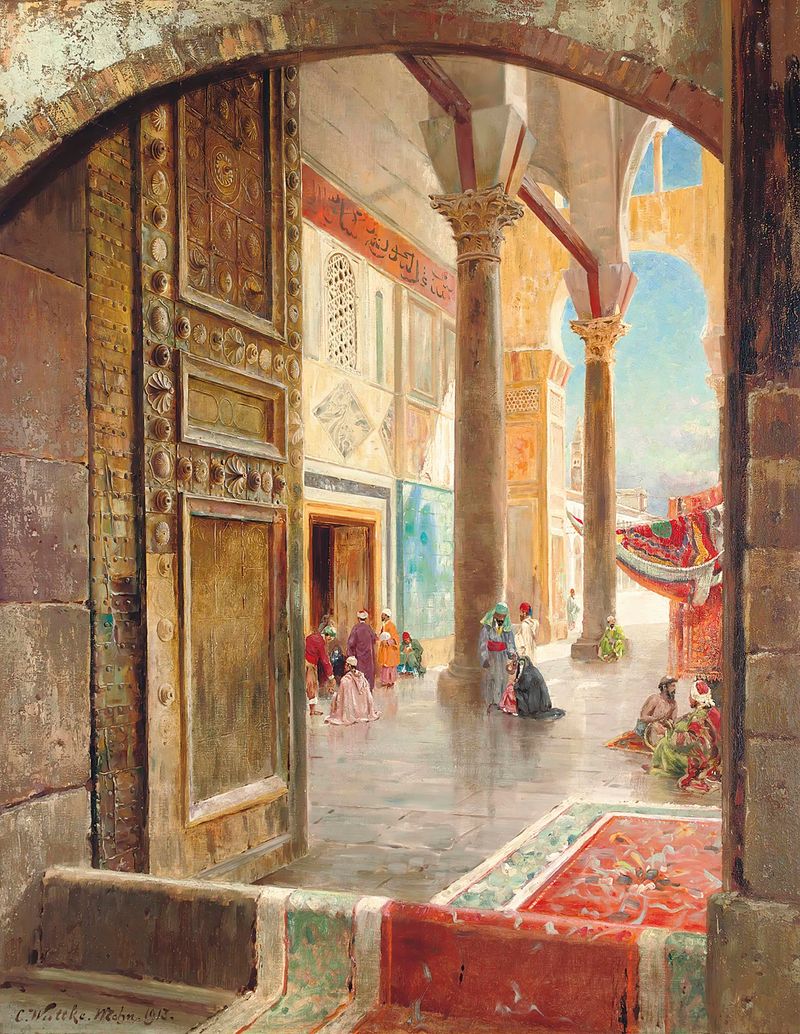
The Great Umayyad Mosque, Damascus
Carl Wuttke
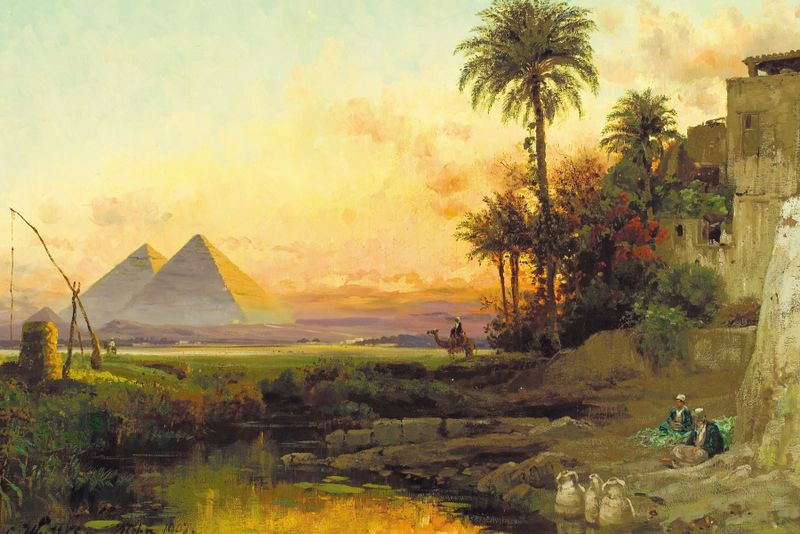
The Pyramids at Dusk
Carl Wuttke

Ansicht von Kairo mit dem Südtor der Stadtmauer
Carl Wuttke
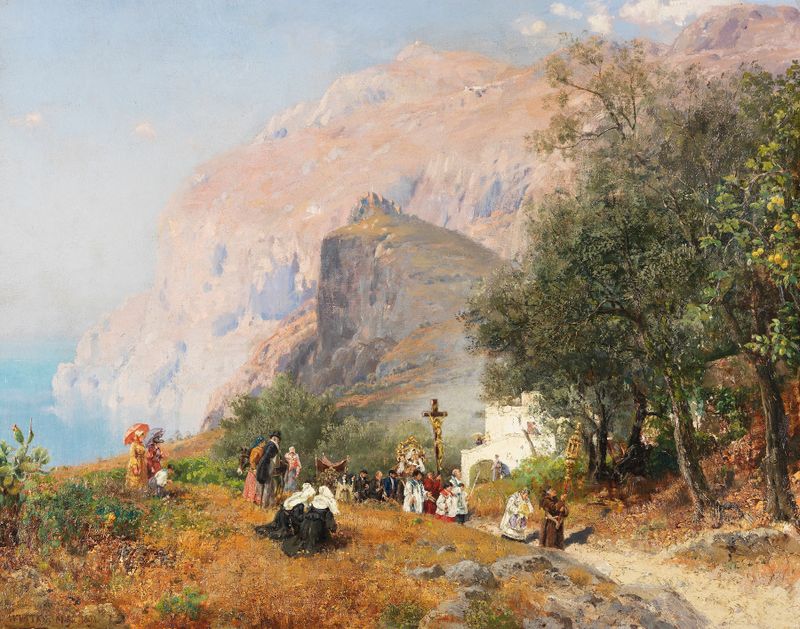
Prozession auf Capri
Carl Wuttke

Alter Wachturm in der röm. Campagna
Carl Wuttke





