
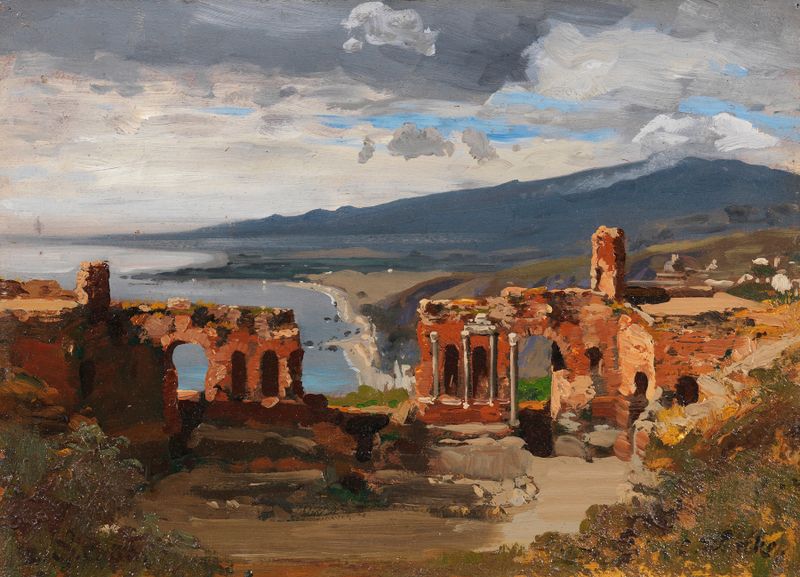
Blick vom antiken Theater in Taormina auf den Ätna — History & Facts
In the vibrant hues of this landscape, color becomes the language of emotion, speaking volumes where words fall short. Look to the left at the gentle curve of the lush hillside, its green tones whispering secrets of life. The ancient theater stands proudly in the foreground, offering a view that is both majestic and contemplative. Notice how the warm golds and soft blues merge around the looming figure of Mount Etna, the interplay of light and shadow creating a dynamic tension that draws the eye upwards.
The painter’s brushstrokes evoke a sense of tranquility, inviting viewers to linger in this moment of serene beauty. Yet beneath this calm facade lies a deeper narrative, one of contrasts. The vibrant colors of the theater and the earth below speak to human creativity and legacy, while the imposing, volcanic silhouette of Etna symbolizes nature’s raw power and unpredictability. This juxtaposition invites reflection on the fleeting nature of human achievement against the backdrop of an eternal landscape, suggesting an ongoing dialogue between civilization and the wild. In 1880, as Wuttke painted this piece, he found himself immersed in the artistic revival sweeping through Europe.
Living in a time when Romanticism was giving way to Impressionism, artists were beginning to explore the use of color and light in innovative ways. This work marks a period in his life where he sought to capture the transcendent beauty of the Italian landscape, a quest that mirrored broader trends in the art world as it moved towards a more expressive, evocative use of color.
More Artworks by Carl Wuttke
Browse all →
Sonnenuntergang auf Borkum
Carl Wuttke

Orientalischer Basar
Carl Wuttke
Blick vom antiken Theater in Taormina auf den Ätna
Carl Wuttke
Kairo im Abendlicht
Carl Wuttke
The Great Umayyad Mosque, Damascus
Carl Wuttke
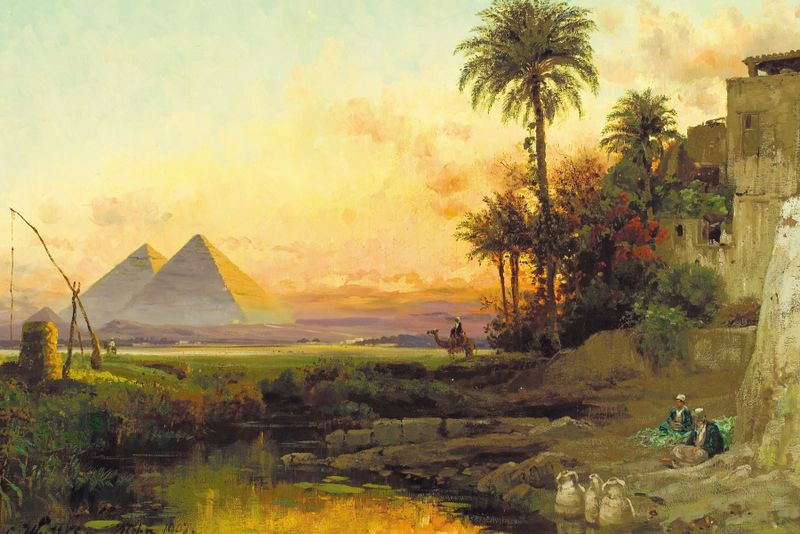
The Pyramids at Dusk
Carl Wuttke

Ansicht von Kairo mit dem Südtor der Stadtmauer
Carl Wuttke

Hügellandschaft in Westbengalen
Carl Wuttke
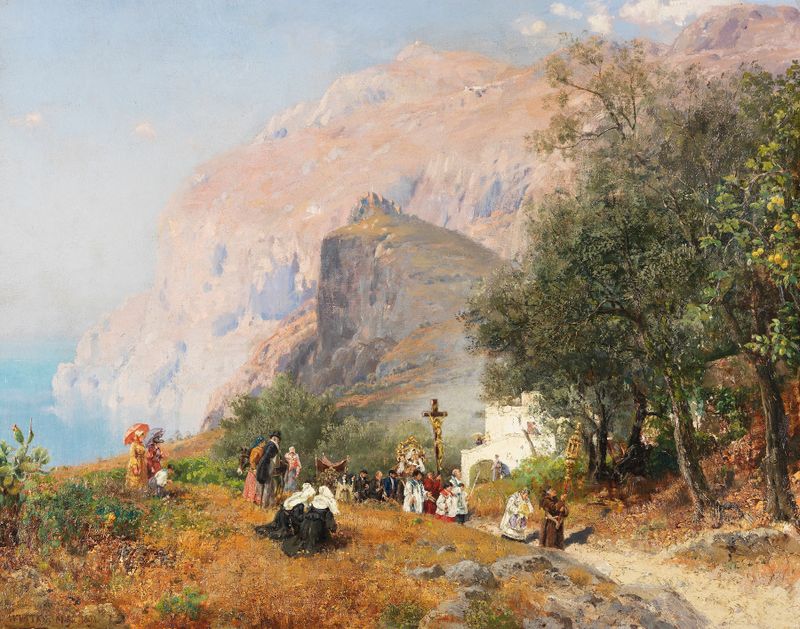
Prozession auf Capri
Carl Wuttke

Alter Wachturm in der röm. Campagna
Carl Wuttke





