
Die Mühle bei den großen Eichen — History & Facts
In a world forever in pursuit, how do we capture the essence of longing in a singular moment? Focus on the center of the canvas, where the mill stands resolutely, its weathered stones telling stories of countless seasons. The grand oaks surrounding it frame the scene, their gnarled branches creating a protective canopy. Notice how the light filters through the foliage, dappling the earth below in a gentle interplay of shadow and illumination, evoking a sense of serenity that contrasts with the relentless passage of time.
The painter’s adept use of earthy tones connects the structure to its landscape, grounding it in reality while inviting the viewer into a world of contemplation. Beneath the serene exterior lies a narrative of yearning, symbolized by the still water reflecting the mill and trees, mirroring not only their beauty but also their transience. The juxtaposition of the sturdy mill and the ephemeral light hints at a deeper emotional tension — the desire for permanence in an ever-changing world. Each brushstroke reveals a longing for connection, whether to nature, to the past, or to the fleeting moments that shape our experiences, resonating with anyone who has felt time slip through their fingers. In 1786, Johann Christian Reinhart painted this work during a period when German Romanticism was emerging, a time characterized by a deep appreciation for nature and introspection.
Living in Weimar, he was influenced by the philosophical currents of the day, as artists sought to express the sublime and the ineffable. This painting serves not only as a representation of his skill but also as an intimate reflection of the human condition amidst the beauty of the natural world.
More Artworks by Johann Christian Reinhart
Browse all →
Klassische Landschaft mit Archemoros und Hypsipyle
Johann Christian Reinhart

Landschaft mit antiken Denkmälern
Johann Christian Reinhart
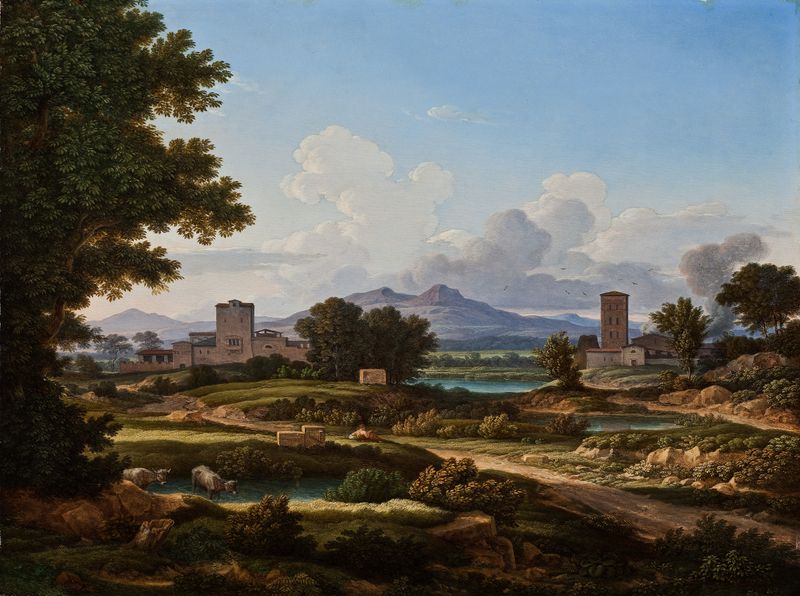
Scene From The Roman Campagna, Torre Del Quinto
Johann Christian Reinhart
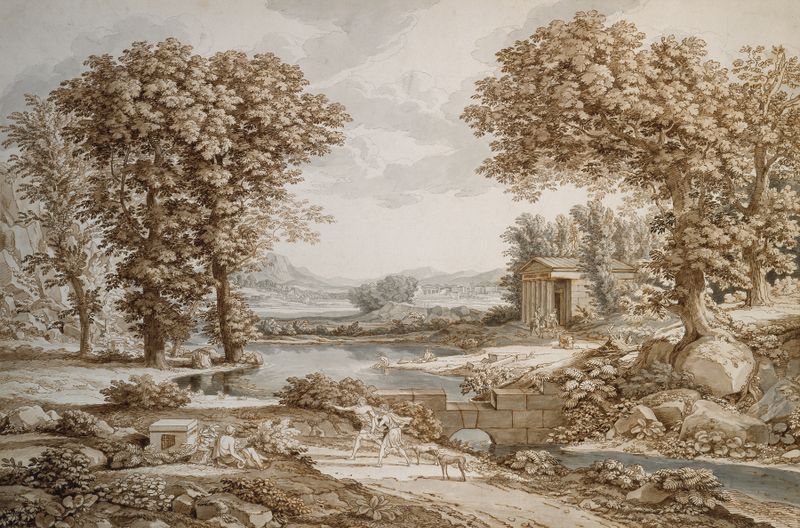
Heroic landscape
Johann Christian Reinhart
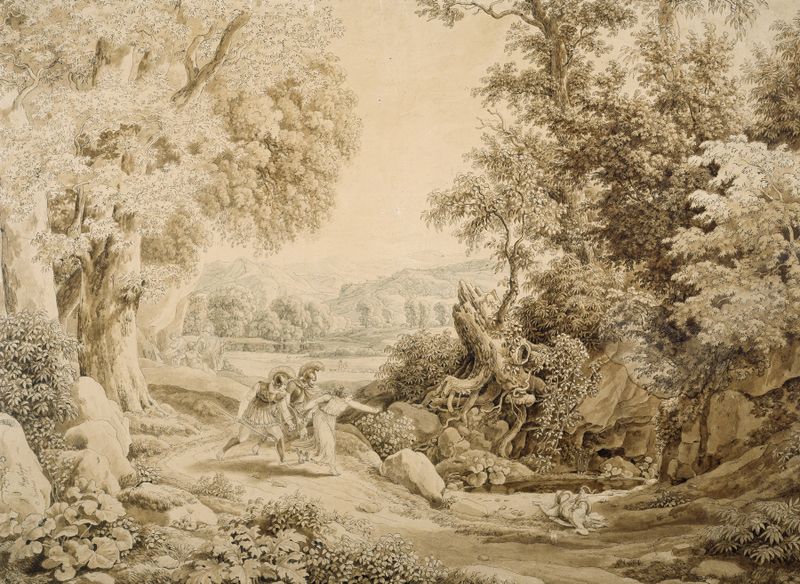
Heroische Landschaft mit dem Tod des Opheltes beim Zuge der Sieben gegen Theben
Johann Christian Reinhart

Nocturnal river landscape
Johann Christian Reinhart

View Of The Ponte Lupo On The River Anio Near Tivoli, In The Foreground A Youth Playing The Lyre
Johann Christian Reinhart

Landscape
Johann Christian Reinhart

Landschaft mit den Opfern von Kain und Abel
Johann Christian Reinhart
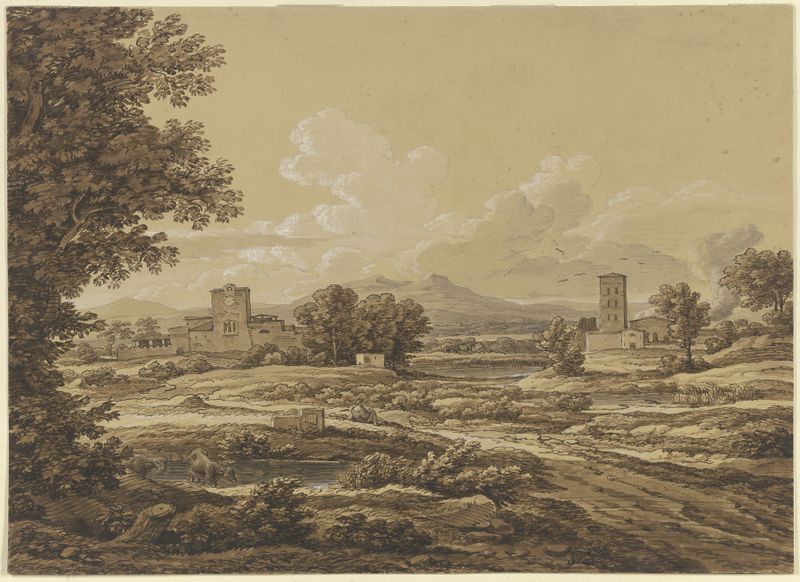
Landschaft mit der Torre del Quinto vor Rom
Johann Christian Reinhart





