
Heroic landscape — History & Facts
It stands as a testament to the unyielding spirit of creation, beckoning us to explore the depths of our own imagination. Look to the horizon, where rolling hills meet the sky, each brushstroke capturing the ethereal dance of light and shadow. The palette is rich, dominated by earthy tones that evoke the grandeur of nature, while soft blues sweep across the upper expanse like a gentle breeze. Notice how the layering of paint creates a textured depth, inviting you to traverse its undulating valleys and steep ridges.
The composition draws your eye along a winding path, suggesting a journey that extends beyond the canvas. Yet, within this serene landscape lies a burst of contrasts — the sublime beauty of nature tempered by a sense of solitude. The quietude of the scene resonates with themes of introspection, as solitary trees stand sentinel against the expansive sky, symbolizing endurance amidst the passage of time. The interplay of light and dark reflects an emotional tension, hinting at the duality of existence — creation and decay, hope and despair. In the late 1820s, Reinhart found himself deeply immersed in the Romantic movement, a time when artists sought to capture the sublime qualities of nature.
Living in Germany, he was influenced by the growing interest in landscapes as expressions of individual experience. His work from this period, including Heroic Landscape, reflects a desire to elevate the natural world into a dramatic narrative, celebrating both its beauty and its capacity to evoke profound feelings.
More Artworks by Johann Christian Reinhart
Browse all →
Klassische Landschaft mit Archemoros und Hypsipyle
Johann Christian Reinhart

Landschaft mit antiken Denkmälern
Johann Christian Reinhart
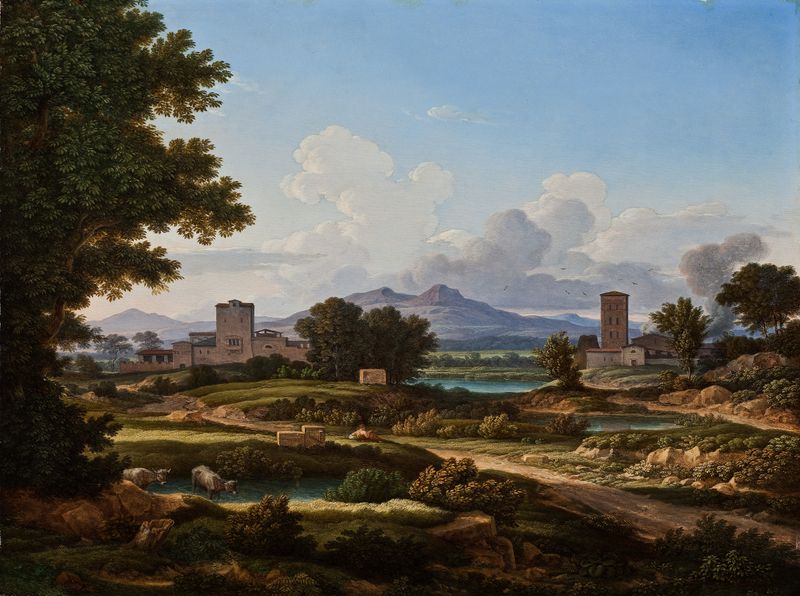
Scene From The Roman Campagna, Torre Del Quinto
Johann Christian Reinhart
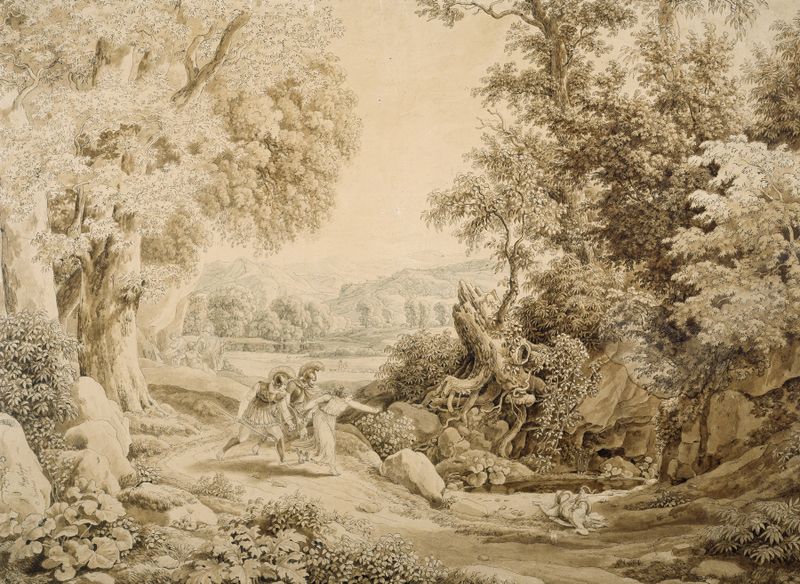
Heroische Landschaft mit dem Tod des Opheltes beim Zuge der Sieben gegen Theben
Johann Christian Reinhart

Nocturnal river landscape
Johann Christian Reinhart

View Of The Ponte Lupo On The River Anio Near Tivoli, In The Foreground A Youth Playing The Lyre
Johann Christian Reinhart

Landscape
Johann Christian Reinhart

Landschaft mit den Opfern von Kain und Abel
Johann Christian Reinhart
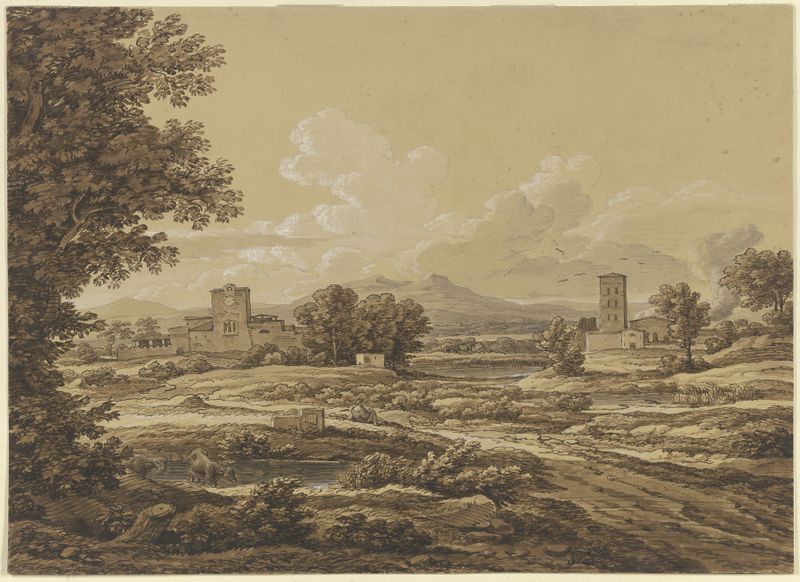
Landschaft mit der Torre del Quinto vor Rom
Johann Christian Reinhart

Die Mühle bei den großen Eichen
Johann Christian Reinhart





