
Landscape — History & Facts
This duality of fragility and grandeur pulses through the layers of nature depicted in this artwork, where every brushstroke whispers secrets of the ephemeral. Focus first on the expansive sky that dominates the canvas, painted in delicate shades of lavender and soft blue. The clouds, billowing and ethereal, seem almost translucent, inviting the viewer to gaze deeper into the horizon. Now, shift your attention to the rolling hills beneath them, cloaked in a verdant green that hints at life yet feels precarious, as though it could crumble into the void below.
The play of light upon these surfaces reveals not just a landscape, but a fragility, revealing an underlying tension between beauty and vulnerability. In this work, the contrast between the serene beauty of the natural world and the subtle hints of decay suggests a deeper reflection on human existence. The delicate interplay of colors evokes the idea that all beauty is fleeting—each feature a reminder of nature's transitory state. Examine the small details, such as the way the light dances across the water, creating a glimmer of hope amidst a backdrop that hints at inevitable change, emphasizing the fragility of life itself. Created around 1783-1784 during his time in Germany, the artist was grappling with the shifts in Romanticism.
As the art world embraced the sublime and the emotional spectacle of nature, Reinhart was carving out a unique vision that merged realism with the nuances of feeling, capturing both the grandeur of the wilderness and the underlying fragility that defines it.
More Artworks by Johann Christian Reinhart
Browse all →
Klassische Landschaft mit Archemoros und Hypsipyle
Johann Christian Reinhart

Landschaft mit antiken Denkmälern
Johann Christian Reinhart
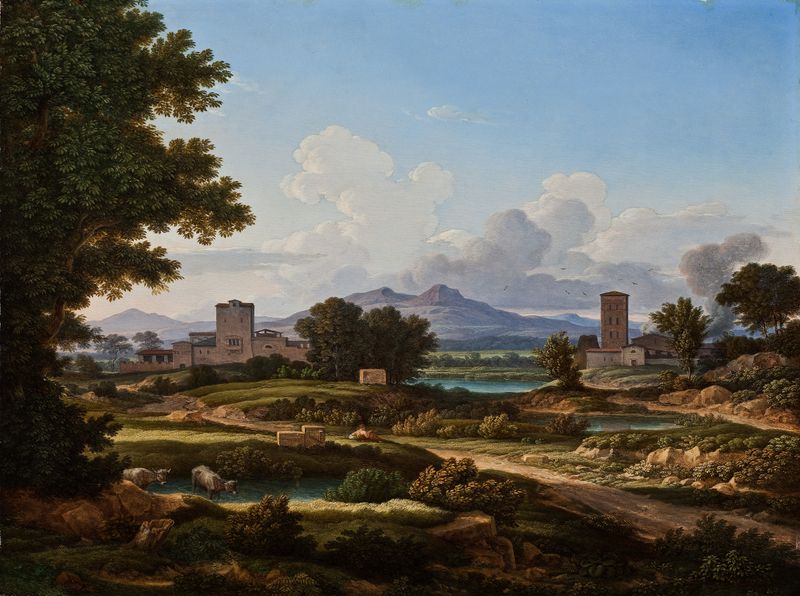
Scene From The Roman Campagna, Torre Del Quinto
Johann Christian Reinhart
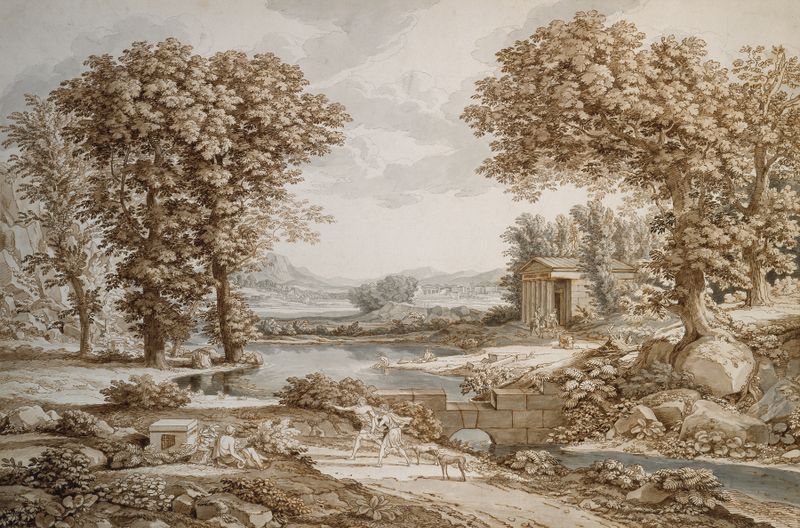
Heroic landscape
Johann Christian Reinhart
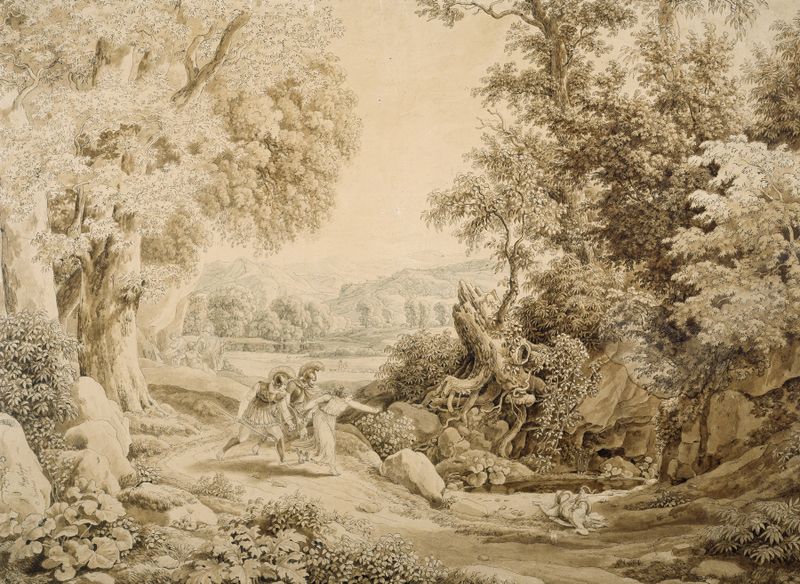
Heroische Landschaft mit dem Tod des Opheltes beim Zuge der Sieben gegen Theben
Johann Christian Reinhart

Nocturnal river landscape
Johann Christian Reinhart

View Of The Ponte Lupo On The River Anio Near Tivoli, In The Foreground A Youth Playing The Lyre
Johann Christian Reinhart

Landschaft mit den Opfern von Kain und Abel
Johann Christian Reinhart
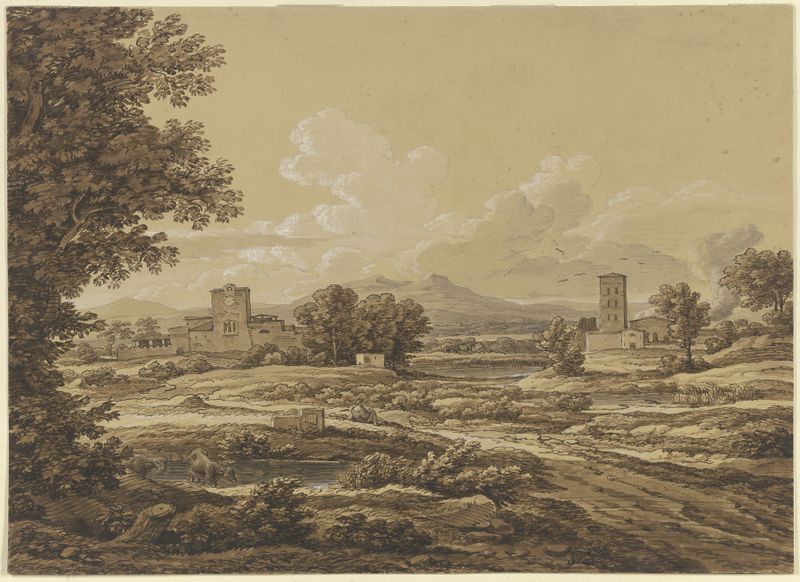
Landschaft mit der Torre del Quinto vor Rom
Johann Christian Reinhart

Die Mühle bei den großen Eichen
Johann Christian Reinhart





