
Heroische Landschaft mit dem Tod des Opheltes beim Zuge der Sieben gegen Theben — History & Facts
Who listens when art speaks of silence? In the embrace of stillness, emotions can ripple through the canvas like whispers on the wind, drawing us into an obsession with the unspoken. Look to the foreground, where the figures are etched with an intensity that demands your attention. The artist's masterful use of chiaroscuro illuminates the contours of their faces, revealing a blend of anguish and determination. The color palette is rich yet somber, with muted earth tones contrasting against the ethereal sky, guiding your gaze toward the dramatic horizon where fate hangs precariously.
The composition is dynamic, leading the eye along the paths of the warriors poised in action, their gestures echoing the weight of their mission. Deeper within the scene, a profound tension unfolds. The looming presence of death, embodied by the figure of Opheltes, serves as a stark reminder of mortality amidst the fervor of battle. This juxtaposition between vitality and demise creates an emotional complexity that resonates through the ages.
Additionally, the obsession with glory and the burden of sacrifice are palpable in every brushstroke, whispering the unrelenting drive of human ambition while also illuminating the fragility of life. Created in 1798, this piece emerged during a time of political turmoil and shifting artistic ideals in Europe. Johann Christian Reinhart worked in Weimar, a hub of cultural enlightenment, where the prevailing neo-classical influences began to intertwine with romantic sensibilities. This evolution in style mirrors the artist's own grappling with themes of heroism and the human condition, encapsulating a moment when art began to deeply reflect the complexities of existence.
More Artworks by Johann Christian Reinhart
Browse all →
Klassische Landschaft mit Archemoros und Hypsipyle
Johann Christian Reinhart

Landschaft mit antiken Denkmälern
Johann Christian Reinhart
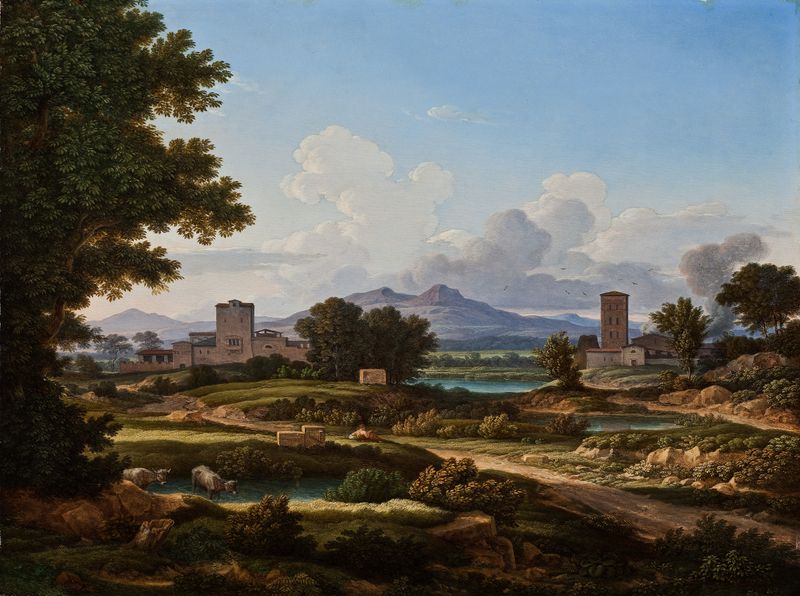
Scene From The Roman Campagna, Torre Del Quinto
Johann Christian Reinhart
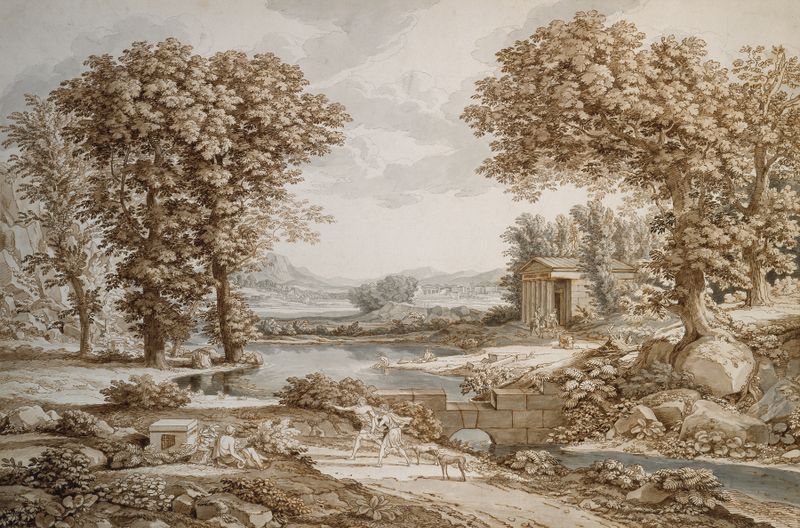
Heroic landscape
Johann Christian Reinhart

Nocturnal river landscape
Johann Christian Reinhart

View Of The Ponte Lupo On The River Anio Near Tivoli, In The Foreground A Youth Playing The Lyre
Johann Christian Reinhart

Landscape
Johann Christian Reinhart

Landschaft mit den Opfern von Kain und Abel
Johann Christian Reinhart
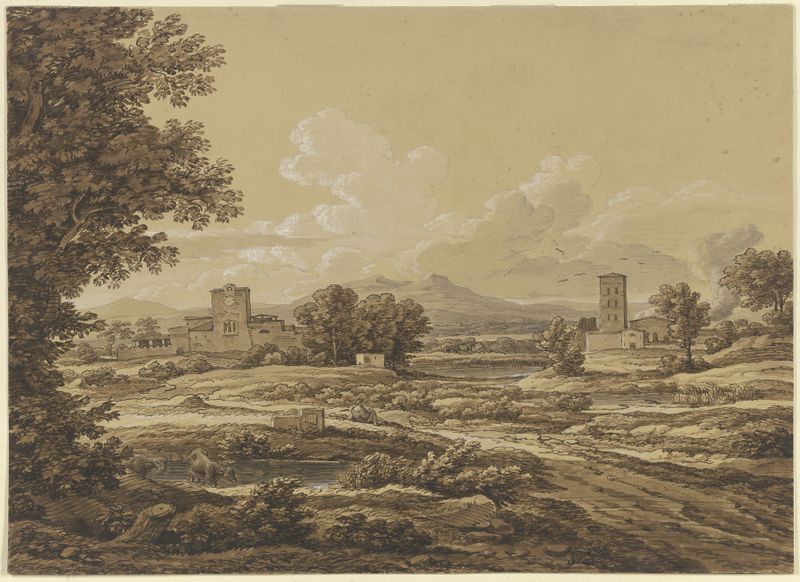
Landschaft mit der Torre del Quinto vor Rom
Johann Christian Reinhart

Die Mühle bei den großen Eichen
Johann Christian Reinhart
More Historical Art
Browse all →
The Night Watch Militia Company of District II under the Command of Captain Frans Banninck Cocq
Rembrandt van Rijn

Lincoln Memorial
Henry Bacon

The Third of May 1808
Francisco de Goya

Isaac and Rebecca, Known as ‘The Jewish Bride’
Rembrandt van Rijn

The Charge of the Mamelukes (1814)
Francisco de Goya

De vier ruiters van de apocalyps
Albrecht Dürer