
Klassische Landschaft mit Archemoros und Hypsipyle — History & Facts
In the silent embrace of nature, remnants of the past lie intertwined with the present, evoking whispers of decay beneath the splendor. Look to the left at the delicate, gnarled trees, their twisted branches reaching towards the sky like longing fingers. The lush greens of the foliage juxtapose with the ethereal, golden light gently illuminating the scene, drawing the eye across the canvas. Notice how the artist employs soft brushstrokes to create a dreamlike horizon, blending the vivid colors with hints of muted earth tones, establishing a serene yet haunting landscape that invites contemplation. Beneath the picturesque exterior, the work reflects a tension between life and decay.
The lush vegetation thrives, yet hints of deterioration lurk in the background, suggesting the inevitable passage of time. The figures of Archemoros and Hypsipyle stand resolute, their presence a reminder of stories untold and the weight of history. This interplay between vibrancy and decline resonates with the viewer, urging them to explore the layers hidden within this idyllic façade. In 1816, Johann Christian Reinhart painted this landscape during a period marked by a burgeoning Romantic movement in art, characterized by an embracing of nature's beauty and a deeper exploration of human emotion.
Settled in Rome, he was influenced by both the classical ideals of antiquity and the emerging desire to capture personal experience. Amidst the transition in artistic expression, Reinhart sought to immortalize not just the allure of the landscape, but also the poignant truth of its impermanence.
More Artworks by Johann Christian Reinhart
Browse all →
Landschaft mit antiken Denkmälern
Johann Christian Reinhart
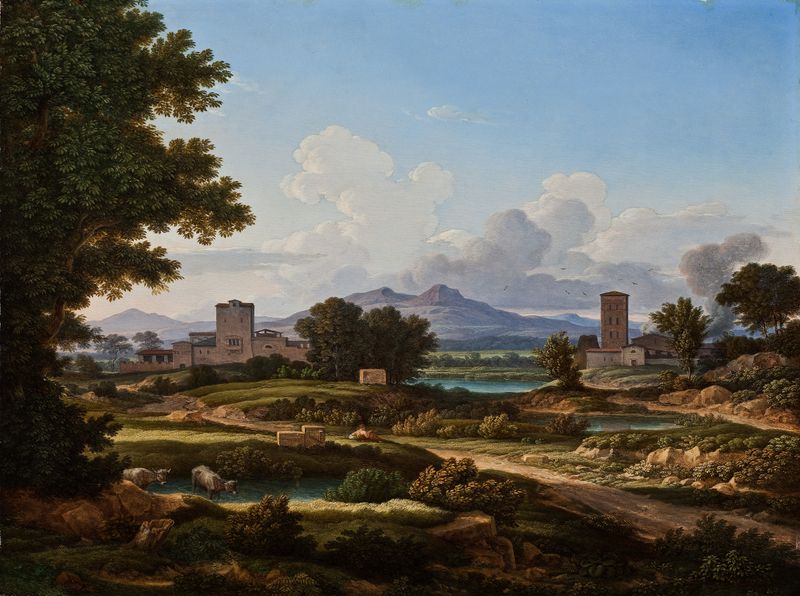
Scene From The Roman Campagna, Torre Del Quinto
Johann Christian Reinhart
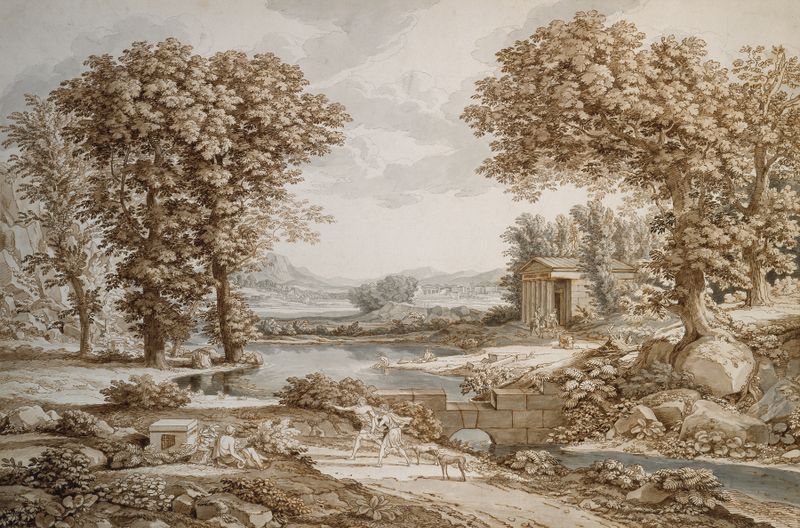
Heroic landscape
Johann Christian Reinhart
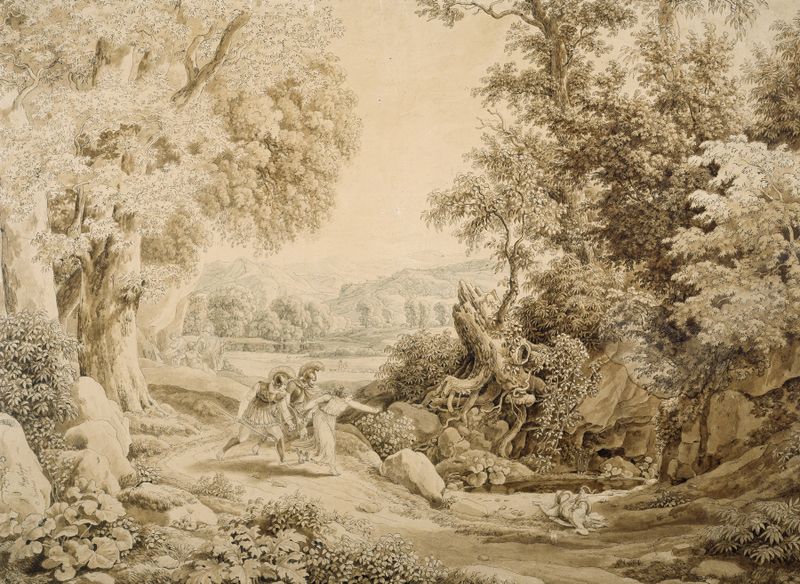
Heroische Landschaft mit dem Tod des Opheltes beim Zuge der Sieben gegen Theben
Johann Christian Reinhart

Nocturnal river landscape
Johann Christian Reinhart

View Of The Ponte Lupo On The River Anio Near Tivoli, In The Foreground A Youth Playing The Lyre
Johann Christian Reinhart

Landscape
Johann Christian Reinhart

Landschaft mit den Opfern von Kain und Abel
Johann Christian Reinhart
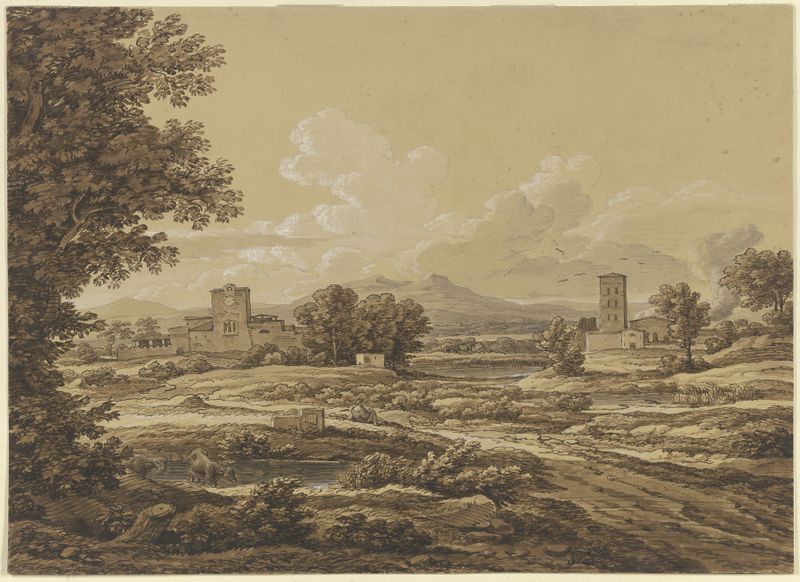
Landschaft mit der Torre del Quinto vor Rom
Johann Christian Reinhart

Die Mühle bei den großen Eichen
Johann Christian Reinhart





