
Die Mühlsturzhörner mit Hintersee — History & Facts
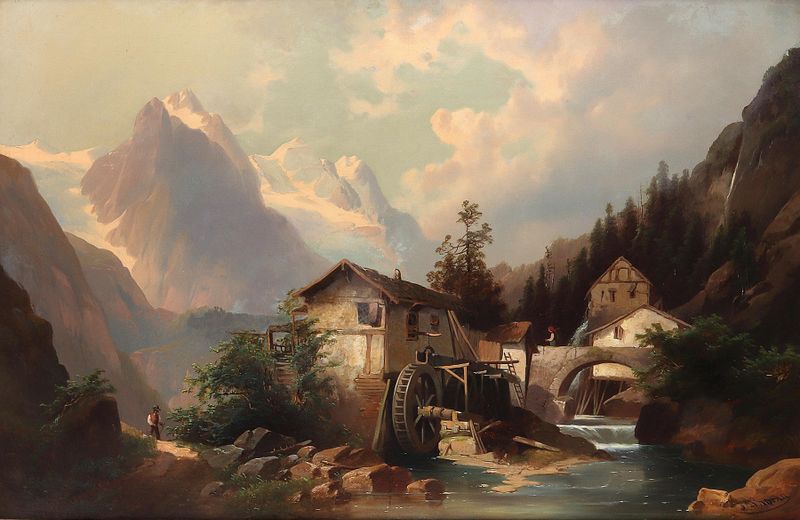
Did the painter know this moment would outlive them? Each brushstroke in this ethereal landscape immortalizes a fleeting memory, capturing the essence of nature's quiet majesty. Focus on the gentle curve of the mountain's silhouette, where the soft blues and greens entwine in harmonious layers. Notice how the light plays upon the surface of the tranquil lake, reflecting a symphony of colors that seem to echo an unseen past. The scene invites you to meander through its textures, from the delicate grasses in the foreground to the imposing peaks standing sentinel in the background. Within this serene vista, there lies a tension between the permanence of the mountains and the ephemeral nature of the water.
Each ripple hints at the passage of time, while the shadows cast by the clouds evoke a sense of longing, perhaps for moments that have already slipped away. The interplay between light and dark evokes memories—both cherished and elusive—that seem to linger just out of reach. Created during a transformative period in the late 19th century, this piece reflects the artist's deep connection to the Alpine landscape of Germany and Austria. While specific dates remain elusive, it is clear that Die Mühlsturzhörner mit Hintersee emerged amidst a burgeoning movement that sought to capture the essence of nature through impressionistic techniques.
Thoma's exploration of light and memory echoes the sentiments of his contemporaries, even as he infused his work with a uniquely personal touch.
More Artworks by Josef Thoma
Browse all →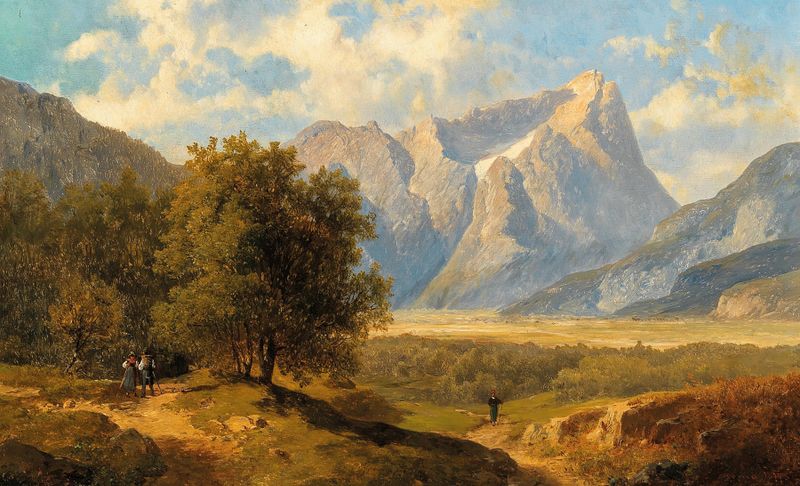
Travellers with a View of the Dachstein Massif
Josef Thoma
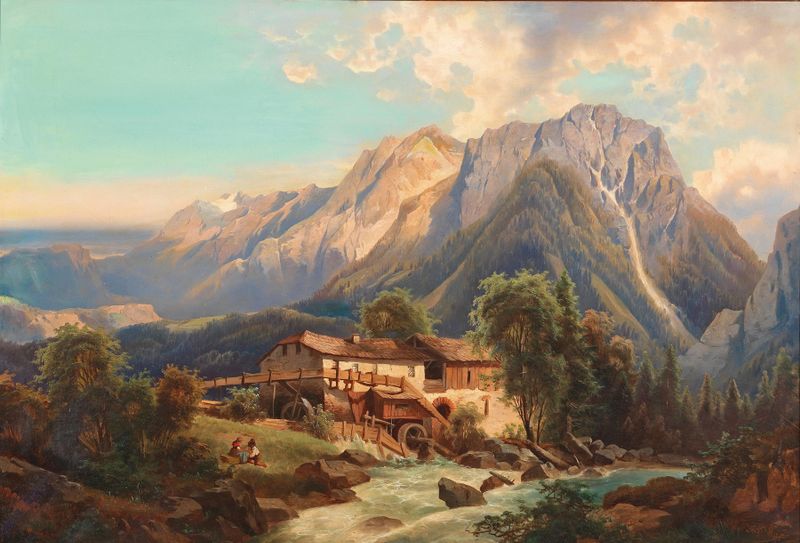
Mühle im Gebirge
Josef Thoma

Alpenlandschaft
Josef Thoma

Schafhirte mit seiner Herde am Heimweg
Josef Thoma
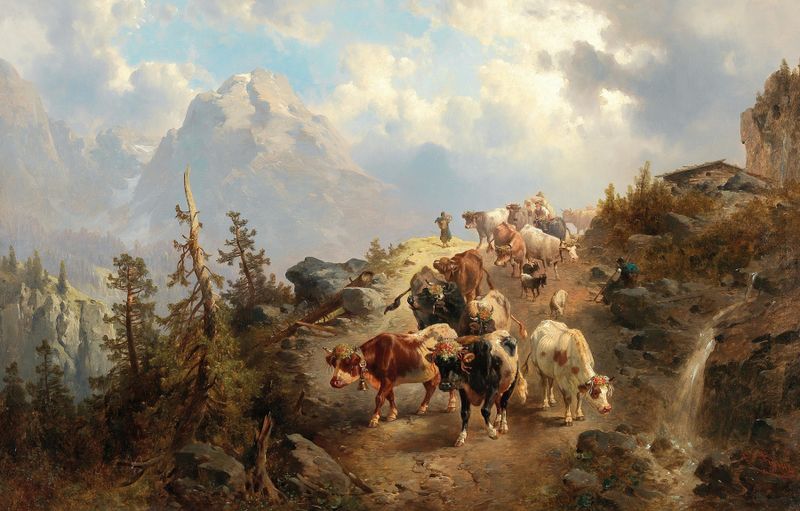
Driving Down the Cattle from the Alps
Josef Thoma

Lake Gosau with the Dachstein
Josef Thoma
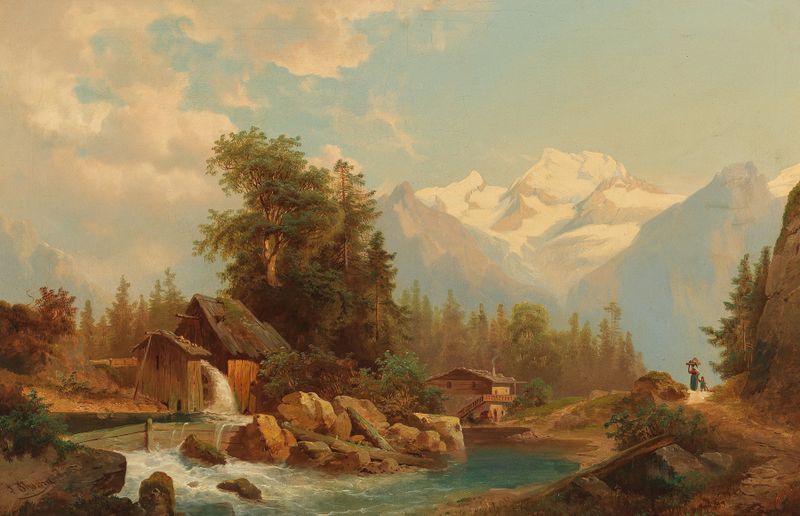
Mühle am Gebirgsbach
Josef Thoma

Blick auf den Königssee
Josef Thoma
Mühle im Gebirge
Josef Thoma

Fischernachen am See
Josef Thoma





