
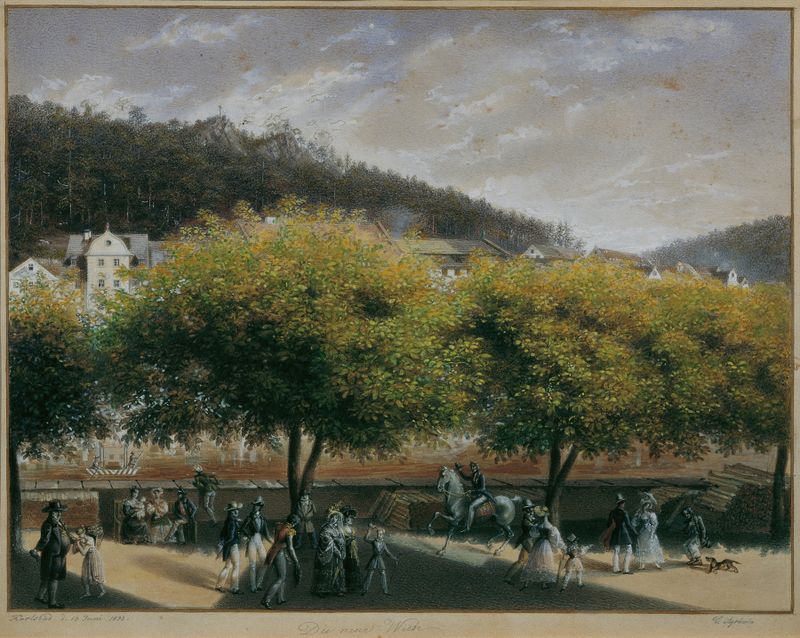
Die neue Wiese in Karlsbad — History & Facts
When did color learn to lie? This question lingers as we gaze upon a canvas that transforms memory into a vivid tapestry of hues. The delicate interplay between reality and imagination captures a moment that feels both familiar and elusive, stirring nostalgia in the heart. Focus on the vibrant greens that stretch across the foreground, where fields seem to dance under an endless sky. Notice how the figures of villagers subtly emerge amid the flora, their postures conveying a sense of labor yet infused with a serene tranquility.
The light, dappled and warm, invokes the late afternoon sun, creating a gentle harmony that cradles the entire scene, inviting the viewer to step closer and breathe in the essence of this pastoral life. Beneath the idyllic surface lies a tension between the vibrant colors and the somber undertone of ephemeral memory. The villagers, while engaged in their daily activities, appear almost ghostlike, suggesting the passage of time and the fading of simpler lives. This juxtaposition evokes a bittersweet feeling, urging us to contemplate the fragility of our own recollections as they diminish against the vibrant yet fleeting backdrop of life. In 1833, Agricola created this work during a period when Romanticism was flourishing, emphasizing emotion and individualism in art.
Residing in Karlsbad, he was influenced by the German landscape tradition, capturing the essence of his surroundings while grappling with the industrial changes sweeping through Europe. This painting reflects not only a moment in time but also Agricola's attempt to preserve the beauty of memory against the tide of change.
More Artworks by Karl Joseph Aloys Agricola
Browse all →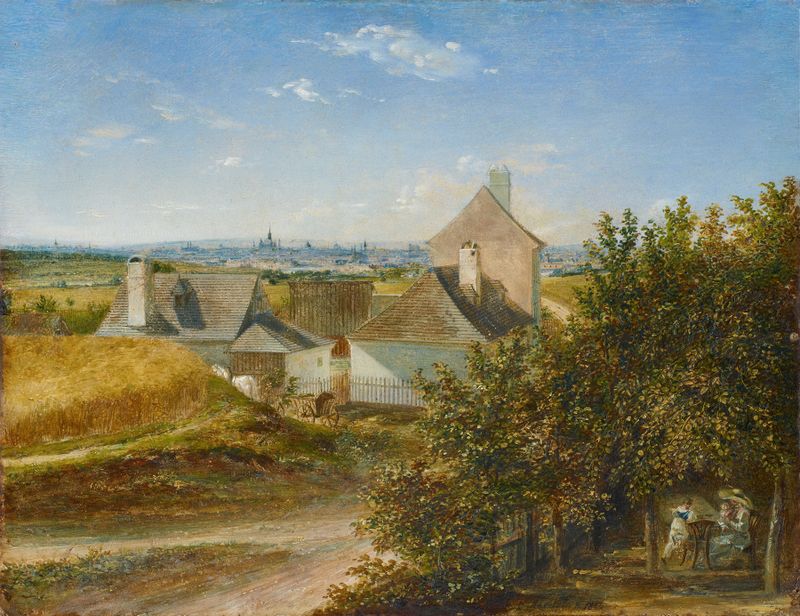
Blick auf Wien von Grinzing
Karl Joseph Aloys Agricola

Die Donau mit der alten Reichsbrücke
Karl Joseph Aloys Agricola
Die neue Wiese in Karlsbad
Karl Joseph Aloys Agricola
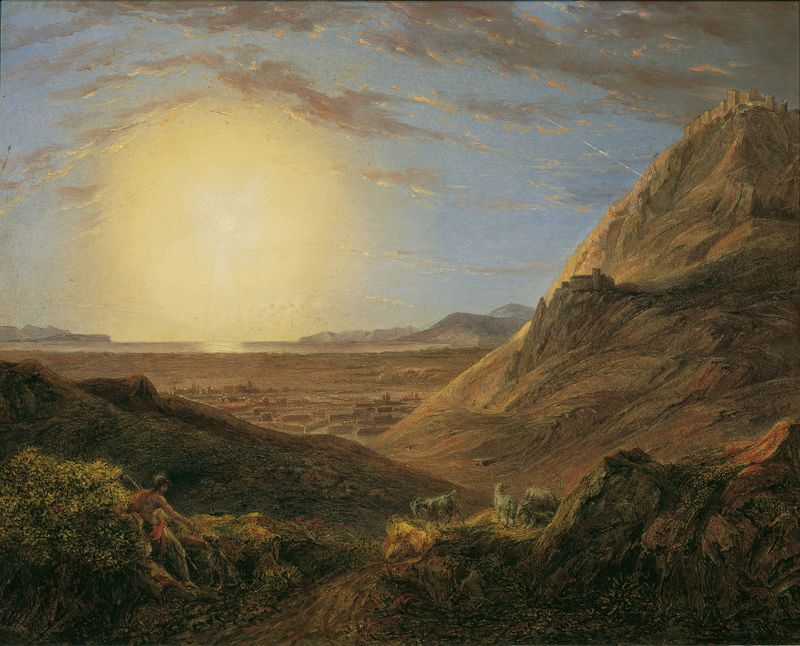
Athen nach Sonnenaufgang
Karl Joseph Aloys Agricola

Baumlandschaft mit Familie und Kindern
Karl Joseph Aloys Agricola
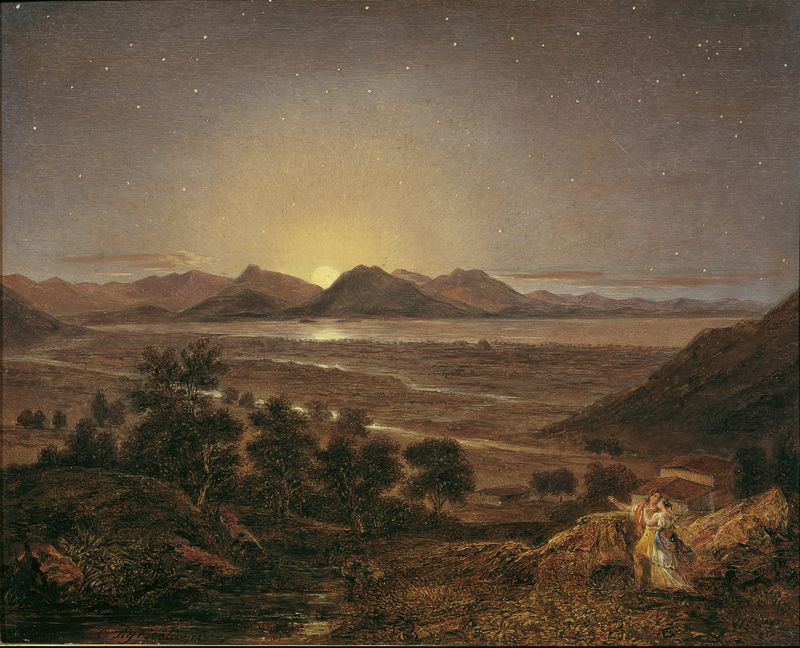
Marathon bei Mondbeleuchtung
Karl Joseph Aloys Agricola





