
Die Pyramiden von Gizeh — History & Facts
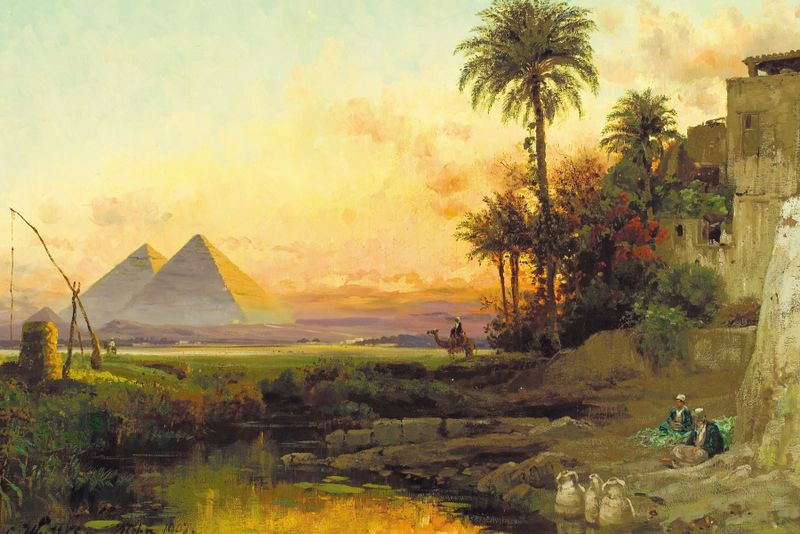
Could a single brushstroke hold eternity? In Die Pyramiden von Gizeh, the essence of time is captured within the still grandeur of ancient monuments, inviting contemplation of both the past and what lies beyond our perception. Look to the left at the towering pyramids, their jagged peaks breaking the horizon against a deepening twilight. Notice how the sun’s last light spills like molten gold over the stony surfaces, creating a striking contrast between the warm hues of the foreground and the cool, encroaching shadows. Each brushstroke is deliberate, and the texture evokes the weight and permanence of these monumental structures, while the subtle gradation of color suggests the constant shift between light and dark, day and night. As you journey deeper into the scene, notice the ethereal mist that clings to the base of the pyramids, hinting at an illusion of mystery.
This interplay of clarity and obscurity reflects the duality of human ambition—how we strive for immortality yet remain bound by the ephemeral nature of existence. The viewer is drawn to the vast expanse of the desert, evoking feelings of solitude while simultaneously illustrating the ancient civilization that once thrived in this harsh landscape. In 1906, Carl Wuttke painted this piece during a period of rising fascination with ancient history and archaeology. His works often combined elements of realism with romantic ideals, mirroring the broader art movements of his time that sought to engage with the past.
This artwork emerged from Wuttke’s experiences in Egypt, as he immersed himself in the culture and history of the region, capturing a moment that resonates with contemporary themes of exploration and the quest for knowledge.
More Artworks by Carl Wuttke
Browse all →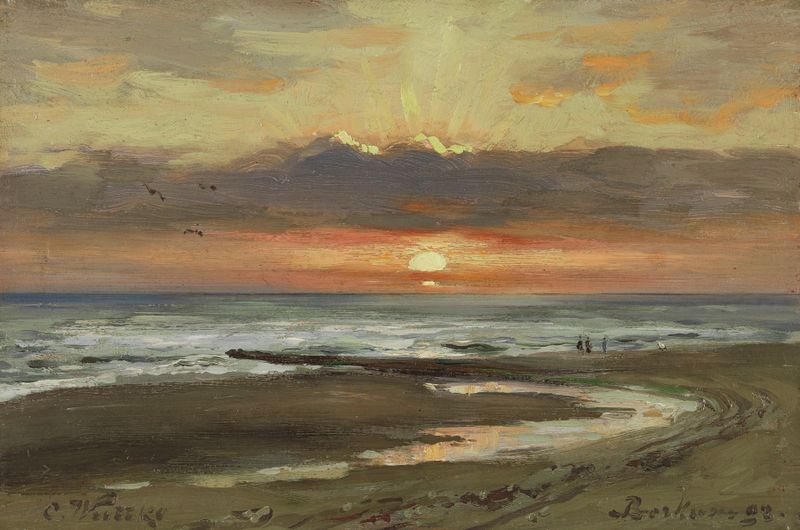
Sonnenuntergang auf Borkum
Carl Wuttke

Orientalischer Basar
Carl Wuttke

Blick vom antiken Theater in Taormina auf den Ätna
Carl Wuttke
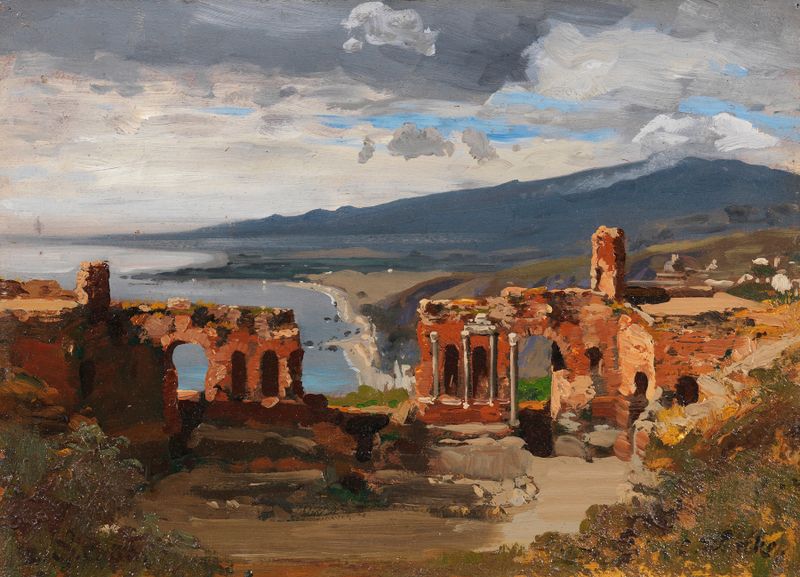
Blick vom antiken Theater in Taormina auf den Ätna
Carl Wuttke
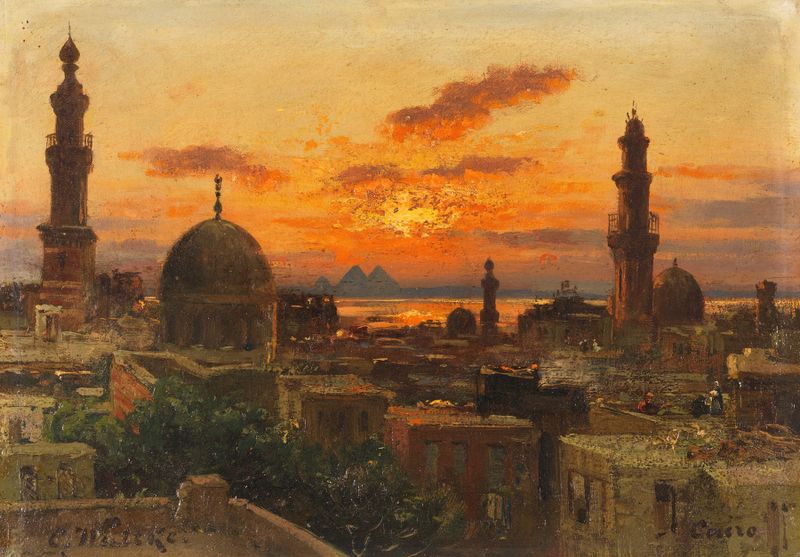
Kairo im Abendlicht
Carl Wuttke
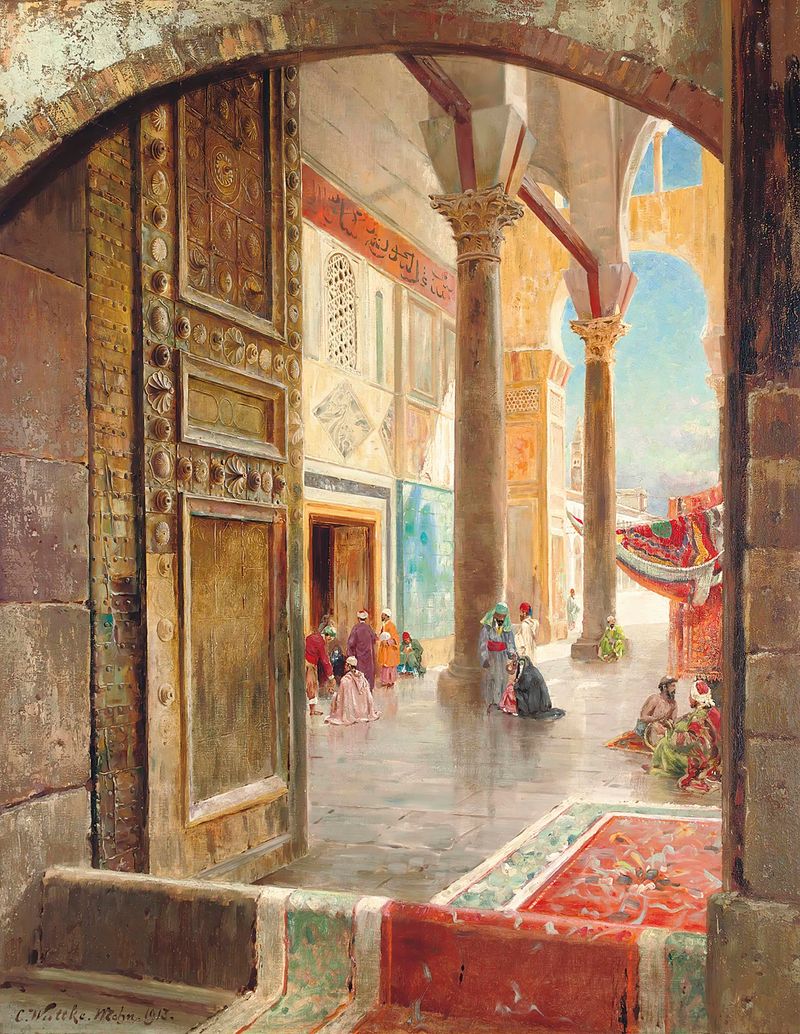
The Great Umayyad Mosque, Damascus
Carl Wuttke
The Pyramids at Dusk
Carl Wuttke

Ansicht von Kairo mit dem Südtor der Stadtmauer
Carl Wuttke

Hügellandschaft in Westbengalen
Carl Wuttke
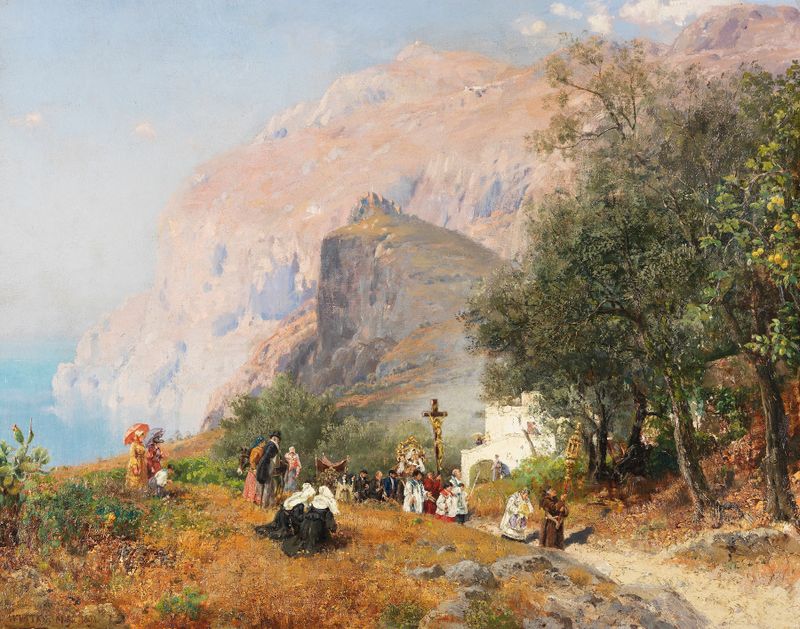
Prozession auf Capri
Carl Wuttke





