
Die Traun und der Traunstein — History & Facts
In the stillness of Ludwig Halauska's work, emptiness takes on a profound significance, urging us to confront our own fleeting moments. First, look to the left, where soft hues of blue and green blend harmoniously, inviting the eye to wander along the tranquil landscape. The distant Traunstein rises majestically against a pale sky, its craggy silhouette a bold contrast to the delicate strokes of the foreground. Notice how the gentle ripples of the water reflect the world above, drawing your gaze deeper into the scene, as if inviting the viewer to pause and contemplate. Yet, beneath this serene facade lies a tension between the expansive sky and the looming mountain, suggesting both isolation and communion.
The emptiness of the foreground, with its muted colors and simplicity, speaks to a sense of longing—a reminder of what once was or could have been. The viewer is left grappling with the juxtaposition of the majestic mountain, symbolizing permanence, against the fleeting nature of the water below. Created in 1875 while Halauska resided in Austria, this painting reflects a transitional period in his career and the broader art world. Influenced by the Romantic era, he sought to capture the emotional essence of landscapes, mirroring both personal introspection and the collective yearning of a society grappling with change and the passage of time.
More Artworks by Ludwig Halauska
Browse all →
Der Schneeberg in Niederösterreich von Gutenstein aus gesehen
Ludwig Halauska

A View of Klamm Castle near Imst in the Inntal in Tyrol
Ludwig Halauska
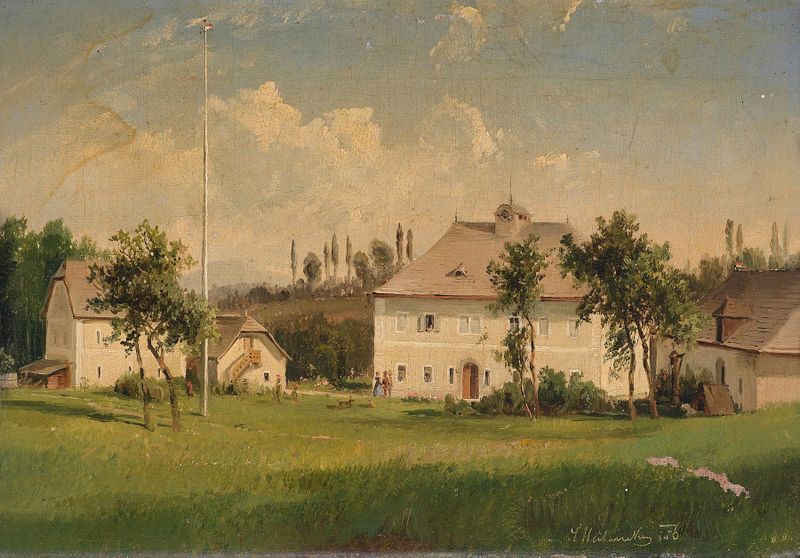
Blick auf einen Gutshof
Ludwig Halauska

Blick auf das Dorf Tutschach bei Aflenz
Ludwig Halauska
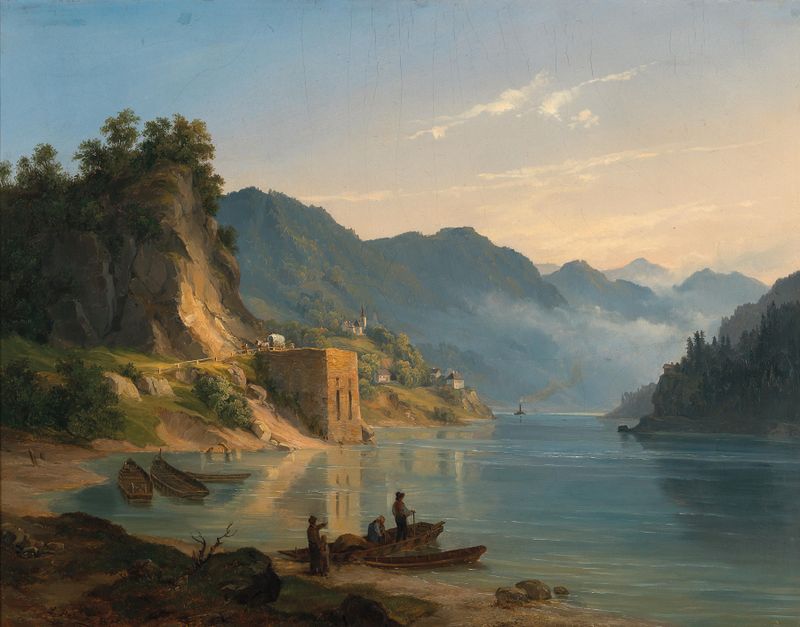
St. Nikola im Strudengau
Ludwig Halauska

Blick auf das Dorf Tutschach bei Aflenz mit dem Jauringbach im Vordergrund
Ludwig Halauska

Landschaft bei Flintsbach am Inn
Ludwig Halauska
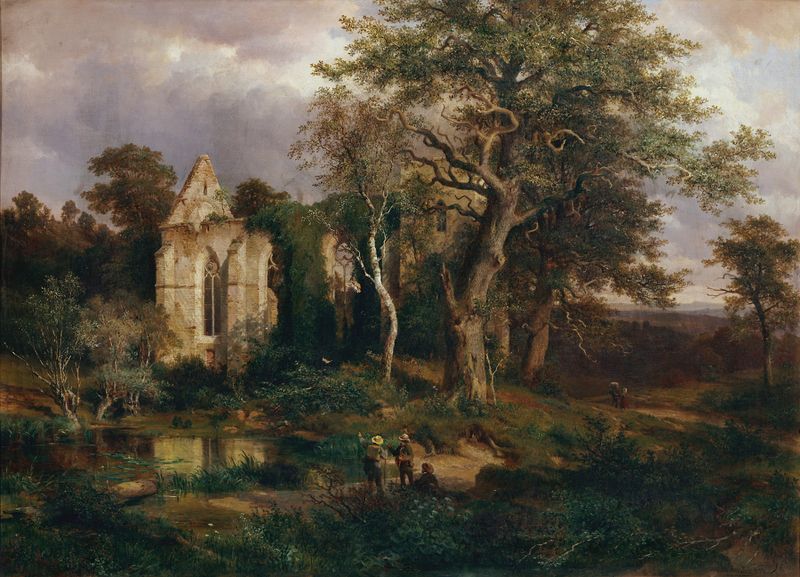
Kirchenruine
Ludwig Halauska

Partie aus Mittenwald am Karwendelgebirge
Ludwig Halauska

Sommerlandschaft
Ludwig Halauska





