
Ditch of the Malakoff, battery gervais and rear of the redan — History & Facts
When did color learn to lie? In the world of memory, every shade carries the weight of experience, shaping our perceptions and reverberating through time. Look to the left at the muted browns and greens, where the landscape sprawls with an unsettling stillness. The foreground reveals a barren ditch, its contours sharply defined, contrasting against the softer edges of the distant hills. Notice how the gray sky looms overhead, heavy and oppressive, casting a pall over the scene that seems to encapsulate the despair of war.
Simpson's careful brushwork captures the textured earth, while the somber palette evokes a sense of melancholy and loss. Beneath the surface, the painting speaks of a juxtaposition—nature’s beauty intertwined with the scars of conflict. The ditch, a symbol of both defense and destruction, serves as a reminder of human folly. Shadows linger in the recesses, suggesting memories trapped in time, while the distant artillery hints at the chaos just beyond the viewer's gaze.
This tension between tranquility and turmoil invites reflection on the cost of struggle, both personal and collective. In 1855, William Simpson created this piece during the Crimean War, a pivotal moment in his life and the art world. As an official war artist, he captured the grim realities faced by soldiers while navigating the complexities of human experience. This period marked a shift in the portrayal of war, as artists moved from romanticizing conflict to depicting its raw and often brutal truths.
Simpson’s work stands as a poignant reminder of those who endure, both in the trenches and in memory.
More Artworks by William Simpson
Browse all →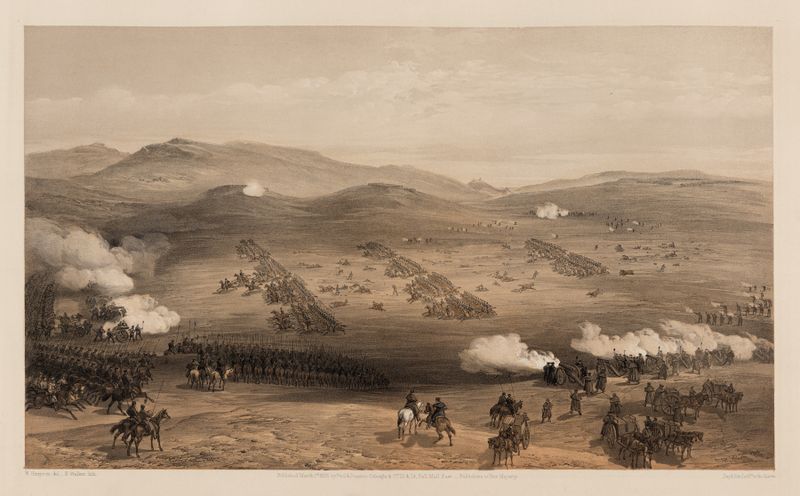
Charge of the light cavalry brigade, 25th Oct. 1854, under Major General the Earl of Cardigan
William Simpson

Charge of the heavy cavalry brigade, 25th Octr. 1854
William Simpson
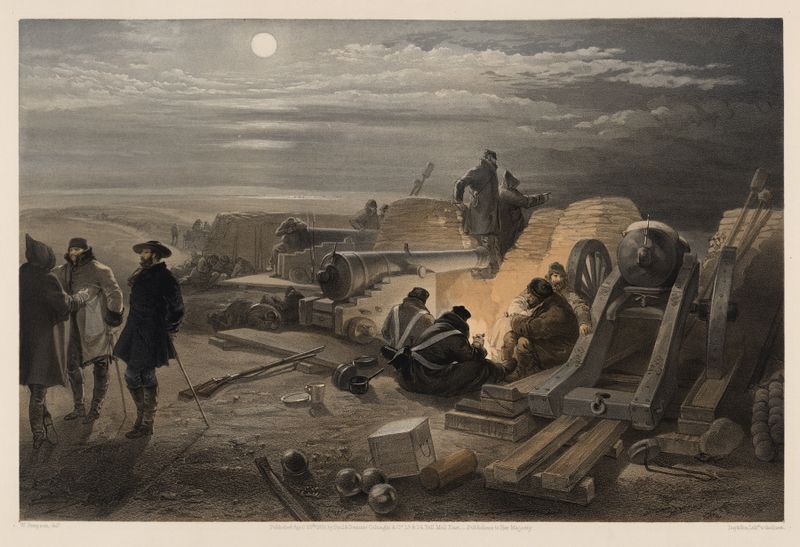
A quiet night in the batteries – a sketch in the Greenhill battery (Major Chapman’s), 29th Jany. 1855
William Simpson

The Great Wall of China
William Simpson
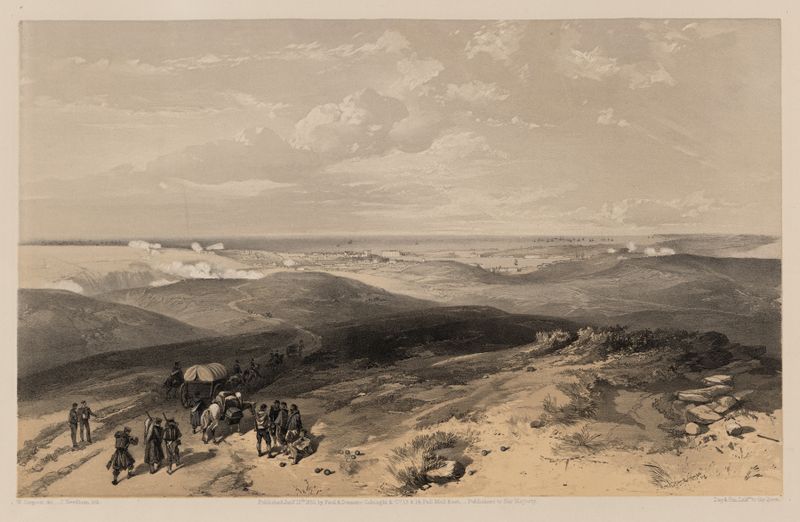
Sebastopol from the rear of the English batteries
William Simpson
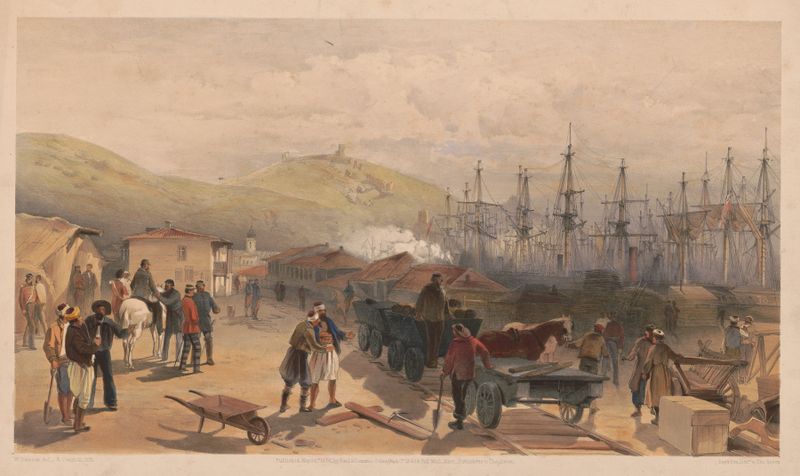
The railway at Balaklava, looking south
William Simpson

The Governor-General’s and Commander-in-Chief’s Camp at Jalandhar, 1 Febuary 1860
William Simpson
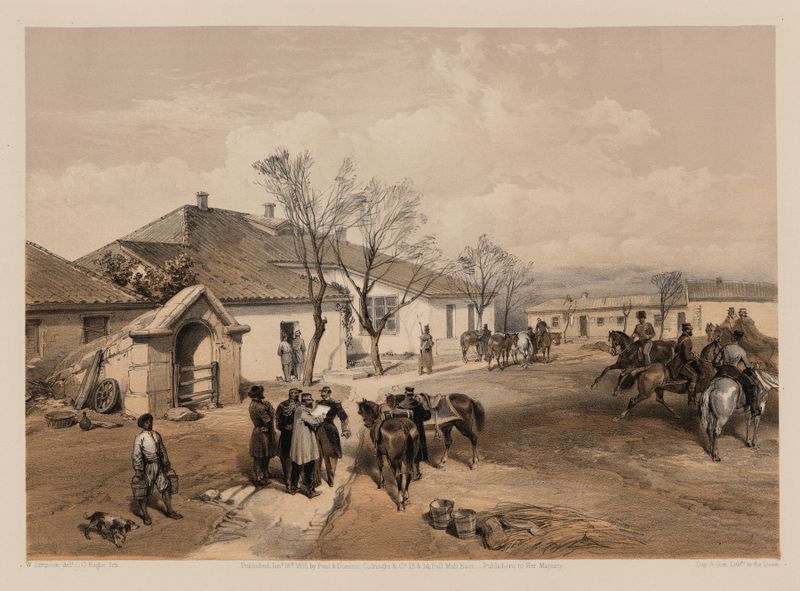
Lord Raglan’s head quarters at Khutor-Karagatch
William Simpson
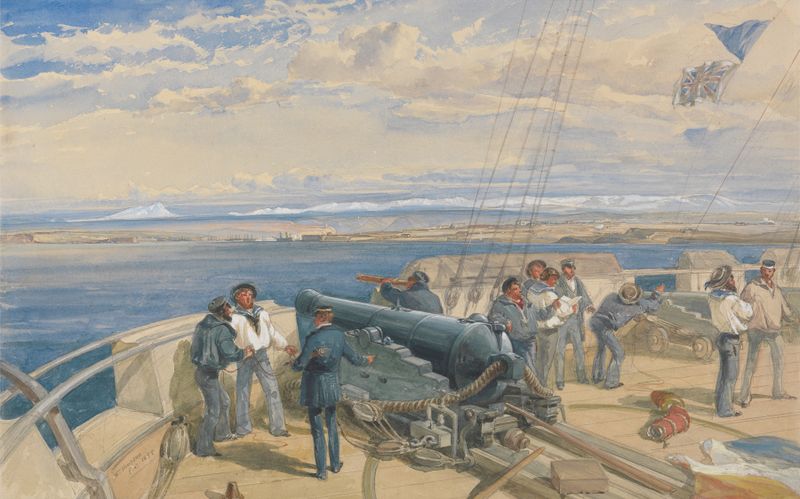
Sebastopol from the Sea, Sketched from the Deck of H. M. S. Sidon, Feb. 1855
William Simpson
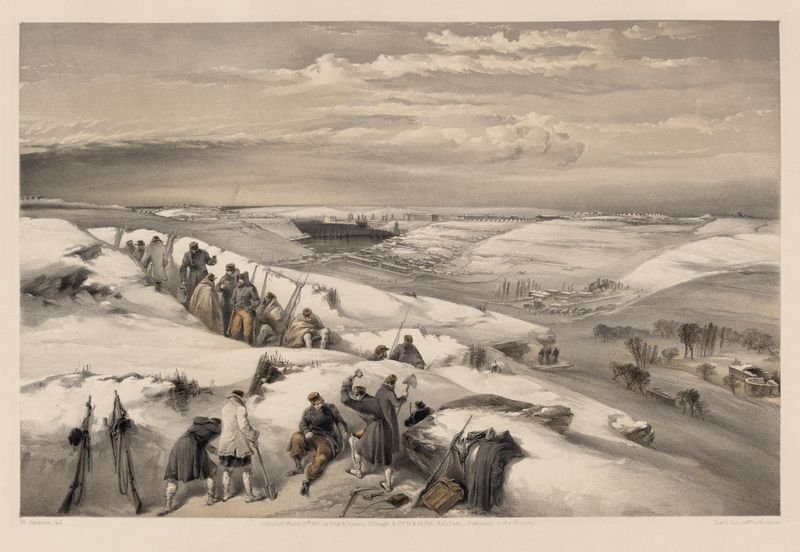
Sebastobol from the 26 gun battery on the extreme right of French attack
William Simpson





