
Démolition de l’église Saint-Jean-en-Grève, en 1800 — History & Facts
Where does light end, and longing begin? In the interplay of shadow and form, memory emerges like a whisper from the past, faint yet resonant. Look closely at the canvas, where the fractured structure of the church stands boldly against a muted sky. To the left, a vibrancy of ochres and browns contrasts sharply with the cooler, somber blues, drawing your gaze to the crumbling facade that seems to echo with the voices of the departed. Notice the meticulous brushwork capturing both the physicality of the bricks and the ethereal glow of light filtering through the rubble, imbuing the scene with a poignant sense of loss and nostalgia. In this moment, the artist has captured more than mere demolition; he addresses the tension between progress and preservation.
The church, a once-sacred space, is reduced to a memory, with the scattered debris symbolizing the fragility of history. The figures in the foreground, small and almost ghostly, confront the remnants of their past, illustrating the emotional weight of change. This juxtaposition of life against decay evokes a deep ambivalence toward the relentless march of time. Created in 1800, Démolition de l’église Saint-Jean-en-Grève reflects Pierre-Antoine Demachy’s engagement with the shifting landscape of post-revolutionary France.
At this time, the nation was grappling with the consequences of social upheaval and modernization, and the artist sought to document the remnants of a bygone era. This work stands as both a historical record and a meditation on memory, capturing an essential moment in the evolution of urban life and collective identity.
More Artworks by Pierre-Antoine Demachy
Browse all →
Démolition de la Bastille, le 17 juillet 1789
Pierre-Antoine Demachy
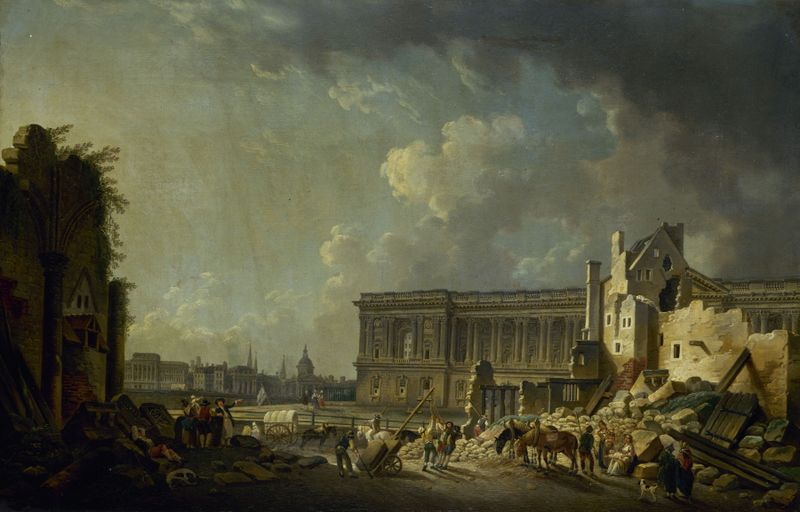
Dégagement de la colonnade du Louvre
Pierre-Antoine Demachy

La colonnade du Louvre, nouvellement dégagée
Pierre-Antoine Demachy
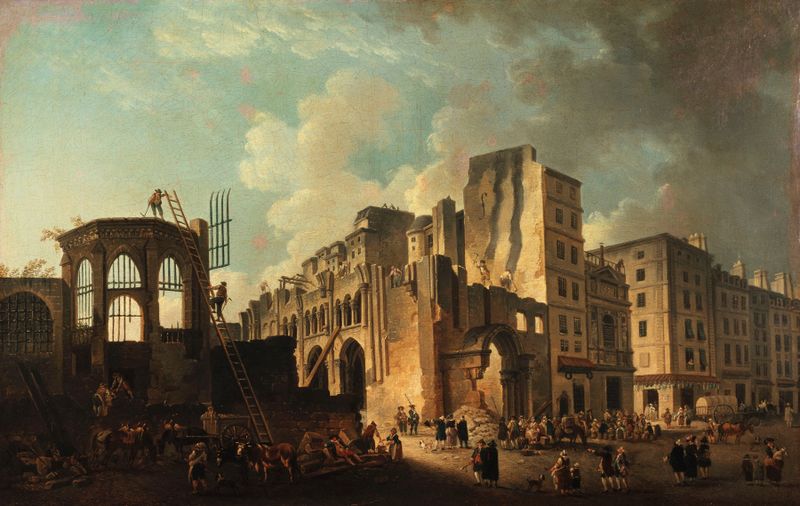
La démolition de l’église des Saints-Innocents, rue Saint-Denis
Pierre-Antoine Demachy
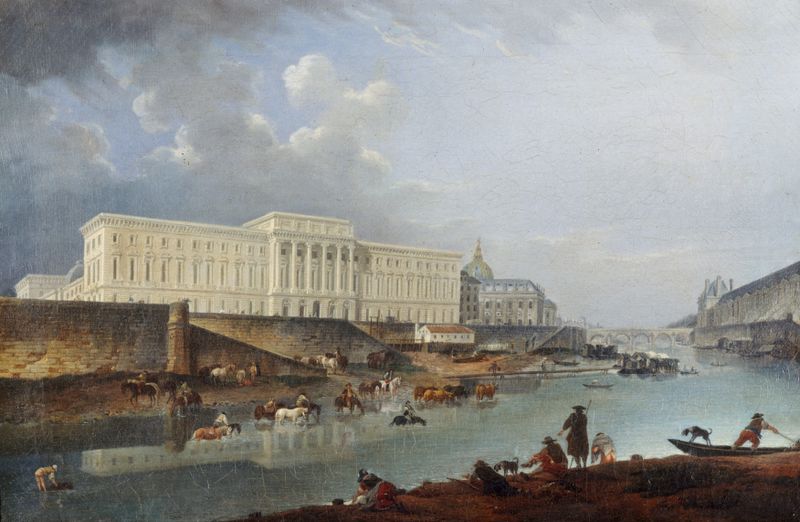
L’Hôtel de la Monnaie, le quai de Conti et la Seine, vus de la pointe de la Cité
Pierre-Antoine Demachy

Dégagement de la colonnade du Louvre
Pierre-Antoine Demachy

L’Hôtel de la Monnaie et le Louvre, vus du Pont-Neuf, vers 1800
Pierre-Antoine Demachy
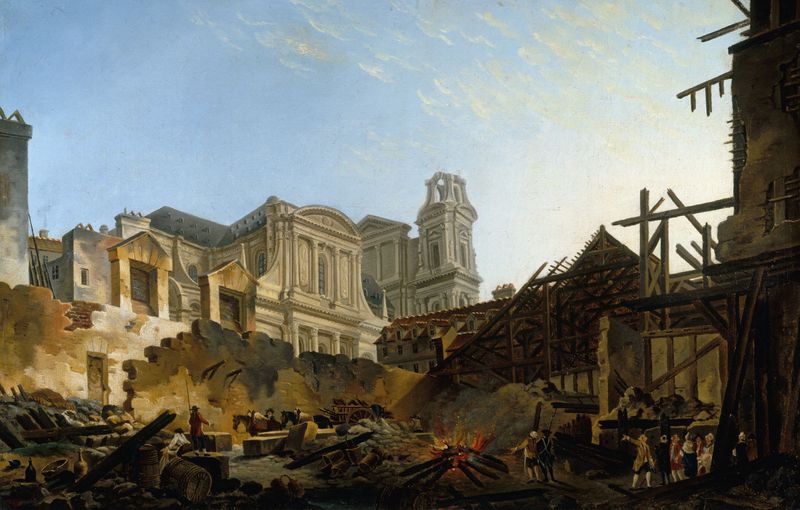
La foire Saint-Germain après l’incendie de la nuit du 16 au 17 mars 1762
Pierre-Antoine Demachy

La Foire Saint-Germain pendant l’incendie (nuit du 16 au 17 mars 1762)
Pierre-Antoine Demachy
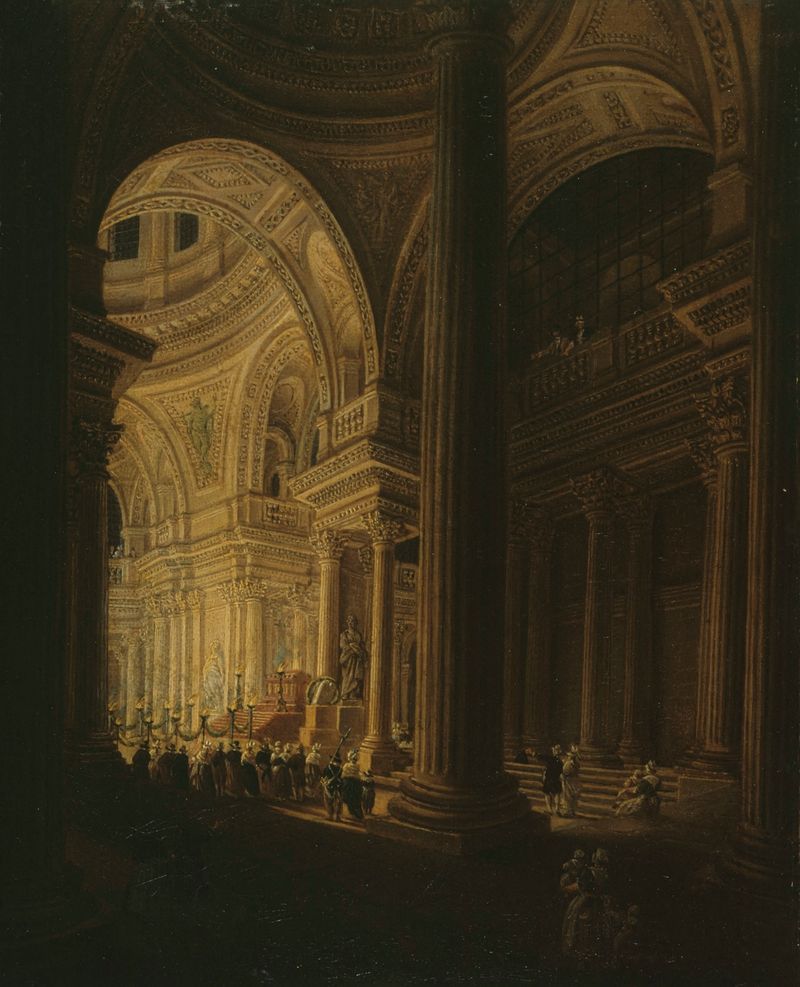
Le sarcophage de Jean-Jacques Rousseau, exposé au Panthéon (20 vendémiaire an III – 11 octobre 1794)
Pierre-Antoine Demachy
More Architecture Art
Browse all →
The statue of Liberty
Frédéric Auguste Bartholdi

View of Houses in Delft, Known as ‘The Little Street’
Johannes Vermeer

View of Houses in Delft, Known as ‘The Little Street’
Johannes Vermeer

The Cathedral in Rouen. The portal, Grey Weather
Claude Monet

The yellow house
Vincent van Gogh

The Church in Auvers-sur-Oise, View from the Chevet
Vincent van Gogh