
Démolition du pont Notre-Dame — History & Facts
This thought lingers when gazing at the transformation captured in this artwork, where the ephemeral meets the void. The scene, a melancholic reminder of both loss and renewal, urges us to ponder the delicate balance between creation and destruction. Focus first on the stark contrast between the jagged silhouettes of the bridge remnants and the soft hues that surround them. The muted palette of grays and earth tones evokes a sense of melancholy, while splashes of warm color hint at the life that once flourished here.
Notice how the light dapples across the debris, casting shadows that elongate and distort, emphasizing the fragility of what remains. Each brushstroke is deliberate, communicating a palpable tension between past glory and present desolation. Hidden within the scene is a narrative of inevitable change. The bridge, a once-proud structure, now lies vulnerable, symbolizing the transient nature of human achievement.
The void left behind invites reflection on loss and the emptiness that follows destruction, suggesting that beauty may indeed be found in decay. This work compels us to confront the lingering echoes of what was, challenging our understanding of progress and memory. Eugène Béjot painted this piece during a time of significant urban transformation in France, from 1867 to 1931. As cities evolved and modernity took hold, Béjot found himself in the midst of a rapidly changing landscape, both physically and artistically.
His work reflects the tension of his era, as the past was actively being replaced by the ambitions of the present, a theme that resonated widely in the art world at the time.
More Artworks by Eugène Béjot
Browse all →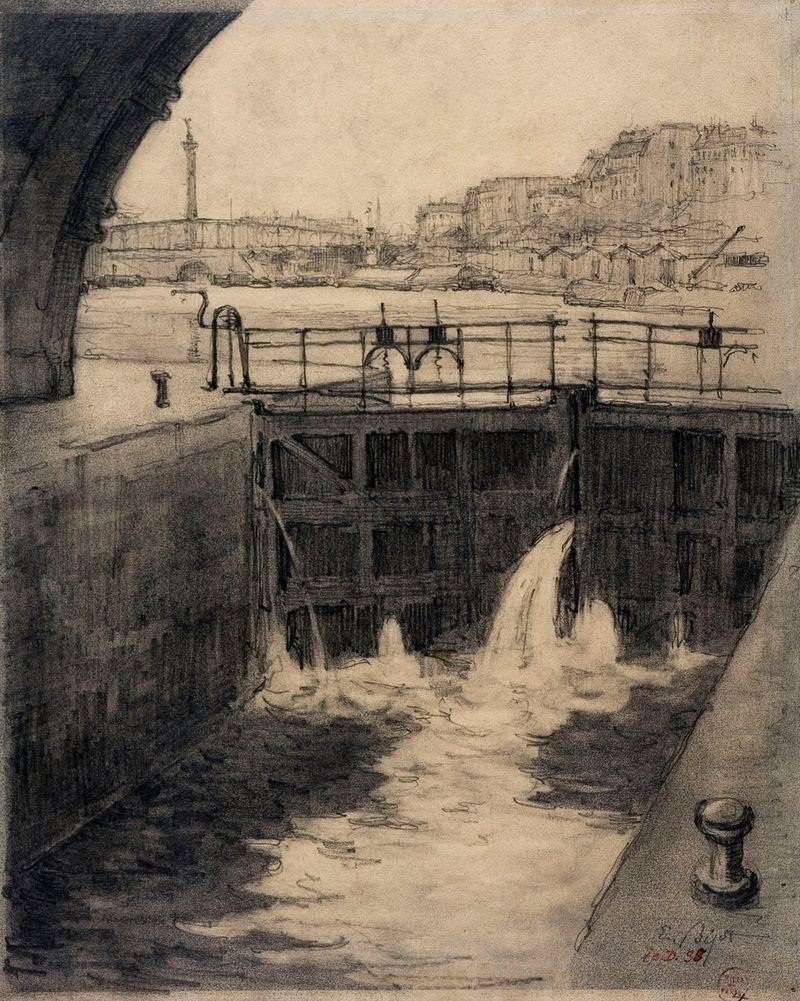
Ecluse du canal Saint-Martin. Ecluse de l’Arsenal
Eugène Béjot
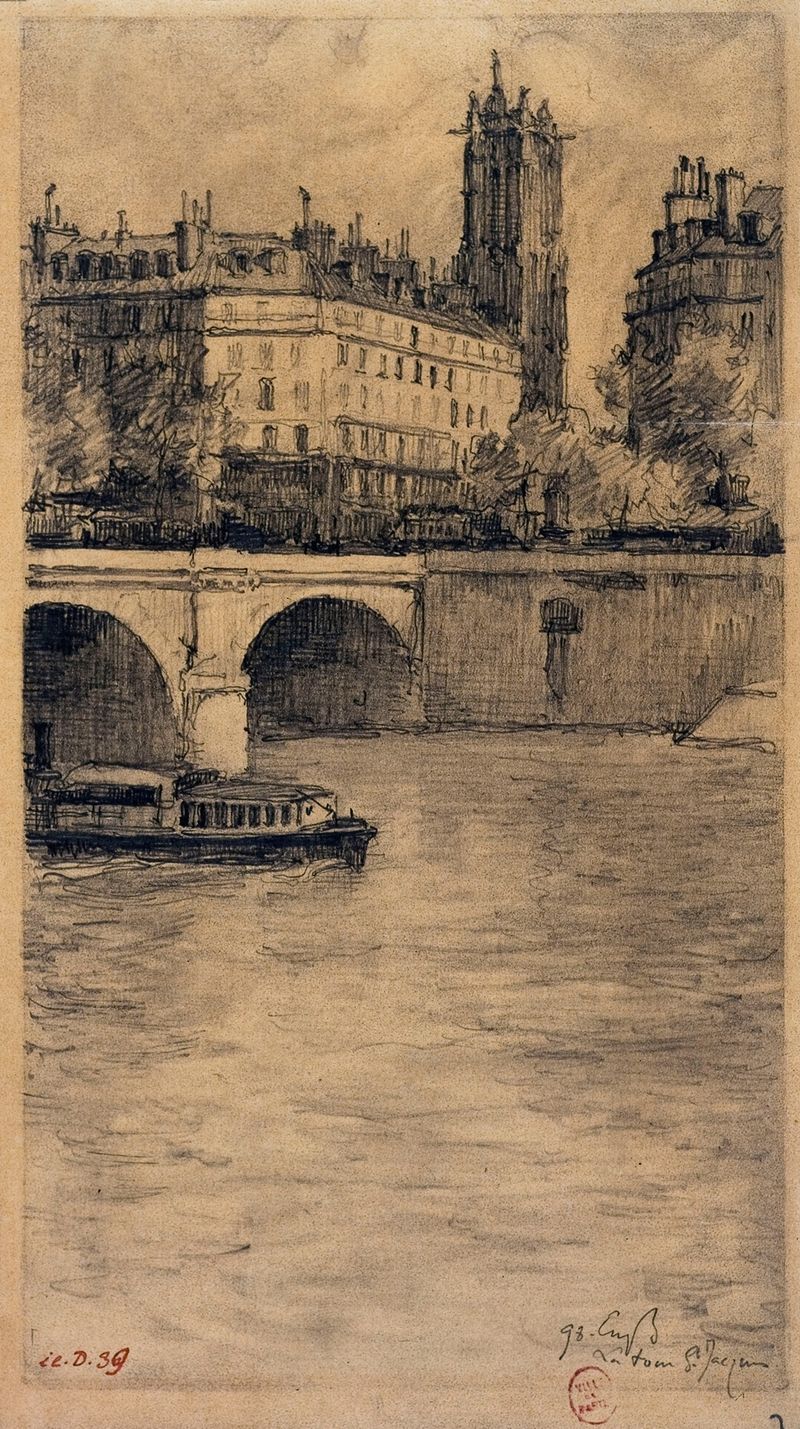
Le pont Notre-Dame et la Tour Saint-Jacques.
Eugène Béjot

Le quai de l’hôtel de ville pris du quai Bourbon.
Eugène Béjot
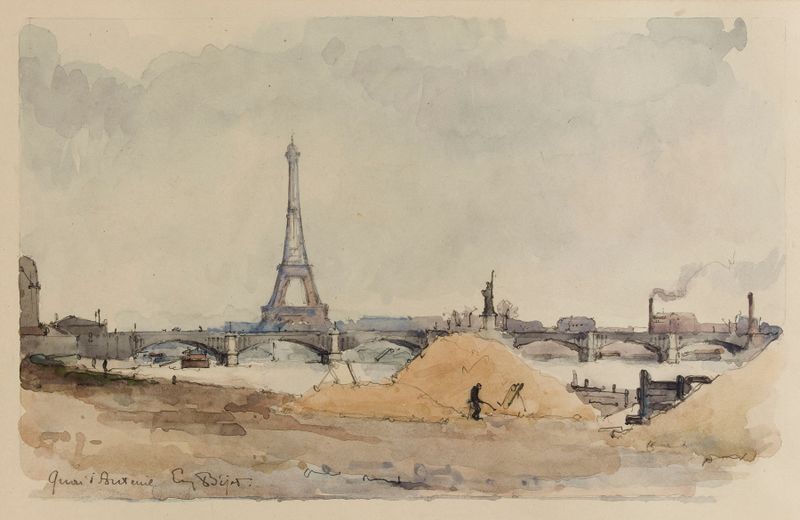
Vue du quai d’Auteuil et du pont de Grenelle
Eugène Béjot
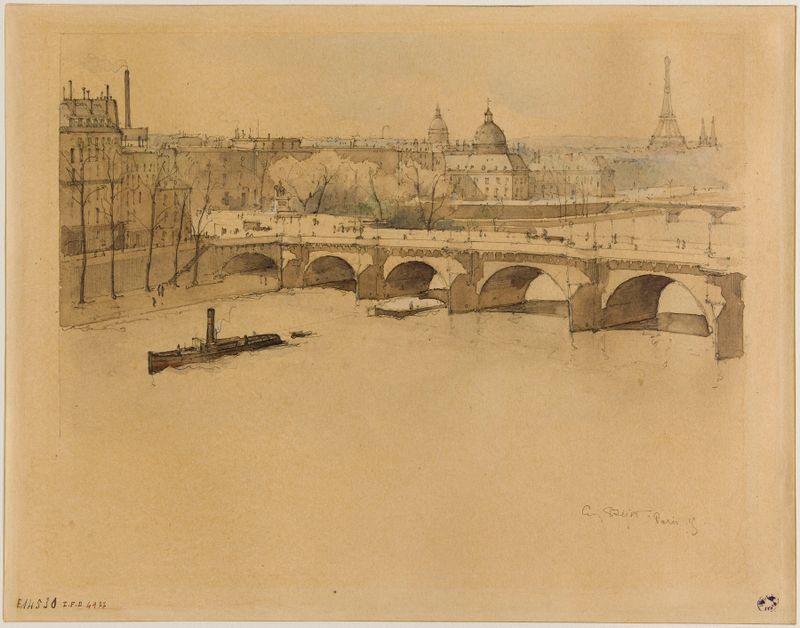
Le Pont-Neuf, grand bras de la Seine.
Eugène Béjot
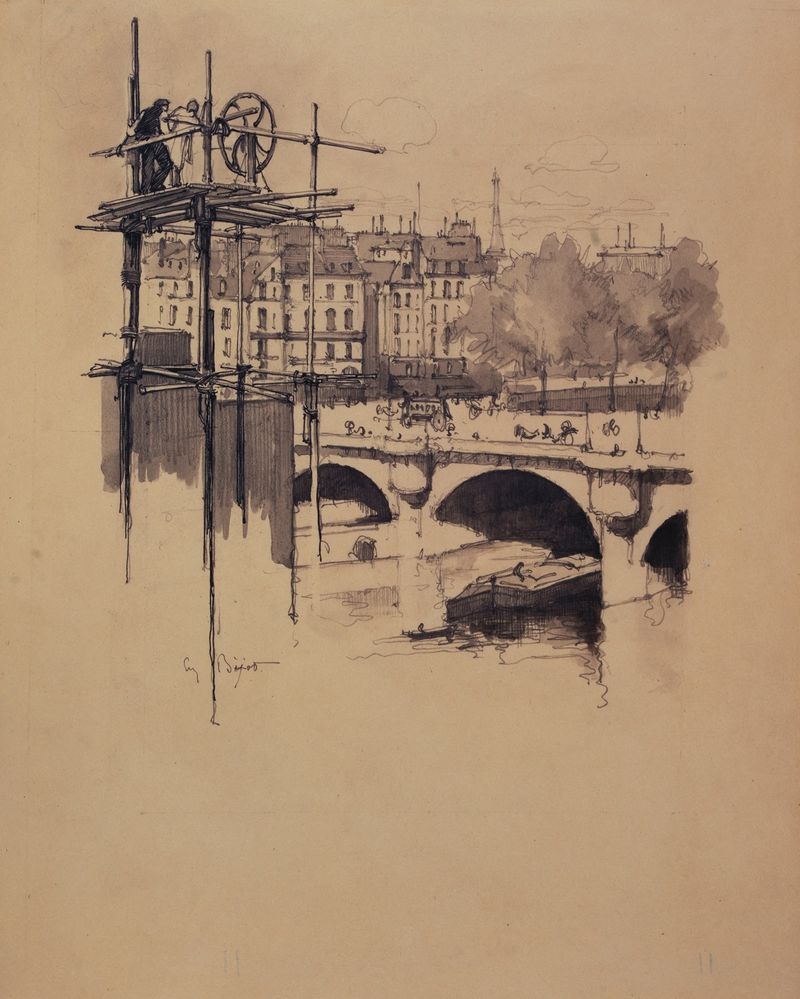
Vue du Pont-Neuf
Eugène Béjot
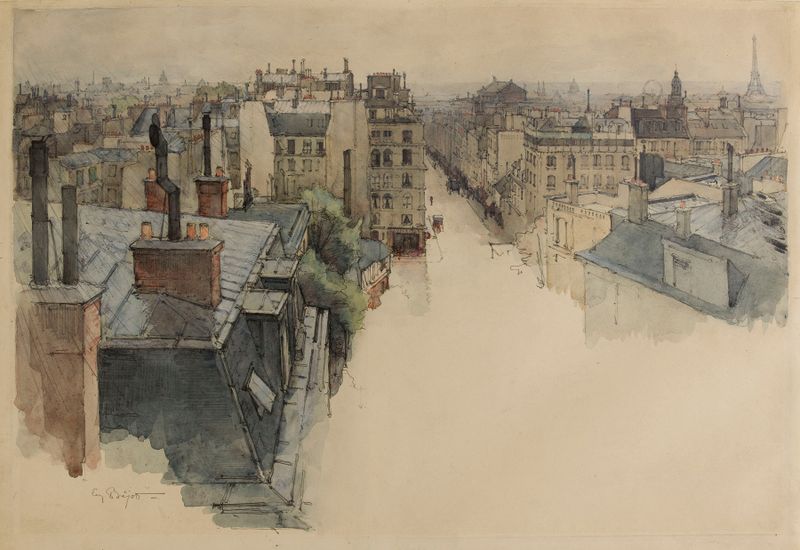
Paris vu des hauteurs de Montmartre.
Eugène Béjot
More Architecture Art
Browse all →
The statue of Liberty
Frédéric Auguste Bartholdi

View of Houses in Delft, Known as ‘The Little Street’
Johannes Vermeer

View of Houses in Delft, Known as ‘The Little Street’
Johannes Vermeer

The Cathedral in Rouen. The portal, Grey Weather
Claude Monet

The yellow house
Vincent van Gogh

The Church in Auvers-sur-Oise, View from the Chevet
Vincent van Gogh