
Le quai de l’hôtel de ville pris du quai Bourbon. — History & Facts
In moments of stillness, a fragile connection between reality and its reflection emerges, whispering the secrets of life itself. Look to the center of the canvas, where the busy scene unfolds beneath a soft, diffused light. Notice how the figures, seemingly caught in a moment of flux, are arranged in delicate balance, their movements gracefully captured as they traverse the banks of the river. The artist employs a muted palette, with subtle blues and warm earth tones, enhancing the sense of nostalgia that envelops the scene, inviting the viewer to ponder the fleeting nature of time. As you explore the composition, consider the contrast between the bustling energy of the busy quai and the serene water reflecting the soft hues of the sky.
The juxtaposition of movement and stillness underscores the fragility of existence; life carries on, yet the moments we inhabit are but brief glimpses in the larger tapestry of experience. The smaller details—like the ripples in the water or the pause in someone's step—hold profound significance, reminding us that fragility coexists with vitality. Eugène Béjot painted this work in 1897 during a period of transition in French art, where Impressionism was giving way to a more modern exploration of urban themes. Living in Paris, he was influenced by the vibrant streets and the ever-changing nature of contemporary life, using his art to reflect on both the beauty and ephemerality of the world around him.
More Artworks by Eugène Béjot
Browse all →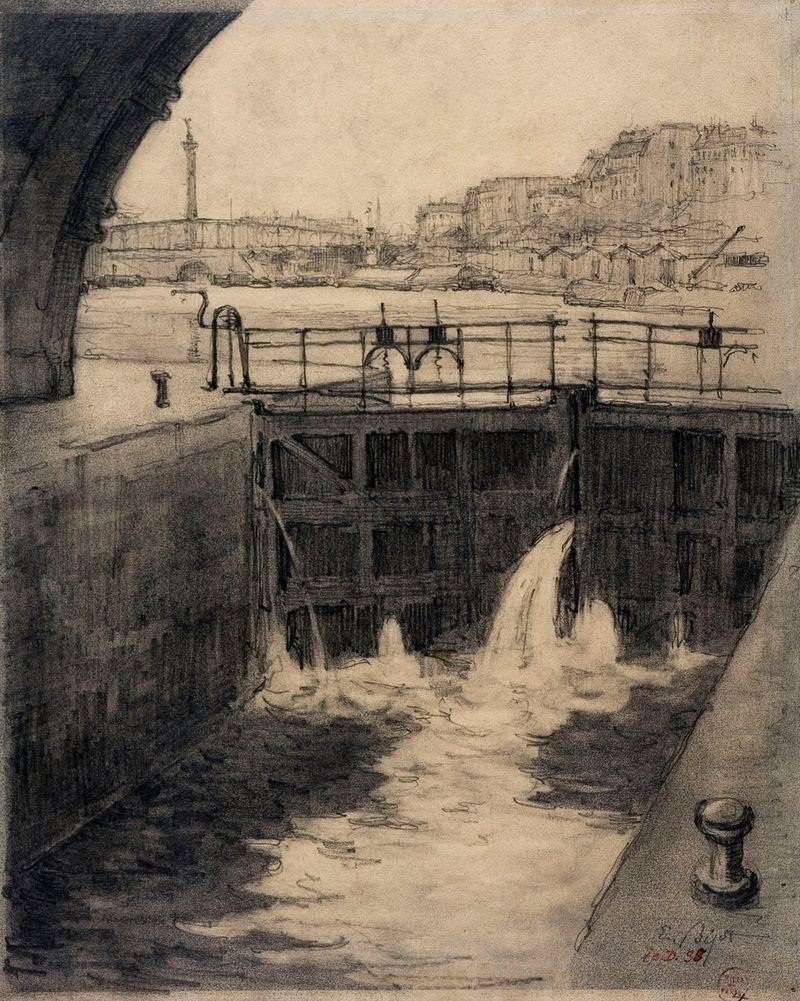
Ecluse du canal Saint-Martin. Ecluse de l’Arsenal
Eugène Béjot
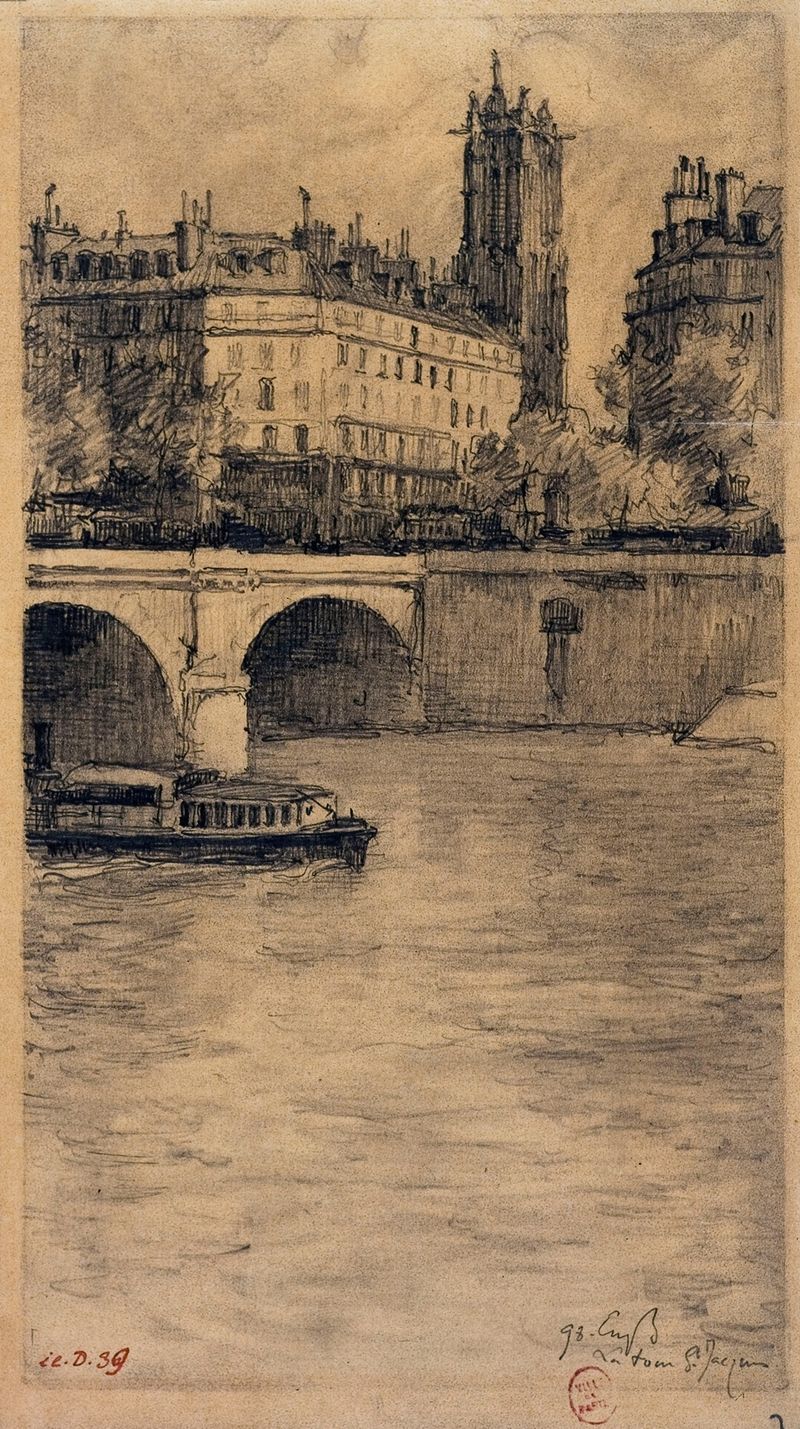
Le pont Notre-Dame et la Tour Saint-Jacques.
Eugène Béjot
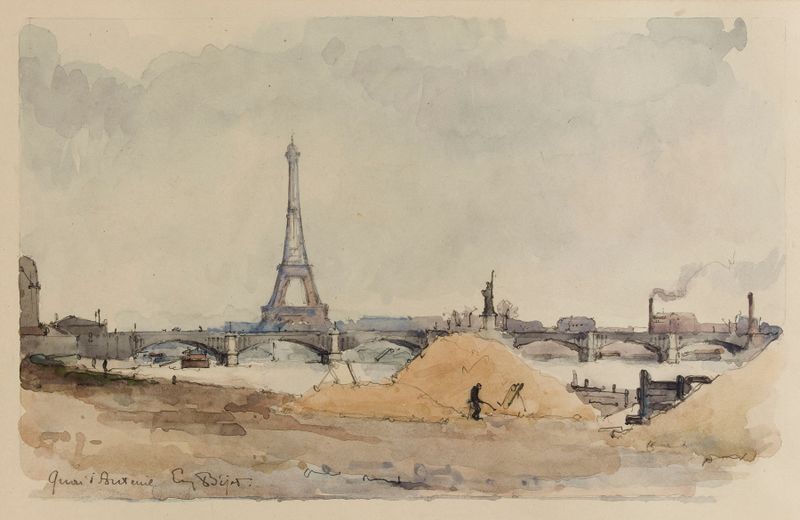
Vue du quai d’Auteuil et du pont de Grenelle
Eugène Béjot
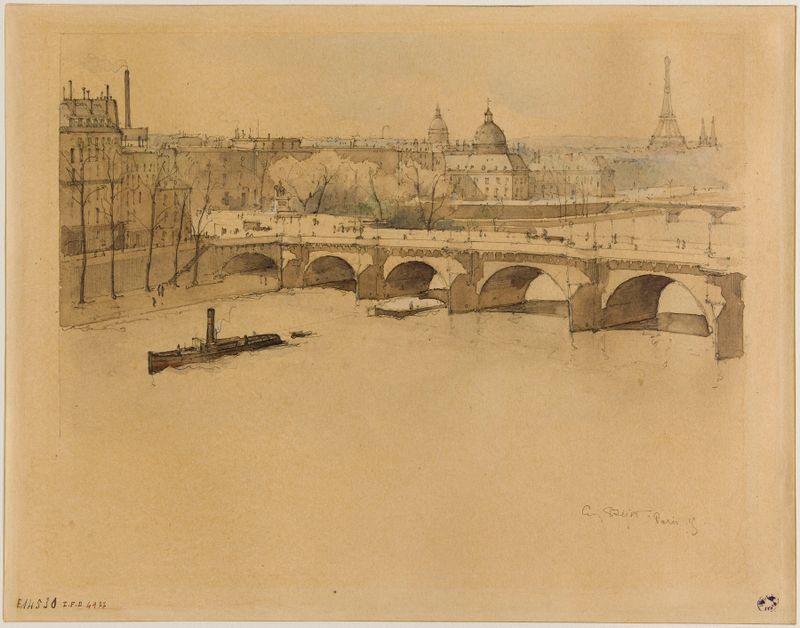
Le Pont-Neuf, grand bras de la Seine.
Eugène Béjot
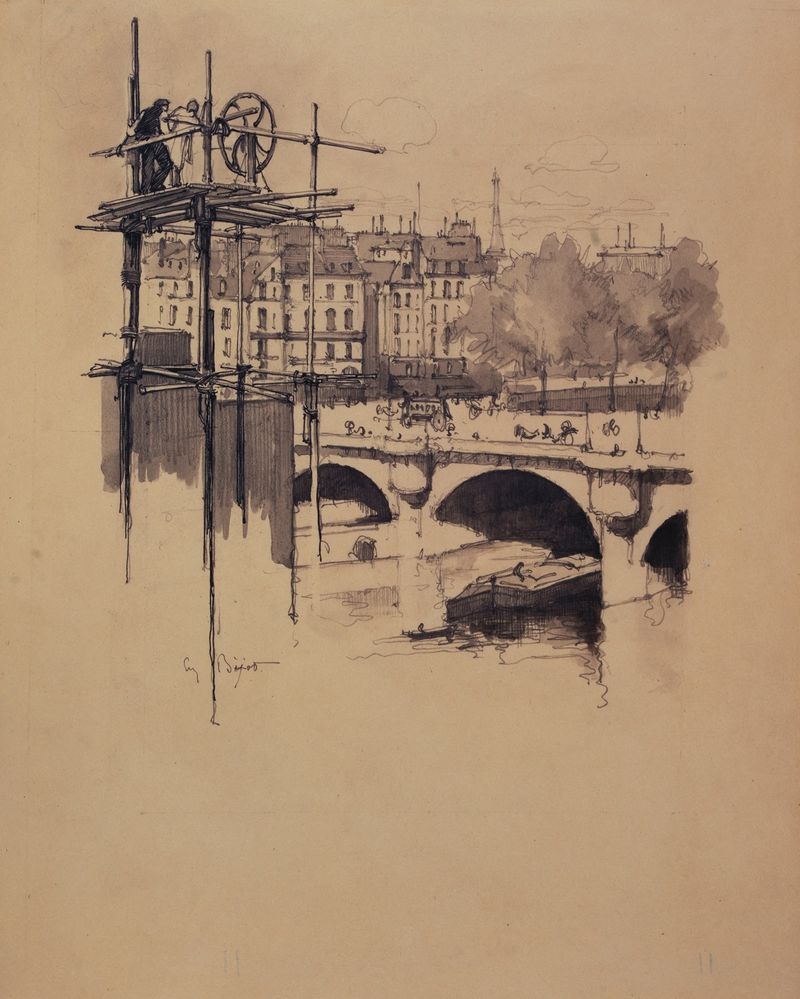
Vue du Pont-Neuf
Eugène Béjot
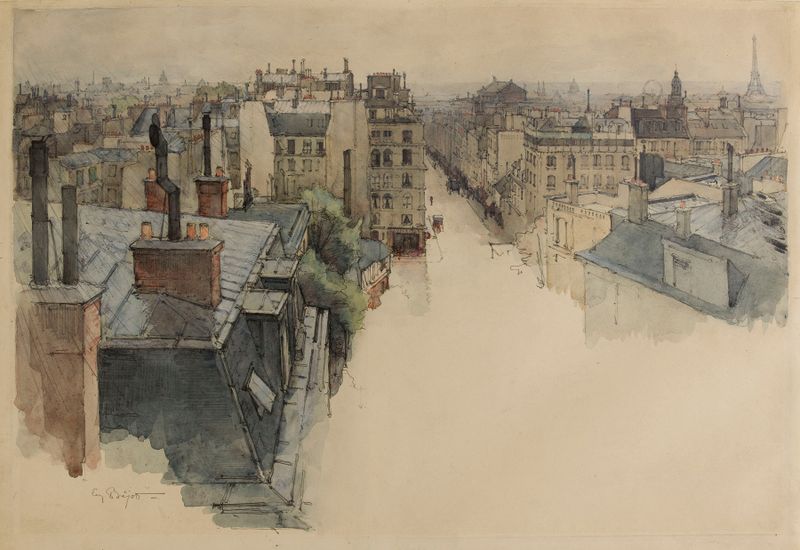
Paris vu des hauteurs de Montmartre.
Eugène Béjot
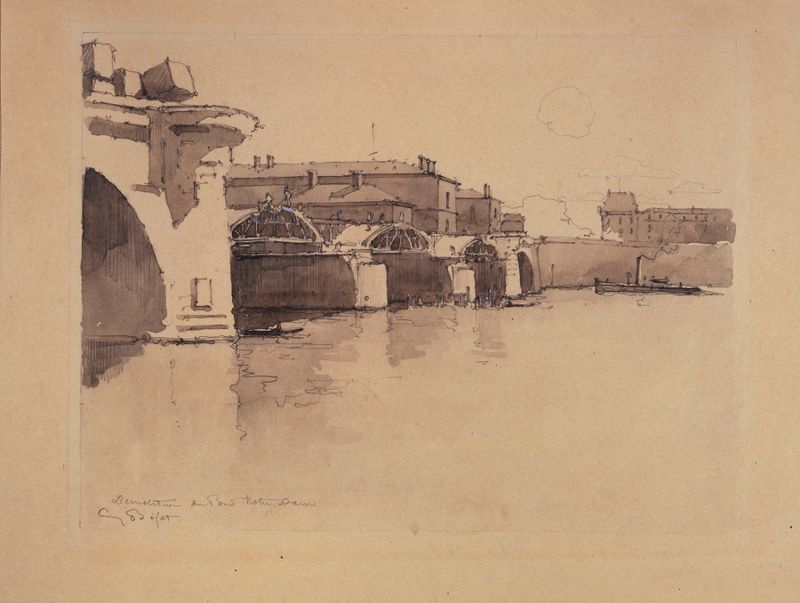
Démolition du pont Notre-Dame
Eugène Béjot





