
Le Pont-Neuf, grand bras de la Seine. — History & Facts
In the vibrant brushstrokes of this piece, we see a fleeting moment of elegance, where the ordinary transforms into the extraordinary. It invites a contemplation on the weight of existence, a dialogue between the ephemeral and the eternal. Look closely at the shimmering waters of the Seine; notice how shades of blue and gold dance together, reflecting not just light but the essence of life itself. The bridge dominates the left side of the canvas, its arches gracefully curving toward the horizon, drawing the eye into the depth of the scene.
Each brushstroke seems deliberate, the colors vibrant yet soft, intertwining to create a tapestry of emotion—a testament to the artist's skill in capturing transient beauty. Within the composition lies an exploration of contrasts: the solid permanence of the stone bridge against the ever-changing surface of the river. This duality hints at the fleeting nature of joy and the pain that often accompanies it. As figures stroll along the bridge, their silhouettes speak of connection, yet their distance evokes a sense of solitude, illustrating the human experience of journeying through both joy and sorrow. Created during the tumultuous years between 1867 and 1931, the artist poured his experiences into this work while navigating the artistic movements of his time, including Impressionism.
Living in Paris, a city alive with innovation and change, he sought to capture the soul of the Seine and its bridge, a symbol of connection in an ever-evolving world. In a period marked by both beauty and strife, this piece stands as a reflection of a life lived between moments of transcendence and the weight of reality.
More Artworks by Eugène Béjot
Browse all →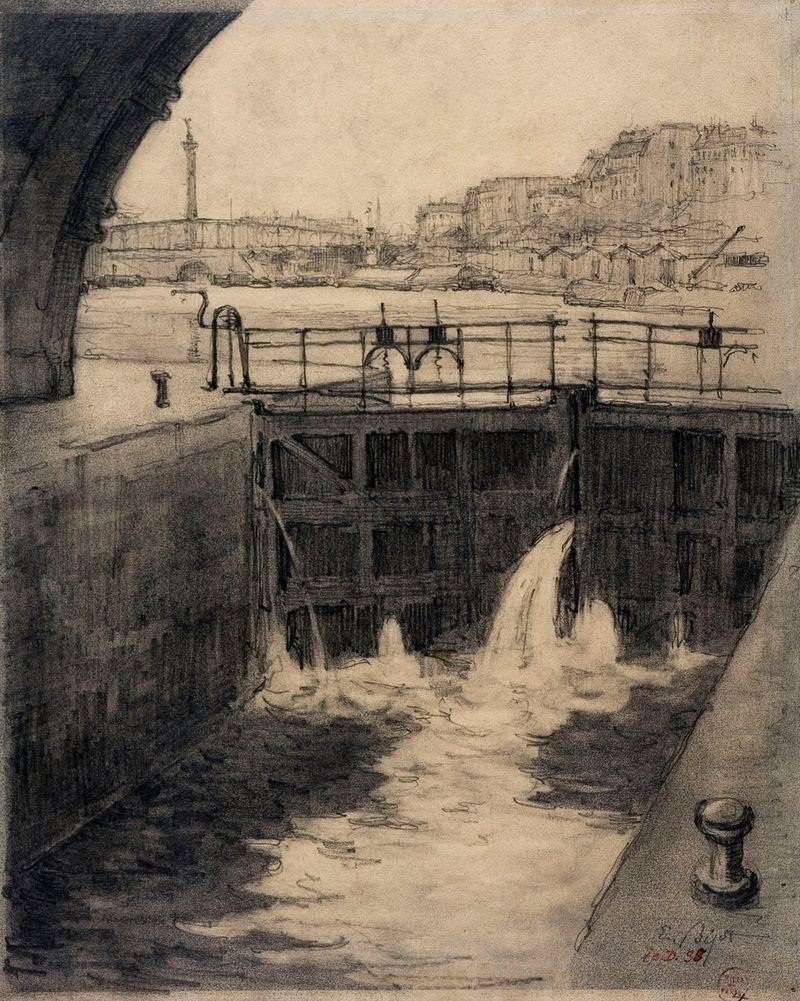
Ecluse du canal Saint-Martin. Ecluse de l’Arsenal
Eugène Béjot
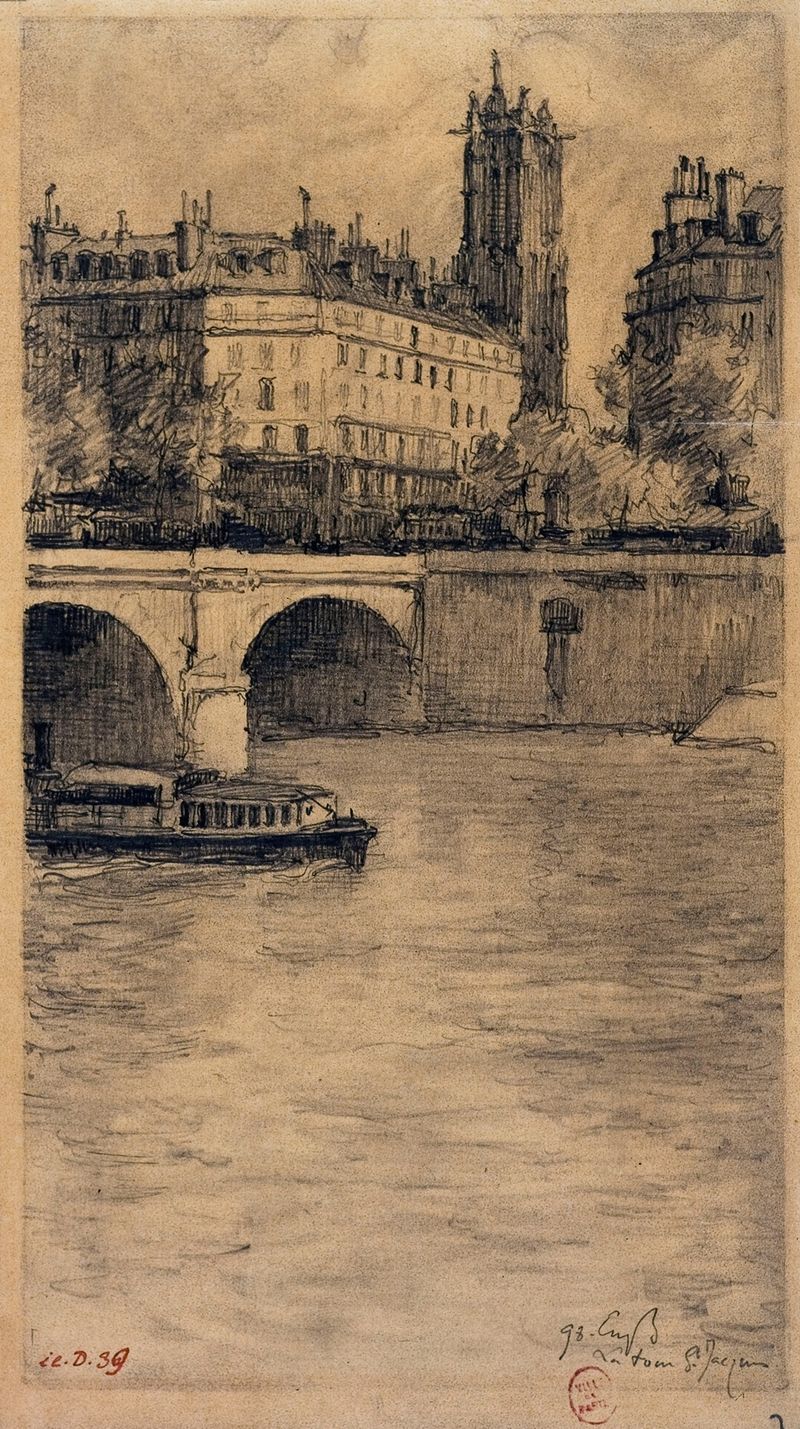
Le pont Notre-Dame et la Tour Saint-Jacques.
Eugène Béjot

Le quai de l’hôtel de ville pris du quai Bourbon.
Eugène Béjot
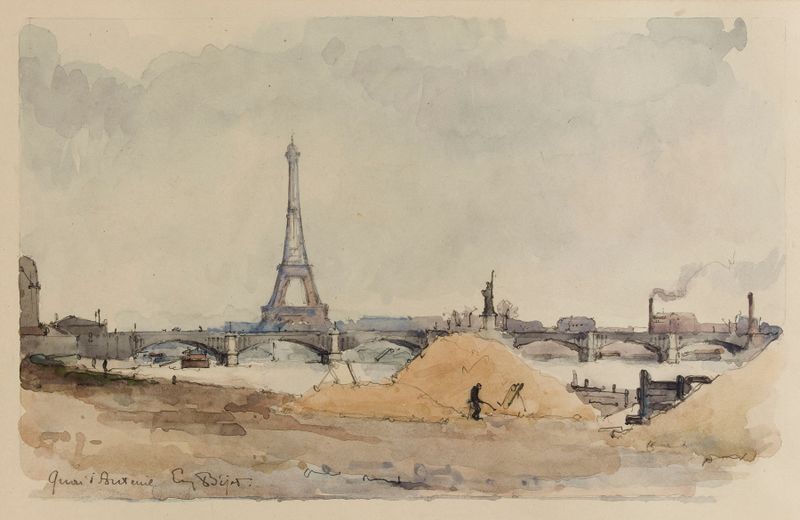
Vue du quai d’Auteuil et du pont de Grenelle
Eugène Béjot
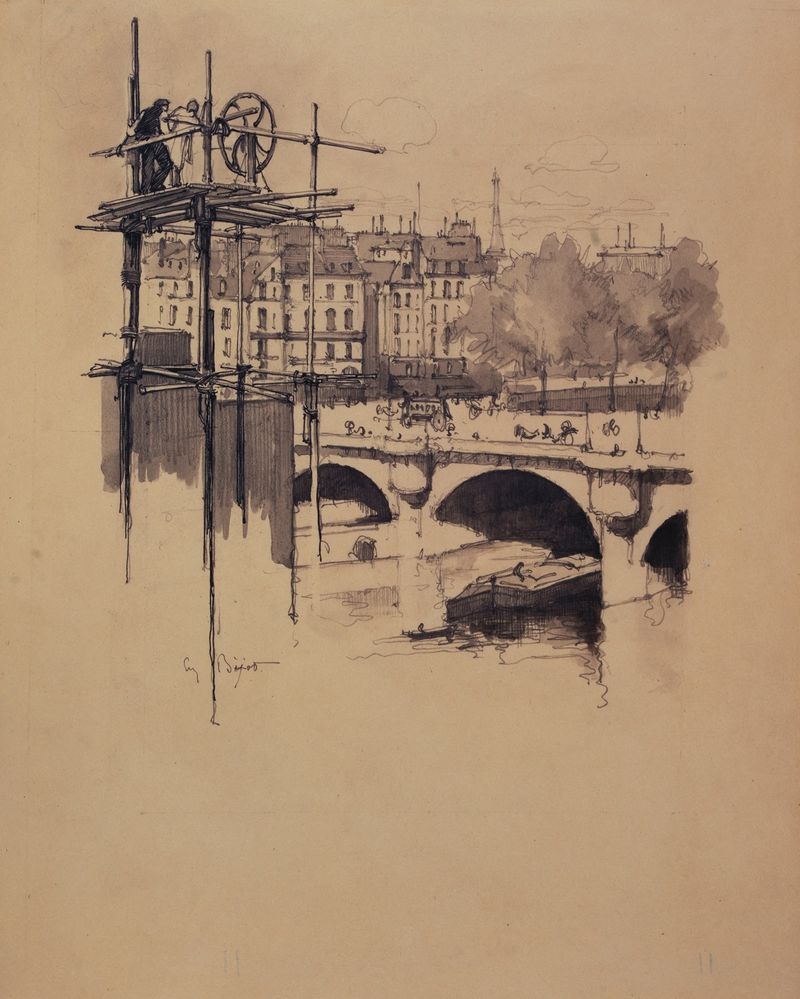
Vue du Pont-Neuf
Eugène Béjot
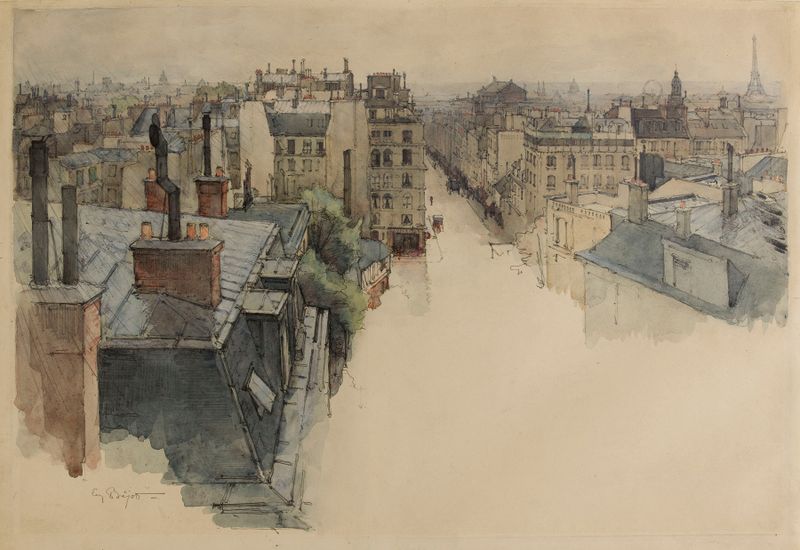
Paris vu des hauteurs de Montmartre.
Eugène Béjot
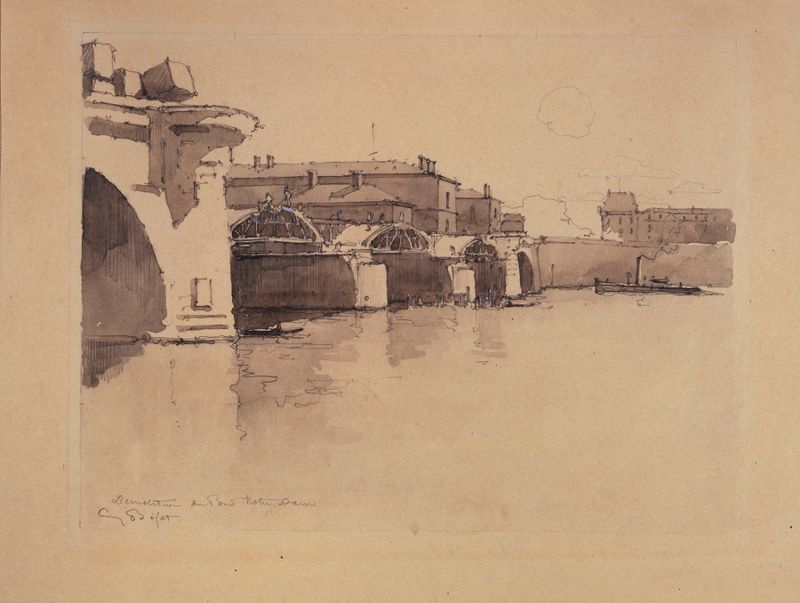
Démolition du pont Notre-Dame
Eugène Béjot





