
Démolition d’un édifice composite — History & Facts
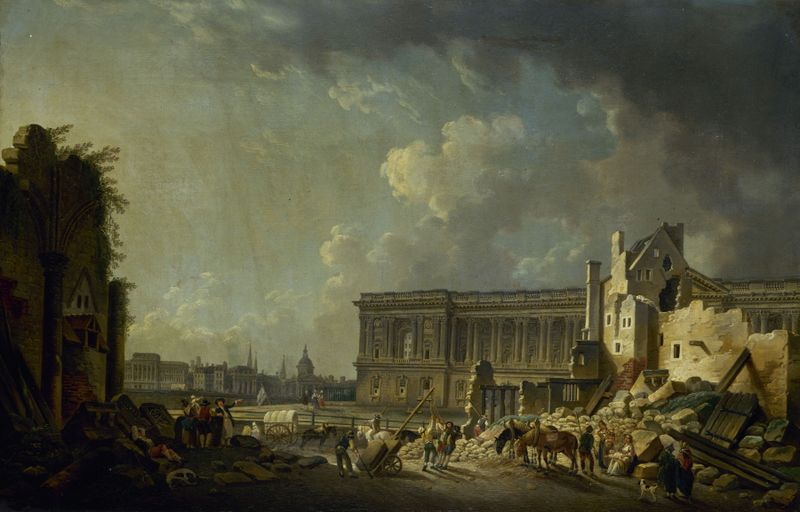
In a world that dances between the lines of madness and clarity, destruction can breathe life into creation. Look to the left at the crumbling façade, where remnants of a once-grand structure threaten to fall into chaos. The artist plays with light and shadow, illuminating the fragments of architecture that remain while casting deeper gloom upon the surroundings. The palette is rich with earth tones, mixed with the starkness of gray and white, creating an emotional depth that pulls the viewer into the turmoil of the moment.
Demachy’s meticulous brushwork captures the textures of bricks and debris, suggesting a past glory now overshadowed by imminent disintegration. As you study the painting, notice the figures standing by, their gestures expressing a range of emotions—curiosity mingled with apprehension. Are they witnesses to madness, or are they participants in the unraveling? The contrast of their stillness against the backdrop of destruction evokes a sense of despair intertwined with contemplation. This dichotomy reflects the fragility of beauty and the chaotic nature of existence, where madness often lurks just beneath the surface of civility. In 1770, while creating this work, the artist found himself in a world undergoing vast transformations—both politically and artistically.
The Enlightenment was shifting the paradigms of thought, and Demachy was deeply influenced by the burgeoning movement, which sought to explore irrationality and the sublime in art. Working in Paris, he grappled with the tension between the old and the new, manifesting this struggle vividly through his depictions of architectural ruin, embodying the madness of a changing society.
More Artworks by Pierre-Antoine Demachy
Browse all →
Démolition de la Bastille, le 17 juillet 1789
Pierre-Antoine Demachy
Dégagement de la colonnade du Louvre
Pierre-Antoine Demachy

La colonnade du Louvre, nouvellement dégagée
Pierre-Antoine Demachy
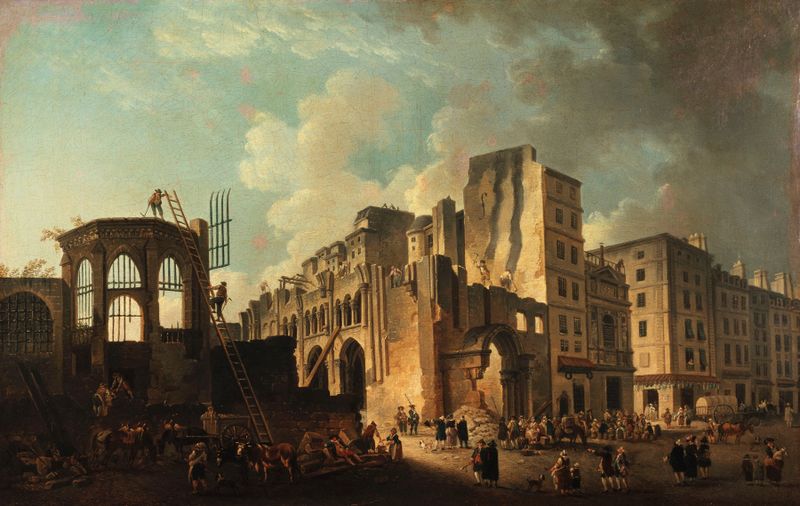
La démolition de l’église des Saints-Innocents, rue Saint-Denis
Pierre-Antoine Demachy
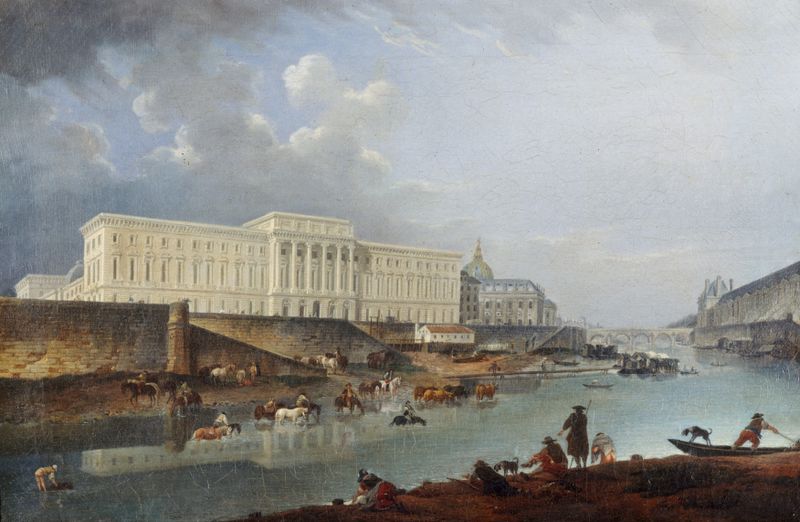
L’Hôtel de la Monnaie, le quai de Conti et la Seine, vus de la pointe de la Cité
Pierre-Antoine Demachy

Dégagement de la colonnade du Louvre
Pierre-Antoine Demachy

L’Hôtel de la Monnaie et le Louvre, vus du Pont-Neuf, vers 1800
Pierre-Antoine Demachy
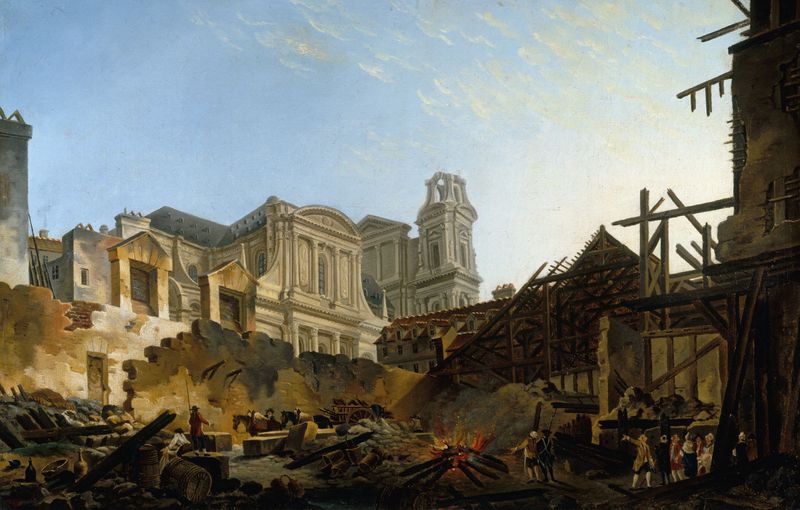
La foire Saint-Germain après l’incendie de la nuit du 16 au 17 mars 1762
Pierre-Antoine Demachy

La Foire Saint-Germain pendant l’incendie (nuit du 16 au 17 mars 1762)
Pierre-Antoine Demachy
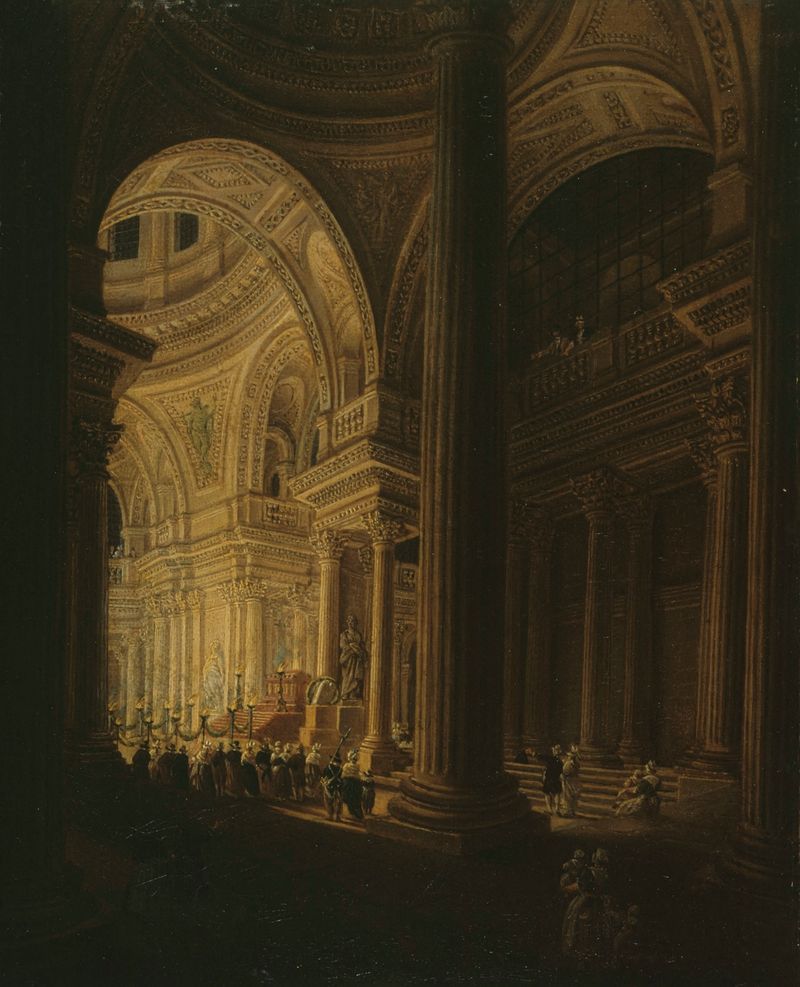
Le sarcophage de Jean-Jacques Rousseau, exposé au Panthéon (20 vendémiaire an III – 11 octobre 1794)
Pierre-Antoine Demachy
More Architecture Art
Browse all →
The statue of Liberty
Frédéric Auguste Bartholdi

View of Houses in Delft, Known as ‘The Little Street’
Johannes Vermeer

View of Houses in Delft, Known as ‘The Little Street’
Johannes Vermeer

The Cathedral in Rouen. The portal, Grey Weather
Claude Monet

The yellow house
Vincent van Gogh

The Church in Auvers-sur-Oise, View from the Chevet
Vincent van Gogh