
Dorflandschaft — History & Facts
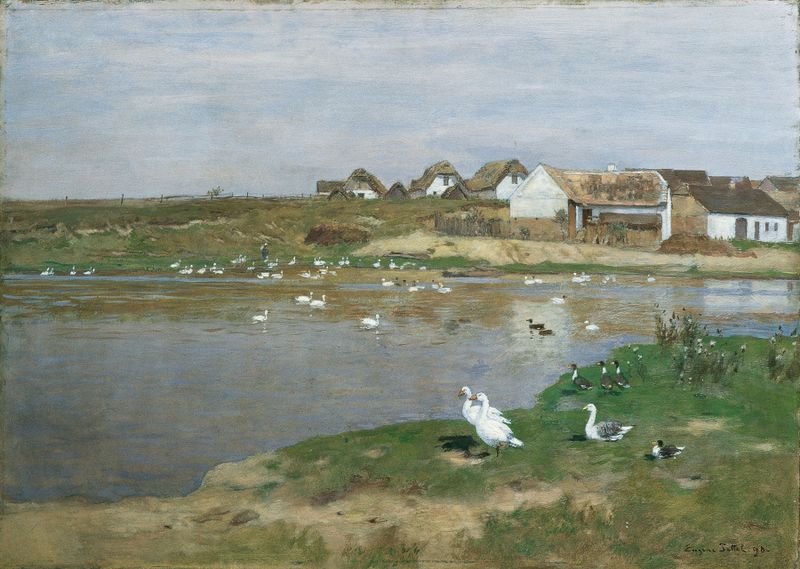
Could beauty survive in a century of chaos? In Dorflandschaft, a moment of serene rebirth unfolds, reminding us that nature endures, no matter the turbulence surrounding it. Look to the foreground where gentle hills roll gracefully, their lush greens kissed by the soft light of a European morning. Note how the strokes blend harmoniously, creating a tapestry of textures that draw the viewer in. The village nestles snugly in the background, its quaint structures painted in warm earth tones, emanating a comforting presence amidst the landscape.
The sky, a canvas of pastel blues and subtle whites, casts a tranquil glow over the scene, inviting contemplation and peace. Beneath the surface, this work resonates with deeper themes of resilience and renewal. The juxtaposition of the idyllic rural life against the looming uncertainties of the late 19th century speaks to a longing for stability and connection to nature. The harmonious colors and composition evoke an emotional tension—reflecting both the melancholy of an era on the brink of modernity and the hopeful promise of new beginnings.
Each brushstroke seems to whisper stories of the land, its inhabitants, and their quiet persistence through change. Eugen Jettel created Dorflandschaft in 1898 while living in Austria, during a time of significant transition in Europe. The art world was experiencing a shift towards Impressionism, and Jettel, influenced by the natural beauty surrounding him, sought to encapsulate the essence of his homeland. This painting stands as a testament to his desire to connect with both the landscape and the profound emotions tied to it, serving as a reflective pause in a rapidly changing world.
More Artworks by Eugen Jettel
Browse all →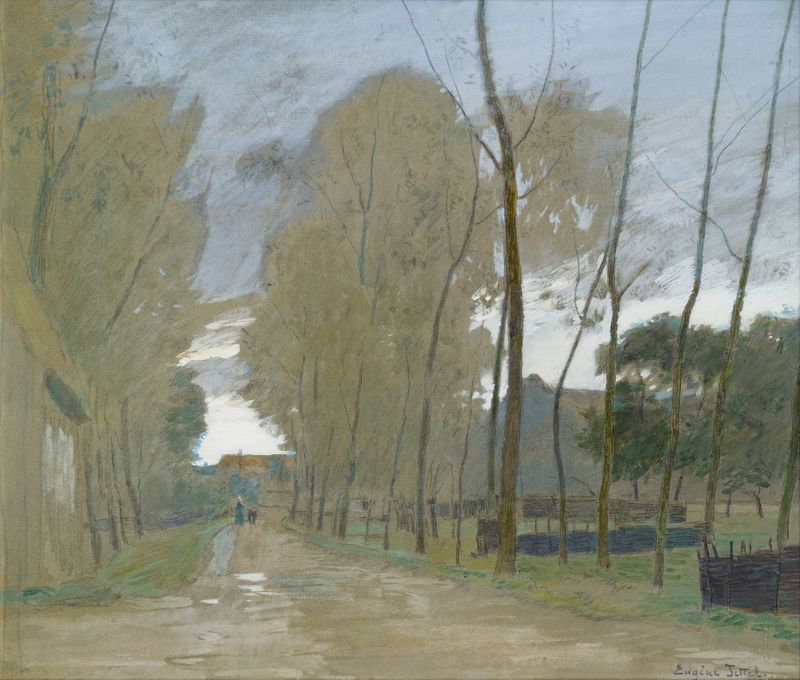
Motiv aus der Bretagne
Eugen Jettel
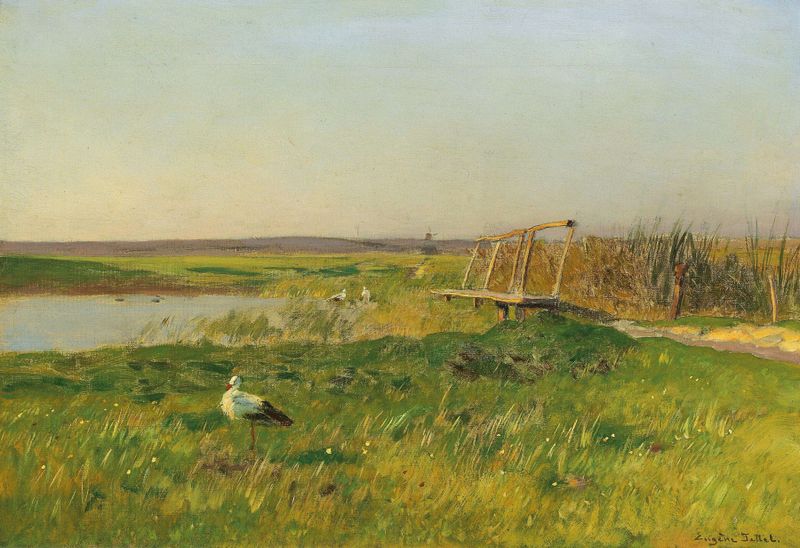
Frühlingslandschaft mit Störchen an einem Weiher
Eugen Jettel

Rinder auf Sommerwiese
Eugen Jettel
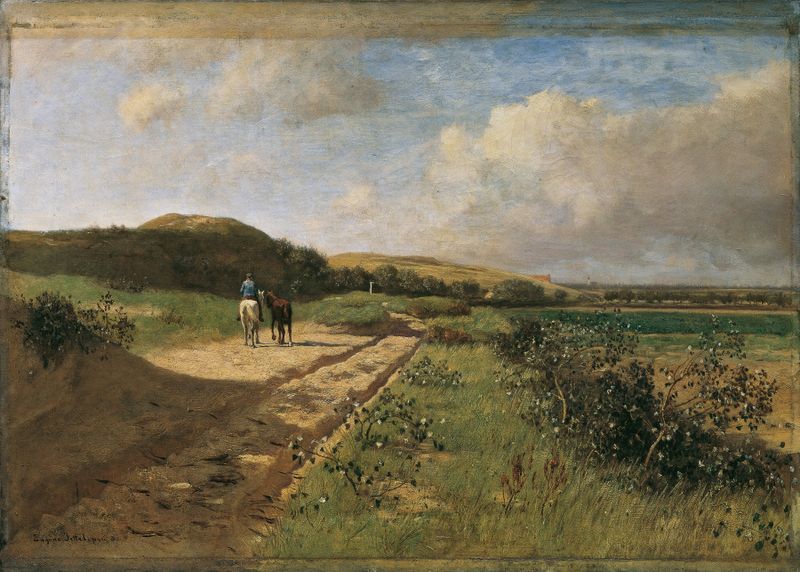
Dünen bei Katwijk
Eugen Jettel
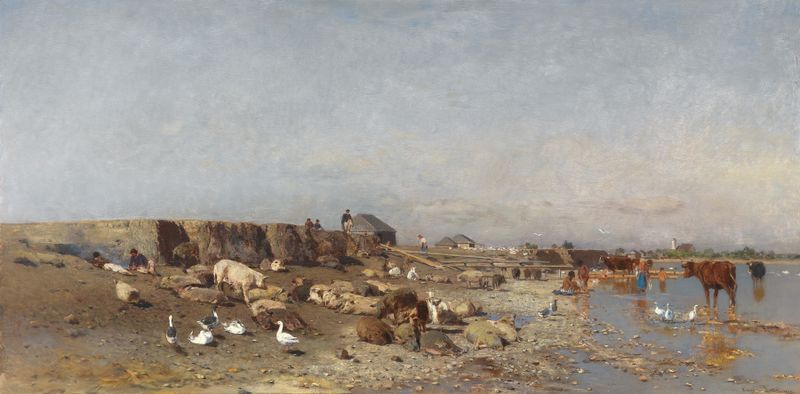
Motiv aus Szered an der Waag
Eugen Jettel
Der Gänseteich in Kotting-Neusiedl
Eugen Jettel

Flusslandschaft Mit Boot
Eugen Jettel

Flusslandschaft mit Kühen
Eugen Jettel

Dorfpartie Strohhütten aus Staatz
Eugen Jettel

Abendlandschaft
Eugen Jettel





