
Dorpsgezicht — History & Facts
Where does light end, and longing begin? In the stillness of Dorpsgezicht, the answer seems to linger just beyond the horizon, wrapped in a cloak of silence. Focus on the horizon, where soft, muted colors blend seamlessly into one another, creating a serene backdrop against which the village unfolds. The warm embrace of sunlight bathes the rooftops, emphasizing the texture of the buildings and the contours of the land. Observe the gentle brushstrokes that encapsulate the quietude of this pastoral scene, inviting the viewer to linger in the atmosphere of stillness and understated beauty. As you delve deeper, consider the juxtaposition of the vibrant village life with the expansive, empty fields around it.
The silence is palpable, evoking a sense of longing for connection amidst the isolation that the landscape imposes. Look closely at the figures dotting the scene; they appear almost as whispers, merging into the environment rather than dominating it. This delicate balance of presence and absence speaks to the human condition, navigating the intricate interplay between solitude and community. In 1936, while painting Dorpsgezicht, Gustave De Smet was entrenched in his exploration of regional identity and the essence of the Flemish landscape.
Living in Belgium during a period marked by political tension and economic uncertainty, he sought solace in the simplicity of rural life, capturing its essence through a modernist lens that reflected both the beauty and melancholy of his surroundings.
More Artworks by Gustave De Smet
Browse all →
Landscape
Gustave De Smet
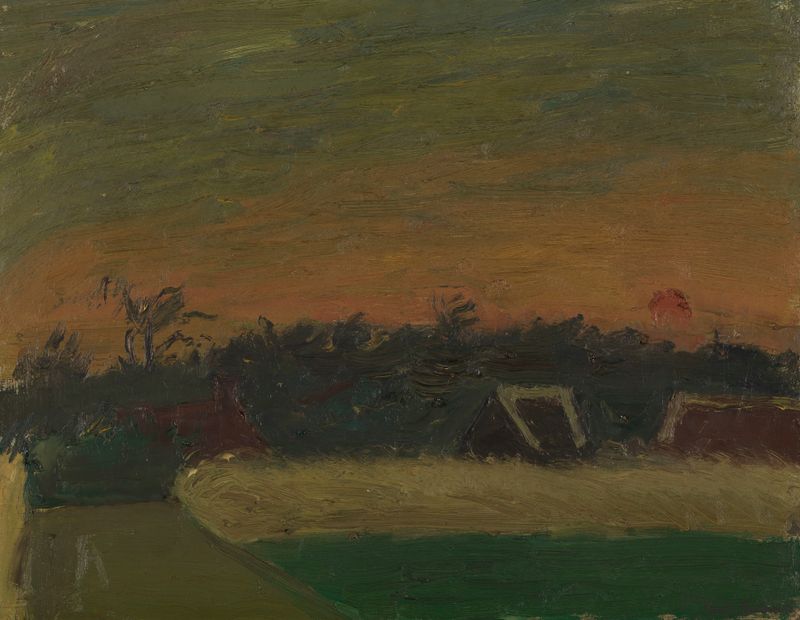
Sunset
Gustave De Smet

Fair in Deurle (Sint-Martens-Latem)
Gustave De Smet
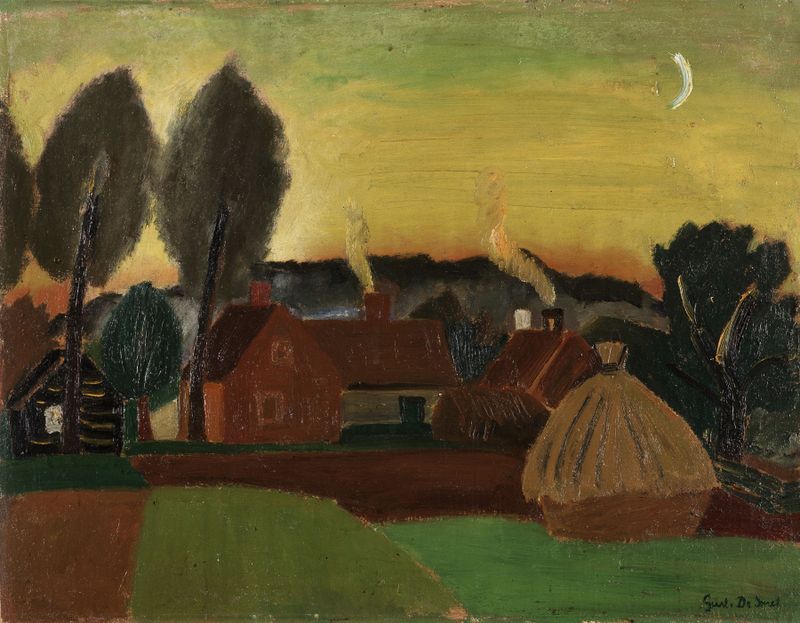
Landscape in the Evening
Gustave De Smet
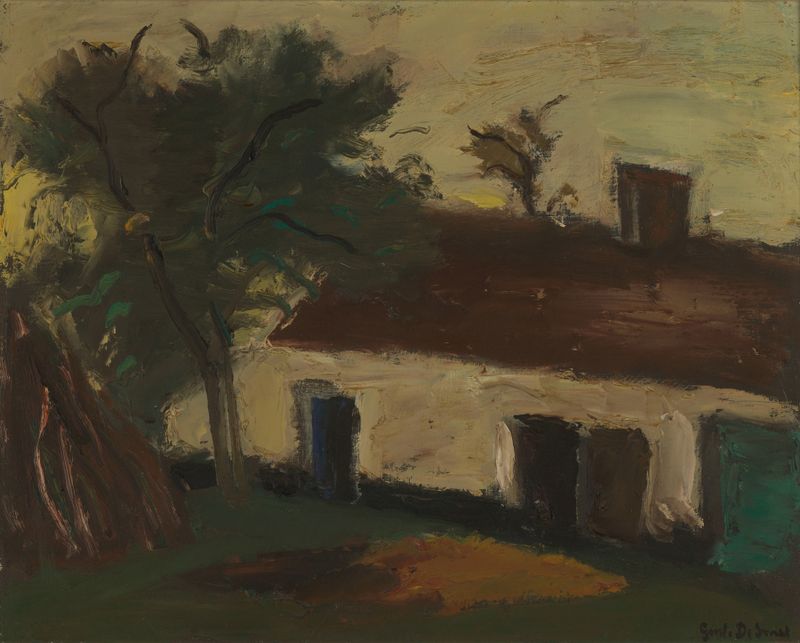
Stable
Gustave De Smet
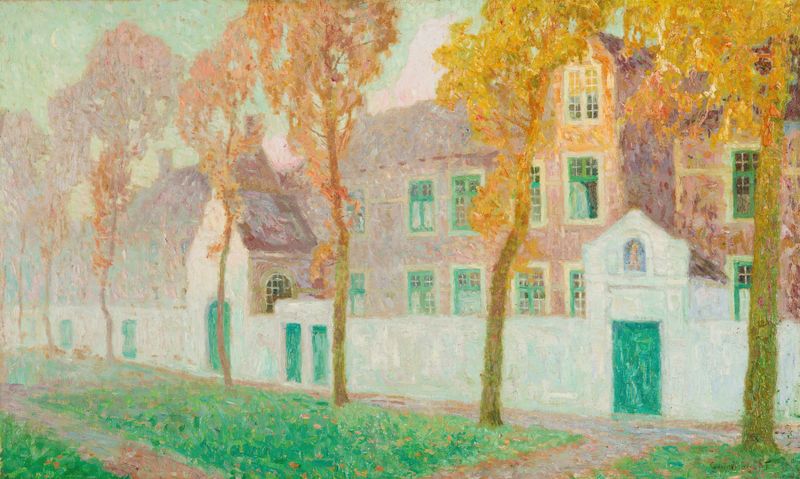
Le Béguinage À Bruges
Gustave De Smet

Oies Dans Un Jardin Avec Deux Enfants
Gustave De Smet
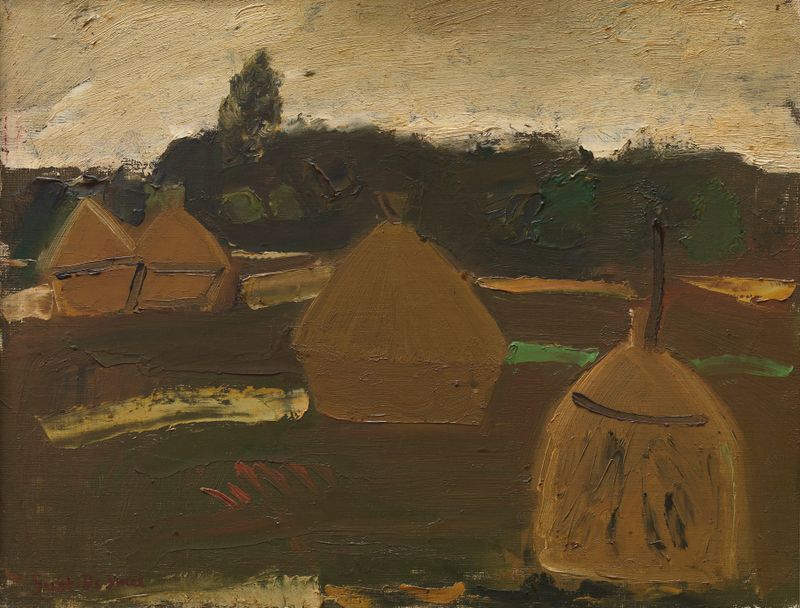
Haystacks
Gustave De Smet
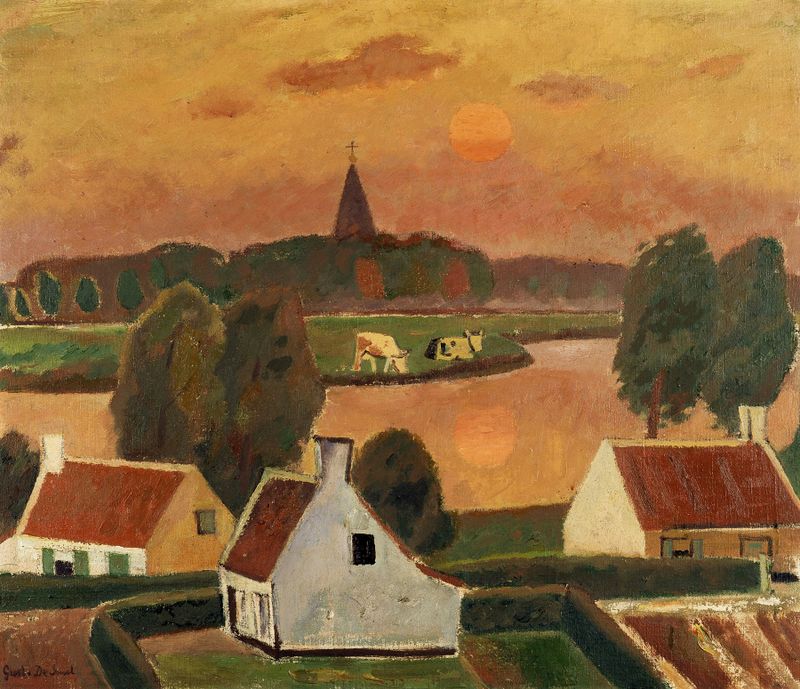
View of a Village
Gustave De Smet

La Moisson
Gustave De Smet





