
Haystacks — History & Facts
In Haystacks, the act of rebirth is woven into the very fabric of the canvas. This piece encapsulates the fleeting beauty of nature while whispering of transformation and renewal. Look to the center of the canvas where the haystacks emerge like sturdy sentinels against a backdrop of rich, moody hues. The artist’s brushwork is both vigorous and tender, blending earthy yellows and muted browns that evoke a warm embrace.
Notice how the light dances across the textured surfaces, casting shadows that create depth and inviting the viewer to linger. The composition is balanced yet dynamic, drawing the eye from the haystacks to the horizon, where the sky unfurls in a soft gradient of pastel colors. De Smet’s use of contrasting colors highlights emotional layers within the piece. The deep, warm tones of the haystacks suggest comfort and familiarity, while the cooler shades of the sky provoke feelings of longing and introspection.
This interplay between the earthly and the ethereal hints at the cycle of life and the hope that springs forth even in times of adversity. Each brushstroke resonates with a sense of both continuity and change, embodying the essence of rebirth in nature. Created in 1942, during a tumultuous period marked by World War II, the artist sought solace in the pastoral beauty of the Belgian countryside. Amidst the chaos of the world, De Smet turned his focus inward, channeling his emotional turmoil into his art.
This painting reflects a time of personal and societal upheaval, as well as a deep connection to the landscapes that surrounded him, marking a pivotal moment in his career as an artist.
More Artworks by Gustave De Smet
Browse all →
Landscape
Gustave De Smet
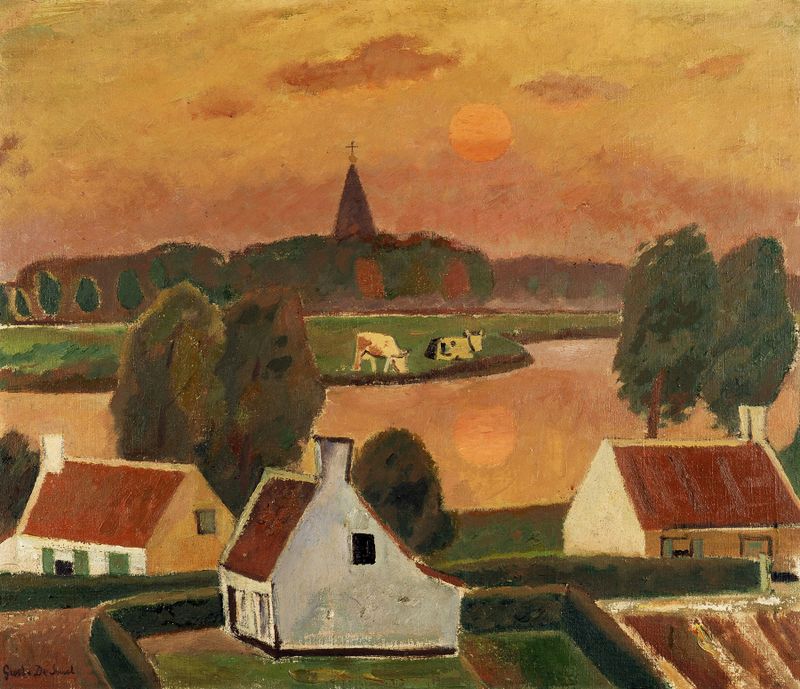
Dorpsgezicht
Gustave De Smet
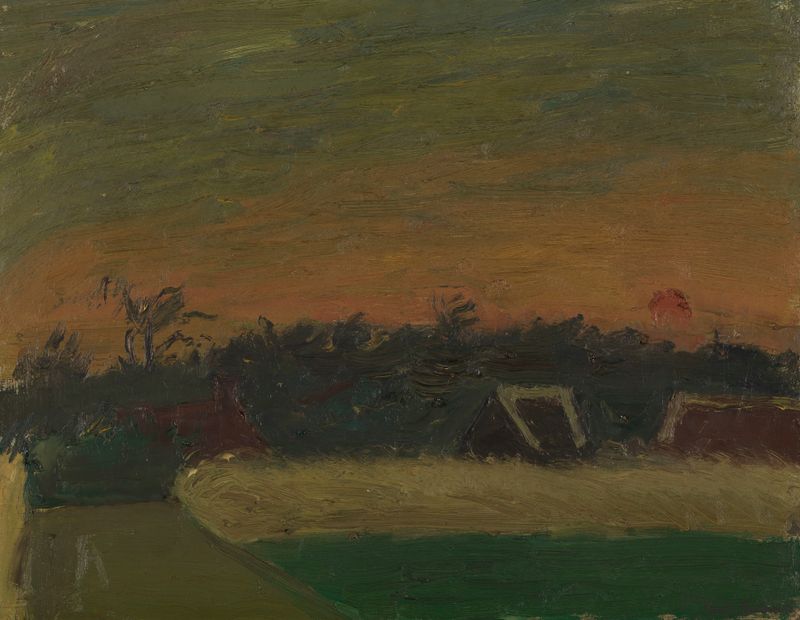
Sunset
Gustave De Smet

Fair in Deurle (Sint-Martens-Latem)
Gustave De Smet
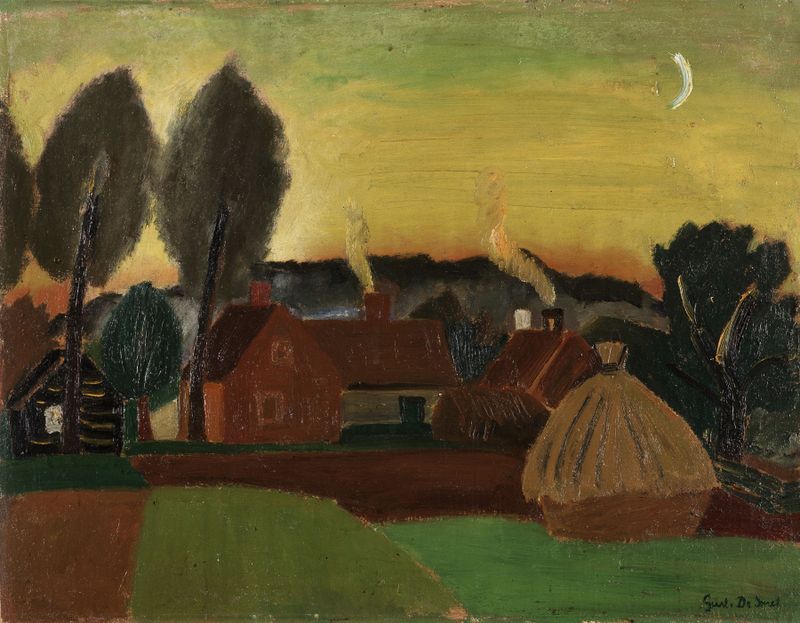
Landscape in the Evening
Gustave De Smet
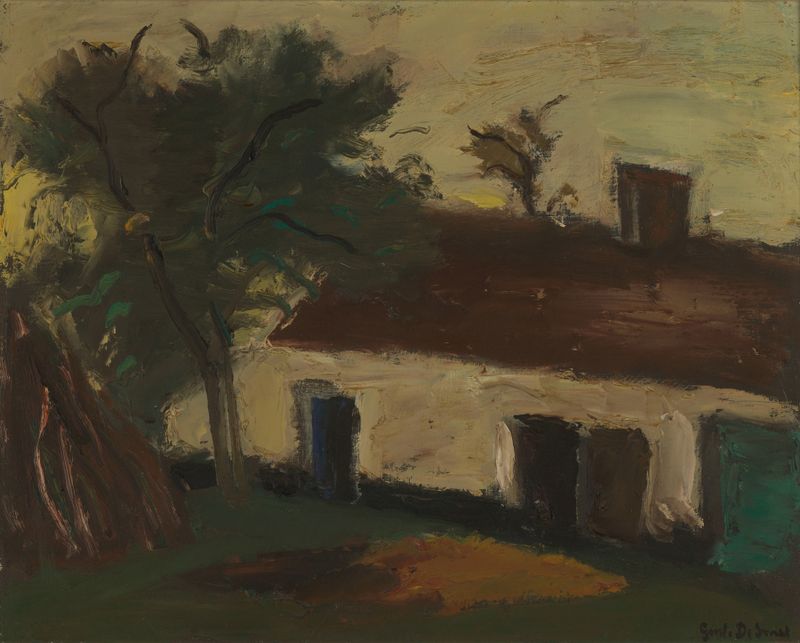
Stable
Gustave De Smet
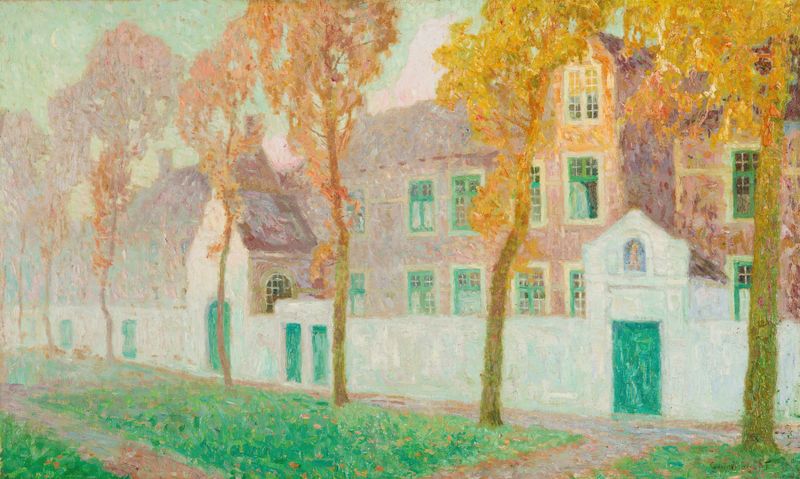
Le Béguinage À Bruges
Gustave De Smet

Oies Dans Un Jardin Avec Deux Enfants
Gustave De Smet
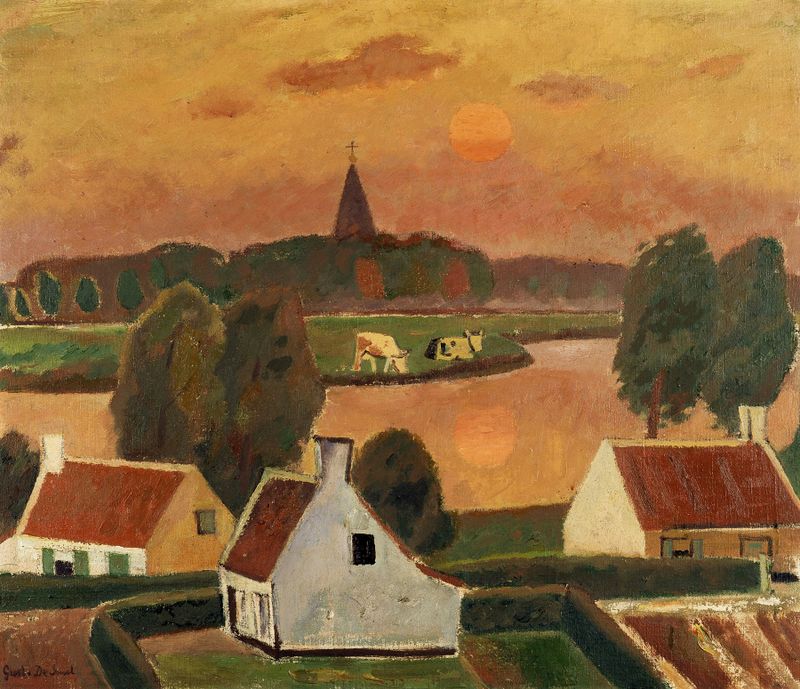
View of a Village
Gustave De Smet

La Moisson
Gustave De Smet





