
Dotombori, theater street — History & Facts
In Dotombori, theater street, a pulse of life emanates from the canvas, inviting viewers into a moment suspended between memory and creation. Look to the left at the vibrant glow of neon signs, their colors reflecting off the wet pavement, creating a dance of light that captures the allure of post-war urban life. The bustling crowd, rendered in soft brushstrokes, draws the eye toward the figures in the foreground, engaged in animated conversations, lost in their own worlds yet connected by the shared experience of this lively street. The warm palette evokes nostalgia, contrasting sharply with the stark realities that followed the war. Within this composition, the juxtaposition of light and shadow speaks to the complex emotions of a rebuilding society.
Notice the lone figure at the edge of the crowd, framed by the bright lights—embodying both isolation and hope. This moment captures a vibrant intersection of culture, where the theater's allure offers an escape from the hardships outside, suggesting the tension between the past's weight and the promise of the future. In 1947, Akamatsu Rinsaku painted Dotombori, theater street during a transformative period in Japan. Following the devastation of World War II, the nation was beginning to reclaim its identity through art and culture, and this piece reflects the optimism and resilience of the era.
As urban life blossomed anew, Rinsaku's work stands as a testament to the indomitable spirit of a people determined to remember and celebrate their stories.
More Artworks by Akamatsu Rinsaku
Browse all →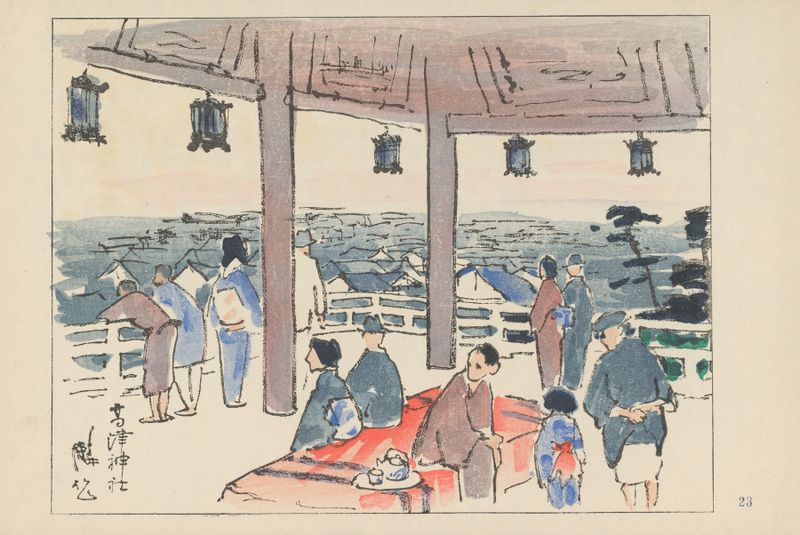
Kozu shrine dedicated to Nintoku Emperor
Akamatsu Rinsaku
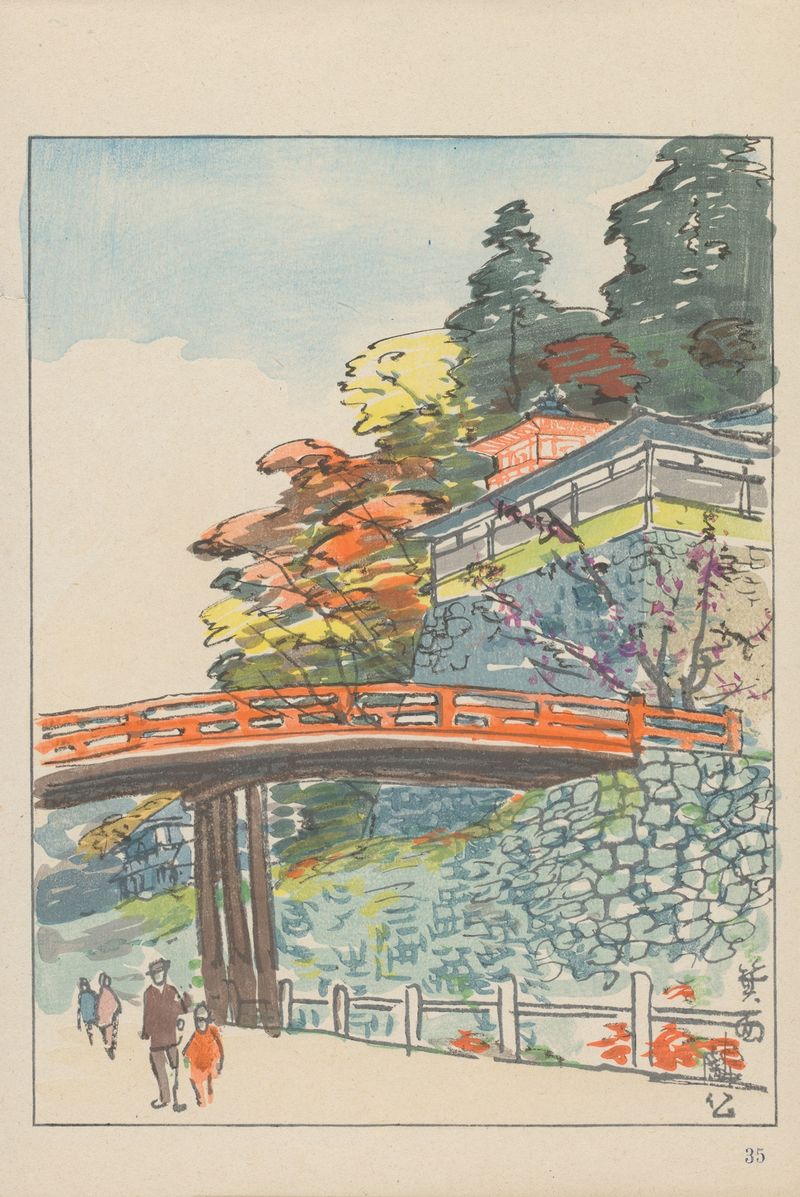
Minoo, National Park
Akamatsu Rinsaku
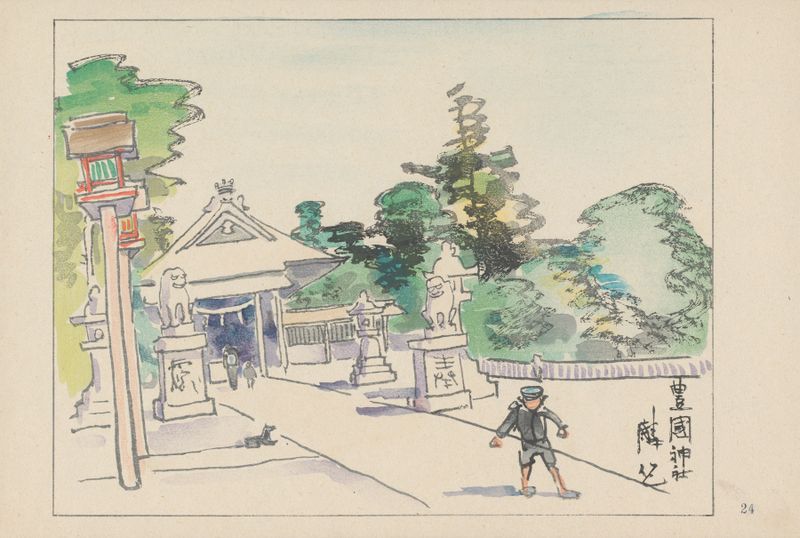
Toyokuni shrine dedicated to Toyotomi Hideyoshi
Akamatsu Rinsaku

Tsumura betsuin, the agency of Nishi-honganji
Akamatsu Rinsaku
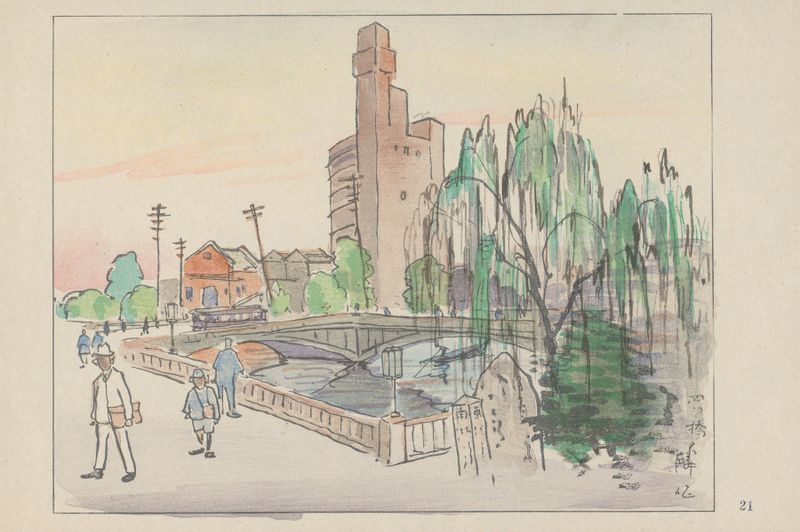
Yotsubashi, four joint bridges
Akamatsu Rinsaku
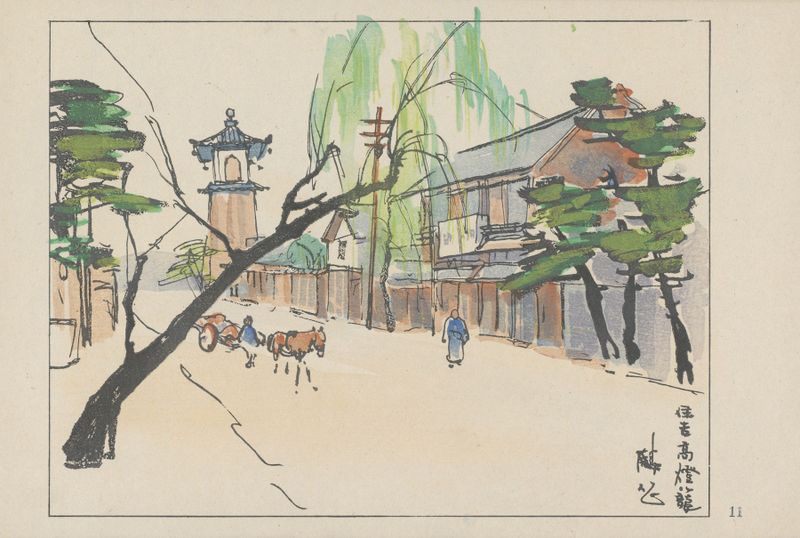
The high lanton at Sumiyoshi, a light house in older time
Akamatsu Rinsaku
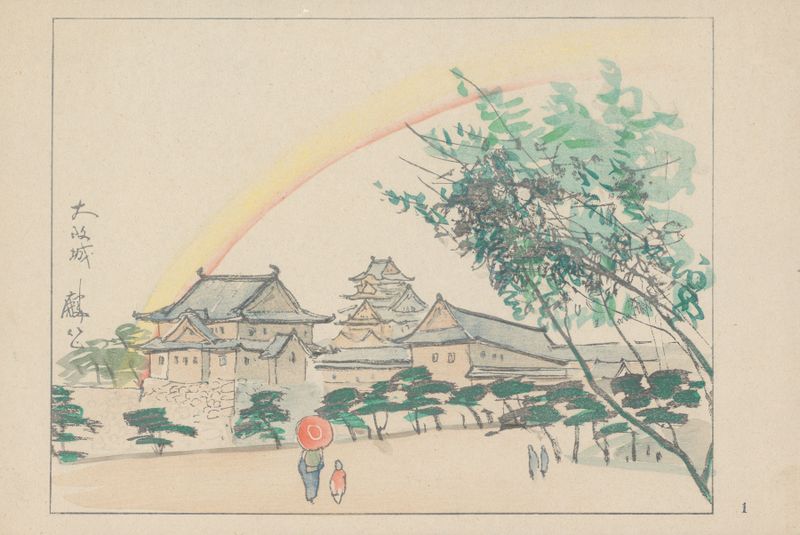
Osaka Castle, built by Toyotomi Hideyoshi in 1585 A.D
Akamatsu Rinsaku
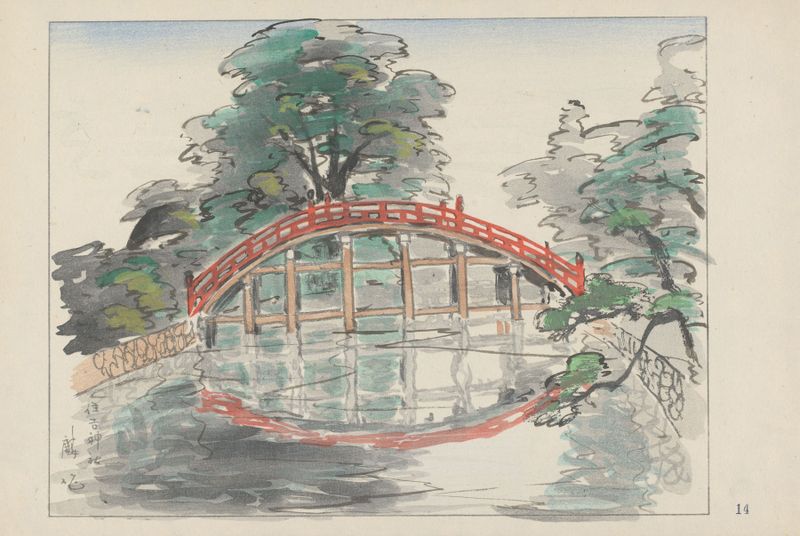
Sumiyoshi Shinto shrine
Akamatsu Rinsaku
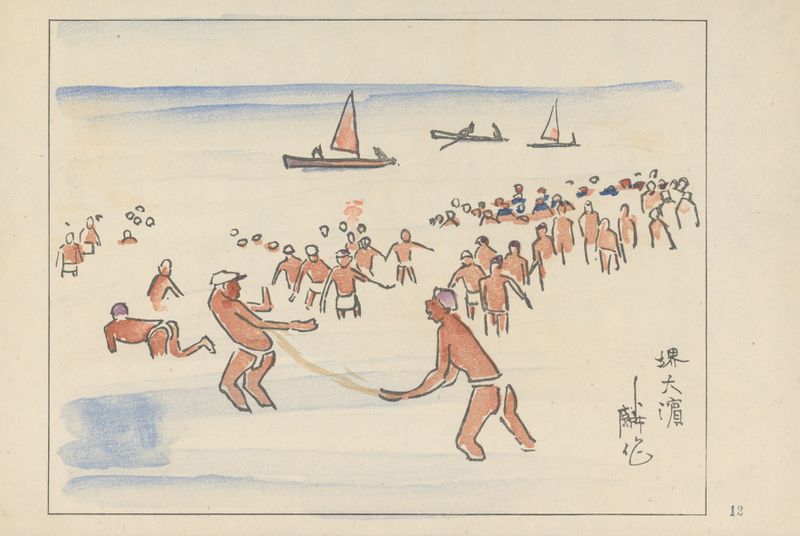
Sakai Ohama, swiming beach
Akamatsu Rinsaku

Kawaguchi, the estuary of Yodo river
Akamatsu Rinsaku





