
Dépendances de l’Hôtel d’Albret, impasse des Bœufs — History & Facts
What if silence could speak through light? In Dépendances de l’Hôtel d’Albret, impasse des Bœufs, the stillness of a Parisian courtyard becomes a canvas for revelation, whispering tales of time and memory. Look to the left, where warm sunlight bathes the aged stones, creating a pattern of light and shadow that invites you into the scene. The delicate interplay of colors—ochres and muted blues—reflects the tranquility of a moment seemingly suspended in time. Notice how the meticulously rendered details of the architecture draw the eye, from the ornate ironwork of the window grates to the textured surfaces of the walls, each telling a story of the past. Beneath the calm facade lies tension; the stillness suggests both nostalgia and melancholy.
The poignant absence of human figures evokes a sense of longing, as if one could almost hear the echoes of laughter and conversation from days gone by. This juxtaposition of light and absence speaks to the impermanence of life, highlighting how beauty can linger in spaces once filled with vitality, now hushed by time. During the period from 1915 to 1945, the artist found himself navigating through the shifting currents of a world at war and a city deeply affected by socio-political changes. Working in France, Jouas dedicated himself to capturing the essence of Paris, infusing his scenes with a longing for peace amidst chaos.
This painting reflects his ability to extract beauty from the quiet corners of his environment, serving as a profound meditation on the resonance of place and memory.
More Artworks by Charles Jouas
Browse all →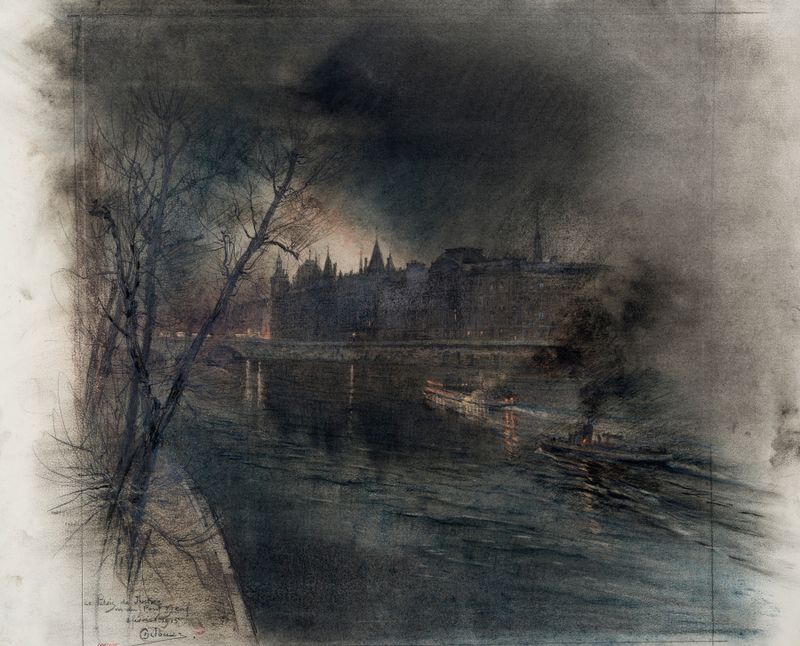
Le Palais de Justice vu du Pont-Neuf
Charles Jouas
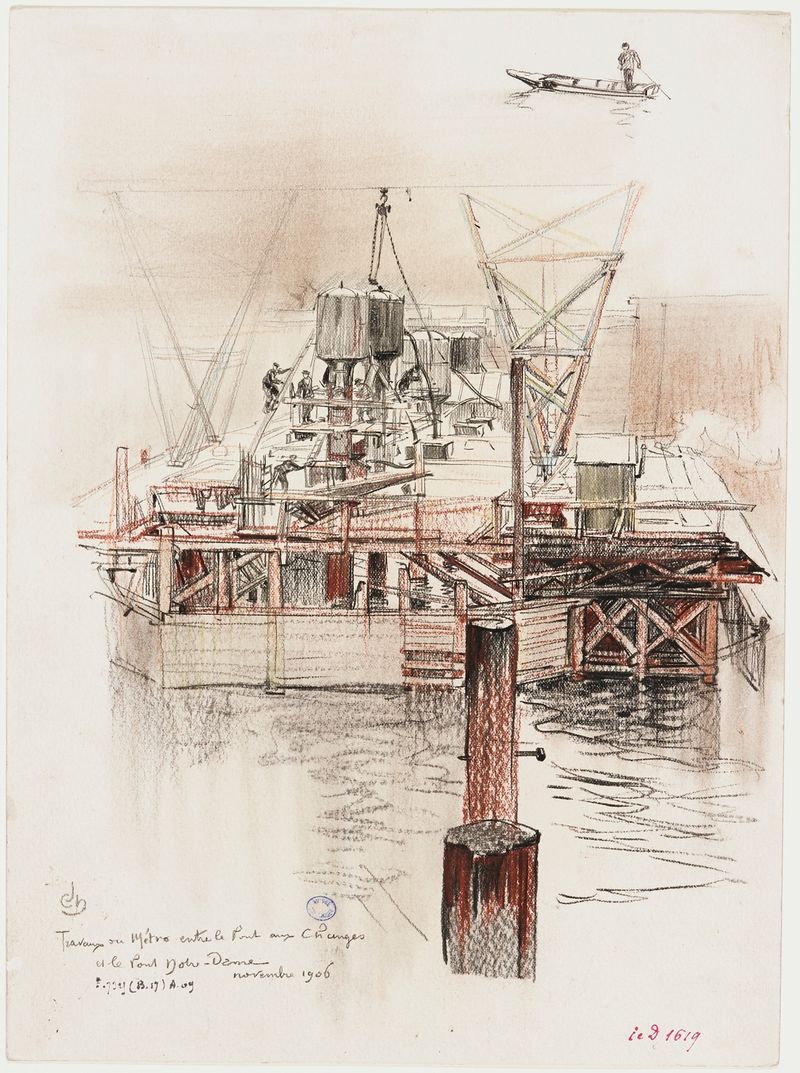
Travaux du métro entre le pont au Change et le pont Notre Dame
Charles Jouas
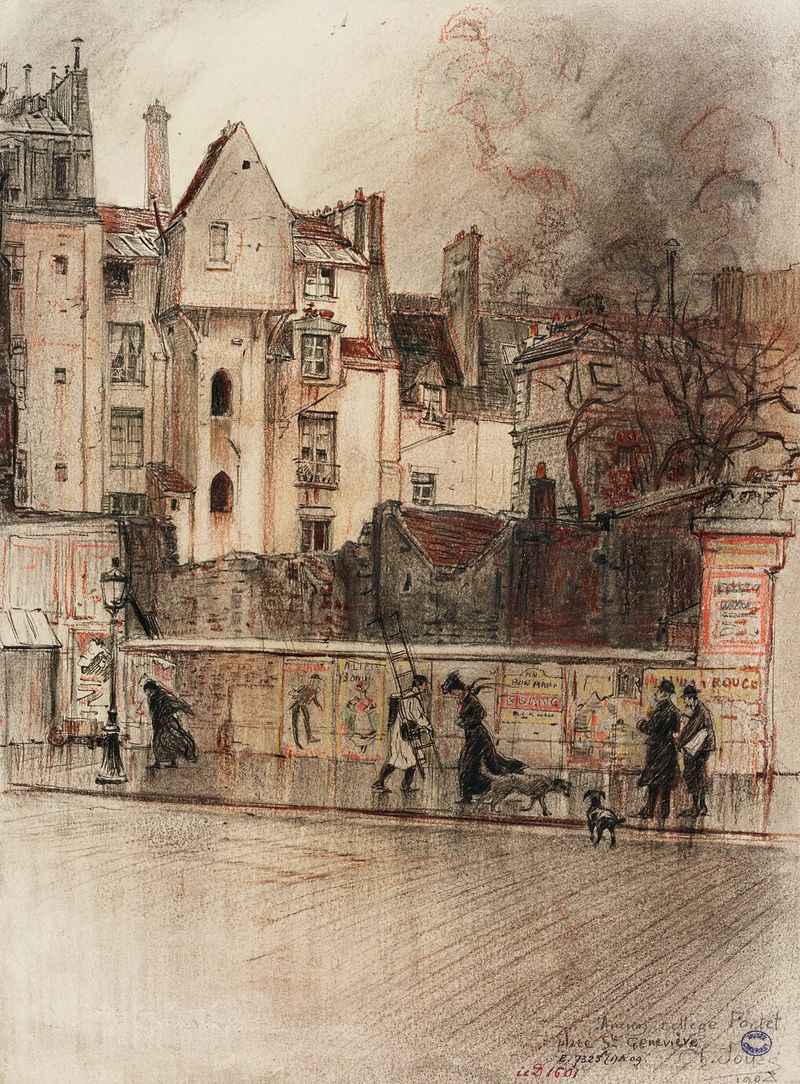
La tour de Calvin (ancien collège de Fortet), place Sainte Geneviève
Charles Jouas

Travaux du métro entre le pont au Change et le pont Notre Dame
Charles Jouas
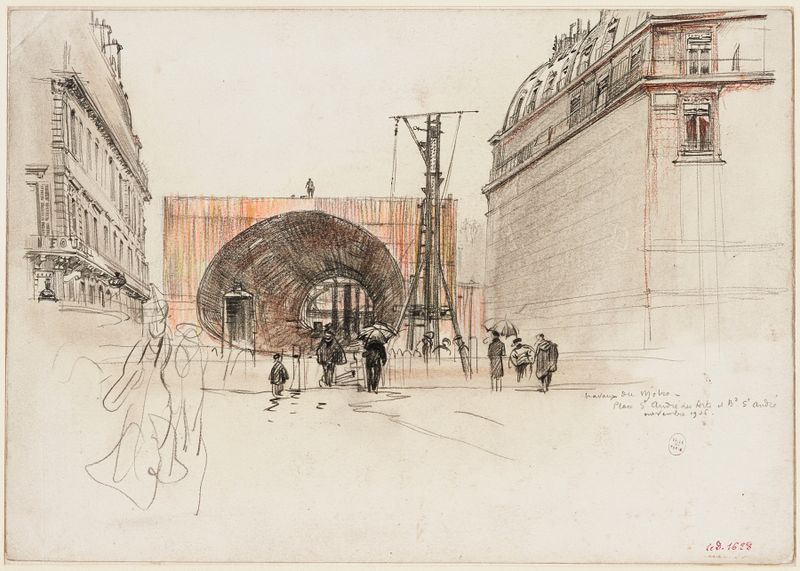
Travaux du métropolitain rue Danton et boulevard Saint-André (le caisson), 6ème aarondissement, Paris
Charles Jouas
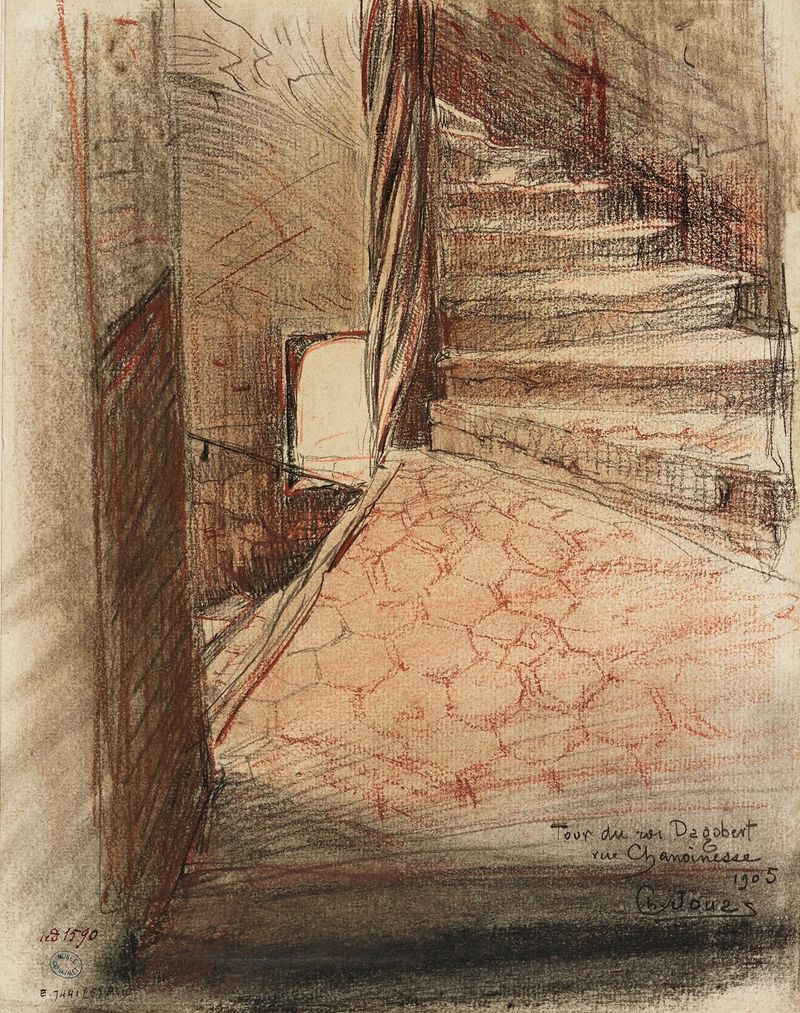
Escalier de la tour Dagobert, rue Chanoinesse
Charles Jouas

Escalier intérieur, 16 rue du Cloître Notre-Dame
Charles Jouas

L’escalier de la rue des Barres
Charles Jouas
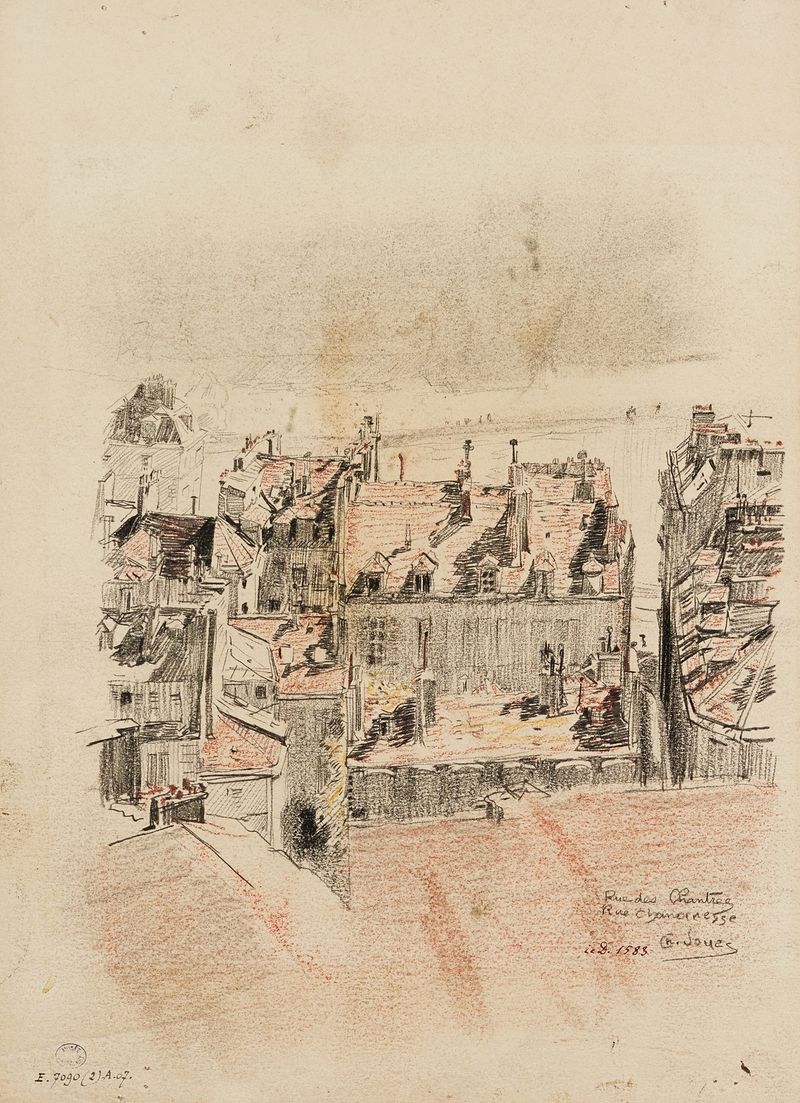
Rue des Chantres et rue Chanoinesse
Charles Jouas

Rue Grenier sur l’Eau
Charles Jouas
More Architecture Art
Browse all →
The statue of Liberty
Frédéric Auguste Bartholdi

View of Houses in Delft, Known as ‘The Little Street’
Johannes Vermeer

View of Houses in Delft, Known as ‘The Little Street’
Johannes Vermeer

The Cathedral in Rouen. The portal, Grey Weather
Claude Monet

The yellow house
Vincent van Gogh

The Church in Auvers-sur-Oise, View from the Chevet
Vincent van Gogh