Drie bokken — History & Facts
In Drie bokken, a serene moment unfurls, inviting viewers into a world suspended in time, where the whispers of nature beckon rebirth and renewal. An examination of life, it hints at the cyclical dance between existence and stillness, where every stroke breathes possibility into the mundane. Focus first on the three goats, their forms gracefully poised against a lush backdrop of verdant greens and soft earth tones. Notice how the artist’s brush captures the gentle play of light across their fur, rendering a soft texture that almost invites touch.
The rich palette resonates with warmth, while the subtle contrasts between shadows and highlights create a sense of dimensionality, inviting the observer deeper into the tranquil landscape. Delve into the emotional layers woven within this pastoral scene. The goats, symbols of vitality and rebirth, embody a quiet resilience amidst the calm. Their presence evokes a connection to the cycles of nature, while the intricate details of the surrounding flora signify the richness of life that flourishes in harmony.
This interplay between the tranquil scene and the inherent vitality it represents speaks to the essence of rebirth, urging us to acknowledge the beauty in simplicity. During the years of 1648 to 1652, Nicolaes Pietersz Berchem painted Drie bokken while immersed in the vibrant artistic environment of the Dutch Golden Age. He was in pursuit of pastoral subject matters, drawing inspiration from both nature and the classical ideals of beauty that were prevalent at the time. Berchem's work reflects a merging of naturalism and idealized landscapes, capturing the essence of daily life while also paying homage to a world filled with possibility and renewal.
More Artworks by Nicolaes Pietersz Berchem
Browse all →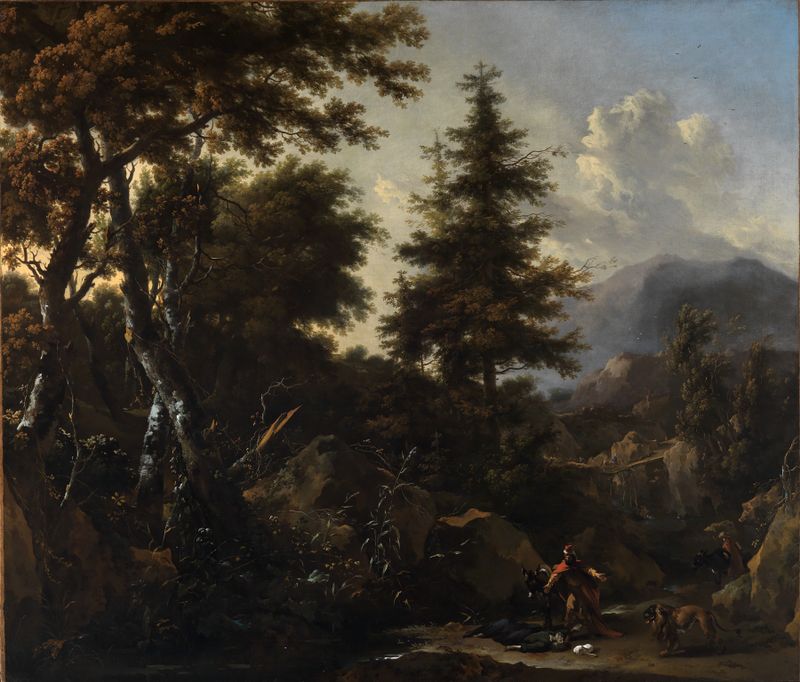
Schlucht im Bergwald mit alttestamentlicher Staffage
Nicolaes Pietersz Berchem
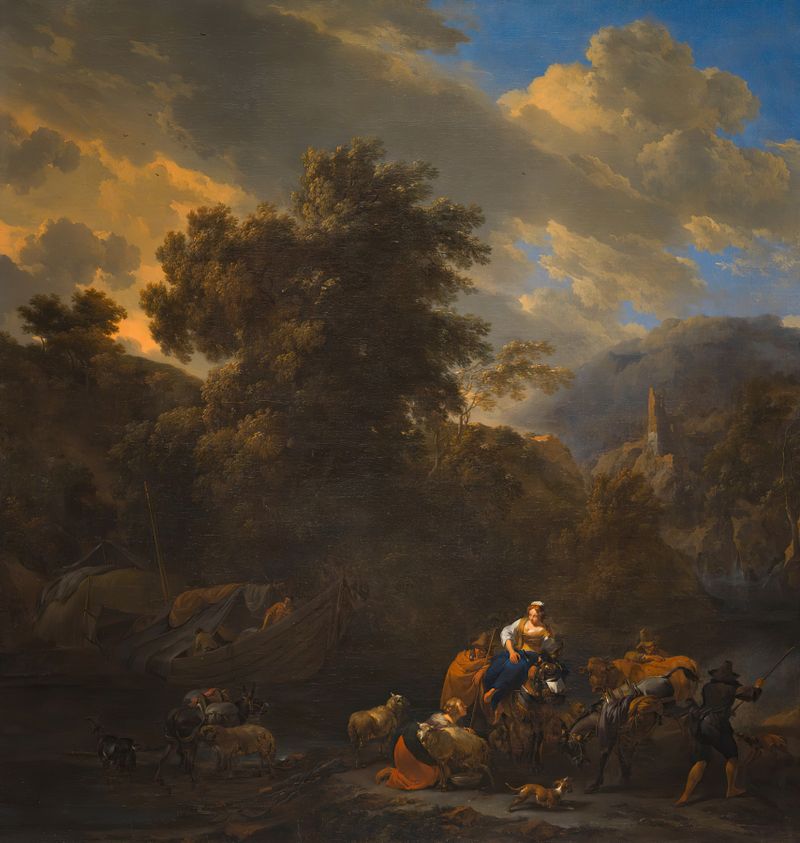
Italianate Landscape with Figures and Pack Animals on the Banks of a River
Nicolaes Pietersz Berchem
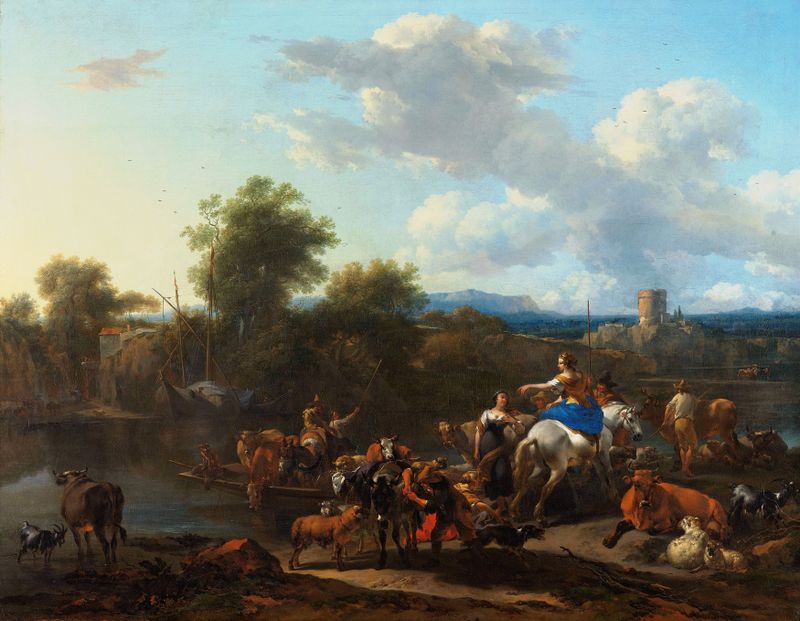
The Cattle Ferry
Nicolaes Pietersz Berchem
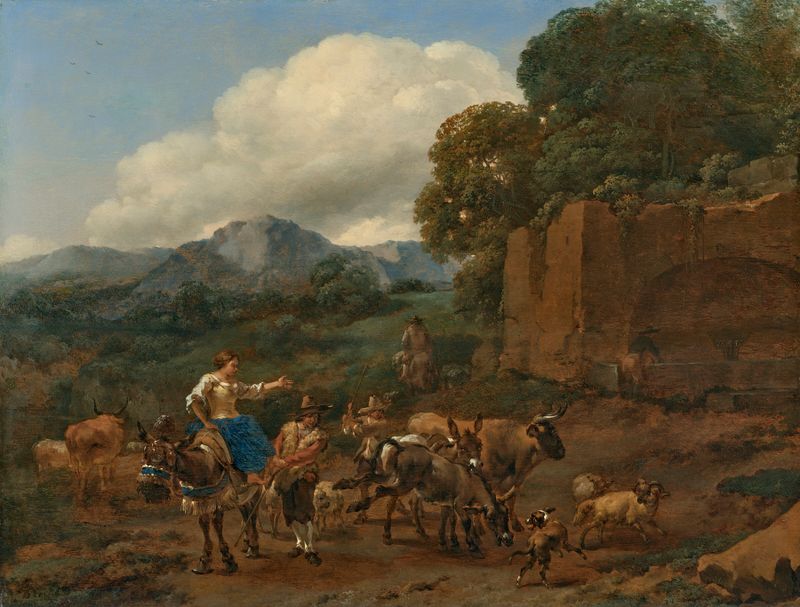
An Italianate landscape with a shepherdess on a mule and a shepherd, herding cattle, sheep, donkeys and dogs on a mountain track next to ruins
Nicolaes Pietersz Berchem
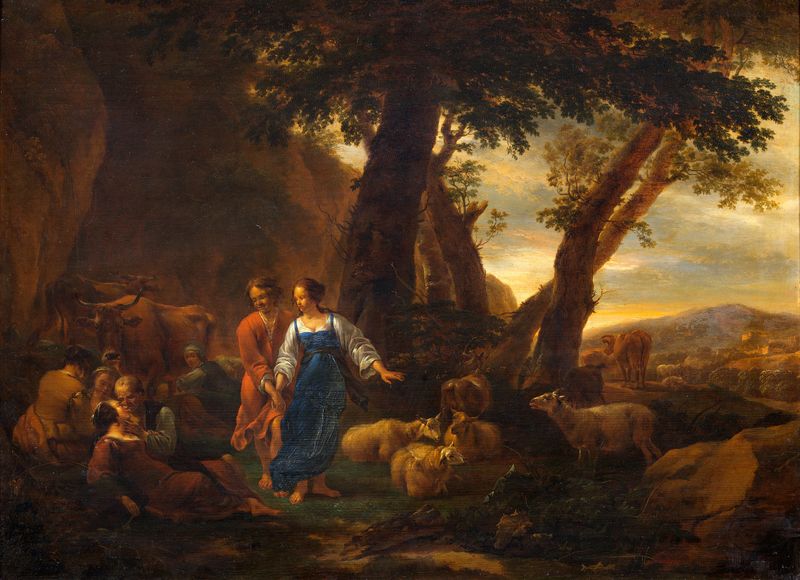
Landscape with Peasants and Cattle
Nicolaes Pietersz Berchem
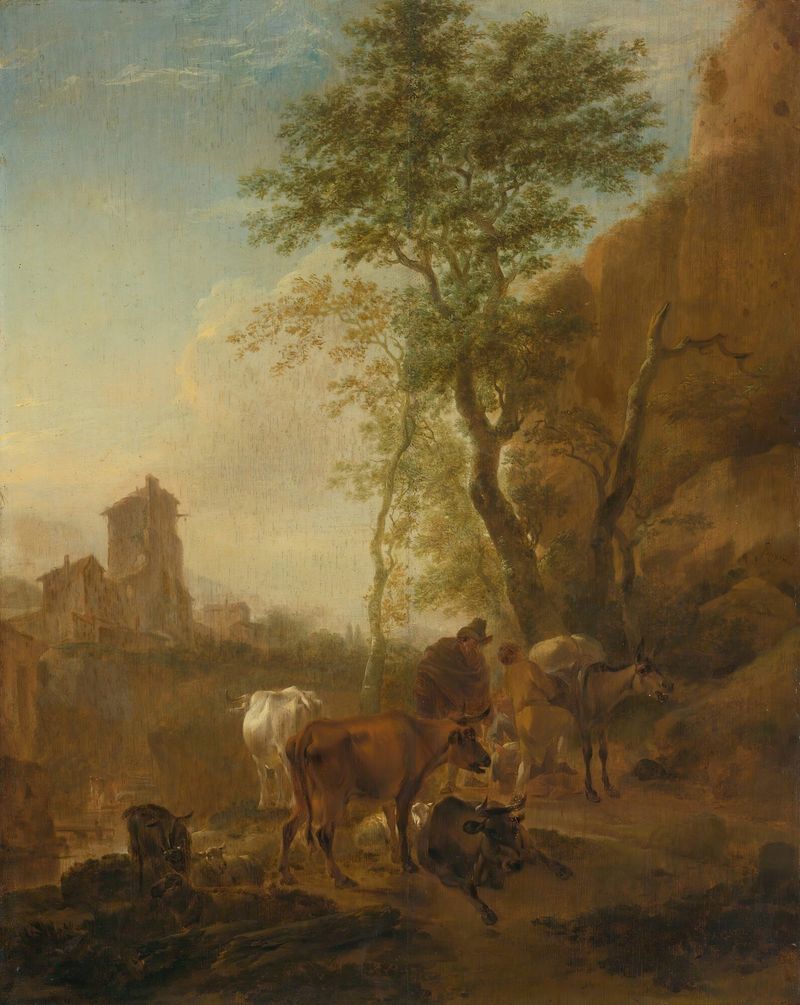
Italianate Landscape With Cows
Nicolaes Pietersz Berchem
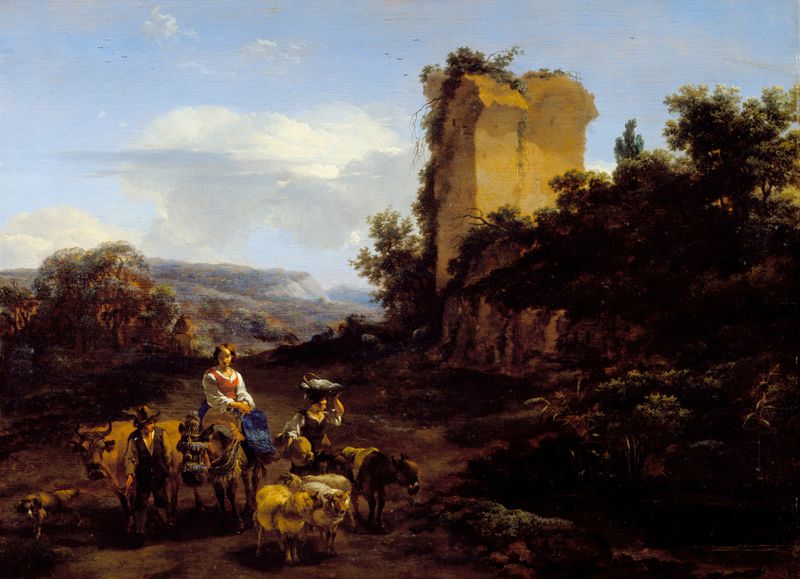
Landscape with Ruins and Travelers
Nicolaes Pietersz Berchem
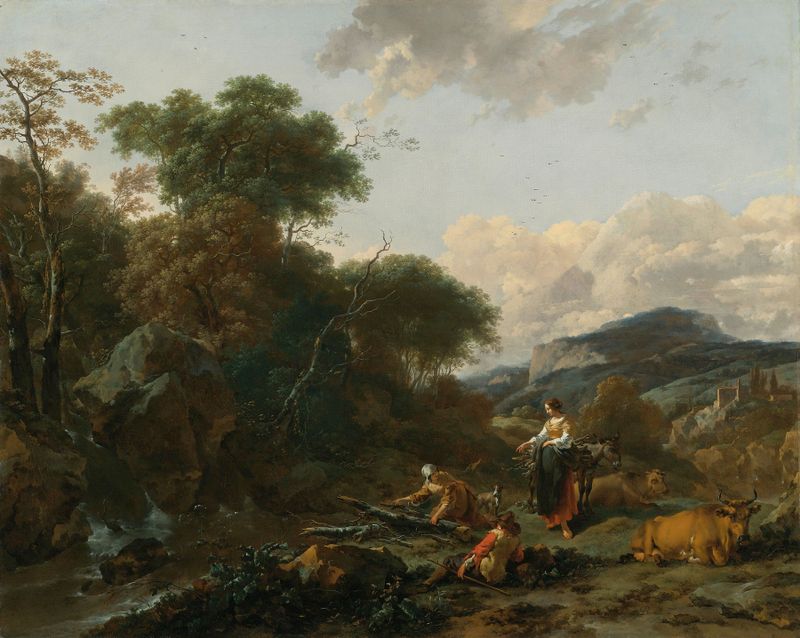
A Landscape With Figures
Nicolaes Pietersz Berchem
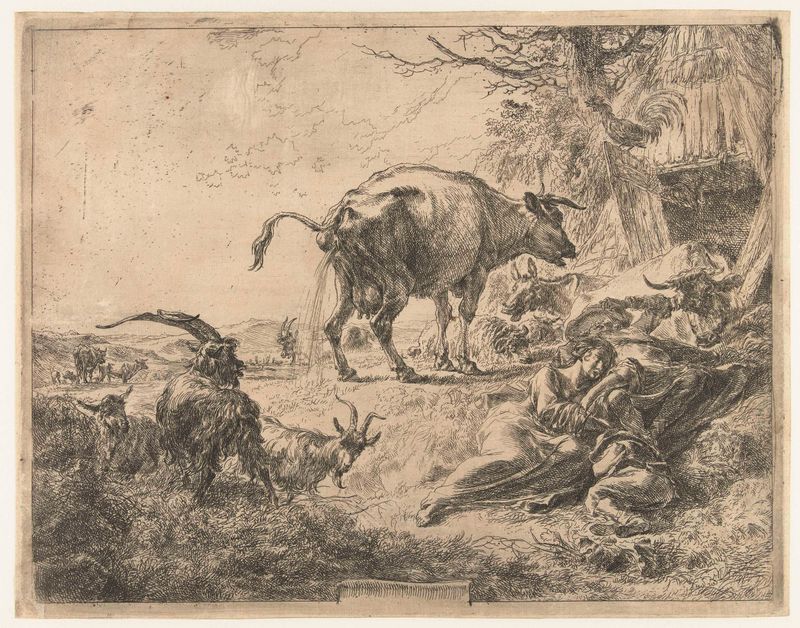
Slapende herdersfamilie en rustend vee
Nicolaes Pietersz Berchem
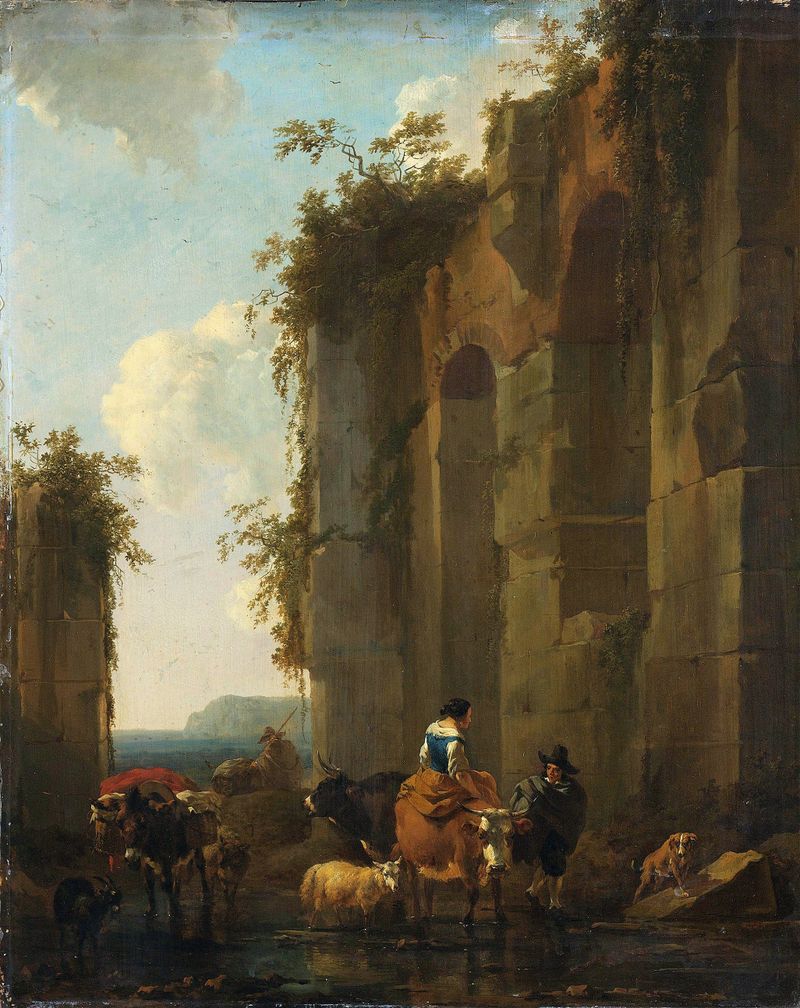
Ruins in Italy
Nicolaes Pietersz Berchem