Drie bomen — History & Facts
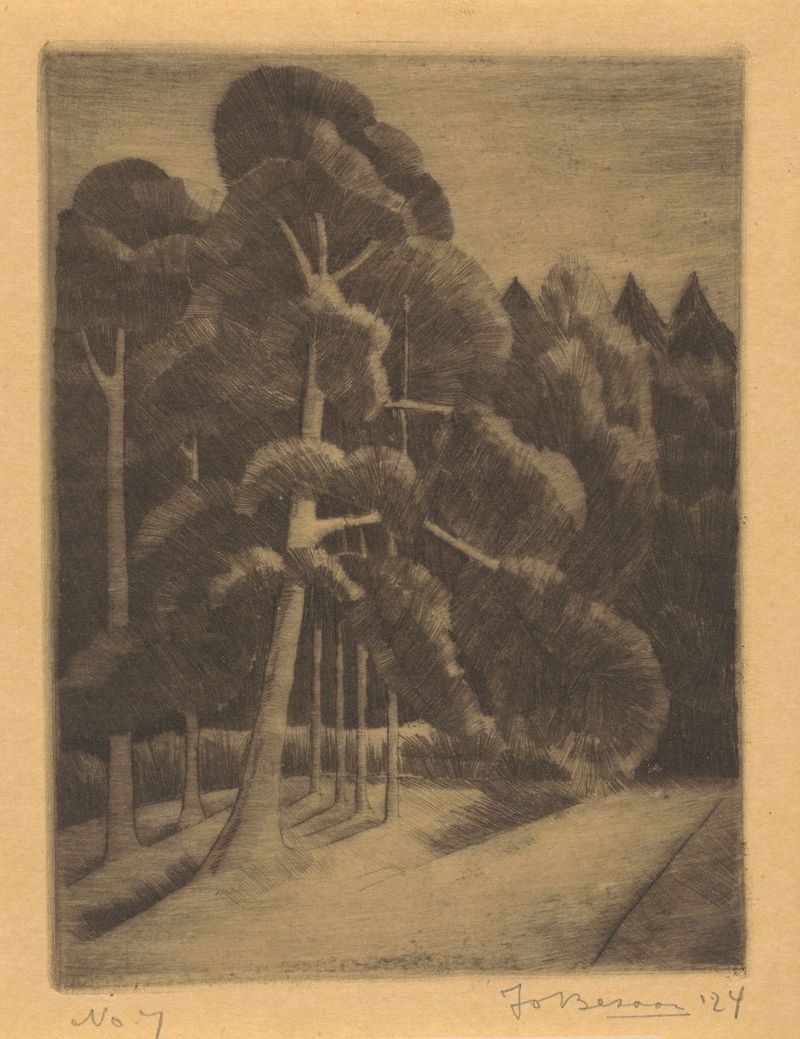
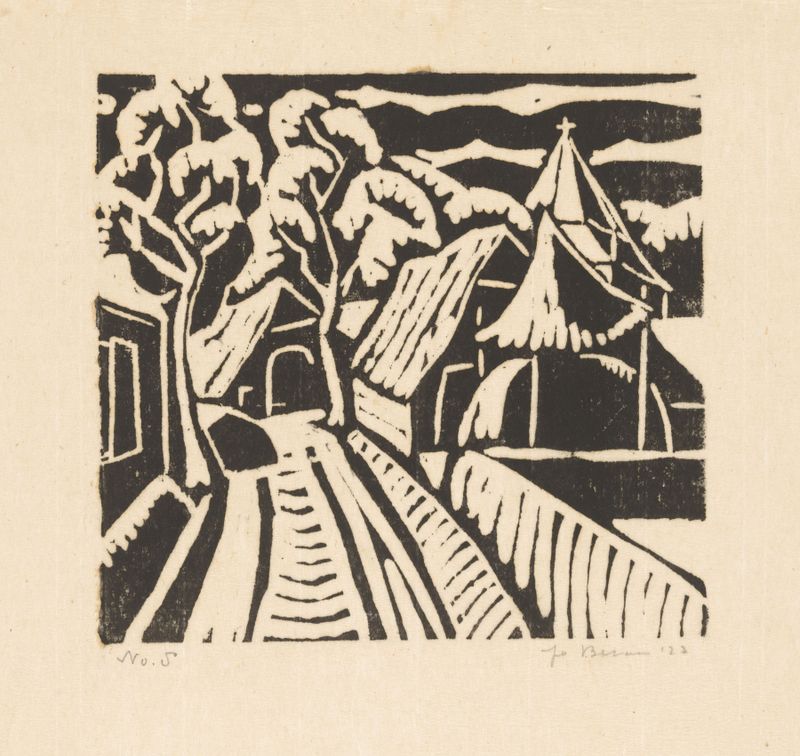
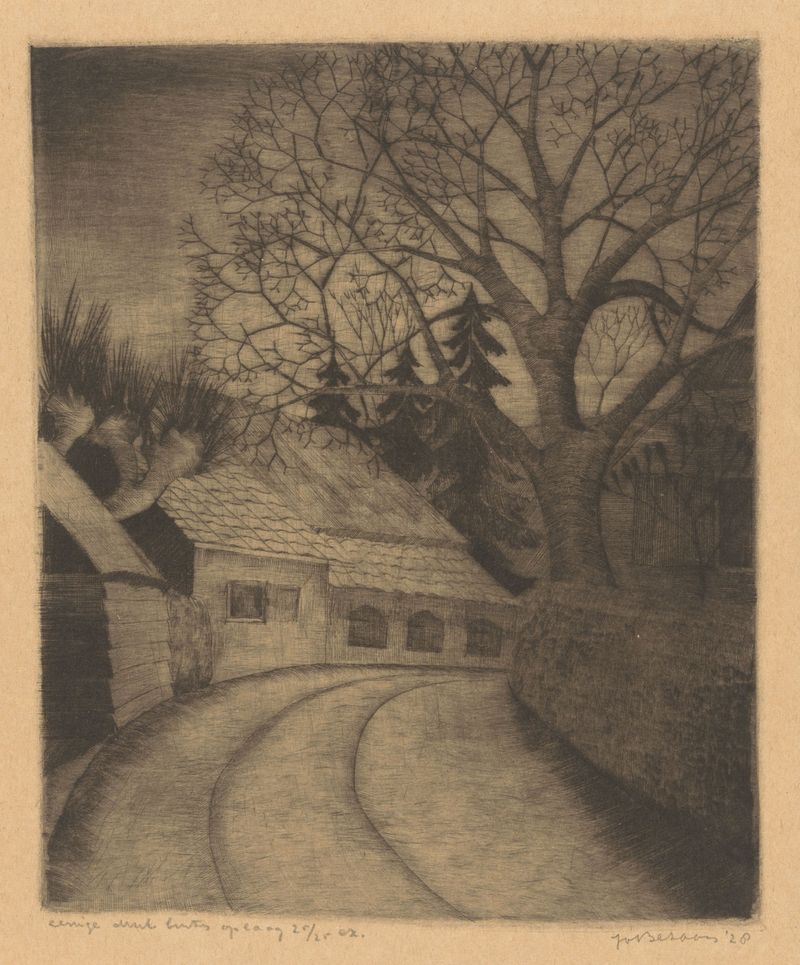
In the stark interplay of hues and shadows, loneliness envelops the canvas, whispering secrets of the soul. Look to the left at the three trees, their skeletal branches stretching into an expanse of muted blues and grays. Each tree stands distinct yet connected, a poignant trio against the backdrop that merges into a quiet void. Notice how the artist employs a delicate palette to evoke a sense of melancholy; the browns of the trunks contrast with the ethereal atmosphere, suggesting a world both tangible and elusive. Beneath the surface, there lies a profound emotional tension.
The trees are not merely elements of nature but symbols of solitude, their barren forms hinting at a deeper yearning for connection. The gentle gradient of color fosters a sense of depth, while the empty space around them amplifies their isolation, allowing viewers to reflect on their own experiences of loneliness. The subtle brushwork captures a fleeting moment, inviting a contemplative gaze into their stoic existence. In 1927, Jo Bezaan painted this work during a period of great change in the art world, as modernism began to challenge traditional forms.
Living in the Netherlands, he was influenced by the cultural shifts of post-World War I Europe, where existential themes resonated deeply. Drie bomen encapsulates this atmosphere, reflecting both personal introspection and the broader societal landscape of his time.